How to Identify Hail Damage on Your Roof Shingles
 9min Read
 Posted 4.17.2026
After a hailstorm rolls through the Twin Cities, the question isn’t just did it hail? — it’s did the hail actually damage my roof? Those are two very different questions, and the answer to the second one isn’t always obvious. Hail damage to asphalt shingles is notoriously difficult to spot from the ground. Some of the worst damage — bruised asphalt, exposed mat, broken granule bonds — is completely invisible unless you’re standing on the roof with a trained eye.
This guide walks through exactly what hail damage looks like on every part of your roof system, what separates real functional damage from normal wear, and how to document what you find before calling your insurance company.
Why Hail Damage Looks Different Than You’d Expect
Most homeowners picture hail damage as obvious holes or broken shingles. That level of damage does happen — but only with baseball-size hail (2.75″+). The far more common scenario in Minnesota is quarter-to-golf-ball-size hail (1″–1.75″) that leaves damage you can only identify up close. Here’s why: asphalt shingles are made of three layers — a fiberglass mat, asphalt coating, and a layer of protective granules on top. When hail strikes, it dislodges granules and bruises the asphalt beneath, but the shingle often still looks intact from 20 feet away.
The damage is real and consequential — exposed asphalt mat degrades rapidly under UV exposure and Minnesota’s freeze-thaw cycles — but it requires a roof-level inspection to confirm. That’s why getting a professional inspection after any significant hail event is so important.
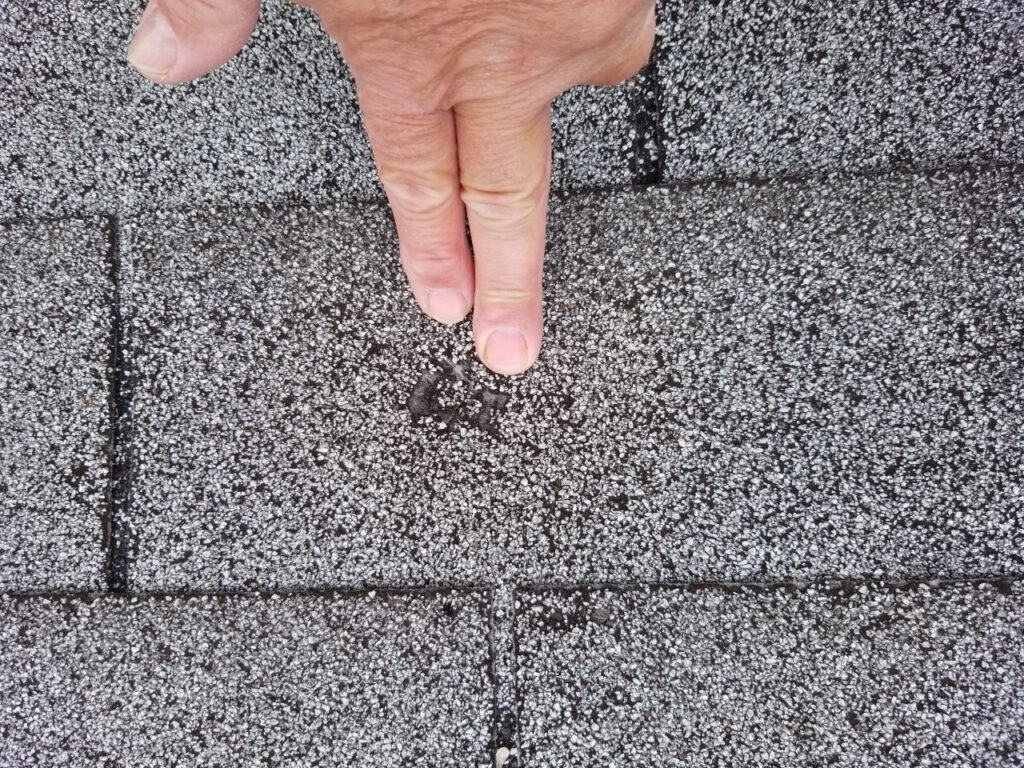
Hail Damage on Asphalt Shingles: What to Look For
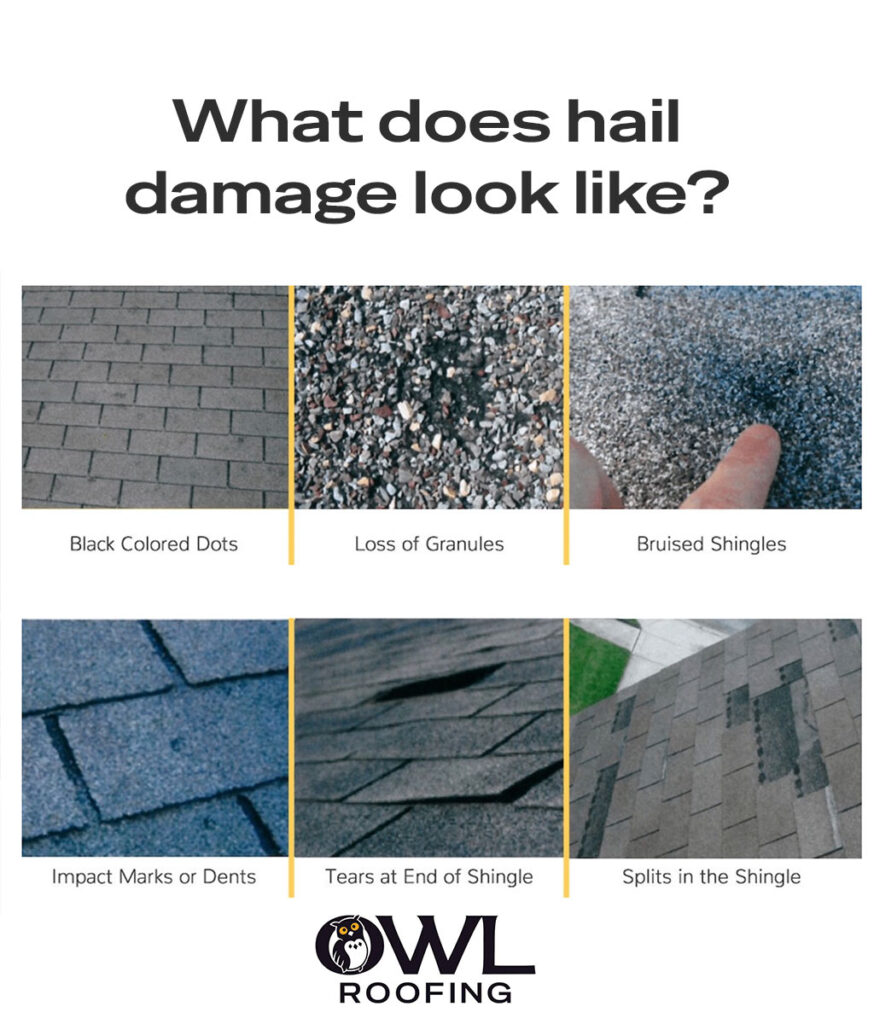
Asphalt shingles show hail damage in several distinct ways. Here are the key signs, from easiest to spot to hardest:
1. Circular Granule Loss (the Most Common Sign)
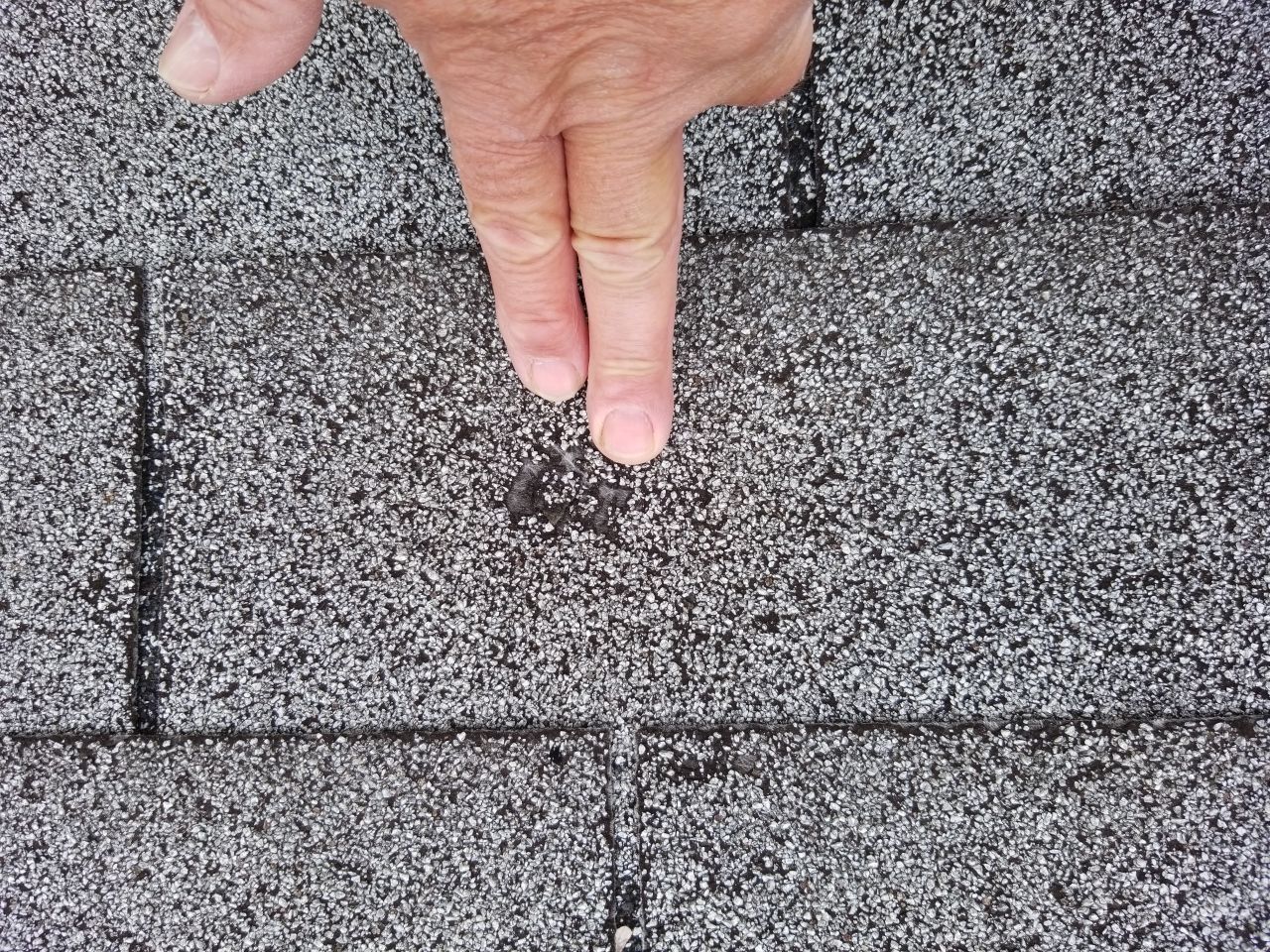
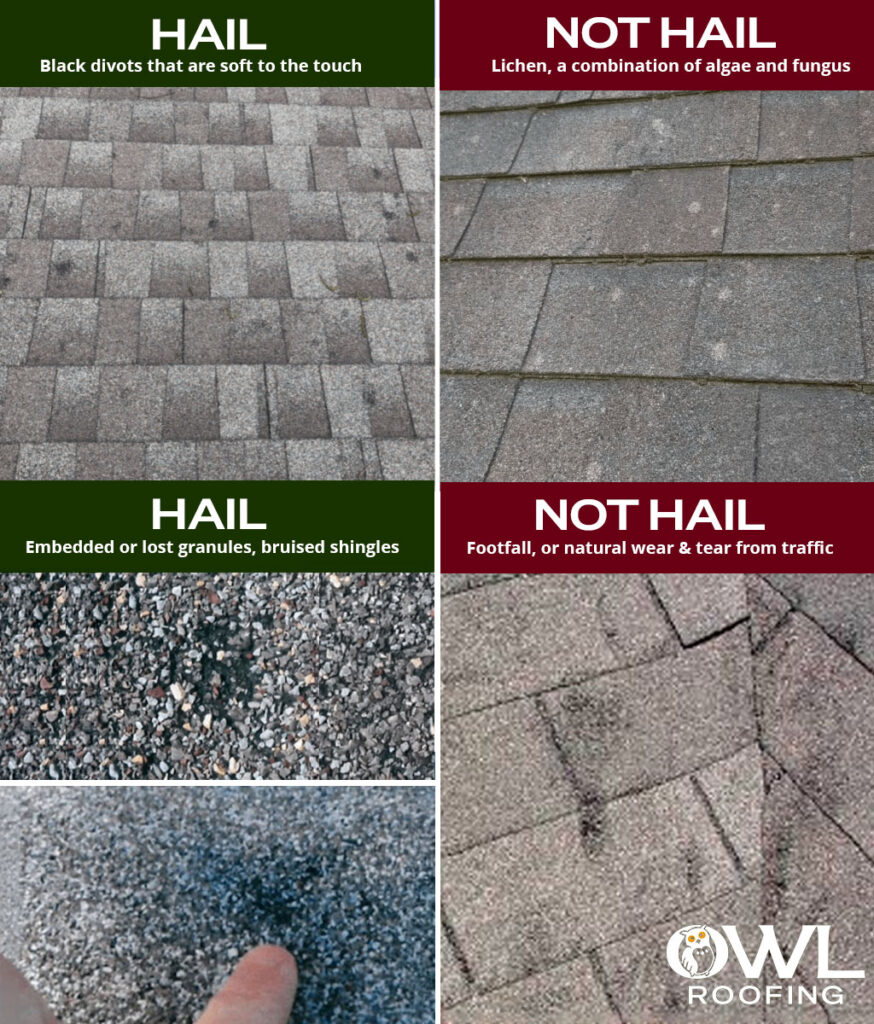
Hail knocks granules off the shingle in roughly circular or oval impact patterns. These bare spots expose the dark asphalt mat underneath. Key characteristics that distinguish hail impacts from normal wear:
- Random distribution — hail impacts are scattered across the shingle surface with no particular pattern relative to the edges or tabs
- Consistent diameter — if the hail was all roughly the same size, the bare spots will be similar in size too
- Fresh mat exposure — newly exposed asphalt mat looks shiny or black; weathered mat from normal aging looks gray and oxidized
- Sharp edges — fresh hail impacts have distinct borders; normal granule loss from aging has gradual, feathered edges
2. Soft Bruising (Requires Touch)
This is the sign most often missed by homeowners and even untrained inspectors. When hail strikes asphalt, it can fracture the mat beneath the granule layer without knocking the granules off. The surface looks intact but feels soft and spongy when pressed — like a bruise on fruit. Trained adjusters and roofing contractors use this test by pressing firmly on suspect spots. A soft, yielding feel under firm pressure indicates subsurface damage. Hard, firm shingles are intact.
3. Cracked or Split Shingles
Larger hail (1.5″+) can crack or split shingles outright, especially on roofs more than 10 years old where the asphalt has become brittle. These cracks are visible from the roof surface and sometimes from the ground on lower slopes. Any cracked shingle is compromised — water can work its way under the crack during the next rain event.
4. Loosened or Lifted Tabs
Repeated hail impacts can break the adhesive seal strip on the underside of shingle tabs. Once the seal is broken, wind can lift the tab, accelerating further damage and eventually causing blow-offs. This often isn’t visible until after a subsequent wind event, which is why post-hail inspection before the next storm is so valuable.
Hail Damage on Gutters and Downspouts
Gutters are actually one of the best places to start your post-storm assessment — they’re accessible from the ground and show clear evidence of hail impact.
- Dents and divots in the gutter channel — look for circular dents consistent in size, scattered across the entire gutter run
- Granule accumulation in gutters and downspouts — granules knocked off your shingles collect here. A significant amount of granules after a storm (more than a coffee cup’s worth) is a strong indicator of shingle impact
- Dents on downspout elbows — the elbows and turns in your downspout system are prime spots to confirm hail size
Take photos of any dents in your gutters and measure their diameter if you can. That documentation supports your claim by confirming the hail size that hit your property specifically — not just what was reported in a neighboring zip code.
Hail Damage on Flashing, Vents, and Soft Metals
The soft metal components of your roof system — step flashing, valley flashing, pipe boot collars, ridge vents, and skylight frames — show hail impacts very clearly. These are often the first places insurance adjusters look to confirm hail size and coverage.
| Component | What Hail Damage Looks Like | Why It Matters |
|---|---|---|
| Step flashing (wall meets roof) | Circular dents, bent corners | Damaged flashing leaks at the most common failure point |
| Pipe boot / plumbing vents | Dents in collar, cracked rubber boot | Cracked boots cause active leaks at pipe penetrations |
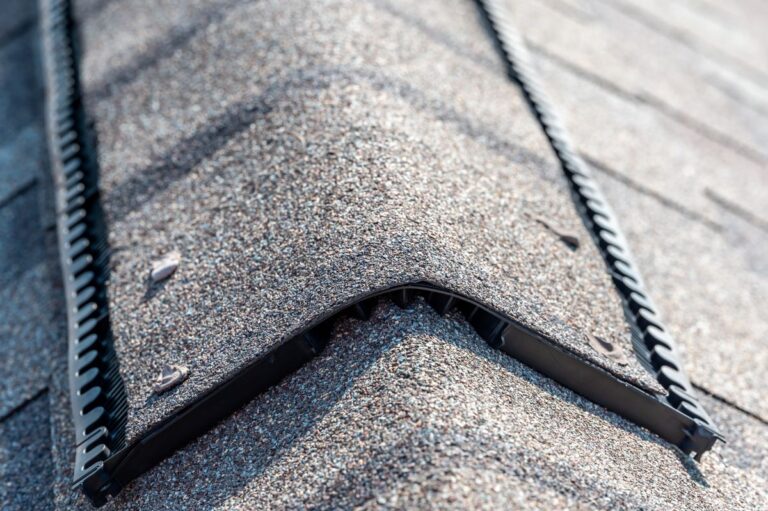
| Ridge vent cap | Dents, cracked plastic fins | Broken fins reduce ventilation and allow water intrusion |
| Skylight frame | Dented aluminum frame, scratched glass | Frame damage can compromise the seal |
| AC condenser fins | Bent fins, dented cabinet | Confirms hail reached your property; useful for claim documentation |
| Window screens | Torn mesh, bent frames | Easy documentation of storm intensity |
Hail Damage vs. Normal Wear: How to Tell the Difference
Insurance adjusters are trained to look for signs that damage is from hail, not normal aging. Here’s how to distinguish them:
| Characteristic | Hail Damage | Normal Wear / Aging |
|---|---|---|
| Granule loss pattern | Random circular spots, consistent size | Gradual, concentrated at ridges and edges |
| Mat appearance | Shiny black, recently exposed | Gray, oxidized, chalky |
| Impact marks on metal | Sharp circular dents, consistent diameter | Scratches, scrapes, irregular shapes |
| Shingle cracking | Clean fractures through the mat | Curling, cupping, alligatoring from UV/heat |
| Distribution | Uniform across all slopes | Worse on south/west slopes from sun exposure |
| Timeline | Following a confirmed storm event | Gradual over years |
What Hail Damage Looks Like on Wood Shake, Metal, and Tile
Wood Shake
Hail splits wood shake shingles cleanly — you’ll see fresh, bright wood at the split, with no gray weathering. The splits run roughly perpendicular to the wood grain and have sharp edges. Normal weathering cracks in wood shake follow the grain and have gray, aged surfaces.
Metal Roofing
Metal roofs show hail impact as circular dents, typically cosmetic rather than functional unless the hail is extremely large. The dents are real and can affect appearance and in rare cases coating integrity, but metal roofing rarely loses its waterproofing from hail alone. Insurance coverage for metal roof hail dents varies significantly by policy — some exclude cosmetic damage.
Concrete or Clay Tile
Tile cracks and chips from hail impact. Look for fresh breaks with bright, unweathered edges — hail breaks will look new compared to the aged surface of surrounding tile. Cracked tiles must be replaced; water infiltrates through the crack and can damage the underlayment beneath.
How to Document Hail Damage for an Insurance Claim
If you find signs of hail damage, documentation is everything. Here’s what to capture before calling your insurer:
- Photograph the date-stamped storm report — screenshot from NOAA’s Storm Prediction Center or local news showing hail size and location
- Photograph gutters and downspouts — close-up of dents with a ruler or coin for scale
- Photograph granule accumulation — in gutters, at downspout exits, around the perimeter of the home
- Photograph soft metal damage — flashing, vents, AC unit from multiple angles
- Have a licensed contractor document roof-level damage — their inspection report with photos is the core of your claim file
Owl Roofing’s storm damage inspection service includes detailed photo documentation organized by slope and component — exactly what insurance adjusters need to process your claim efficiently. Learn more about the full process in our guide to what Minnesota homeowners recover on hail claims.
Frequently Asked Questions
Can I see hail damage from the ground?
Sometimes — but usually not. The most serious hail damage (bruising, granule loss, cracked mat) requires a roof-level inspection. You can often see damage to gutters, soft metal trim, and window screens from the ground, which provides good supporting documentation even before a roofer climbs up.
How long after a storm can hail damage be identified?
Hail damage can be identified for months or even years after a storm. However, the sooner you inspect, the cleaner the evidence — granule deposits in gutters wash away, and fresh mat exposure weathers over time, making it harder to distinguish from normal aging. Get an inspection within the first few weeks of a storm event.
Does hail damage always cause leaks?
Not immediately — but it accelerates the timeline significantly. Hail damage exposes asphalt mat to UV radiation and freeze-thaw cycling, causing the shingle to deteriorate much faster than it would have otherwise. A roof with significant hail damage may develop leaks within 2–5 years rather than the expected 10–15 remaining years of its lifespan.
What if my neighbor filed a claim but my insurance company says I don’t have damage?
Get a second opinion from a licensed roofing contractor before accepting your insurer’s decision. Insurance companies send adjusters under significant time pressure after major storm events, and individual slopes or components can be missed. If a qualified contractor documents damage that the adjuster missed, you can request a re-inspection or file a supplemental claim.
See Something Suspicious After a Storm? We’ll Come Take a Look.
The Owl Roofing team inspects roofs across the Twin Cities metro after every significant hail event. We’re thorough, honest, and we document everything in a way that makes your insurance claim process as smooth as possible. If you’re not sure whether your roof took a hit — or you know it did and want professional documentation — we’re here.
Our roof repair and free inspection services are available across the Northeast Twin Cities and surrounding communities. No pressure. No obligation. Just a straight answer.

Recent Articles
Explore The Blog