


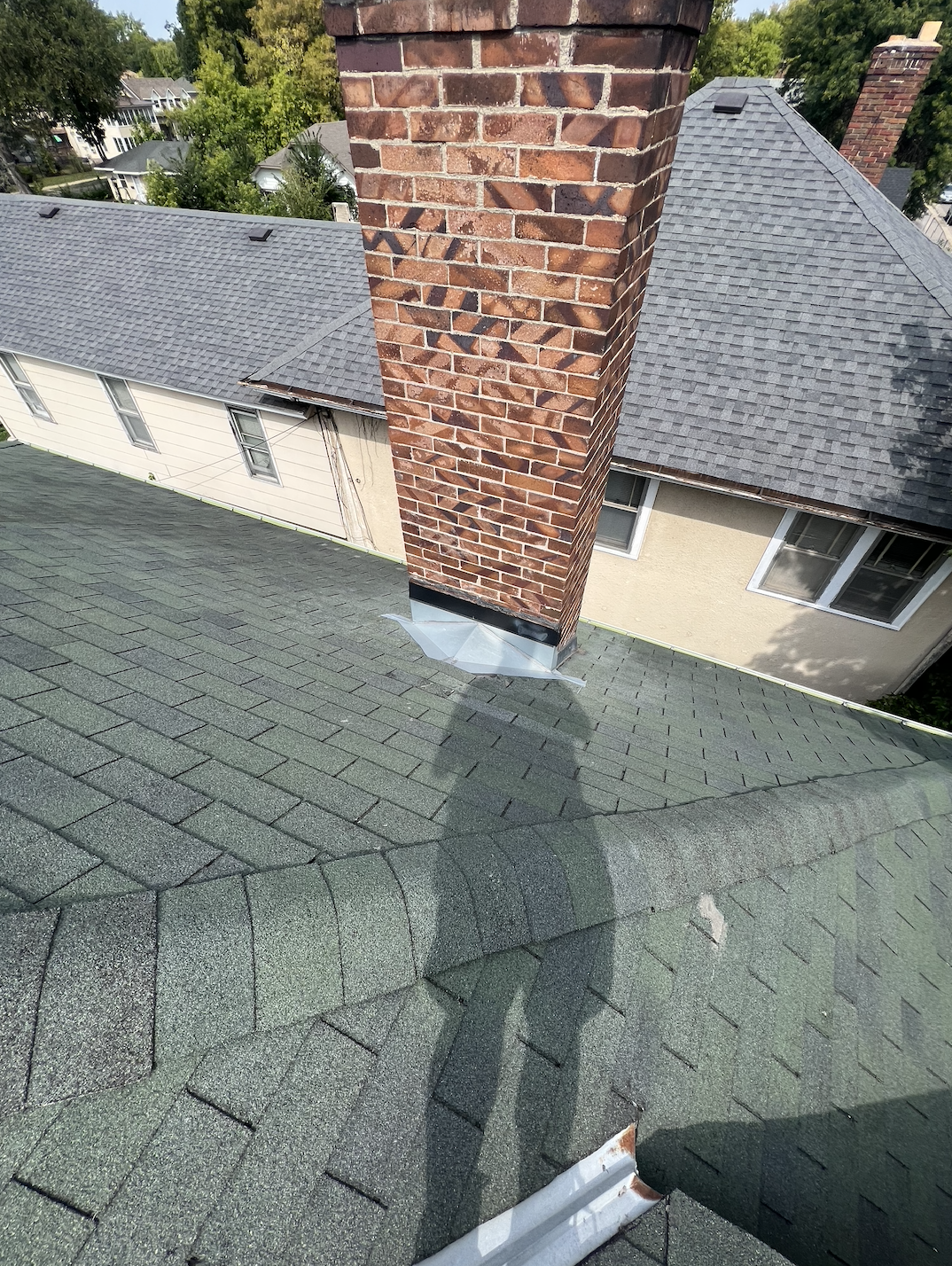
Chimney Repair in Minnesota: Crowns, Tuckpointing, and Why Your Chimney Affects Your Roof
 12min Read
 Posted 4.07.2026
When homeowners call about a roof leak near the chimney, the problem is sometimes the flashing — but just as often it’s the chimney itself. Minnesota’s freeze-thaw cycles are brutal on masonry. Water that enters through a hairline crack in the crown expands 9% when it freezes, opening the crack further. Over a decade, a small crown defect turns into major masonry deterioration, missing mortar joints, and eventually structural issues. The leak that shows up on your upstairs ceiling often started with a chimney problem 5 years earlier.
This guide covers chimney repair for Minnesota homeowners — what fails, how to identify the problem, typical repair costs, and why chimney work and roof work should be planned together. We cover flashing separately in our chimney flashing guide; this post focuses on masonry, crown, and structural chimney issues.
Chimney Anatomy: The Parts That Fail
A typical masonry chimney has five main components, each with its own failure mode:
| Component | Purpose | Common Failures | Repair Cost |
|---|---|---|---|
| Chimney crown | Top concrete cap protecting masonry | Cracks, spalling | $500–$2,000 |
| Flue/liner | Interior channel for exhaust | Cracked tiles, creosote damage | $2,500–$5,500 |
| Masonry (brick & mortar) | Structural body of chimney | Spalling brick, missing mortar | $400–$4,000 (tuckpointing) |
| Flashing | Seals chimney-to-roof joint | Corrosion, pulled caulk | $400–$1,200 |
| Chimney cap | Keeps animals, water, debris out | Rusted out, missing, blown off | $150–$500 |
The Chimney Crown: Where Most Problems Start
The chimney crown is the concrete cap at the very top of the chimney, sloping gently outward to shed water. A properly built crown has a slight overhang, a drip edge on the underside, and is poured thick enough (minimum 2 inches at the edges, thicker at the center) to resist cracking. In Minnesota, many older chimneys (pre-1980) were built with thin mortar crowns instead of proper cast concrete — these last 15–25 years before needing repair or replacement.
Signs of Crown Damage
- Visible cracks. Hairline cracks visible from a ladder or drone inspection indicate water intrusion paths.
- Crumbling edges. Chunks of crown material missing at the perimeter.
- Efflorescence. White mineral staining on brick below the crown indicates water flowing through the masonry.
- Brick spalling. Flakes or chips of brick face falling off — freeze-thaw damage from saturated masonry.
- Mortar deterioration. Soft, crumbling mortar joints in the upper third of the chimney.
Crown Repair vs Replacement
For minor cracks (less than 1/4″), crown repair with flexible polymer-modified mortar or crown sealer ($500–$900) extends life by 5–10 years. For major cracking, crumbling, or if the crown is just a thin mortar wash rather than proper concrete, full replacement ($1,200–$2,000) is required. A new cast concrete crown with proper overhang and drip edge will last 30–50 years.
Tuckpointing: Restoring Mortar Joints
“Tuckpointing” (sometimes called “repointing”) is the repair of deteriorated mortar joints between bricks. Over decades, mortar softens, crumbles, or falls out entirely due to freeze-thaw cycles, acid rain, and age. Without sound mortar, water penetrates behind the brick face and accelerates damage. Tuckpointing removes the old mortar to a specified depth (typically 3/4″ to 1″) and refills with fresh mortar matched to the original color.
When Tuckpointing Is Needed
- Mortar can be picked out with a screwdriver (a test any homeowner can do)
- Mortar is visibly recessed more than 1/4″ below the brick face
- Mortar color is significantly different (bleached, darkened)
- Cracks run through mortar joints
- Sections of mortar have fallen out entirely
Tuckpointing Cost in Minnesota
| Scope | Typical MN Cost | Notes |
|---|---|---|
| Spot tuckpointing (small area) | $400–$800 | Quick fix for localized damage |
| Full chimney tuckpointing (one side) | $800–$1,500 | Most common scope |
| All sides, full height | $2,000–$4,000 | Major restoration |
| Brick replacement + tuckpoint | $2,500–$6,000 | When spalling is extensive |
| Chimney rebuild (above roofline) | $4,000–$9,000 | When tuckpointing isn’t enough |
| Full chimney rebuild | $7,000–$15,000+ | Down to foundation if needed |
Labor for tuckpointing runs $12–$25 per square foot of wall area in Minnesota. The work is slow and requires skill to match old mortar color and properly rake joints to a specific depth. Don’t settle for a quick “smear over” approach — that traps moisture and creates worse problems within 5 years.
Brick Spalling: The Freeze-Thaw Problem
Spalling is when the face of a brick flakes off due to water freezing inside the brick. It’s the single most common masonry failure in Minnesota chimneys because we have dozens of freeze-thaw cycles per year. Once a brick face spalls, the exposed interior brick absorbs water more readily and spalls faster. What starts as a few flakes can progress to structural loss within 5–10 years.
Causes of Brick Spalling
- Failed crown letting water saturate masonry from above
- Missing or damaged mortar allowing water infiltration
- Sandblasting or power-washing brick (removes the harder outer face)
- Improper sealing with non-breathable coatings
- Original brick quality (softer reclaimed brick spalls faster)
Spalling Repair Options
- Individual brick replacement: $30–$75 per brick when done during tuckpointing. Matching old brick can be difficult.
- Brick replacement with salvaged brick: $50–$125 per brick, best match for historic homes.
- Section rebuild: When spalling affects multiple courses, rebuilding the affected section.
- Breathable water repellent: Silane/siloxane sealers ($300–$800 to apply) slow future spalling but don’t reverse existing damage.
Chimney Cap: The $300 Preventive Fix
A chimney cap covers the flue openings at the top of the chimney. It keeps rain, snow, animals, and debris out of the flue. Missing or damaged chimney caps are one of the most common — and most preventable — causes of chimney damage. Without a cap, water falls directly down the flue and saturates the smoke chamber, creosote, and ultimately the masonry.
Cost to install a stainless steel or copper chimney cap: $150–$500 depending on size and material. Expected life: 20+ years for stainless, 50+ for copper. This is the single best preventive investment for chimney longevity — skip it at your peril.
Why Chimney Work and Roof Work Belong Together
If you’re replacing your roof in Minnesota, get the chimney inspected at the same time. Here’s why the timing matters:
- Access is cheap during a re-roof. The roofer is already on the roof with safety equipment. Adding a chimney inspection to their scope costs little.
- Flashing must match chimney condition. New flashing installed against crumbling masonry will fail within 5 years. The chimney must be sound before flashing goes on.
- Tuckpointing is easier during re-roof. Masons have cleaner access without shingles in the way. The roofer removes a wider shingle area temporarily to give the mason working room.
- Crown repair before ice-and-water shield. A crown repair installed before the shingles lock in creates a cleaner waterproofing detail.
- You avoid two mobilizations. Fixing the chimney after re-roofing means paying twice for staging, safety setup, and scaffold/ladder.
Our roof replacement guide covers the full scope of what to include in a quality re-roof. For understanding how the chimney interacts with flashing specifically, see the chimney flashing guide.
DIY Chimney Inspection from the Ground
You can do a meaningful chimney inspection from the ground with binoculars and good lighting. Walk the perimeter of your house annually and look for:
- Stains on brick. Dark streaks running from the top indicate water flowing down through compromised masonry.
- White efflorescence. Chalky deposits on brick signal water is finding paths through the masonry.
- Missing or recessed mortar joints. Use binoculars to check mortar quality.
- Tilted or leaning chimney. Catastrophic issue — stop using the fireplace and call a mason immediately.
- Visible crown cracks. Cast shadows can reveal cracks you’d miss otherwise.
- Missing chimney cap. If you can see daylight down the flue opening from the ground, there’s no cap.
- Debris growing on chimney. Moss, grass, or vegetation indicates chronic moisture.