


Diamond Kote Trim & Fascia: Pairing Options with LP SmartSide Siding
 9min Read
 Posted 6.26.2025
Diamond Kote’s factory-finished trim and fascia boards are designed to be color-matched or intentionally contrasted with Diamond Kote or standard-finished LP SmartSide field siding, giving you three broad pairing approaches: matching trim to siding for a clean, unified look, choosing a contrasting trim color for definition, or using trim as a distinct accent color. Which approach fits best depends mostly on your home’s architectural style and how much visual contrast you want between the field siding and its edges.
Approach 1: Monochrome — Trim Matches Siding
Choosing the same Diamond Kote color family for both trim and field siding creates a clean, understated look where the home’s architectural lines (corners, window casings, fascia) read as subtle definition rather than a bold design statement. This approach tends to work particularly well on contemporary or minimalist home styles, and on homes where you’d rather let landscaping, a roof color, or an accent material like stone do the visual work instead of a high-contrast trim scheme.
Approach 2: Contrast — Light Siding, Dark Trim (or Vice Versa)
| Siding Tone | Common Contrasting Trim Choice | Effect |
|---|---|---|
| Light gray or white field siding | Charcoal or black trim | Crisp, modern definition |
| Warm tan or beige field siding | Dark brown or bronze trim | Traditional, grounded look |
| Deep blue or navy field siding | White or cream trim | Classic, high-contrast coastal-inspired look |
| Dark charcoal field siding | White trim | Bold, high-contrast modern statement |
Contrast pairings tend to emphasize a home’s architectural shape more strongly than a monochrome approach, since window casings, corner boards, and fascia lines become visually distinct rather than blending into the field siding. This is a popular choice on homes with strong, clean architectural lines worth highlighting.
Approach 3: Trim as a Distinct Accent Color
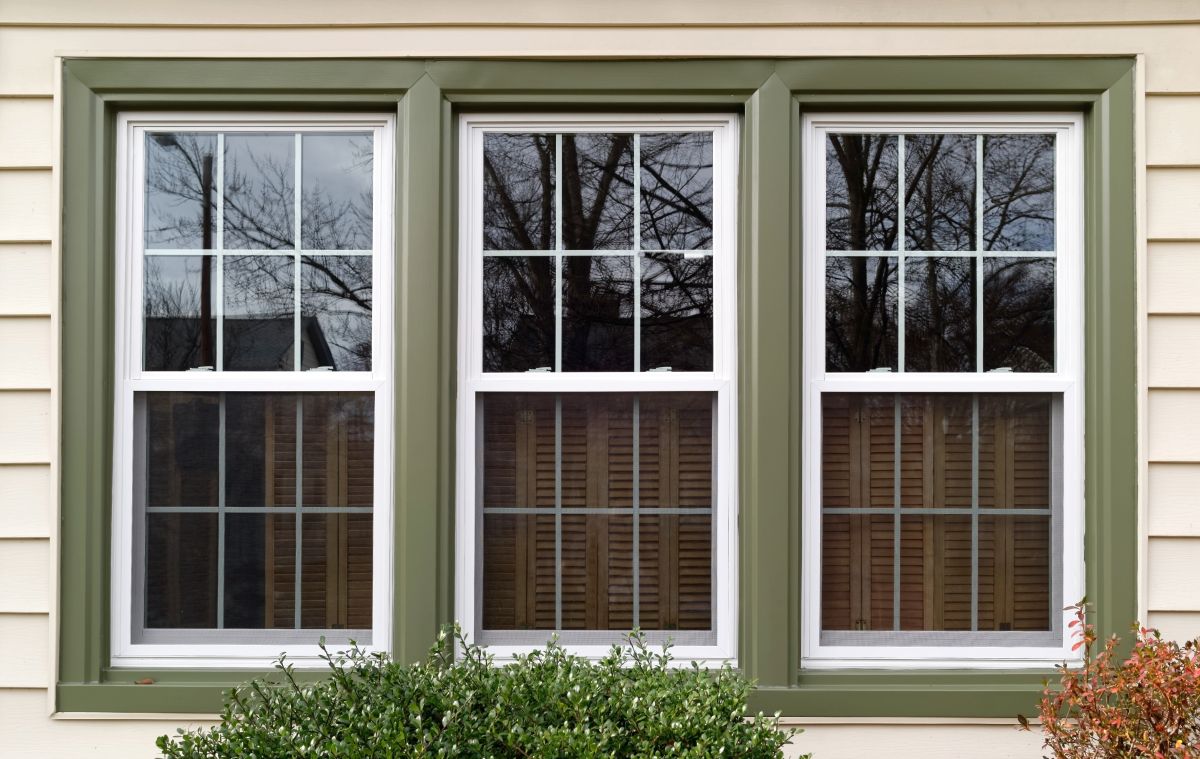
Rather than choosing a strict light-dark contrast, some homeowners choose a trim color that’s a genuinely different hue from the field siding — a muted green or blue trim against a warm gray siding field, for instance. This approach requires a bit more care to avoid an unintentionally busy or mismatched look, and it’s worth viewing physical samples of both colors together before committing, but it can produce a distinctive, more custom-feeling exterior than either a strict monochrome or straightforward light-dark contrast approach.
Where Fascia Specifically Fits Into the Decision
Fascia — the horizontal board running along the roofline where gutters typically attach — is usually viewed from a greater distance and at more of an angle than window trim or corner boards, so its color impact reads a bit differently than trim closer to eye level. Many homeowners choose to keep fascia in the same color family as trim for overall consistency, though some intentionally choose a fascia color that ties more closely to the roof shingle color instead, since fascia sits at that visual transition point between the roofline and the siding field. Our companion piece on what fascia is and how it functions covers the component itself in more depth if you’re unfamiliar with its role.
Coordinating Trim Color With Your Roof
Beyond the siding field, your roof’s shingle color is a third element worth factoring into a trim decision, particularly for fascia and any trim visible near the roofline. A dark charcoal or black roof generally pairs well with either a matching dark trim for a cohesive, monochrome roofline transition, or a crisp white trim for defined contrast — while a warmer brown or tan roof tends to pair more naturally with warm-toned trim choices rather than a stark black-and-white scheme that can visually compete with a warm roof color.
How Window and Door Trim Factor In Separately
Window and door casings are typically the most visually prominent trim element since they sit at eye level and are viewed up close, which means their color choice carries more visual weight than fascia or less-visible corner trim. Many homeowners choose a single consistent trim color across windows, doors, corners, and fascia for simplicity, though it’s also common to use a slightly different, complementary shade specifically at entry doors to create a subtle focal point without introducing an entirely separate color into the broader scheme.
A Note on Diamond Kote Trim Availability
Diamond Kote trim and fascia boards are available in a range of factory-finished colors designed to coordinate with the broader Diamond Kote siding color palette, though not every trim color is necessarily available in every profile or board width. It’s worth confirming specific trim color and profile availability directly with your installer early in the design process, since this can affect how much flexibility you have with the pairing approaches described above for your specific project.
How Trim Color Choices Differ for Board-and-Batten vs. Lap Siding Profiles
The siding profile you choose affects how prominently trim reads visually, which is worth factoring into a color decision. Board-and-batten profiles create strong vertical lines with more visible seams, so trim at corners and openings tends to read as a more continuous part of the overall pattern rather than a separate framing element. Traditional horizontal lap siding, by contrast, creates a more even field with trim reading as a clearer visual boundary around windows, doors, and corners. A higher-contrast trim color tends to show off a board-and-batten profile’s vertical rhythm more distinctly, while both matching and contrasting trim work well with lap siding depending on the overall look you’re going for.
Working With an Existing Roof and Landscape Palette
If you’re re-siding an existing home rather than building new, your roof color and any established landscaping or hardscape elements (a stone foundation, a paver walkway, mature trees) are effectively fixed constraints worth working around rather than choosing trim and siding in isolation. Bringing a photo of your home’s current roofline and any prominent stone or brick elements to a design conversation with your installer can help narrow trim and siding pairing options to combinations that will genuinely work with what’s already there, rather than risking a color scheme that looks appealing in isolation but clashes once installed against your home’s existing fixed elements.
Common Pairing Mistakes Worth Avoiding
A few pairing choices tend to underperform in practice: trim and siding colors that are extremely close in value without being an intentional monochrome match can read as an unintentional mismatch rather than a deliberate, clean design choice. Similarly, combining more than two or three distinct colors across siding, trim, fascia, and accent elements can result in a visually busy exterior that undercuts a home’s architectural lines rather than highlighting them. Keeping your overall palette to two or three coordinated colors, including your roof, tends to produce a more cohesive result than introducing additional colors for their own sake.
Does Trim Choice Affect Cost?
Diamond Kote trim generally carries a modest per-linear-foot premium over standard trim options, reflecting its factory-finish process, though the total cost impact across a typical home’s trim scope is usually a smaller portion of the overall project budget than the field siding itself. Homes with more extensive trim detail — multiple window styles, decorative corner treatments, wide fascia boards — will naturally see a larger trim cost contribution than a simpler home with minimal trim detail, which is worth keeping in mind if budget flexibility is a factor in your color and material decisions.
Seeing Trim and Siding Combinations Before Committing
Color swatches alone can be difficult to judge accurately for a trim-and-siding pairing, since the visual effect depends heavily on how the two colors sit next to each other at full scale on an actual home, in your specific lighting conditions. Many installers, including Owl Roofing, can provide larger physical samples or digital visualization tools showing your specific color combination before you finalize an order, which tends to give a much more reliable sense of the final look than swatches viewed side by side on their own.
Explore Pairing Options for Your Home
Learn more about LP SmartSide and Diamond Kote options — we can walk through trim and fascia pairing ideas specific to your home’s style whenever you’re ready to explore further.
Frequently Asked Questions
Should my trim match or contrast with my siding color?
Both approaches work well; matching creates a clean, unified look while contrasting trim emphasizes your home’s architectural lines more strongly. The right choice depends on your home’s style and how much visual definition you want.
Does fascia need to match my trim color?
Not necessarily — many homeowners keep fascia consistent with trim for simplicity, though some coordinate fascia more closely with the roof color instead, since it sits at that visual transition point.
How many colors should I use across siding, trim, and fascia?
Generally two or three coordinated colors, including your roof, produces a cleaner result than introducing additional colors for their own sake.
Is every Diamond Kote trim color available in every profile?
Not always — confirm specific trim color and profile availability directly with your installer early in the design process for your specific project.
Color and pairing guidance reflects general design principles and current product offerings, which can change; confirm current specific colors and trim profiles directly with your installer. Last updated September 2026.
