
Gutter Apron vs Drip Edge: What’s the Difference?
 14min Read
 Posted 9.16.2026
Gutter apron vs drip edge is one of the most common questions Maplewood homeowners ask during roof replacement or gutter installation, with both components being metal roof edge flashing designed to direct water away from the fascia and into the gutter system. The key differences come down to shape, installation location, overhang design, and which type works best for a specific home. Owl Roofing, a GAF and Owens Corning certified roofing contractor, installs drip edge and gutter apron flashing on every roof replacement across Maplewood and surrounding Twin Cities communities. This guide breaks down the seven key differences with cost data, installation considerations, and guidance on which flashing type works best for a specific Maplewood home.
- Seven key differences: Shape, location, overhang, timing, applications, cost, and code.
- Real cost data: Per-linear-foot pricing for each flashing type.
- Which to choose: Best applications for drip edge vs gutter apron.
Understanding Gutter Apron and Drip Edge
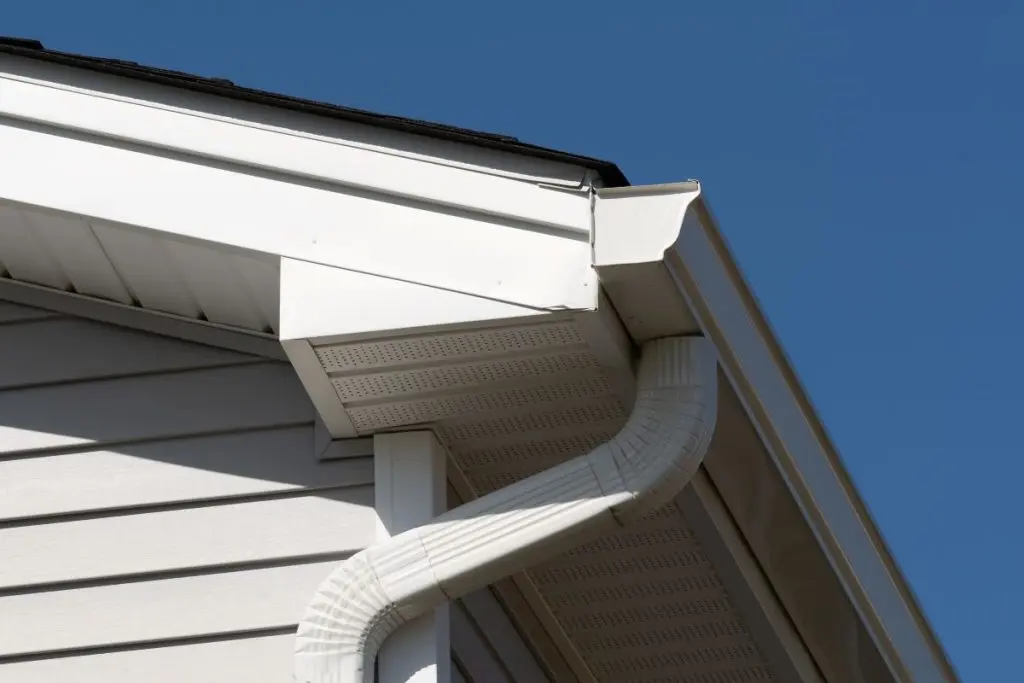
Understanding gutter apron and drip edge starts with recognizing that both are metal flashing components installed at the roof edge to direct water and prevent damage to the fascia, roof deck, and interior of the home. Owl Roofing installs both types on Maplewood roofs based on the specific roof design and whether the project involves new roof installation or retrofit to an existing roof.
What a Drip Edge Is
A drip edge is a metal flashing strip installed along the roof edges, typically with an L-shape or T-shape profile, that directs rainwater away from the fascia board and into the gutter system. Owl Roofing installs drip edge on every Maplewood roof replacement because the International Residential Code requires drip edge on shingle roofs at both the eaves and rake edges. Drip edges typically have a small overhang of half an inch to three-quarters of an inch that shoots water clear of the fascia, and they can be installed on roofs with or without gutters. The metal is typically aluminum or galvanized steel that resists corrosion and lasts the full service life of the roof.
- Profile shape: L-shape or T-shape.
- Installation locations: Eaves and rake edges of the roof.
- Overhang: Half inch to three-quarters of an inch typical.
- Material: Aluminum or galvanized steel for corrosion resistance.
What a Gutter Apron Is
A gutter apron is a metal flashing strip with an L-shape profile installed specifically at the eaves to direct water from the roof directly into the gutter without letting it run behind the gutter. Owl Roofing installs gutter apron on Maplewood roofs where the gutter is installed close to the shingle edge and where preventing water from running behind the gutter matters most. The bottom flange of a gutter apron extends into the gutter itself, filling the gap between the roof edge and the gutter opening. Gutter aprons work best when installed during roof replacement because they need to be tucked under the shingles.
- Profile shape: L-shape only.
- Installation location: Eaves only where gutters are installed.
- Bottom flange: Extends into the gutter itself.
- Best timing: During roof replacement for proper shingle tuck.
7 Key Differences Between Gutter Apron and Drip Edge
Seven key differences separate gutter apron and drip edge flashing beyond the basic shape distinction. Owl Roofing walks Maplewood homeowners through each difference during roof consultations to determine which flashing works best for the specific home.
1. Shape and Profile
Shape and profile are the most obvious visual difference between gutter apron and drip edge flashing. Owl Roofing finds Maplewood homeowners often identify each type by looking at the profile shape from the side. Drip edge typically has an L-shape or T-shape profile, with the L-shape being simpler and the T-shape featuring an additional flange that provides more separation between the roof edge and the fascia. Gutter aprons have only an L-shape profile, but the bottom flange is typically longer than a drip edge L-shape because it needs to reach into the gutter. The specific profile affects both function and installation approach.
- Drip edge shapes: L-shape or T-shape available.
- Gutter apron shape: L-shape only.
- Bottom flange difference: Longer on gutter aprons to reach gutter.
- T-shape drip edge: Additional flange for fascia separation.
2. Installation Location
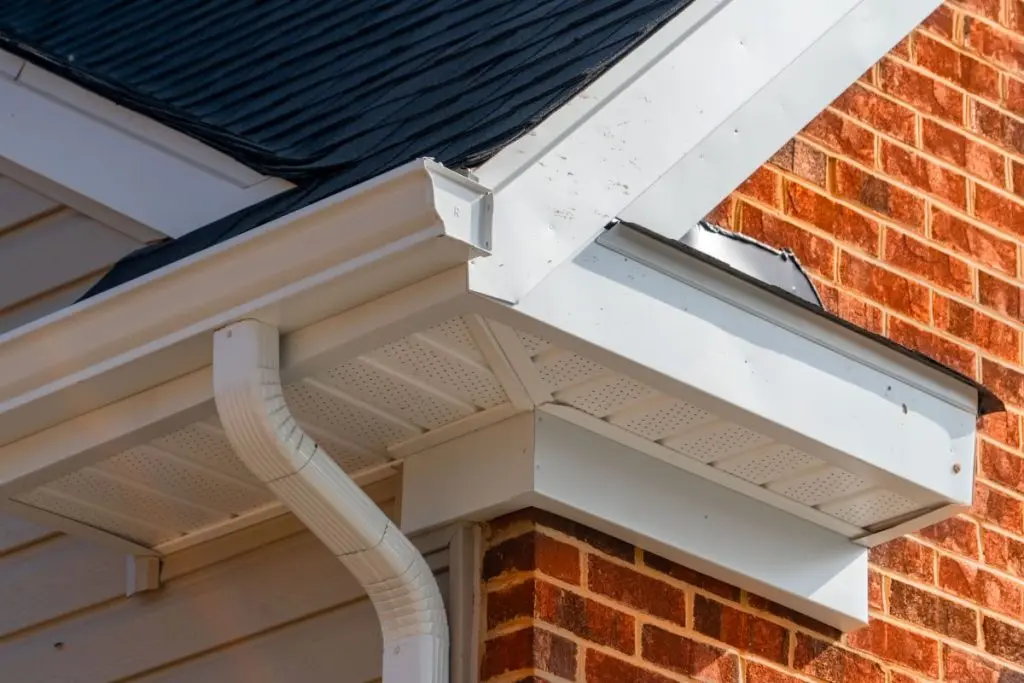
Installation location differs significantly between the two flashing types. Owl Roofing installs drip edge on Maplewood roofs at both the eaves (horizontal roof edges above gutters) and the rake edges (sloped edges along gable walls) because drip edge protects both edges from water infiltration. Gutter aprons install only at the eaves where the gutter attaches to the roof because the design specifically bridges the gap between the roof edge and the gutter. Most Maplewood roofs use drip edge on rakes and either drip edge or gutter apron on eaves depending on the gutter design and shingle-to-gutter distance.
- Drip edge locations: Both eaves and rake edges.
- Gutter apron location: Eaves only where gutter attaches.
- Rake edges: Always use drip edge regardless of gutter design.
- Eave decision: Depends on gutter placement and shingle overhang.
3. Overhang Design
Overhang design differs between the two flashing types, with drip edge featuring a small overhang that shoots water clear of the fascia and gutter aprons featuring minimal or no overhang because the bottom flange extends directly into the gutter. Owl Roofing selects between the two flashing types on Maplewood roofs based on the gap between the shingle edge and the gutter position. Drip edge with its half-inch to three-quarter-inch overhang works well when there is space between the roof edge and gutter, while gutter aprons work best when the gutter sits close to the shingle edge and needs the water directed straight into the trough.
- Drip edge overhang: Half inch to three-quarter inch typical.
- Gutter apron overhang: Minimal or none.
- Water shooting behavior: Drip edge sends water out and away.
- Water diversion: Gutter apron sends water straight into gutter.
4. When to Install Each
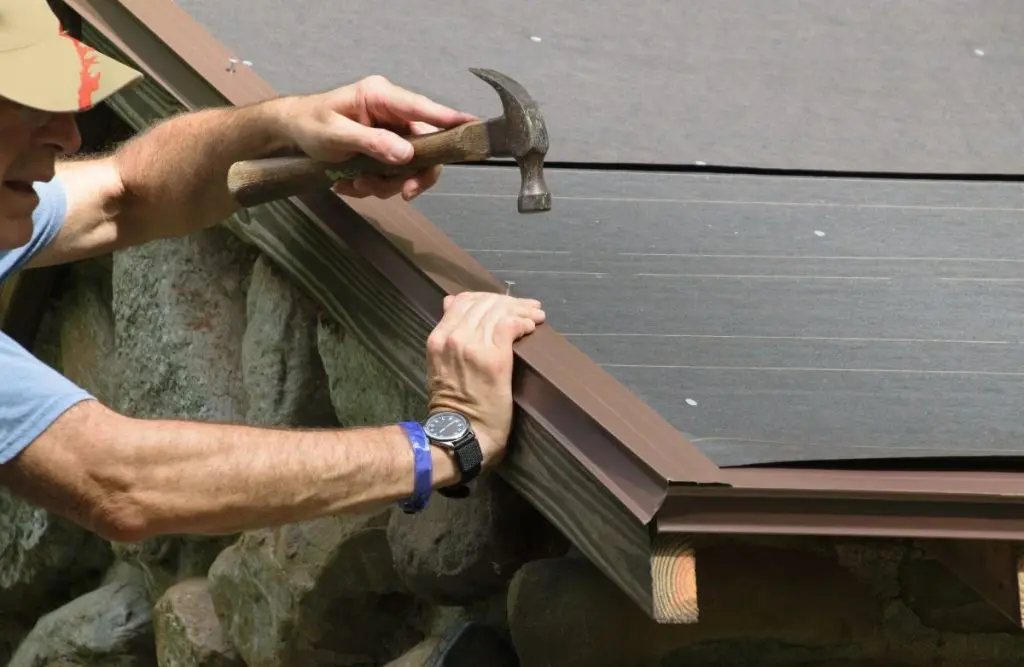
The timing of installation differs between drip edge and gutter apron. Owl Roofing installs drip edge on Maplewood roofs both during roof replacement and as a retrofit to existing roofs because drip edge can be tucked under the existing shingle course or installed along the exposed roof edge. Gutter aprons install best during full roof replacement because proper installation requires tucking the top edge underneath the roofing material, which is difficult on an existing roof without disturbing the shingles. Homeowners with existing roofs typically install drip edge rather than gutter apron for that reason.
- Drip edge: Works during new install and as retrofit.
- Gutter apron: Best during full roof replacement.
- Existing roof: Drip edge is the practical choice.
- New roof: Either option available based on gutter design.
5. Best Roof Applications
Best roof applications vary between the two flashing types based on roof design and homeowner priorities. Owl Roofing installs drip edge on Maplewood homes with simple roof designs, standard gutter placement, or existing roofs that need retrofit flashing. Gutter aprons work best for Maplewood homes with complex rooflines, gutters installed very close to the shingle edge, or wide roof overhangs where preventing water from running behind the gutter matters most. Roofs with multiple sides, curved edges, or complex architectural details often look cleaner with gutter aprons because the L-shape sits closer to the roof edge than a T-shape drip edge.
- Drip edge applications: Simple designs, standard gutters, retrofits.
- Gutter apron applications: Complex rooflines, close gutter placement.
- Aesthetic considerations: Gutter apron sits closer to roof edge.
- Wide overhangs: Gutter apron prevents water bypass.
6. Cost per Linear Foot
Cost per linear foot differs between drip edge and gutter apron flashing. Angi notes that drip edges cost between $3 and $15 per linear foot depending on the style, with L-shaped drip edges costing $3 to $10 per linear foot and T-shaped drip edges costing $10 to $15 per linear foot, while gutter aprons cost between $3 and $10 per linear foot.
- Drip edge material: $3 to $15 per linear foot.
- L-shape drip edge: $3 to $10 per linear foot.
- T-shape drip edge: $10 to $15 per linear foot.
- Gutter apron material: $3 to $10 per linear foot.
7. Code Requirements
Code requirements affect both flashing types. Owl Roofing installs drip edge on every Maplewood roof replacement because the International Residential Code specifically requires drip edge flashing on shingle roofs at both eaves and rake edges. Gutter aprons are not universally required by code but may be required by specific manufacturer installation instructions for warranty coverage on premium shingle systems. Some local building codes also specify additional requirements for gutter apron installation on homes with specific eave configurations. Owl Roofing ensures every Maplewood installation meets both code and manufacturer requirements to preserve warranty coverage.
- Drip edge code requirement: Universally required on shingle roofs.
- Gutter apron code: Not universally required, may vary locally.
- Manufacturer requirements: Some warranties require specific flashing.
- Warranty preservation: Proper flashing maintains coverage.
Which Should You Choose for Your Maplewood Home
The choice between drip edge and gutter apron for a Maplewood home depends on roof design, gutter placement, project timing, and specific aesthetic preferences. Owl Roofing walks homeowners through the decision during free consultations that assess the specific roof.
When to Choose Drip Edge
Choose drip edge for Maplewood homes with existing roofs that need retrofit flashing, simple roof designs where the profile difference does not matter aesthetically, standard gutter placement with adequate space between shingle edge and gutter, and homes without gutters where the flashing still protects the fascia. Owl Roofing recommends drip edge as the default choice for most Maplewood roofs because the material works in more situations, meets universal code requirements, and can be installed at any point in the roof’s service life. Drip edge is also the appropriate choice for all rake edges regardless of gutter design.
- Existing roofs: Retrofit installation practical.
- Simple roof designs: Profile visibility not a concern.
- Standard gutter placement: Adequate shingle-to-gutter space.
- Universal choice: Works in more situations than gutter apron.
When to Choose Gutter Apron
Choose gutter apron for Maplewood homes during full roof replacement when the gutter is installed close to the shingle edge, when preventing water from running behind the gutter matters most, and when the aesthetic of an L-shape profile close to the roof edge matches the home style. Owl Roofing recommends gutter aprons for Maplewood homes with complex rooflines featuring multiple sides and curves because the profile sits cleaner than T-shape drip edge on visible edges. Gutter aprons are also preferred for homes with wide roof overhangs where water might otherwise bypass the gutter entirely.
- New roof installation: Best timing for proper installation.
- Close gutter placement: Fills gap between roof and gutter.
- Complex rooflines: Cleaner appearance on visible edges.
- Wide overhangs: Prevents water bypass of gutter.
Cost of Installing Drip Edge or Gutter Apron in Maplewood
The cost of installing drip edge or gutter apron in Maplewood depends on linear footage, flashing type, roof complexity, and whether the installation is part of a full roof replacement or a standalone project. Owl Roofing provides itemized estimates showing material and installation costs separately for either flashing option.
Total Installation Pricing for Roof Edge Flashing
Total installation pricing for drip edge or gutter apron in Maplewood typically runs $300 to $900 for a standard home with 150 linear feet of roof edge for L-shaped drip edge or gutter apron installations, and $500 to $1,500 for T-shaped drip edge installations. Owl Roofing pricing for standalone flashing installations (not part of a full roof replacement) reflects labor as a bigger percentage of the total cost. Full roof replacements in Maplewood include drip edge in the project base price rather than as a separate line item because drip edge is required by code on every shingle roof.
- L-shape flashing (150 ft): $300 to $900 installed.
- T-shape drip edge (150 ft): $500 to $1,500 installed.
- Full roof replacement: Drip edge included in base price.
- Standalone flashing: Labor is larger cost percentage.
Owl Roofing in Maplewood
Owl Roofing handles roof edge flashing installation across Maplewood and surrounding Twin Cities communities as part of every roof replacement project. The team installs both drip edge and gutter apron with attention to Minnesota-specific weather performance and manufacturer warranty requirements.
Why Homeowners Choose Owl Roofing for Roof Edge Flashing
Owl Roofing is a strong choice for roof edge flashing installation in Maplewood because the team installs both drip edge and gutter apron with manufacturer-certified expertise, provides free pre-installation inspections with no obligation to proceed, uses code-compliant materials meeting Minnesota Residential Code requirements, and offers itemized estimates showing every cost component separately. Owl Roofing installs flashing with proper overlaps, fastening, and integration with shingles and underlayment designed to preserve warranty coverage. Every installation includes manufacturer warranty registration and written documentation of the exact products installed for future reference during resale or service claims.
- Both flashing types: Drip edge and gutter apron expertise.
- Free pre-installation inspections: Written estimates with no obligation.
- Code-compliant materials: Meet Minnesota Residential Code.
- Written warranty documentation: Registered on every installation.
Frequently Asked Questions
Is Drip Edge Required by Code in Minnesota?
Yes, drip edge is required by the International Residential Code adopted as the Minnesota Residential Code, and drip edge flashing must be installed on shingle roofs at both the eaves and rake edges. Owl Roofing installs code-compliant drip edge on every Maplewood roof replacement to meet both code and manufacturer warranty requirements. Existing roofs without drip edge may benefit from retrofit installation to prevent water damage.
Can Drip Edge and Gutter Apron Both Be Installed?
Yes, drip edge and gutter apron can be installed together on the same roof, with drip edge typically used along the rake edges and gutter apron used along the eaves. Owl Roofing sometimes installs both flashing types on Maplewood roofs when the specific roof design benefits from the combination. Most residential roofs use only drip edge throughout, with gutter apron reserved for specific eave situations.
What Happens If a Roof Has No Drip Edge?
A roof without drip edge is at higher risk of water damage to the fascia, roof deck, and interior of the home because water can seep behind the shingles at the roof edge and infiltrate the wall or attic. Owl Roofing recommends drip edge retrofit on Maplewood homes with older roofs that lack drip edge to prevent long-term water damage. Ice dam risk also increases significantly without proper drip edge installation.
Does Drip Edge Help Prevent Ice Dams?
Yes, drip edge helps prevent ice dams by directing water and melting snow away from the fascia and into the gutter system rather than allowing water to pool at the roof edge. Owl Roofing installs drip edge on every Maplewood roof replacement partly because ice dam prevention is a significant benefit in Minnesota’s climate. Drip edge alone does not eliminate ice dam risk, which also depends on attic insulation and ventilation.
How Long Does Drip Edge Last?
Drip edge typically lasts the full service life of the roof it protects, which for Maplewood asphalt shingle roofs is 20 to 30 years. Owl Roofing uses aluminum and galvanized steel drip edge on Minnesota installations because both materials resist corrosion for the roof’s full service life. Rust or damage to drip edge before the roof reaches end of life typically indicates a defective product or improper installation.
Does Owl Roofing Install Drip Edge on All Roof Replacements?
Yes, Owl Roofing installs drip edge on every Maplewood roof replacement because the material is required by Minnesota Residential Code and is essential for proper water management at the roof edge. The cost of drip edge is included in the base roof replacement price rather than as a separate line item because the material is required on every shingle roof.
Get Your Free Roof Edge Flashing Consultation Scheduled
Owl Roofing handles drip edge and gutter apron installation across Maplewood and surrounding Twin Cities communities with insurance claim coordination, emergency repair availability, free inspections, financing options, and a maintenance program designed to protect the roof edge investment for its full service life. Every Owl Roofing consultation includes physical flashing samples viewed in natural light and property-specific recommendations so Maplewood homeowners can compare drip edge and gutter apron options with objective information for their specific home.
Contact Owl Roofing to schedule a free consultation for your Maplewood home and receive a written estimate that breaks down the cost for drip edge or gutter apron installation.

Recent Articles
Explore The Blog