



What to Do After a Hailstorm in Minnesota: 48-Hour Homeowner Checklist (2026)
 8min Read
 Posted 3.15.2026
A hailstorm just rolled through the Twin Cities. Your deck is littered with stones, your gutters are full of granules, and door-knockers are already in the driveway. What you do in the next 48 hours determines whether you get a fair insurance settlement or a denied claim. This 2026 checklist from Owl Roofing is the exact sequence we walk Twin Cities homeowners through after every major hail event.
- Lawn swept 3x with magnets
- Storm restoration specialists
- We actually answer: (651) 977-6027
 5.0 · 90+ reviews
 Accredited
Owl is the local family-owned roofer that actually cares.
250+ Twin Cities families have trusted us with their homes. Book a free inspection and see why.
★★★★★“We couldn’t be happier with how everything turned out. From the beginning to the end, the whole experience was great.”
Rob Larson, Local Homeowner + Owl Customer
A real person calls you back, usually within the hour.
- Document everything with photos and video — ground, gutters, deck, AC unit, siding — within hours, not days.
- Look up the storm via NOAA Storm Events — print a record for your file.
- Do NOT file a claim before getting a licensed roofer’s inspection. Filing blind can hurt your record.
- Schedule a free roofer inspection within 48 hours while memory and evidence are fresh.
- Never sign a contract with a door-knocker in those 48 hours — take the time to verify credentials.
Hour 0–4: Safety first, then documentation
- Confirm your household is safe. Check on family, pets, and neighbors. Hail storms frequently bring tornado warnings — wait until the NWS all-clear before going outside.
- Photograph hailstones immediately. Lay a coin or ruler next to a stone on your deck for scale. Photograph multiple stones from different angles within 1 hour — they melt fast.
- Video your yard and roof from the ground. Walk the perimeter with your phone. Capture hail on the ground, in gutters, on the AC condenser fins, on window screens, and on siding. Metadata timestamps matter for claims.
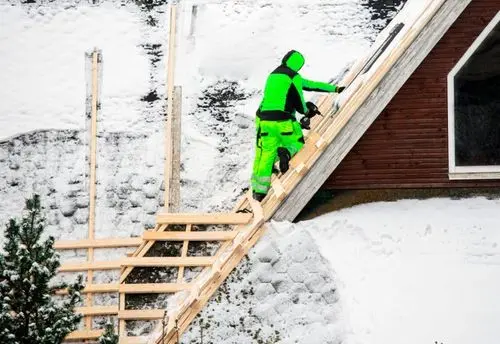
- Do NOT climb on the roof. Wet, hail-covered shingles are dangerously slick. Leave the roof assessment to a licensed roofer.
Hour 4–24: Documentation, weather verification, first calls
- Pull NOAA storm records. Visit NOAA Storm Events Database and search your county and date. Print or PDF the record — this becomes your claim’s foundational weather evidence.
- Check for interior damage. Look at every ceiling and upper-level room for new water stains. Check the attic with a flashlight for daylight through the deck or fresh moisture.
- Schedule a free roofer inspection. Call a licensed Minnesota roofer you’ve pre-vetted — not a door-knocker. See our local roofer verification guide.
- Photograph collateral damage. AC fins dented by hail are strong supporting evidence. Damaged gutters, garage doors, and car hoods all help document storm severity.
- Do NOT file the insurance claim yet. Wait for the roofer inspection so you know if damage is claim-worthy.
Hour 24–48: Inspection, assessment, claim decision
- Meet the roofer on-site. A proper inspection takes 45–90 minutes. The roofer does test squares per HAAG method, documents impacts with chalk circles and photos, and produces a written report.
- Review the report. If damage is functional (8+ impacts per test square or mat penetration), file the claim. If damage is cosmetic only, document and monitor — don’t file a doomed claim.
- File the claim with your insurer. YOU file (not the roofer — that would require public adjuster licensing under MN Statute 72B). Use the roofer’s documentation as supporting evidence.
- Schedule the adjuster meeting. Your insurer will assign an adjuster within 7–14 days. Coordinate a date when your roofer can also be present to walk the roof together.
What to photograph — the complete storm documentation list
| Subject | Why it matters | Priority |
|---|---|---|
| Hailstones with coin/ruler for scale | Proves stone size on your property | Critical |
| Hail on the ground, in multiple yard zones | Shows storm coverage, not isolated | Critical |
| Gutter contents (granules) | Evidence of roof impact severity | High |
| AC condenser fins | Metal dents = hail confirmation | High |
| Window screens (tears) | Supports hail trajectory claim | Medium |
| Siding dents or splits | Insurance may cover as part of claim | High |
| Landscaping damage (leaves, branches) | Corroborates storm intensity | Low |
| Ceiling stains (new) | Critical for interior damage claims | Critical if present |
| Any garage door or car damage | Supporting evidence of stone size | Medium |
Door-knocker handling — what to say, what not to sign
Within hours of a Twin Cities hailstorm, door-knocking roofers appear. Most are selling, not inspecting. Here’s the exact script to use at the door:
- “Thanks for stopping by. I’m already in touch with a local roofer I’ve pre-vetted. I’m not signing anything today. What’s your company name and license number?”
- Note down the name and BC/RR license number on a sticky note.
- Later, verify that license at doli.state.mn.us.
- If they pressure, push, or linger: close the door.
What NOT to do in the first 48 hours
- Do NOT climb on the wet/icy roof yourself
- Do NOT sign any contract with a door-knocker — MN’s 3-day cooling-off period applies but preventing the situation is better
- Do NOT accept an offer to “cover” or “waive” your deductible — this is a felony under MN 325E.66
- Do NOT file a claim before a qualified inspection confirms functional damage
- Do NOT allow a door-knocker onto your roof
- Do NOT throw away damaged items (AC fins, screens, etc.) before the adjuster inspects
- Do NOT make permanent repairs before the adjuster visits — temporary-only (tarp)
Recent Articles
Explore The Blog