



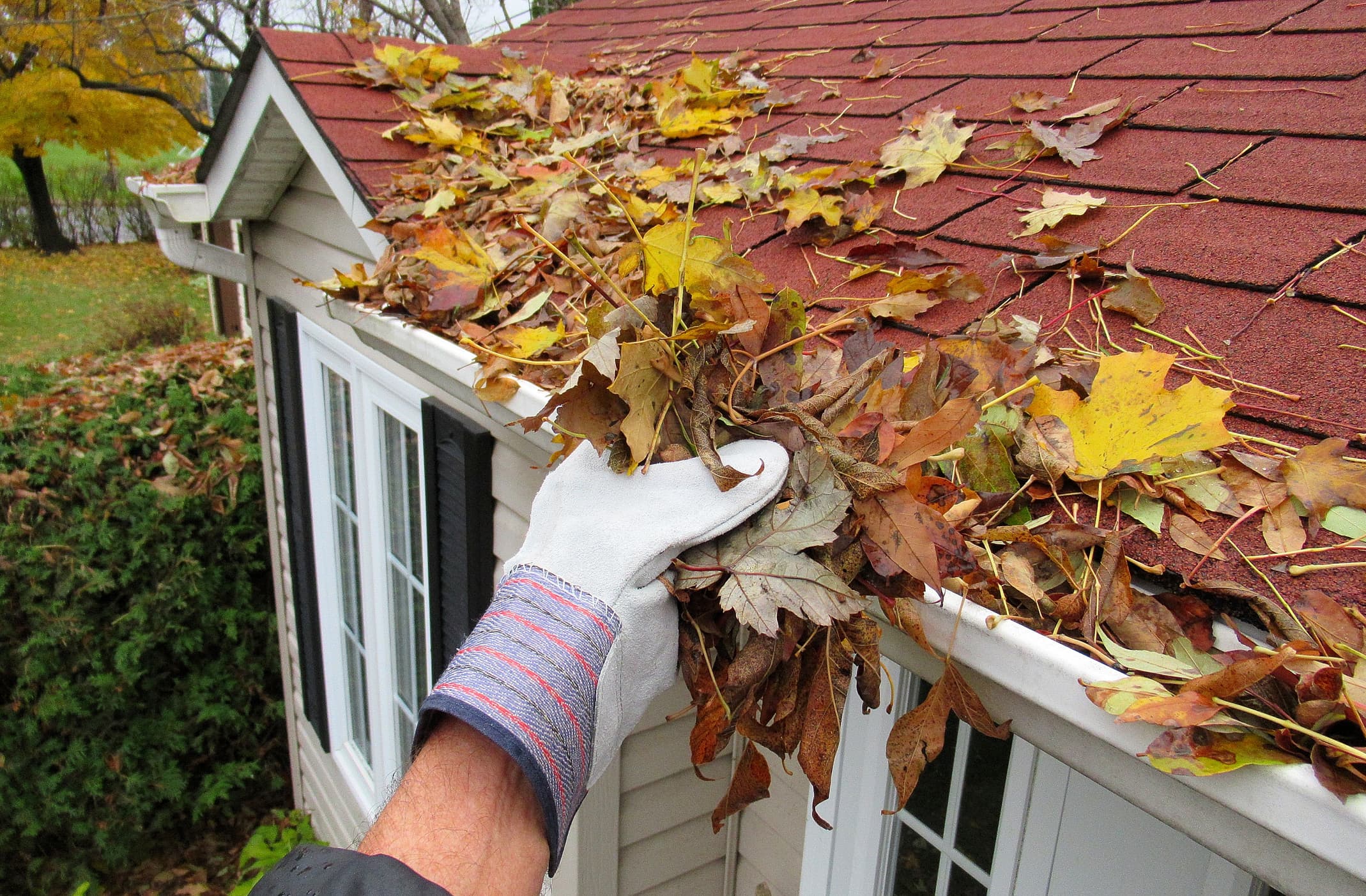
6 Roof Maintenance Tips So You Don’t Have to Hire a Roofer
 16min Read
 Posted 4.18.2026
Most roof replacements aren’t caused by one catastrophic event. They’re caused by six small problems that nobody fixed. This post covers each one — what it looks like, why it matters, and exactly what to do about it before it turns into a five-figure conversation with a contractor.
The honest truth: A well-maintained roof can last 5–10 years longer than a neglected one. These tips won’t take your whole Saturday. Most of them take 20 minutes and a ladder.
Roofers don’t love telling you this, but a lot of what we fix could have been handled by the homeowner with a tube of roofing cement and a leaf blower. The jobs that turn into full replacements almost always have a history — a flapping shingle nobody noticed, gutters that hadn’t been touched in three years, a branch rubbing the same spot through two winters.
Here are the six things worth staying on top of.
Tip 1: Fix Flapping Shingles Before They Become a Bigger Problem
Every asphalt shingle has a self-sealing strip — a thin line of adhesive factory-applied to the underside that bonds to the shingle below it in warm weather. When that seal breaks, either from age, impact, or a bad install, the shingle tab lifts. You’ve got a flapping shingle.
On a calm day this looks harmless. In a 50 mph wind — which is not unusual in a spring storm — that tab becomes a lever. It catches air, flexes repeatedly, and can tear off entirely, taking the underlying layers with it. What started as a $15 repair (a dab of roofing cement and a couple of nails) becomes a slope replacement or worse.
The three-tab shingle design is especially prone to this. The cutouts between tabs concentrate stress right at the adhesive strip, and once one seal goes the neighboring tabs tend to follow. Architectural shingles are better, but not immune — particularly on low-slope sections or north-facing roofs that stay cold and don’t let the adhesive re-seal after winter.
What to do
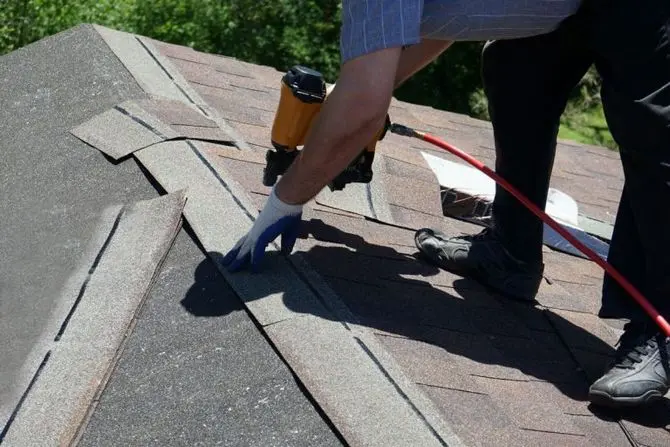
Walk around your home after any wind event above 40 mph and look for shingles that are visibly lifted, curled at the corners, or missing. From the ground with a pair of binoculars is fine — you don’t need to get on the roof for the inspection. If you see a lifted tab, get up there, press it flat, apply roofing cement underneath, and nail it. If multiple tabs in the same area are loose, that section may need replacement rather than repair. Either way, catching it early is always cheaper.
Quick cost comparison
Roofing cement + 20 minutes: under $20. Replacing a single slope after wind damage: $800–$2,500. Replacing a full roof because one slope went and water got into the decking: $10,000+. The math is not subtle.
Tip 2: Keep Debris Out of Your Roof Valleys
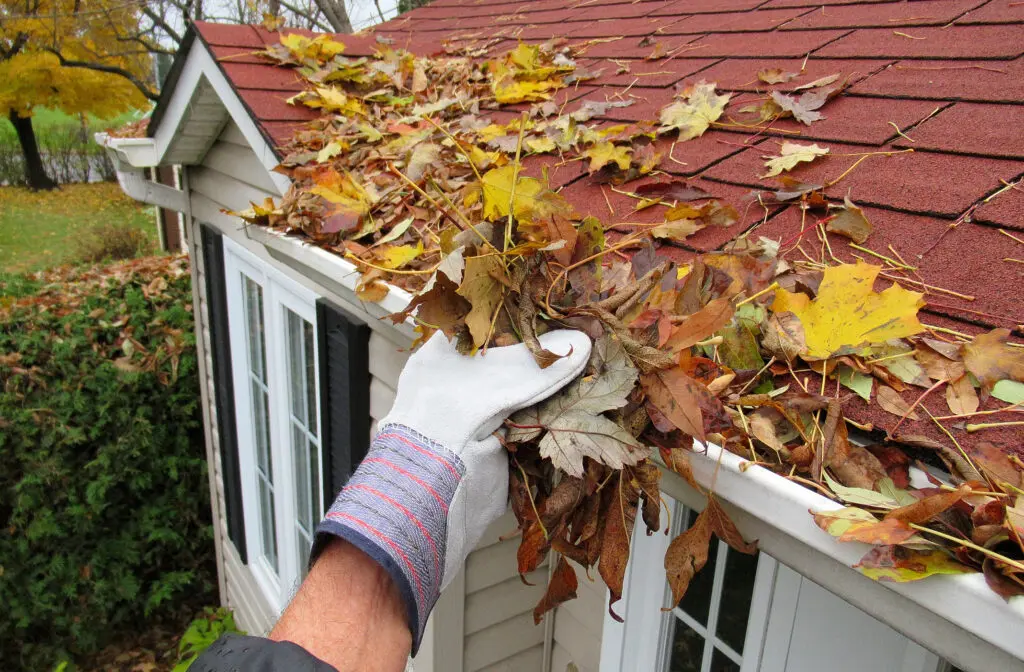
The valleys of your roof — the V-shaped channels where two roof planes meet — are doing the heaviest water-moving work on the entire structure. Every raindrop that lands anywhere on either of those planes eventually drains through the valley. They’re the highway, and like any highway, they need to stay clear.
Leaves, sticks, pine needles, and seed pods love valleys. They collect there, mat together, hold moisture, and start to decompose. That decomposing organic matter does two things you don’t want: it stays wet, which keeps the shingles and underlayment beneath it wet far longer than they’re designed to be, and it eventually creates a dam that causes water to back up under the shingles instead of running off cleanly.
This is one of the sneakier causes of roof leaks. The entry point isn’t a damaged shingle or a failed flashing — it’s just standing water that found a seam. By the time you notice a stain on your ceiling, the underlayment underneath that debris pile has been soaking for months.
What to do
Twice a year — fall after the leaves drop, and spring after winter debris accumulates — clear your valleys. A leaf blower works well for dry debris. For matted wet leaves, a soft-bristle brush and some patience. Never use a pressure washer on your roof and never scrape aggressively — you’re trying to preserve granules, not strip them. If you’ve got significant tree coverage over your roof, do it three or four times a year. The 20 minutes it takes is nothing compared to a valley replacement.
What to look for
If your valleys are consistently holding debris, also check whether your gutters at the base of those valleys are clear. A clogged gutter at the valley terminus creates backpressure that makes the debris problem significantly worse.
Tip 3: Keep Your Gutters Actually Functional
Gutters have one job: catch water coming off the roof and route it away from your foundation. When they’re clogged, that job doesn’t happen — but the water still has to go somewhere. It either backs up under your drip edge and into your fascia, or it pours over the front of the gutter and pools against your foundation. Neither outcome is good, and both are entirely preventable.
Here’s the thing about gutter covers: they help, but they’re not a maintenance-free solution. Most gutter guard systems have small holes or slots that can clog with fine debris — shingle granules, seed pods, pine needles, cottonwood fluff. The guard keeps out the big stuff but the small stuff still accumulates, and eventually water sheeting over a clogged guard just waterfalls over the front instead of going in.
The other gutter failure worth knowing about is the downspout extension. The whole point of routing water through the gutter is to deposit it away from your foundation — ideally four to six feet out from the house. A downspout that terminates right at the foundation, or worse, one that’s disconnected and draining into the soil next to the footing, is channeling roof runoff directly into your basement risk zone.
What to do
Clean gutters at minimum twice a year: once in late spring after cottonwood and seed season, once in late fall after leaf drop. If you have pine trees, add a third cleaning. While you’re up there, check that every downspout is flowing freely and that the extensions are directing water well away from the house. Squeeze the gutter slightly as you move along it — soft spots indicate the gutter has been holding standing water long enough to corrode. Run a hose through each downspout to confirm it’s clear.
The domino effect
Backed-up gutters in winter freeze into ice dams. Ice dams force meltwater under your shingles. That water shows up as a ceiling stain in February. The gutter you didn’t clean in November is now a $3,000 problem. These things connect.
Related: Brown stain on your ceiling? Here’s what’s actually causing it.
Tip 4: Get Large Debris Off the Roof Surface
A fallen branch sitting on your roof is doing damage in at least two ways simultaneously, and most homeowners only think about the obvious one.
The obvious one: impact. A branch that fell hard enough to leave a mark may have cracked shingles, dented metal flashing, or dislodged granules from a patch of shingles large enough to accelerate UV degradation in that area. Worth checking after any wind event that brought down significant debris.
The less obvious one: accumulation. A branch sitting in a low spot on your roof becomes a collection point. Leaves and debris pile up against it. That pile holds moisture. That moisture sits against your shingles through repeated wet-dry and freeze-thaw cycles. Eventually, water works its way under the shingles at the edge of the debris pile. You’ve got a leak at a spot that has no obvious entry point — no cracked shingle, no failed flashing, just a spot where debris sat too long.
Homes with significant tree canopy over the roof deal with this constantly. The debris accumulation never fully stops; it’s a maintenance rhythm rather than a once-and-done task.
What to do
After any significant wind event, walk the perimeter and look. If you can safely reach debris from the edge of the roof or with an extended-reach tool from a ladder, remove it. For debris in the middle of the roof, use a soft roof rake — the kind sold for snow removal works fine for light debris — and rake toward the edge rather than walking across the roof unnecessarily. The fewer footsteps on an asphalt roof, the better, particularly in hot weather when shingles are soft.
Tip 5: Take Algae, Moss, and Lichen Seriously
This one surprises homeowners. The dark streaking or greenish patches on an older roof look cosmetic. They’re not.
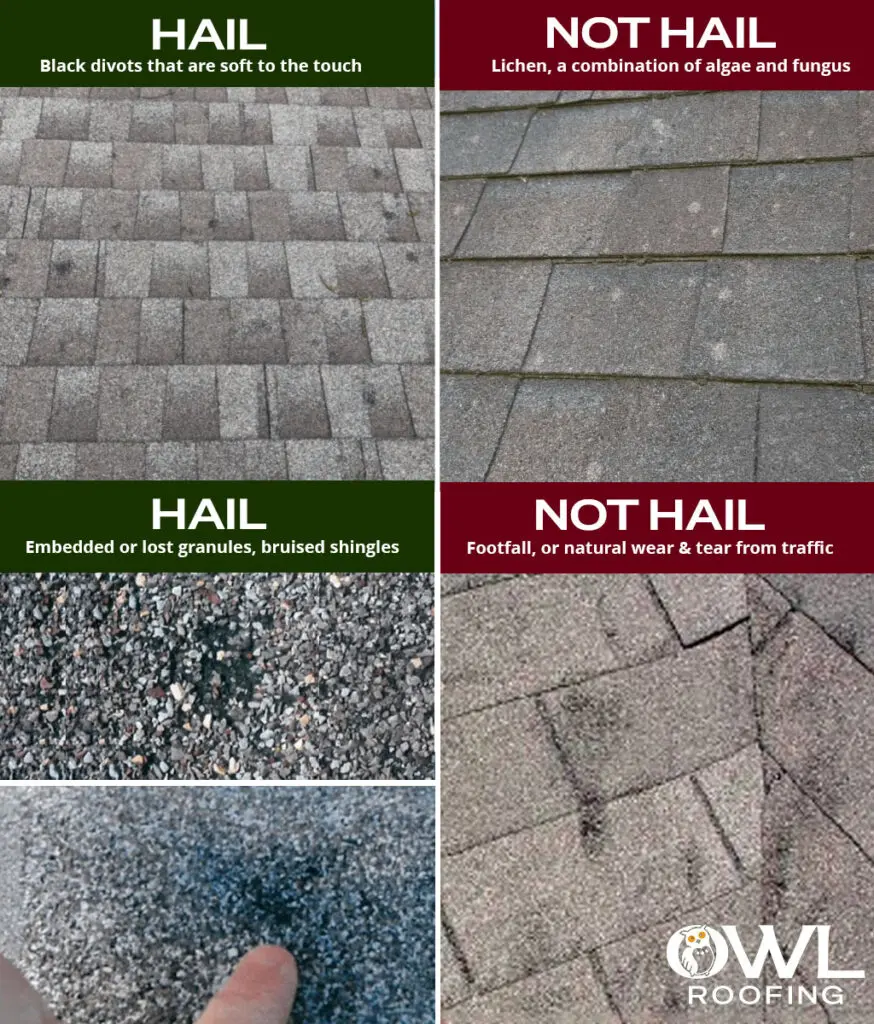
What you’re seeing when you see black staining is usually Gloeocapsa magma — a cyanobacteria that spreads via airborne spores and feeds on the limestone filler in asphalt shingles. It’s accelerating the breakdown of your shingles from the outside in. Moss is worse — it holds moisture against the shingle surface and its root structures physically lift shingles as it grows, creating pathways for water infiltration. Lichen is the most aggressive of the three. It bonds to the shingle granules with root-like structures called rhizines that actually embed into the asphalt. When lichen is removed, it takes granules with it, leaving pockmarks and exposed asphalt.
Left untreated, significant lichen growth can cut years off a roof’s lifespan. The granules it removes are not decorative — they’re UV protection. Once they’re gone, the asphalt beneath degrades rapidly.
What to do
For early-stage algae streaking, a 50/50 mix of water and bleach applied with a garden sprayer (protect your landscaping first) will kill the organism. Let it dwell and rinse gently — never pressure wash. For moss, the same treatment works, followed by a zinc or copper strip installed near the ridge that releases trace amounts of metal ions every time it rains, creating an inhospitable environment for regrowth. Lichen is harder — it requires a professional treatment and some patience, as dead lichen doesn’t always fall off on its own.
Prevention is the better play. If you’re replacing your roof and algae or lichen growth has been a recurring problem, specify shingles with copper-infused granules. GAF’s HDZ shingles, for example, embed copper granules throughout the shingle surface — enough to carry a 25-year warranty against algae and staining. That’s not a marketing claim; copper is genuinely toxic to these organisms and the protection is real.
Know your organisms
| What you see | What it is | Damage level | Treatment |
|---|---|---|---|
| Black streaks or staining | Algae (Gloeocapsa magma) | Moderate — eats limestone filler | Bleach solution, copper strips |
| Green or brown fuzzy patches | Moss | High — lifts shingles, holds moisture | Bleach solution, zinc/copper strips |
| Crusty gray-green growth | Lichen | Severe — embeds into asphalt, removes granules | Professional treatment required |
Tip 6: Keep Tree Branches Away From the Roofline
Trees and roofs have a complicated relationship. Trees provide shade that keeps a roof cooler (genuinely extending shingle life in hot climates), but branches in contact with or near the roof surface cause a specific type of damage called tree rub that’s slow, constant, and destructive.
When a branch rests against or repeatedly contacts shingles in wind, it acts like sandpaper. Every time the branch moves, it scours the granule surface off the shingles beneath it. Once the granules are gone in that area, the exposed asphalt cracks and degrades rapidly. Depending on the size and weight of the branch, it may also physically displace shingles or damage flashing at the eave or rake edge.
Beyond tree rub, overhanging branches create two additional problems: they deposit debris continuously onto the roof surface (feeding back into tips 2 and 4), and they provide a highway for squirrels, raccoons, and other animals to access the roof — where they then probe soffit vents, pipe boots, and any other penetration that offers entry to the attic.
What to do
The rule of thumb most roofers use: maintain at least six feet of clearance between any branch and the roof surface. That sounds like a lot, but branches grow — a branch that clears the roof by two feet in spring may be resting on it by August. Factor in how much a branch moves in wind, which is often more than you’d expect, and six feet is the right margin.
Hire an arborist for anything that requires significant cutting or anything near power lines. For smaller overhanging branches, a pole saw handles most situations from the ground. The cost of an annual trim is a fraction of what one season of tree rub can do to a section of shingles.
Heavy tree cover: double down on everything
If your home sits under a significant tree canopy, every tip on this list matters more and needs to happen more frequently. More debris, more organic growth, more branch contact risk, more critter activity. The maintenance rhythm isn’t optional — it’s what keeps a roof under tree cover alive as long as one in the open.
The Full Maintenance Checklist at a Glance
| Task | When | Time required | DIY or pro? |
|---|---|---|---|
| Inspect for lifted / flapping shingles | After any wind event 40+ mph | 15 min from ground | DIY |
| Re-seal lifted shingles | As found | 20–30 min per shingle | DIY |
| Clear debris from roof valleys | Spring and fall (more if wooded) | 20–45 min | DIY |
| Clean gutters and check downspouts | Late spring and late fall | 1–2 hours | DIY |
| Remove large debris from roof surface | After storms, as needed | 15–30 min | DIY |
| Treat algae / moss growth | Annually or as spotted | 1–2 hours | DIY |
| Treat lichen growth | As spotted | Varies | Pro |
| Trim overhanging branches | Annually, maintain 6 ft clearance | Varies by tree | Arborist |
| Professional roof inspection | Every 3–5 years, after major storms | 1–2 hours on site | Pro |
How Long Should a Roof Actually Last?
The answer depends heavily on what you do with it. An architectural asphalt shingle roof — the most common type installed today — is rated for 25–30 years by most manufacturers. In practice, maintained roofs regularly hit that number or exceed it. Neglected roofs in the same climate, with the same materials, can fail in 15.
The variables that matter most, in rough order of impact:
- Attic ventilation — a poorly ventilated attic traps heat in summer, which cooks shingles from underneath and accelerates granule loss. It also traps moisture in winter, which causes the decking to deteriorate. This is the single biggest factor most homeowners don’t know about.
- Installation quality — a correctly installed roof with proper underlayment, correctly nailed shingles, and properly flashed penetrations will significantly outlast a sloppy install of the same materials.
- Maintenance — everything on this list. The difference between a 20-year roof and a 30-year roof is often just consistent attention.
- Climate and exposure — south-facing slopes take more UV. High-wind areas cycle through more flex stress. Heavy tree coverage creates moisture and debris challenges. None of these are dealbreakers, but they all affect pace of wear.
- Material quality — matters, but less than most people think. A premium shingle poorly installed and never maintained will underperform a mid-grade shingle on a well-ventilated roof that gets regular attention.
“The homeowners who never call us for emergency repairs are the ones who walk their roof perimeter twice a year and handle small things immediately. That’s the whole secret.”
Frequently Asked Questions
How often should I inspect my own roof?
Twice a year as a baseline — spring and fall. Add an inspection after any storm with winds above 40 mph or significant hail. Most of this can be done from the ground with binoculars. You don’t need to get on the roof for a visual check.
When should I hire a professional instead of DIYing?
Any repair that involves replacing multiple shingles, addressing flashing, or anything near a penetration (chimney, skylight, vent stack) is worth having a professional handle. These require techniques that, done incorrectly, create worse leaks than the original problem. Cleaning, clearing debris, re-sealing a single lifted shingle — those are homeowner territory.
Is it safe to walk on my roof?
Asphalt shingles can be walked on, but with caveats. Don’t walk on them in hot weather — shingles soften and your footsteps will visibly compress the granules. Don’t walk on wet shingles. Wear rubber-soled shoes. Walk on the lower third of each shingle (over the nailing zone) rather than the middle. And honestly — if you’re not comfortable with heights or don’t have roof experience, hire someone. A professional inspection costs less than an ER visit.
What’s the best time of year for roof maintenance?
Late spring and early fall hit the sweet spot. Late spring lets you address anything winter left behind while the weather is mild and shingles are pliable. Early fall lets you button everything up before winter loads arrive. Avoid mid-summer heat for any work that involves walking the roof.
Does homeowners insurance cover maintenance issues?
No. Insurance covers sudden, accidental damage — a hail event, a windstorm, a tree falling. It doesn’t cover deterioration from deferred maintenance, algae damage, or a roof that simply aged out. This is why maintenance matters: the things insurance won’t pay for are exactly the things you can prevent.
My roof is 15 years old. Is it worth maintaining or should I just replace it?
Almost certainly worth maintaining, assuming the decking is sound and there’s no widespread granule loss. A 15-year-old architectural shingle roof with good bones has 10–15 years left in it with proper care. The calculus changes if you’re seeing significant shingle cracking, widespread blistering, or soft spots in the deck — those are signs the roof is past the point where maintenance extends its life meaningfully.
The Bottom Line
None of this is complicated. Clear your gutters. Pull the sticks off the roof. Fix the shingle that’s been flapping since last March. Get the trees trimmed back. Deal with the algae before it turns into lichen. These aren’t big weekend projects — most of them take less time than mowing the lawn.
The roof replacement you’re trying to avoid costs $10,000–$20,000 depending on your home size and material choice. The maintenance that extends your current roof another decade costs a few hours a year and maybe $50 in supplies. That’s the math. Do with it what you will.
And if you do need a roofer — whether it’s because storm damage caught up with you, or the roof has simply reached the end of its life, or you want a professional set of eyes to tell you where things stand — we’re here.
Serving homeowners nationwide — Twin Cities based
Not sure what shape your roof is actually in?
We’ll come take a look. No charge.
Request a Free Roof Inspection →
Owl Roofing — We give a hoot.
Owl Roofing is a residential roofing company specializing in storm damage assessment and repair, based in the Twin Cities metro area.

Recent Articles
Explore The Blog