


Roof Repair vs Roof Replacement in Minnesota: How to Decide (2026)
 13min Read
 Posted 3.03.2026
Should you repair the roof or replace it? It’s the most common question Minnesota homeowners ask us — and the answer depends on five specific variables: the age of the roof, the scope of the damage, what your insurance policy actually covers, Minnesota’s 25% rule, and how long you plan to stay in the home. This guide walks through the exact decision framework our inspectors use so you can make the call with real numbers instead of guessing. By the end you’ll know which option is cheaper over 10 years, which carries more risk, and when “just fixing a small spot” is the most expensive choice you can make.
The 5-factor decision framework
| Factor | Lean toward repair | Lean toward replacement |
|---|---|---|
| Roof age | Under 15 yrs | 15+ yrs, or past 75% of warranty |
| Damage scope | One slope, <25%, localized | Multiple slopes, >25%, widespread |
| Shingle availability | Same product still made, close color match | Discontinued, fading is visible |
| Insurance / claim | No claim, out-of-pocket | Approved hail/wind claim |
| Plan to stay | Selling in under 3 yrs | Staying 5+ yrs |
If 4 of 5 factors point the same direction, the decision is clear. If it’s split 3-2, you’re in the judgment zone — and that’s where a HAAG-certified or manufacturer-certified inspector pays for themselves.
Factor 1 — How old is the roof?
Architectural asphalt shingles in Minnesota realistically last 20–25 years (not the 30-year or “lifetime” number in the warranty). 3-tab shingles last 12–18 years. Metal roofs last 40–50. Cedar lasts 20–30. Once a roof passes 75% of its expected life, every repair is a bandage on a system that will need total replacement soon anyway.
| Roof age | Default call (absent claim) |
|---|---|
| 0 – 7 years | Repair — young roof, localized fix |
| 8 – 14 years | Repair if minor, replace if damage is widespread |
| 15 – 19 years | Evaluate — replacement often makes sense |
| 20+ years | Replacement — further repair = throwing good money after bad |
Factor 2 — How much of the roof is damaged?
Minnesota Building Code R908.3 (the 25% rule) says if more than 25% of any roof section is damaged in a 12-month period, you cannot repair — you must tear off the affected section and install to current code. Practically, that means a hailstorm that damages 3 out of 4 slopes almost always triggers a full replacement. A wind event that rips shingles off one valley might still qualify as a repair. Read the full breakdown in our 25% rule explainer.
Factor 3 — Can we even match the shingles?
This is the hidden gotcha. Shingle colors are discontinued every 3–5 years. Even when the line stays the same, shingles on the roof have faded from UV exposure for 5–15 years. A “matching” repair often shows as a bright patch that’s visible from the street. Insurance carriers with a matching clause will pay to replace adjacent slopes to avoid this — but only if your contractor documents the mismatch in the scope.
Factor 4 — Is an insurance claim involved?
If there’s an approved hail or wind claim, the economics almost always favor replacement. Reason: you pay the wind/hail deductible (typically 1%–5% of dwelling, $2K–$10K) and the insurance company covers the rest. A $2,500 deductible on a $27,000 scope is 9% of the total. Out-of-pocket repair on the same roof ages you 5 years and still doesn’t fix the underlying issue. See our walkthrough of how to file a roof insurance claim in Minnesota.
Factor 5 — How long are you staying?
If you’re selling in under 3 years, a repair may be enough — but disclose any known damage to buyers, and expect the home inspector to flag it. If you’re staying 5+ years, replacement usually wins on total cost when the roof is 15+ years old. Real estate data shows new roofs recover 60–70% of their cost at resale and resolve one of the most common inspection-driven re-negotiations.
10-year cost comparison — repair vs replace at year 15
For a typical 2,400 sq. ft. MN home with an architectural asphalt roof installed 15 years ago, here’s the 10-year lookback (out-of-pocket scenario, no claim):
| Year | Repair path (patch + patch + replace) | Replace path (full replacement) |
|---|---|---|
| Today (Yr 15) | $1,500 repair | $24,000 full replacement |
| Yr 17 | $2,000 another repair | — |
| Yr 20 | $3,000 emergency leak fix | — |
| Yr 22 | $26,000 full replacement anyway | — (still 3 yrs in) |
| 10-yr total | ~$32,500 | ~$24,000 |
The repair path is more expensive in most late-stage MN roofs because you stack deductibles, labor trips, and then still pay for a full replacement. The only scenario where repair wins is when the roof is genuinely young (under 12 years) and the damage is truly localized.
When repair is the right answer
- Missing or lifted shingles from a single wind event, under 10 sq ft, on a roof under 12 years old
- A leaking pipe boot (almost always a $400–$700 repair regardless of roof age)
- Chimney flashing failure with no hail damage
- A single valley that failed due to improper installation — usually covered under workmanship warranty if within 5–10 yrs of install
- A small hail-hit area that doesn’t trigger the 25% rule and doesn’t involve an insurance claim
When replacement is the right answer
- Roof is 15+ years old with any systemic issue (granule loss, curling, multiple soft spots)
- Hail or wind damage on 2+ slopes
- Damage triggers MN’s 25% rule on any slope
- Shingle color is discontinued or faded beyond match
- Approved insurance claim with RCV coverage
- Selling in 5+ years and want to recover resale value
- Planning solar within 10 years (install the new roof first)
- Recurring leaks in different parts of the roof
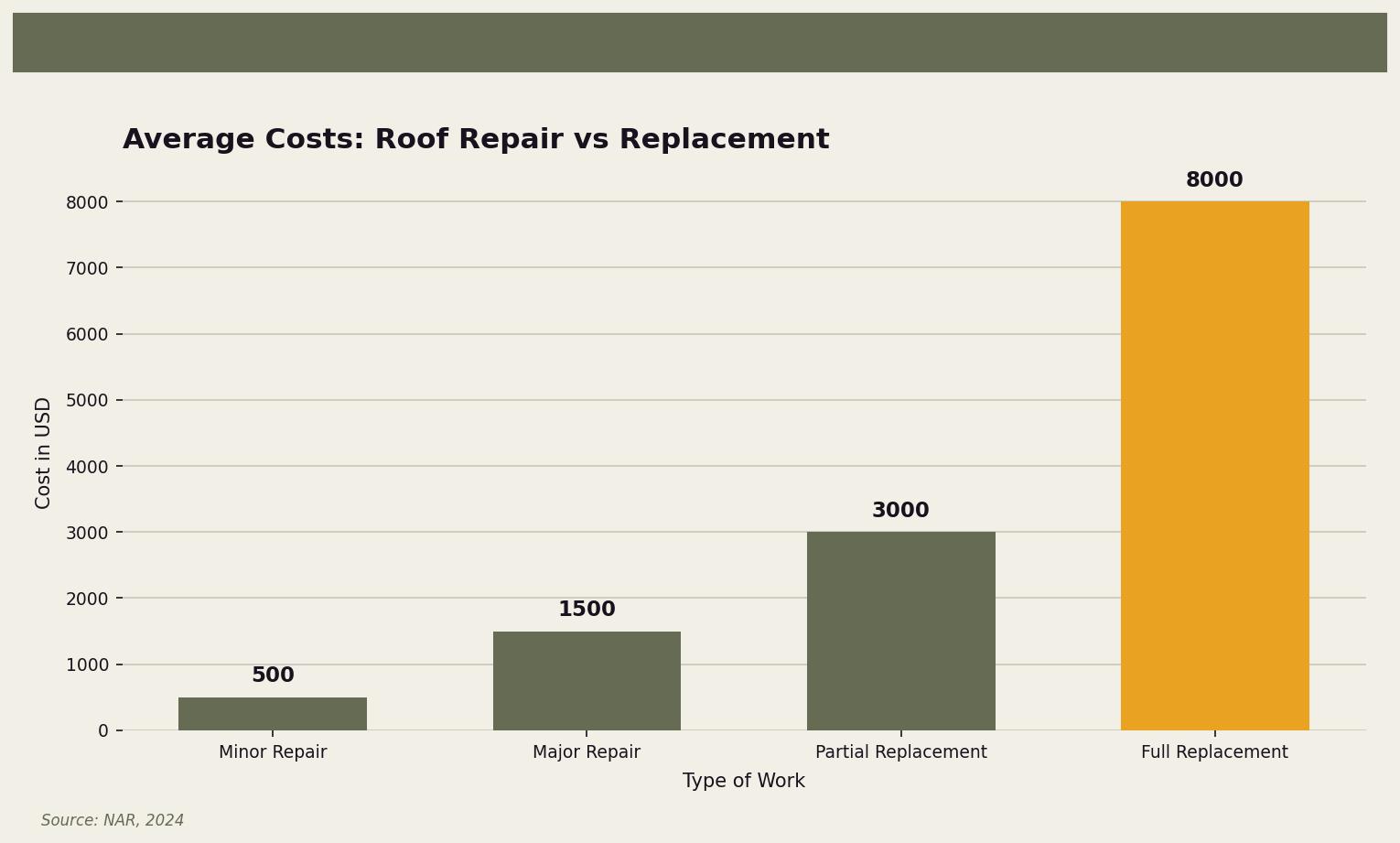
What repairs actually cost in the Twin Cities (2026)
| Repair | Typical MN cost (2026) |
|---|---|
| Pipe boot replacement (1) | $300 – $700 |
| Missing shingle replacement (5–15 sq ft) | $400 – $900 |
| Valley metal replacement (1 valley) | $900 – $1,800 |
| Chimney flashing replace + seal | $700 – $1,500 |
| Small leak diagnosis + repair | $500 – $1,200 |
| Ridge cap replacement (one ridge) | $600 – $1,400 |
| Step flashing replacement (one side) | $800 – $1,700 |
| Storm damage patch (hail hits, <25%) | $1,500 – $4,500 |
| Full replacement (2,400 sq ft arch. asphalt) | $19,000 – $29,000 |
The “partial replacement” option most homeowners don’t know about
When only one slope is damaged and it’s visually separated from the rest of the roof (different plane, different facing direction), some MN contractors can do a slope replacement — tearing off and replacing just that slope while leaving others in place. This is common on garages, additions, or complex roofs with multiple planes. Cost is proportional to the slope size plus a fixed setup cost. Insurance carriers sometimes push this option to reduce claim payout, but under MN’s 25% rule and most matching clauses, it’s only appropriate when the slope is truly independent.
The signs that say “don’t repair, replace now”
- Granules piling up in gutters after every rain
- Shingles curling at the edges on more than one slope
- Sagging ridge line (structural issue)
- Daylight visible from the attic along the ridge or valleys
- Active leak after you already paid for a repair in the past 2 years
- Streaking or algae on more than half the roof
- Interior ceiling staining that keeps coming back
- Roof is 18+ years old regardless of appearance
Any 3 of these, especially combined with age 15+, is a replacement signal. See our full checklist in 12 signs you need a new roof in Minnesota.
How a contractor should present the repair-vs-replace decision
A qualified Minnesota roofer will:
- Inspect the whole roof (not just the damaged area) and document with photos
- Record roof age from permit records or manufacturer codes on back of shingles
- Quote both a repair AND a replacement where both are feasible
- Explain the 25% rule and whether it applies
- Note shingle match availability and fade status
- Disclose which option the contractor recommends and why
- Put the workmanship warranty in writing for whichever option is chosen