Roof Storm Damage: 5 Signs Every Homeowner Should Look For
 14min Read
 Posted 7.13.2026
A roof storm damage inspection should look for five specific signs after any severe weather event: missing or torn shingles, granules accumulating in gutters and downspouts, dented metal flashing and vents, fallen tree limbs or impact damage on the roof surface, and water stains or active leaks on interior ceilings. Owl Roofing is a GAF and Owens Corning certified roofing contractor serving Lino Lakes and surrounding Twin Cities communities, and the team specializes in identifying storm damage during free post-storm inspections. This guide walks through the five visible storm damage signs every Lino Lakes homeowner should check after wind, hail, or severe weather events, plus what the damage means for insurance claims and roof service life.
- Five visible signs: Specific storm damage indicators homeowners can identify safely.
- Damage cause identification: Which signs point to wind, hail, or other storm impact.
- Next steps: What to do when storm damage is found on a Lino Lakes home.
Roof Storm Damage Overview
Roof storm damage in Lino Lakes results from the severe weather events that affect the Twin Cities multiple times each year. Owl Roofing handles storm damage inspections, insurance claim coordination, and full replacement installations during every storm season.
How Common Is Roof Storm Damage in Lino Lakes?
Roof storm damage is extremely common in Lino Lakes because the Twin Cities sits in one of the most active severe weather corridors in the United States. NOAA’s Storm Events Database has documented 15,223 hailstorm events, 13,141 damaging-wind events, and 2,360 tornadoes across Minnesota between 1950 and 2025, making the state one of the most storm-affected in the country. Lino Lakes and surrounding Twin Cities communities face hail-bearing thunderstorms multiple times each summer, severe wind events during spring and fall, and significant snow and ice loads during winter. Owl Roofing responds to storm damage calls across Lino Lakes every season, with peak call volume during May through September when severe thunderstorm activity is highest.
- Minnesota hailstorms: 15,223 events recorded since 1950.
- Damaging wind events: 13,141 events recorded since 1950.
- Tornadoes: 2,360 confirmed tornadoes since 1950.
- Peak season: May through September for severe weather activity.
What Types of Storms Damage Roofs in Minnesota?
The types of storms that damage roofs in Minnesota include hail-bearing thunderstorms, high-wind events from severe thunderstorms and derechos, tornadoes, ice storms that produce ice dam damage, heavy snow loads on flat or low-slope sections, and fallen tree branches from severe winds. Owl Roofing identifies the specific storm cause during every Lino Lakes damage inspection because the damage pattern, the insurance claim approach, and the repair scope all differ based on the storm type. Hail produces bruising and granule loss patterns, wind produces missing or torn shingles and lifted edges, ice produces flashing damage and gutter strain, and falling debris produces localized impact damage. The damage pattern usually identifies the storm cause clearly when documented by an experienced inspector.
- Hail damage: Bruising and granule loss patterns.
- Wind damage: Missing shingles, torn edges, and lifted sections.
- Ice damage: Flashing failure and gutter strain.
- Impact damage: Localized damage from fallen branches and debris.
5 Signs of Roof Storm Damage Every Homeowner Should Check
Five visible signs confirm roof storm damage on a Lino Lakes home. Owl Roofing inspectors document each sign with photos that support insurance claim filings.
1. Missing or Torn Shingles
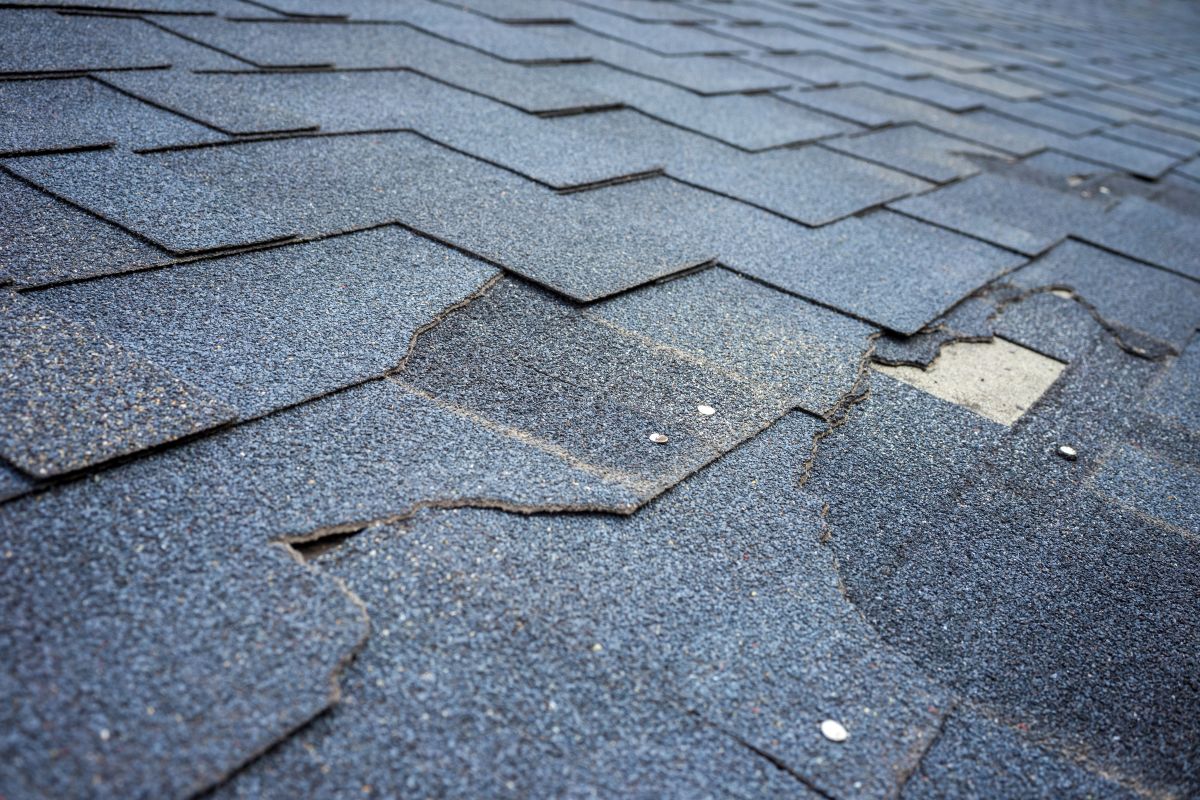
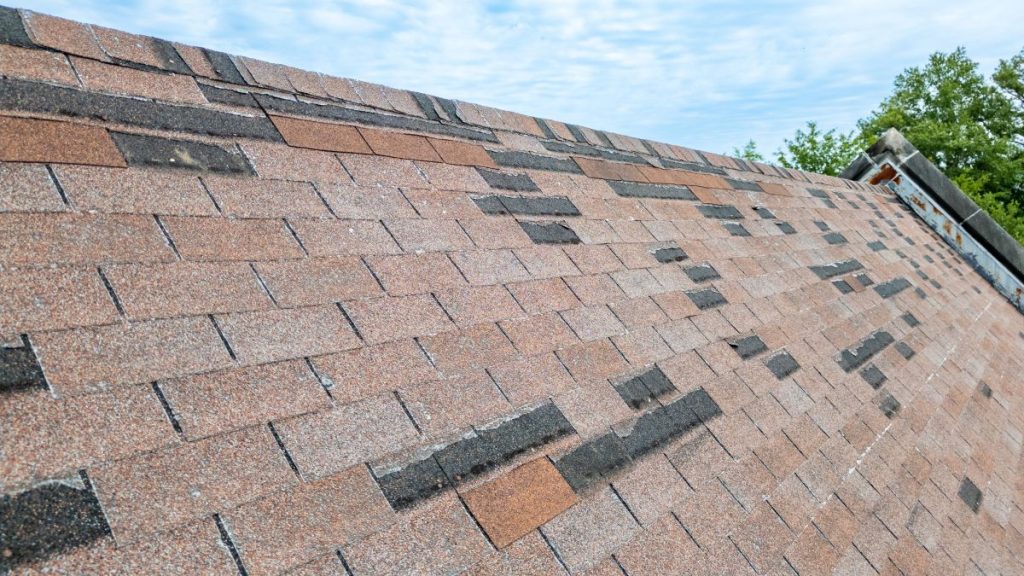
Missing or torn shingles after a storm indicate wind damage strong enough to break the seal between shingle layers and lift the shingles off the roof. Owl Roofing finds missing shingles after every significant wind event in Lino Lakes, with damage typically concentrated on the slope facing the storm direction. Wind speeds above 50 mph commonly produce visible shingle damage, while gusts above 75 mph often produce widespread shingle loss across multiple slopes. Homeowners can identify missing shingles from the ground by looking for dark patches on the roof surface where the underlayment shows through, or by finding shingles in the yard, driveway, or surrounding landscape after the storm. Torn shingles still attached to the roof show visible tears, lifted corners, or creases from wind stress.
- Visual signature: Dark patches showing underlayment.
- Ground-level evidence: Shingles found in yard or driveway.
- Wind speed threshold: 50 mph and above commonly produces damage.
- Storm-facing slope: Damage typically concentrated on one side.
2. Granules Accumulating in Gutters and Downspouts
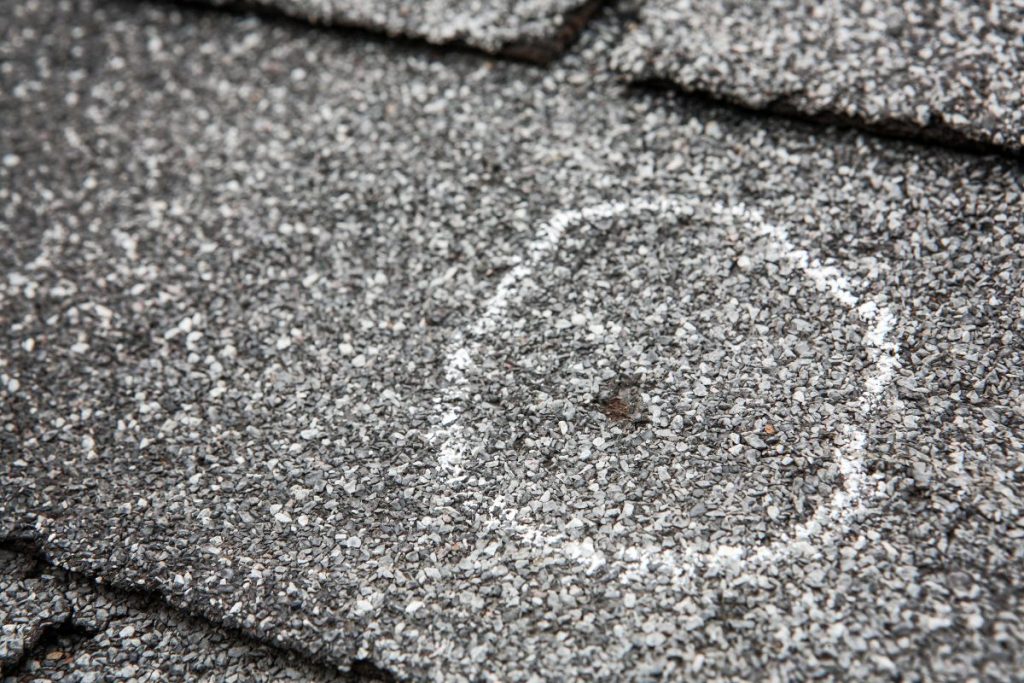
Granules accumulating in gutters and downspouts indicate hail damage that has knocked the protective mineral layer off the shingles at a much higher rate than normal weathering. Owl Roofing identifies granule accumulation as one of the first and most reliable signs of hail damage during Lino Lakes inspections. The granules look like coarse dark sand and collect at downspout outlets, in gutter corners, and on the ground beneath downspout extensions. A small amount of granule loss is normal as shingles age, but a sudden accumulation after a storm event confirms hail impact. Homeowners can check this sign safely from the ground by looking at the bottom of every downspout for granule piles or by running a hand along the inside of accessible gutters within 48 hours of the storm.
- Storm-related accumulation: Sudden spike confirms hail impact.
- Easy ground check: Visible at every downspout outlet.
- Normal aging contrast: Gradual loss differs from storm spike.
- Inspection trigger: Significant accumulation warrants professional review.
3. Dented Metal Flashing, Vents, and Gutters
Dented metal flashing, vents, and gutters provide the strongest physical evidence of hail and severe wind impact during storm damage inspections. Owl Roofing project leads photograph dented metal surfaces during every Lino Lakes inspection because adjusters use the dents as direct confirmation that hail of damaging size hit the property. Aluminum gutters dent easily and show round depressions from hail impact. Roof vents, plumbing boots, and HVAC components on the roof often show more pronounced dents because the components sit higher than the shingle surface. Visible dents on metal components confirm hail impact occurred and justify a full roof inspection by Owl Roofing across Lino Lakes and surrounding Twin Cities areas. Dents on outdoor AC units and mailboxes provide additional confirmation evidence.
- Gutter dents: Round depressions confirm hail impact.
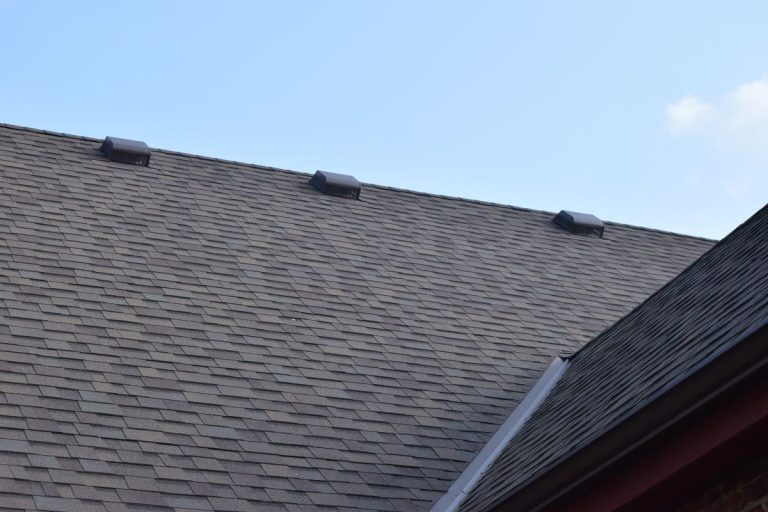
- Vent damage: Pronounced dents on roof penetrations.
- AC unit dents: Ground-level confirmation of hail size.
- Insurance evidence: Adjusters use metal damage as primary confirmation.

4. Fallen Tree Limbs or Impact Damage
Fallen tree limbs or impact damage on the roof produces visible holes, broken shingles, cracked decking, and structural compromise that requires immediate emergency response. Owl Roofing dispatches emergency response crews to impact damage calls across Lino Lakes with same-day or next-day availability during storm season. Falling branches create damage that ranges from minor shingle breakage to full roof punctures with active interior leaking, depending on branch size and impact angle. Smaller branches typically break shingles and bend flashing, while larger branches can puncture through the deck and into the attic. Homeowners should never attempt to remove fallen branches from a roof because the combination of damaged roof surface and unstable branch weight creates serious fall risk. Owl Roofing handles branch removal as part of emergency response service.
- Impact range: Minor shingle breakage to full roof puncture.
- Branch size effect: Larger branches produce structural damage.
- Emergency response: Same-day availability during storm season.
- No DIY removal: Falling branches and damaged roof create serious fall risk.
5. Water Stains or Active Leaks on Interior Ceilings
Water stains or active leaks on interior ceilings indicate that storm damage has compromised the roof’s waterproof barrier and water is now entering the home. Owl Roofing finds interior water signs during storm damage inspections in Lino Lakes when the exterior damage is significant enough to allow water through the shingle layer, underlayment, and deck. Active leaks during or immediately after a storm confirm roof damage requiring immediate attention. Water stains that appear days or weeks after a storm indicate slower water infiltration that often started during the storm event but only became visible as water worked through ceiling materials. Yellow or brown stains on ceilings, soft spots in drywall, and any sagging ceiling sections all indicate water intrusion that needs prompt investigation.
- Active leaks during storm: Confirm immediate roof damage.
- Delayed water stains: Often start during storm but appear later.
- Yellow or brown discoloration: Standard water damage signature.
- Soft drywall spots: Indicates ongoing water exposure.
What Should You Do When You Find Roof Storm Damage?
What you should do when you find roof storm damage in Lino Lakes is document the damage immediately, contact your insurance carrier within 24 to 48 hours, schedule a professional roof inspection, and avoid permanent repairs until the insurance adjuster has inspected the damage. Owl Roofing coordinates the full storm damage response from initial inspection through final installation.
How Quickly Should You Act After Finding Storm Damage?
You should act within 24 to 48 hours of finding storm damage on a Lino Lakes home to protect the insurance claim and prevent additional damage from accumulating. Owl Roofing emergency response includes inspection availability within 24 to 48 hours of the storm event during peak season, with same-day response available for active leaks and structural damage. Insurance carriers typically require notification within a defined window of the loss event, with delayed notification potentially complicating claim approval. Active leaks and water damage compound quickly, with interior repair costs increasing significantly when leaks continue beyond 48 to 72 hours. The full emergency response cycle from storm event through professional inspection should complete within 72 hours when possible.
- Within 24 to 48 hours: Protects the insurance claim filing window.
- Same-day for active leaks: Emergency response available immediately.
- Notification window: Most carriers require prompt notification.
- Damage compounding: Interior damage costs grow with delay.
What Does a Professional Storm Damage Inspection Include?
A professional storm damage inspection includes safe access to the roof surface using OSHA-required fall protection, detailed photo documentation of all damage areas, a written damage report identifying every storm-related issue, a measurement of the roof for replacement scope, attic inspection for water intrusion and structural damage, and a recommendation for repair or replacement based on damage extent. Owl Roofing project leads complete every inspection element on every Lino Lakes storm response call. The written report supports the insurance claim filing and provides the basis for the adjuster’s scope determination during the formal claim inspection. Inspections are typically scheduled within 24 to 48 hours of the storm event during peak season.
- Safe access: OSHA-required fall protection on every inspection.
- Photo documentation: Detailed evidence of every damage area.
- Written report: Supports insurance claim filings.
- Attic inspection: Identifies hidden water and structural damage.
How Much Does Storm Damage Repair Cost in Lino Lakes?
The cost of storm damage repair in Lino Lakes depends on the damage extent and whether the work is part of a covered insurance claim. Owl Roofing provides itemized estimates for both repair and replacement work so homeowners understand the cost components.
What Does Storm Damage Replacement Cost in Lino Lakes?
Storm damage roof replacement in Lino Lakes costs $14,000 to $25,000 for a typical 2,000 square foot home, with typical Lino Lakes replacements landing around $18,500 for GAF Timberline HDZ architectural shingles installed in 2026. Owl Roofing pricing includes complete tear-off, decking inspection and repair as needed, ice and water shield at every eave, synthetic underlayment, new flashing, GAF or Owens Corning shingles, ridge cap, ventilation upgrades as needed, and full cleanup. When the work is part of a covered insurance claim, the homeowner pays only the policy deductible, typically $1,000 to $2,500 on standard Minnesota policies. Class 4 impact-rated installations run $20,000 to $26,000 and qualify for wind and hail insurance discounts of 5 to 30 percent.
- Typical replacement range: $14,000 to $25,000 in Lino Lakes.
- Average Lino Lakes replacement: Approximately $18,500.
- Insurance deductible only: $1,000 to $2,500 on covered claims.
- Class 4 impact-rated: $20,000 to $26,000 with insurance discounts.
Owl Roofing in Lino Lakes
Owl Roofing handles roof storm damage response across Lino Lakes and surrounding Twin Cities communities. The team is GAF and Owens Corning certified and specializes in insurance claim coordination on every storm response job.
Why Choose Owl Roofing for Storm Damage Response?
Choose Owl Roofing for storm damage response in Lino Lakes because the team provides free post-storm inspections within 24 to 48 hours of the event, attends adjuster inspections to ensure accurate damage scope documentation, installs emergency tarping when needed to protect the home during the claim process, and completes full storm damage replacements with appropriate manufacturer warranty registration. The storm response service is included in every replacement at no additional cost beyond the standard installation.
- 24 to 48 hour response: Free inspections during storm season.
- Adjuster meetings: Owl Roofing attends to ensure accurate scope.
- Emergency tarping: Available when needed for active leaks.
- Insurance coordination: Direct experience with all Minnesota carriers.
Frequently Asked Questions
Can I Inspect My Roof for Storm Damage Myself?
Homeowners can safely inspect their roof for storm damage from the ground using binoculars and from windows on upper floors, but should not climb on the roof surface because storm-damaged shingles are extremely slippery and unstable. Owl Roofing provides free professional inspections across Lino Lakes that identify damage homeowners cannot see from the ground. Professional inspectors use OSHA-required fall protection equipment to safely access the roof surface and document damage thoroughly.
What Wind Speed Damages a Roof in Lino Lakes?
Wind speeds above 50 mph commonly produce visible shingle damage on Lino Lakes roofs, while wind speeds above 75 mph often produce widespread damage across multiple slopes. The exact threshold depends on shingle age, installation quality, and the specific product installed. GAF Timberline HDZ shingles carry a 130 mph wind warranty when installed properly, making the product significantly more wind-resistant than 3-tab shingles with a 60 mph wind warranty.
How Does Storm Damage Affect My Insurance Rates?
Storm damage claims do not always raise homeowners insurance rates in the same way at-fault claims would because wind and hail events are often treated as catastrophic events outside the homeowner’s control. Owl Roofing recommends Lino Lakes homeowners file legitimate storm damage claims because the cost savings on the replacement typically exceed any potential premium increase over the following years. Specific rate impact varies by carrier and claim history.
Does Owl Roofing Handle Storm Damage Insurance Claims?
Owl Roofing handles storm damage insurance claims as a core specialty across Lino Lakes and surrounding Twin Cities communities. The team coordinates directly with the homeowner’s adjuster, submits required documentation, supports the claim from filing through final payment, and attends adjuster inspections to ensure the damage scope is documented accurately. Insurance coordination is included in every storm damage installation at no additional cost.
How Long Do I Have to File a Storm Damage Claim?
Most Minnesota insurance policies allow 12 months to file a storm damage claim, though specific timelines vary by carrier and policy. Owl Roofing recommends filing within 24 to 48 hours of the storm event because prompt notification strengthens the claim and prevents complications from delayed reporting. Damage that worsens over time without proper documentation can also lead to disputes about whether the damage actually resulted from the original storm event.
Will My Roof Need Full Replacement After Storm Damage?
Storm damage requires full roof replacement in Lino Lakes when damage exceeds the insurance carrier’s threshold for partial repair, typically eight or more hail strikes per 10-by-10 foot test square or widespread wind damage across multiple slopes. Owl Roofing documents damage thoroughly to support full replacement approval when warranted. Localized damage below the threshold receives repair coverage instead, with the carrier paying for targeted repair rather than full replacement.
Get Your Storm Damage Inspection Scheduled
Owl Roofing handles roof storm damage response across Lino Lakes and surrounding Twin Cities communities with GAF and Owens Corning certified installations, insurance claim coordination, emergency repair availability, fast turnaround, free inspections, financing options, and a maintenance program designed to protect the roof investment for its full service life. Every Owl Roofing storm response includes free inspection, written damage documentation, adjuster coordination, and a complete roof installation with appropriate warranty registration.
Contact Owl Roofing to schedule a free storm damage inspection for your Lino Lakes home and get a written damage report ready to support your insurance claim.

Recent Articles
Explore The Blog