Roofing Layers: What Every Homeowner Should Know
 15min Read
 Posted 7.06.2026
The roofing layers on a complete residential roof system include seven distinct components installed from the deck upward: roof decking, ice and water shield, synthetic underlayment, drip edge and flashing, starter strip, field shingles, and ridge cap, with building code allowing a maximum of two layers of asphalt shingles on the same roof before a full tear-off is required. Owl Roofing is a GAF and Owens Corning certified roofing contractor serving North Oaks and surrounding Twin Cities communities, and the team installs every layer of a complete roof system to manufacturer specifications and Minnesota building code on every job. This guide explains what each layer does, why the two-shingle-layer code limit exists, and what homeowners should understand about roofing layers before signing a contract.
- Roof system layers: The seven components that make a complete roof assembly.
- Shingle layer limits: Why building code restricts asphalt shingles to two layers.
- Layer selection: How layer choices affect cost, warranty, and long-term performance.

What Are the Layers of a Roof?
The layers of a roof system include seven primary components installed in sequence from the roof deck upward to create a complete waterproof assembly. Owl Roofing installs each layer to GAF or Owens Corning manufacturer specifications on every North Oaks installation to support full warranty registration.
Why Do Roofs Need Multiple Layers?
Roofs need multiple layers because each layer performs a specific function that the other layers cannot perform alone. Owl Roofing installs the complete layered system on every North Oaks replacement because skipping any layer compromises both warranty coverage and long-term performance. The decking provides the structural base, ice and water shield prevents ice dam damage at the eaves, synthetic underlayment serves as a secondary water barrier, drip edge directs water off the roof, flashing protects penetrations, starter strip and field shingles form the primary waterproof surface, and ridge cap shingles finish the peaks. Each layer also supports the next, with proper sequencing critical for the system to perform across decades of Minnesota weather exposure.
- Decking: Structural base that supports all other layers.
- Ice barrier: Prevents ice dam damage at vulnerable eaves.
- Underlayment: Secondary water barrier beneath the shingles.
- Shingles: Primary waterproof surface visible from the ground.
What Building Codes Govern Roofing Layers?
The Minnesota State Building Code adopts the International Residential Code Chapter 9, which governs every aspect of residential roofing layers including materials, installation methods, and the maximum number of shingle layers allowed. IRC Section R908.3 specifies that a new roof covering is not allowed over an existing roof when the existing roof already has two or more applications of any roof covering, when the existing covering is water-soaked or deteriorated, or when the existing covering is slate, clay, cement, or asbestos-cement tile. Owl Roofing follows IRC requirements and Minnesota state amendments on every North Oaks installation, including the ice barrier requirements specific to cold climates. The City of Minneapolis Construction Code Services division and the building departments of surrounding municipalities enforce the same standards across the Twin Cities metro.
- Minnesota State Building Code: Adopts IRC Chapter 9 with state amendments.
- IRC R908.3: Restricts roof recover under specific conditions.
- Two-layer maximum: Code prohibits more than two layers of asphalt shingles.
- Local enforcement: Twin Cities municipalities enforce identical standards.
7 Layers of a Complete Roof System
Seven layers make up a complete asphalt shingle roof system on a North Oaks home. Owl Roofing installs each layer in sequence from the deck upward on every replacement.
1. Roof Decking
Roof decking is the structural base layer that supports every other layer of the roof system, typically built from 7/16 inch or 1/2 inch oriented strand board (OSB) or plywood sheathing. Owl Roofing inspects decking during every North Oaks tear-off to identify rot, water damage, or structural compromise that requires replacement before new materials go on. Sound decking is firm, free of significant water staining, and securely fastened to the rafters or trusses. Damaged decking must be replaced before the underlayment is installed because compromised sheathing cannot hold fasteners properly and the entire roof system fails when the deck fails. Decking replacement costs $75 to $125 per sheet in North Oaks depending on material and labor required.
- Material standard: 7/16 inch or 1/2 inch OSB or plywood sheathing.
- Structural function: Supports every other layer of the roof system.
- Inspection required: Exposed during tear-off for damage assessment.
- Replacement cost: $75 to $125 per sheet in North Oaks.
2. Ice and Water Shield
Ice and water shield is a self-adhering waterproof membrane installed at every eave, valley, and roof penetration to prevent water damage from ice dams that form during Minnesota winters. The Minnesota Residential Code requires ice barrier coverage extending from the lowest edge of the roof to a point at least 24 inches inside the exterior wall line on every eave. Owl Roofing installs ice and water shield on every North Oaks replacement at the code minimum or beyond, with additional coverage in valleys, around chimneys, and at skylights as standard practice. The membrane bonds directly to the deck and seals around any nails driven through it during shingle installation, creating an impermeable barrier against water that backs up from ice dams.
- Code requirement: 24 inches inside the exterior wall line at every eave.
- Standard practice: Extra coverage in valleys and at penetrations.
- Self-adhering: Bonds directly to the roof deck.
- Ice dam protection: Prevents water intrusion from frozen meltwater.
3. Synthetic Underlayment
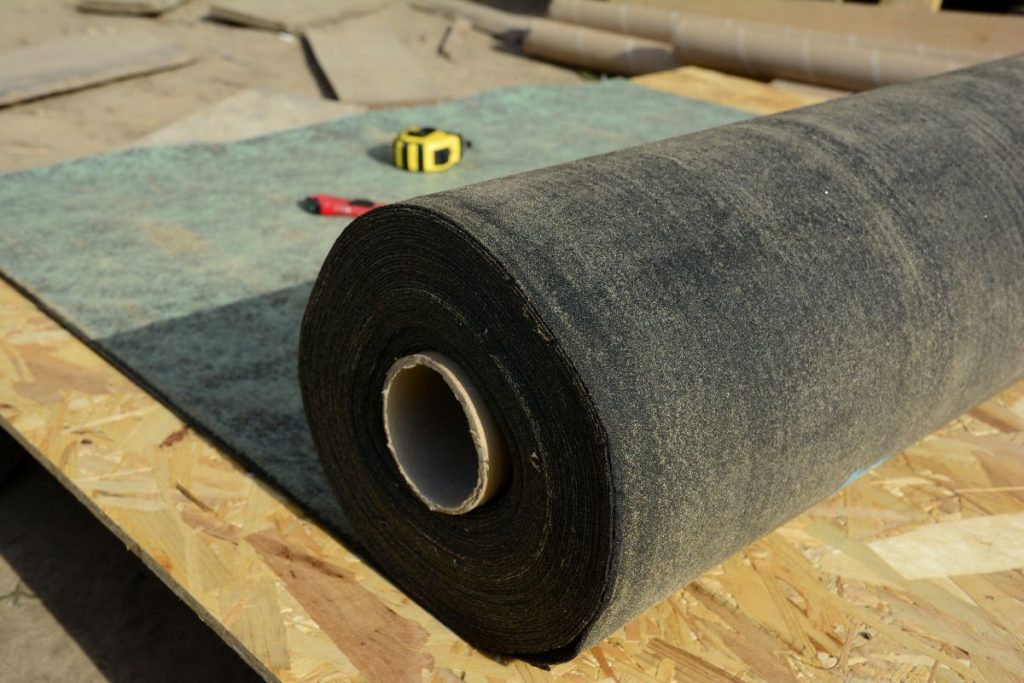
Synthetic underlayment covers the entire roof deck above the ice and water shield and serves as a secondary water barrier beneath the shingles. Owl Roofing installs GAF FeltBuster or Tiger Paw synthetic underlayment on every North Oaks installation because the product qualifies for enhanced GAF warranty registration including Golden Pledge. Synthetic underlayment has replaced traditional 15-pound felt on professional installations because the synthetic material is lighter, stronger, and resists tearing during installation. The underlayment installs in a specific overlapping pattern with minimum horizontal laps of 2 inches and minimum end laps of 4 inches per IRC standards. The layer protects the deck from any water that gets past the shingles and supports the shingle layer above.
- Full deck coverage: Above the ice barrier across the entire roof.
- Overlap requirement: 2 inch horizontal and 4 inch end laps minimum.
- Synthetic advantages: Lighter, stronger, and faster to install than felt.
- Warranty support: Required for enhanced GAF warranty registration.

4. Drip Edge and Flashing
Drip edge and flashing protect every place water could enter the roof system including the eaves, rakes, valleys, sidewalls, chimneys, plumbing vents, and skylights. Owl Roofing installs new flashing on every North Oaks reroofing job rather than reusing old flashing because new flashing is required for enhanced warranty registration and old flashing is a common source of leaks on aging roofs. Drip edge installs along every eave and rake to direct water off the roof and away from the fascia. Step flashing protects every wall-to-roof intersection. Valley flashing protects every roof valley. Chimney flashing requires custom fitting around brick or stone. All flashing must use corrosion-resistant materials per IRC standards.
- Drip edge locations: Every eave and rake.
- Step flashing: At every wall-to-roof intersection.
- Valley flashing: At every roof valley.
- Material standard: Corrosion-resistant per IRC requirements.
5. Starter Strip Shingles
Starter strip shingles install along the eaves and rakes to provide proper alignment and sealing on the first course of field shingles. Owl Roofing uses GAF Pro-Start starter strip on every North Oaks installation because GAF-approved starter strip is required for enhanced warranty registration including Silver Pledge and Golden Pledge. Generic 3-tab shingles cut into starter pieces do not qualify for warranty coverage, which is one of the most common reasons homeowners face warranty disputes years after installation. The starter strip provides the first sealed edge of the roof where wind uplift is highest and water exposure is most direct, making proper material selection critical for long-term performance.
- Location: Along every eave and rake.
- GAF Pro-Start: Approved product for warranty registration.
- Sealing function: First sealed edge of the roof system.
- Wind uplift protection: Highest-stress location on the roof.
6. Field Shingles
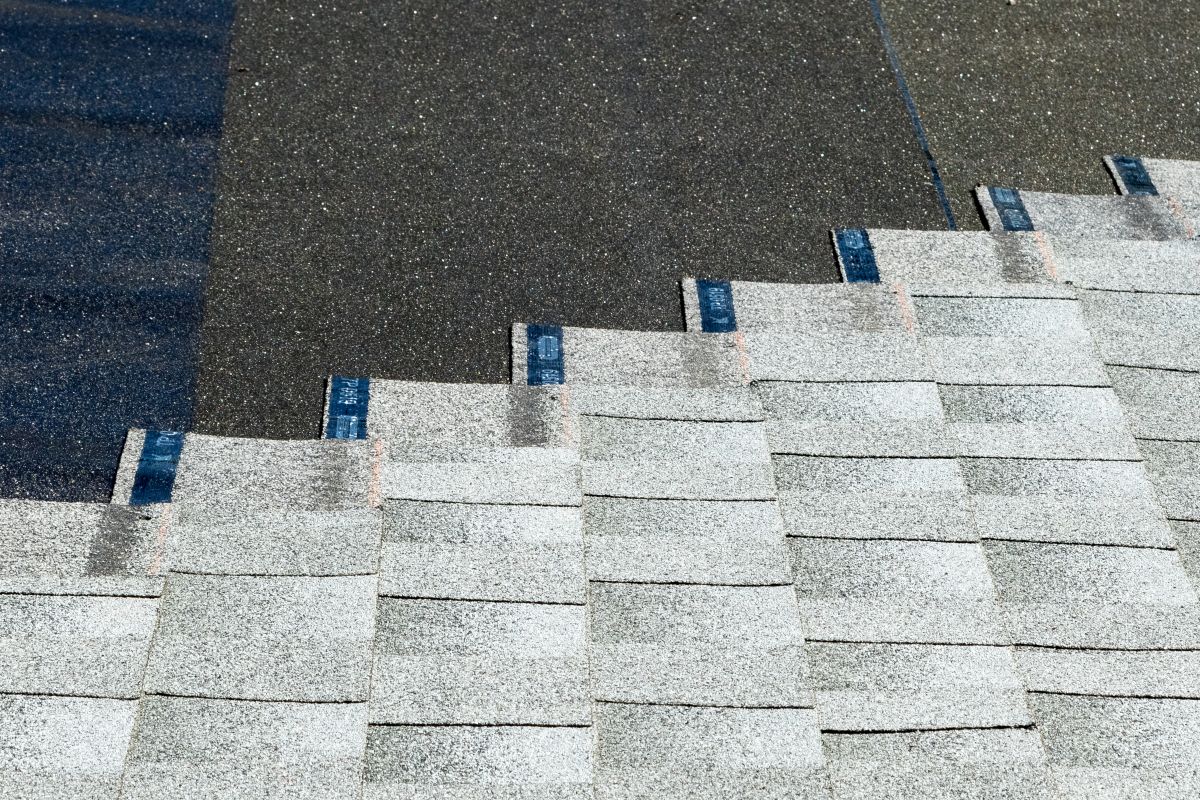
Field shingles cover the main surface area of the roof and provide the primary waterproof barrier visible from the ground. GAF Timberline HDZ architectural shingles are the most common installation choice for North Oaks replacements because the product carries a lifetime limited warranty, a 130 mph wind warranty, and 25 to 30 year service life. Field shingles install in a staggered pattern from the bottom of the roof to the peak, with each course overlapping the one below to shed water properly. The shingle nailing pattern must follow manufacturer specifications, with GAF requiring four to six nails per shingle depending on the product and wind zone. Improper nailing voids the warranty and reduces wind resistance significantly.
- Primary waterproof barrier: Main visible roof surface.
- Staggered installation: Each course overlaps the one below.
- Nailing pattern: Four to six nails per shingle per GAF specifications.
- Service life: 25 to 30 years on Timberline HDZ in Minnesota.
7. Ridge Cap Shingles
Ridge cap shingles finish the peaks of the roof where two slopes meet, with specially designed shingles that bend over the ridge angle without cracking. Owl Roofing uses GAF-approved ridge cap shingles matched to the field shingle color on North Oaks installations because GAF-approved ridge cap is required for warranty registration. Cutting field shingles into ridge cap pieces, a common shortcut on lower-quality installations, voids the GAF warranty entirely and increases the risk of cracking at the ridge over time. Ridge cap shingles also work with any installed ridge vent to support proper attic ventilation while finishing the roof aesthetically across every slope intersection.
- Location: Every roof peak where two slopes meet.
- GAF-approved products: Required for warranty registration.
- Designed-for-purpose bending: Avoids cracking over the ridge.
- Ventilation integration: Works with ridge vents on properly ventilated roofs.
How Many Layers of Shingles Can You Have on a Roof?
How many layers of shingles can be on a roof is governed by the International Residential Code, which allows a maximum of two layers of asphalt shingles before a full tear-off is required. Owl Roofing follows IRC R908.3 on every North Oaks job and recommends full tear-off in nearly every case even when a second layer would technically be allowed.
What Does Building Code Say About Roof Layers?
Building code says that a roof can have a maximum of two layers of asphalt shingles before a full tear-off is required for any new roofing. IRC Section R908.3 specifically prohibits installation of a new roof covering when the existing roof already has two or more applications of any roof covering, when the existing covering is water-soaked or deteriorated to the point of being inadequate as a base for additional roofing, or when the existing covering is slate, clay, cement, or asbestos-cement tile. Owl Roofing verifies existing layer count during every North Oaks inspection by lifting shingles at unobtrusive locations to count the layers underneath. The two-layer maximum is enforced by Minneapolis Construction Code Services and surrounding municipal building departments through permit reviews and inspections.
- Two-layer maximum: Code allows up to two layers of asphalt shingles.
- Tear-off triggers: Two layers, deteriorated covering, or tile substrate.
- Verification method: Lift shingles at unobtrusive locations to count layers.
- Permit enforcement: Building departments enforce the limit through inspections.
Should You Layover or Tear Off?
Owl Roofing recommends full tear-off in nearly every case rather than a layover, even when code allows a second layer. The tear-off approach provides four specific advantages over a layover: full inspection of the existing decking that exposes rot or damage hidden beneath the old shingles, eligibility for enhanced GAF warranty tiers including Silver Pledge and Golden Pledge that require single-layer installation, longer service life because the new shingles install on a clean flat surface rather than over an uneven existing layer, and lower long-term cost because the additional weight of a second layer can stress the structure and shorten the lifespan of both layers. Layovers save money upfront but typically cost more over the full service life of the roof.
- Decking inspection: Tear-off exposes the deck for damage assessment.
- Enhanced warranties: Most require single-layer installation.
- Longer service life: New shingles install on a clean surface.
- Lower long-term cost: Layovers shorten the lifespan of both layers.
How Roofing Layers Affect Cost in North Oaks
How roofing layers affect cost in North Oaks depends on the number of layers being installed, the quality of each layer’s materials, and the condition of the existing decking. Owl Roofing provides itemized estimates that show each layer separately so homeowners understand what each component contributes to the total.
What Does a Complete Layered Roof System Cost?
A complete layered roof system on a typical 2,000 square foot North Oaks home costs $14,000 to $24,000 installed in 2026, with the average North Oaks replacement landing at approximately $18,500 for GAF Timberline HDZ architectural shingles with full system accessories. Owl Roofing pricing includes complete tear-off, decking inspection and repair as needed, ice and water shield at every eave, synthetic underlayment across the deck, new flashing throughout, GAF starter strip, GAF field shingles, GAF ridge cap, ventilation upgrades as needed, and full cleanup. Budget 3-tab installations run $12,000 to $16,000 with simpler accessory packages, while Class 4 impact-rated installations with premium underlayment run $20,000 to $26,000.
- North Oaks average: Approximately $18,500 for Timberline HDZ with full system.
- Typical range: $14,000 to $24,000 for complete layered installation.
- Budget tier: $12,000 to $16,000 with 3-tab shingles.
- Premium tier: $20,000 to $26,000 with Class 4 impact-rated shingles.
Owl Roofing in North Oaks
Owl Roofing installs every layer of a complete roof system across North Oaks and surrounding Twin Cities communities. The team is GAF and Owens Corning certified and handles permits, inspections, and warranty registration on every job.
Why Choose Owl Roofing for Your Roof Installation?
Choose Owl Roofing for a North Oaks roof installation because the team installs every roofing layer to manufacturer specifications, follows IRC building code requirements on every job, registers full GAF or Owens Corning warranty packages with the appropriate accessory products, and provides written documentation of every layer installed. Owl Roofing crews never take shortcuts on individual layers such as cutting field shingles for ridge cap or reusing old flashing because those shortcuts void warranties and shorten roof lifespan. Every North Oaks installation includes line-item estimates that show each layer separately, scheduled installation timelines, magnetic nail sweep cleanup, same-day walkthrough with the project lead, and a comprehensive maintenance program for the life of the roof.
- Certified installation: Every layer installed to GAF or Owens Corning specifications.
- Code compliance: IRC R908 and Minnesota state requirements followed.
- Warranty registration: Full system warranties registered on every job.
- No shortcuts: Approved materials and methods on every layer.
Frequently Asked Questions
Can I Install New Shingles Over an Existing Roof?
Installing new shingles over an existing roof is allowed when the existing roof has only one layer of asphalt shingles, the existing shingles are not water-soaked or deteriorated, and the underlying decking is sound. Owl Roofing follows IRC R908.3 on every North Oaks job and recommends full tear-off in nearly every case because the warranty access and decking visibility benefits outweigh the cost savings of a layover.
What Happens If My Roof Has Three Layers Already?
When a roof has three or more layers of shingles, the code requires a full tear-off down to the deck before any new roofing can be installed. Owl Roofing handles tear-off of multiple layers regularly across North Oaks, with two-layer tear-offs adding approximately $0.75 to $1.25 per square foot to the standard tear-off cost. The additional cost reflects extra crew time, additional dumpster volume, and increased disposal fees.
What Is the Most Important Layer of a Roof?
The most important layer of a roof is the ice and water shield in Minnesota because ice dam protection prevents the most expensive type of interior damage from a failed roof system. Owl Roofing installs ice and water shield on every North Oaks replacement at the IRC code minimum or beyond, with valley and penetration coverage as standard practice. The membrane prevents water from backing up into wall cavities and ceilings when ice dams form during winter freeze-thaw cycles.
How Long Does Each Layer Last?
Each layer of a roof has its own expected service life, with the decking lasting 50+ years if not damaged, ice and water shield lasting the lifetime of the roof, synthetic underlayment lasting 25 to 50 years, flashing lasting 15 to 25 years if maintained, and field shingles lasting 25 to 30 years on GAF Timberline HDZ in Minnesota. The shortest-lived layer typically determines when the roof needs replacement, which is usually the shingles on most asphalt roofs.
Does Owl Roofing Install All Layers in One Visit?
Owl Roofing installs all seven layers of a complete roof system within the one to three day installation window standard for North Oaks replacements. Tear-off happens first thing in the morning, followed by decking inspection and repair, ice and water shield installation, underlayment installation, flashing installation, and shingle installation in sequence. Single-story homes complete in one day, while larger two-story homes take two to three days for the full layered installation.
Are Underlayment and Ice Barrier Required by Code?
Underlayment and ice barrier are both required by the Minnesota Residential Code on every residential reroofing job. The IRC requires underlayment across the entire roof deck and ice barrier extending from the eave to at least 24 inches inside the exterior wall line on every eave in regions where the January average daily temperature is 25 degrees Fahrenheit or less, which includes North Oaks. Owl Roofing installs both layers on every replacement to meet code and support warranty registration.
Get Your Roof System Estimate Scheduled
Owl Roofing handles complete layered roof installations across North Oaks and surrounding Twin Cities communities with GAF and Owens Corning certified installations, insurance claim coordination, emergency repair availability, fast turnaround, free inspections, financing options, and a maintenance program designed to protect the roof investment for its full service life. Every Owl Roofing estimate itemizes each layer of the roof system so homeowners know exactly what materials are being installed.
Contact Owl Roofing to schedule a free inspection and receive a written estimate that itemizes every roofing layer for your specific North Oaks home.

Recent Articles
Explore The Blog