




Can Hail Damage a Roof Without Leaks Arden Hills, MN?
 15min Read
 Posted 7.24.2026
Yes, the answer to “can hail damage a roof without leaks Arden Hills MN” homeowners ask is that hail absolutely damages roofs without causing immediate leaks, with the damage often starting as aesthetic problems like granule loss, bruising, and surface dents before progressing into functional problems like active leaks months or years later. Owl Roofing is a GAF and Owens Corning certified roofing contractor serving Arden Hills and surrounding Twin Cities communities, and the team identifies hidden hail damage during free post-storm inspections that homeowners cannot see from the ground. This guide explains why hail damage without leaks is real damage, walks through six types of hidden damage that do not produce immediate leaks, and breaks down what hail damage repair costs in Arden Hills.
- Direct answer: Yes, hail damages roofs in ways that do not produce immediate leaks.
- Six damage types: Specific hidden damage patterns that progress over time.
- Insurance and cost: What hail damage repair costs and how insurance treats hidden damage.
Hail Damage Without Leaks Basics
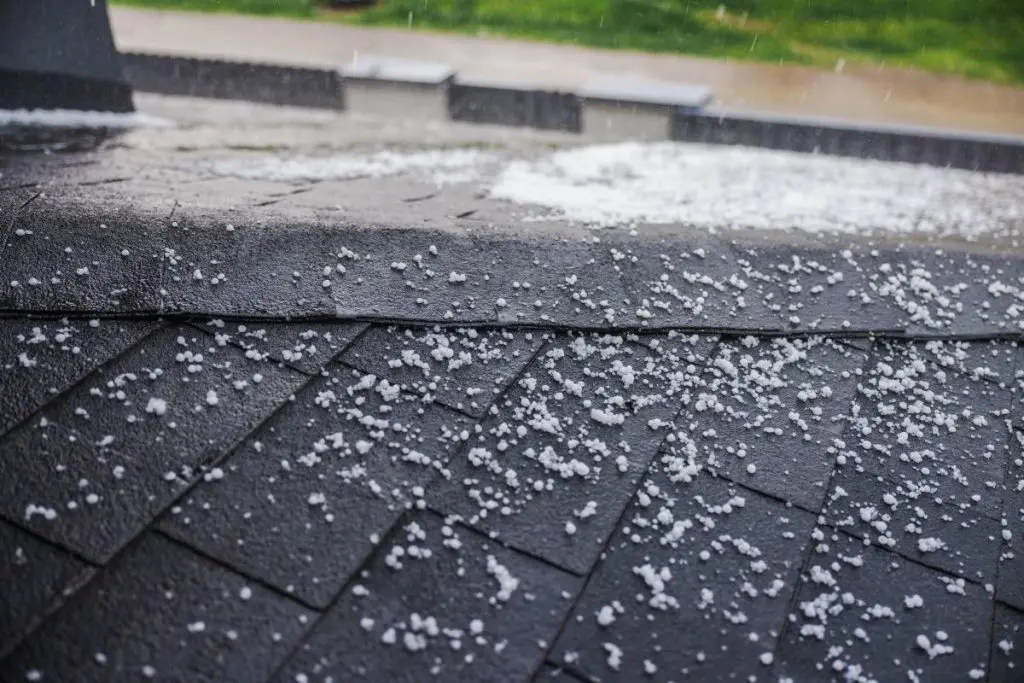
Hail damage without leaks basics center on a key distinction the roofing industry makes between aesthetic damage and functional damage. Owl Roofing inspectors document both types during Arden Hills hail inspections because both qualify for insurance claims and both shorten the remaining service life of the roof.
Can Hail Really Damage a Roof Without Causing Leaks?
Hail really can damage a roof without causing leaks because hail impact creates two distinct types of damage: aesthetic damage that affects appearance and durability without immediately breaching the roof, and functional damage that produces active water entry. The Insurance Institute for Business & Home Safety categorizes hail damage into these two types and notes that aesthetic damage on shingles often progresses into functional damage over time as ultraviolet radiation, freeze-thaw cycles, and additional weather exposure compound the original impact. Owl Roofing finds aesthetic-only hail damage on most Arden Hills roofs inspected after severe storms, with the damage qualifying for insurance claims and replacement under standard policies. Waiting for leaks before filing a claim often results in claim denial because insurance carriers expect claims filed within months of the storm event.
- Two damage categories: Aesthetic and functional damage from hail impact.
- Time progression: Aesthetic damage progresses to functional over months and years.
- Insurance coverage: Both damage types qualify under standard policies.
- Filing timing: Waiting for leaks often results in claim denial.
Why Doesn’t Hail Damage Always Cause Immediate Leaks?
Hail damage does not always cause immediate leaks because asphalt shingles have multiple layers of protection that absorb impact without immediately allowing water through. The mineral granule layer absorbs the initial impact and protects the asphalt mat underneath. The asphalt mat absorbs additional impact energy and can fracture without splitting all the way through. The fiberglass reinforcement layer holds the mat together even when the mat is fractured. The underlayment beneath the shingles provides secondary water protection. Hail strikes that damage the shingle without breaching all layers leave the roof in a weakened state where leaks have not yet occurred, but the protection has been compromised and future weather events will eventually produce active water entry across the damaged areas.
- Multi-layer protection: Granules, mat, fiberglass, and underlayment.
- Sequential damage: Each layer absorbs and slows impact penetration.
- Weakened state: Damage compromises protection without immediate breach.
- Future weather: Subsequent events eventually produce active leaks.
6 Types of Hidden Hail Damage That Don’t Leak Yet
Six types of hidden hail damage commonly affect Arden Hills roofs without producing immediate leaks. Owl Roofing identifies each type during free post-storm inspections by examining the roof surface from close range using proper safety equipment.
1. Bruised Shingles With Fractured Mat
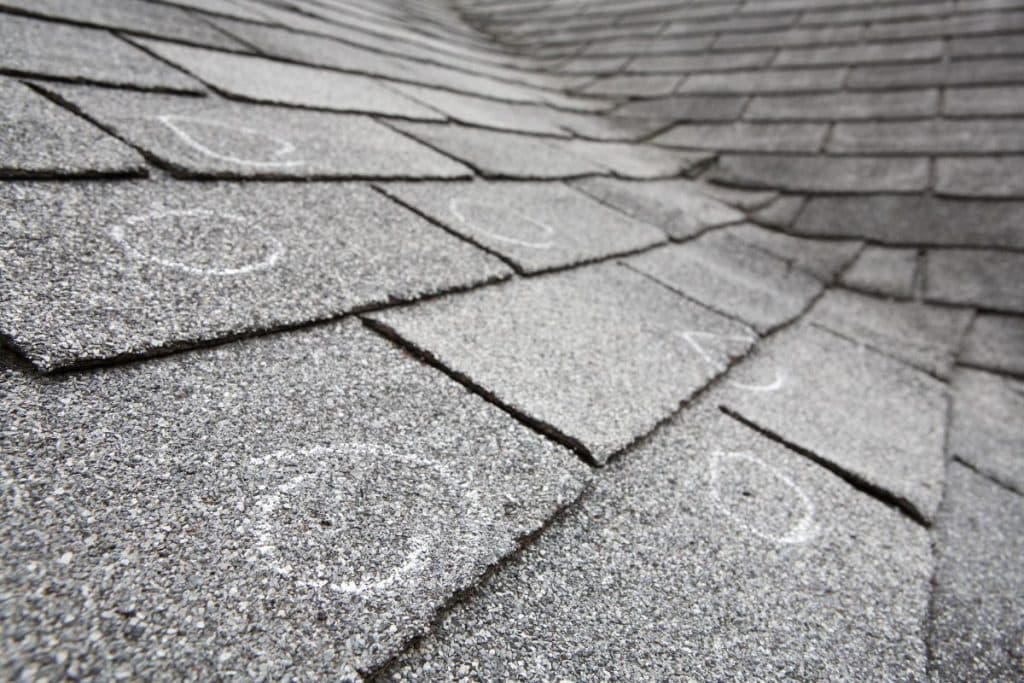
Bruised shingles with fractured mat are the classic signature of hidden hail damage that does not immediately cause leaks. The hail impact compresses the granule layer into the asphalt mat, fracturing the mat fibers underneath without breaking through the shingle. Owl Roofing inspectors identify bruised shingles in Arden Hills by examining the roof surface for round dark spots and pressing each spot with a fingertip to confirm the soft-to-the-touch signature of mat fracture. The shingle still sheds water immediately after the storm, but the fractured mat allows water to wick into the asphalt over time, accelerating shingle aging and eventual failure. Bruised shingles typically fail within 2 to 5 years after the original hail damage even when no immediate leaks occur.
- Visual signature: Round dark spots on shingle surface.
- Tactile test: Soft to the touch like a bruised apple.
- Hidden fracture: Mat fibers broken under intact surface.
- Timeline to failure: 2 to 5 years before leaks develop.
2. Granule Loss Without Penetration
Granule loss without penetration occurs when hail impact strips granules from sections of shingles without breaking through the asphalt mat below. Owl Roofing finds widespread granule loss during Arden Hills hail inspections by examining the roof surface for lighter-colored patches where the asphalt mat is exposed, plus checking gutters and downspouts for granule accumulation. The exposed asphalt does not leak immediately because the shingle is still intact, but the asphalt deteriorates rapidly under ultraviolet radiation once the granule protection is lost. Bare asphalt becomes brittle, cracks, and eventually breaks through within 1 to 3 years of the original damage. The granule loss also reduces the shingle’s fire resistance and wind resistance below original specifications.
- Visual signature: Lighter patches where granules are missing.
- Gutter evidence: Granule accumulation at downspouts.
- UV exposure: Asphalt deteriorates rapidly without granule protection.
- Timeline to failure: 1 to 3 years before cracks develop.
3. Hairline Cracks in Shingles
Hairline cracks in shingles develop when hail impact fractures the shingle surface without producing a visible split. Owl Roofing identifies hairline cracks during close-range Arden Hills roof inspections by examining shingles for fine lines that often appear darker than the surrounding shingle surface. The hairline cracks do not allow water through immediately because the fracture has not separated the shingle into pieces, but the crack expands during freeze-thaw cycles as water wicks into the asphalt and freezes. Expanded cracks eventually produce active leaks, typically within 1 to 2 winter seasons after the original damage. Minnesota’s repeated freeze-thaw cycles accelerate crack expansion significantly compared to milder climates.
- Visual signature: Fine darker lines on shingle surface.
- Initial integrity: Crack does not separate shingle immediately.
- Freeze-thaw expansion: Water freezes and widens the crack.
- Timeline to failure: 1 to 2 winter seasons before leaks develop.
4. Dented Metal Flashing
Dented metal flashing creates compromised water-shedding patterns that do not immediately leak but progress into active leaks over time. Owl Roofing photographs every dented flashing component during Arden Hills hail inspections because the dents provide strong evidence for insurance adjusters and indicate damage to the shingle layer above. Flashing dents change how water flows across valleys, around chimneys, and at wall-to-roof intersections, creating standing water spots and uneven flow patterns that eventually allow water entry. Step flashing damage is particularly problematic because each piece of flashing protects a single shingle course, and damaged step flashing allows water behind multiple courses over time.
- Visual signature: Round depressions on metal surfaces.
- Water flow change: Dents create uneven shedding patterns.
- Standing water spots: Dents collect water during rainfall.
- Step flashing risk: Damage cascades through multiple shingle courses.
5. Compromised Plumbing Boots and Vents
Compromised plumbing boots and vents represent some of the most vulnerable points on the roof during hail events because the rubber and metal components have less material thickness than shingles. Owl Roofing finds compromised boots during Arden Hills hail inspections that show cracked rubber collars around plumbing vent pipes, dented metal vent stacks, and damaged turbine vent caps. The damage does not produce immediate leaks because the boot seal initially holds, but the cracks expand during temperature cycling and eventually allow water entry directly into the attic. Plumbing boot failures account for a significant share of post-hailstorm leaks that develop 6 to 18 months after the original storm event.
- Vulnerability: Less material thickness than shingles.
- Crack expansion: Temperature cycling widens damage.
- Direct attic entry: Failed boots allow water into the attic.
- Timeline to failure: 6 to 18 months after original damage.
6. Damaged Ridge Cap and Starter Strip
Damaged ridge cap and starter strip from hail impact affect the most exposed parts of the roof where wind uplift is highest and water exposure is most direct. Owl Roofing inspectors check ridge cap and starter strip during Arden Hills inspections because the components face the most severe weather conditions and damage often goes unnoticed by homeowners. Damaged ridge cap creates an entry point at the roof peak where wind can drive water under the surrounding shingles during subsequent storms. Damaged starter strip at the eaves allows wind-driven rain to lift the first shingle course and create water entry at the most vulnerable roof edge. Neither damage produces immediate leaks in calm conditions, but the next significant wind-rain event often triggers active water entry through the compromised edges.
- Highest exposure: Peaks and eaves face the most severe weather.
- Wind-driven failure: Damage triggers leaks during subsequent storms.
- Edge vulnerability: Compromised first course allows water entry.
- Peak vulnerability: Damaged ridge cap exposes top of roof.
What Happens If Hidden Hail Damage Goes Unaddressed?
Hidden hail damage left unaddressed progresses from aesthetic problems into functional leaks, structural damage, and compromised roof service life. Owl Roofing recommends Arden Hills homeowners file insurance claims for documented hail damage even when no immediate leaks exist because waiting for leaks typically results in higher repair costs and complicates the claim approval process.
How Does Hidden Damage Progress Over Time?
Hidden hail damage progresses over time through a predictable sequence: ultraviolet radiation accelerates degradation of damaged shingles, freeze-thaw cycles expand cracks in fractured mats, weather exposure deteriorates bare asphalt where granules are missing, and wind events stress weakened shingles until active failures occur. Owl Roofing finds that hidden damage typically produces visible leaks within 1 to 5 years of the original hail event, with the timeline depending on the damage severity and subsequent weather exposure. Roofs in Minnesota progress faster than warmer climates because freeze-thaw cycles repeat multiple times each winter, with each cycle adding stress to damaged shingles. The total cost of waiting includes both the original roof replacement and any interior damage from leaks that eventually develop.
- Progression mechanism: UV, freeze-thaw, and wind compound original damage.
- Typical timeline: 1 to 5 years until visible leaks develop.
- Minnesota acceleration: Freeze-thaw cycles speed deterioration.
- Compounded cost: Roof plus interior damage when delayed.
Will Insurance Cover Hail Damage Without Visible Leaks?
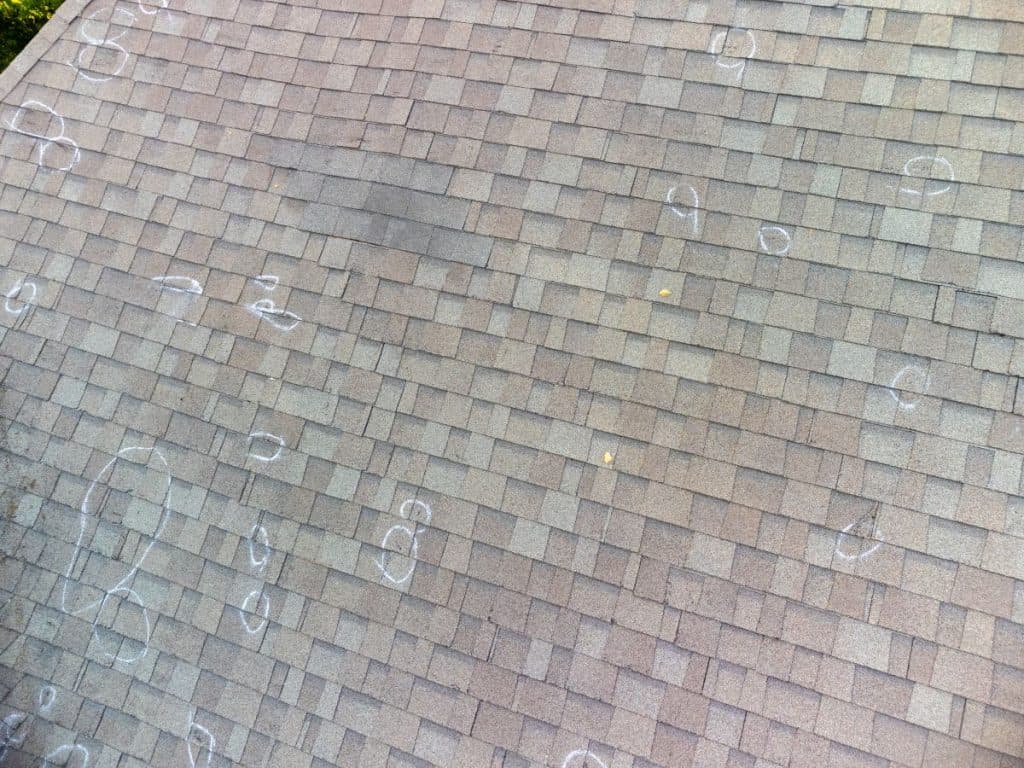
Homeowners insurance covers hail damage without visible leaks when the damage meets the carrier’s threshold for functional or aesthetic impairment, with the specific threshold varying by policy. Owl Roofing supports Arden Hills homeowners through claim filing by documenting hail damage with detailed photos and written reports that meet insurance carrier standards. Most standard policies cover hail damage that affects function, durability, or expected service life even when no immediate leaks exist. Adjusters typically use a 10-by-10 foot test square method to count hail strikes on each roof slope, with 8 or more strikes per square typically qualifying for full replacement approval. Some policies exclude cosmetic-only damage, which makes the documentation of functional implications important during the claim process.
- Standard coverage: Most policies cover hail damage affecting function or durability.
- Test square method: 10-by-10 foot area marked on each slope.
- Approval threshold: 8+ strikes typically qualifies for full replacement.
- Cosmetic exclusion: Some policies exclude purely cosmetic damage.
How Much Does Hail Damage Repair Cost in Arden Hills?
The cost of hail damage repair in Arden Hills depends on the damage extent and whether the work is part of a covered insurance claim. Owl Roofing provides itemized estimates that show repair components separately so homeowners understand the cost breakdown before approving any work.
What Is the Typical Cost Range?
Typical hail damage work in Arden Hills costs $400 to $3,500 for targeted repairs and $13,000 to $25,000 for full replacements depending on damage extent, with typical Arden Hills storm damage replacements landing around $18,000 for GAF Timberline HDZ architectural shingles. Class 4 impact-rated installations like GAF Timberline AS II run $19,000 to $26,000 and qualify for wind and hail insurance discounts of 5 to 30 percent that recover much of the upgrade cost over the life of the roof. Insurance-approved hail damage replacements cost the homeowner only the policy deductible, which is typically $1,000 to $2,500 on standard Minnesota policies. Some policies use percentage-based wind and hail deductibles of 1 to 5 percent of insured home value, which can be significantly higher than flat deductibles.
- Targeted repair range: $400 to $3,500 in Arden Hills.
- Full replacement range: $13,000 to $25,000 in Arden Hills.
- Typical Arden Hills replacement: Around $18,000 for Timberline HDZ.
- Class 4 upgrade: $19,000 to $26,000 with insurance discount eligibility.
Owl Roofing in Arden Hills
Owl Roofing handles hail damage inspection and repair across Arden Hills and surrounding Twin Cities communities. The team is GAF and Owens Corning certified and specializes in identifying hidden hail damage that homeowners cannot see from the ground.
Why Choose Owl Roofing for Hail Damage Inspection?
Owl Roofing is a strong choice for hail damage inspection in Arden Hills because the team provides free post-storm inspections with no obligation to file a claim, identifies hidden damage that homeowners cannot see from the ground, documents damage with photos and written reports that meet insurance carrier standards, and supports homeowners through the insurance claim process. Owl Roofing inspectors use proper safety equipment to safely access the roof surface during inspections and check for all six types of hidden damage that progress into leaks over time. The team also provides honest recommendations for either targeted repair or full replacement based on the actual damage extent documented during inspection.
- Free post-storm inspections: With written damage documentation.
- Hidden damage identification: Six damage types checked during inspection.
- Insurance support: Documentation meets carrier standards.
- Honest recommendations: Repair or replacement based on findings.
Frequently Asked Questions
How Long Does Hail Damage Take to Cause Leaks?
Hail damage takes 1 to 5 years to develop into active leaks in most cases, with the specific timeline depending on damage severity and subsequent weather exposure. Owl Roofing finds that Arden Hills hail damage progresses faster than warmer climates because Minnesota’s freeze-thaw cycles repeat multiple times each winter, adding stress to damaged shingles. Some severe hail damage produces leaks within months, while minor damage takes the full 5-year window.
Should I File an Insurance Claim Without Visible Leaks?
You should file an insurance claim for hail damage without visible leaks when a qualified contractor documents damage that affects roof function, durability, or expected service life. Owl Roofing recommends Arden Hills homeowners file claims within 30 to 60 days of the storm event because waiting often results in claim denial. Most insurance policies require prompt notification, and damage that develops further over time becomes harder to attribute to the original storm.
What Hail Size Causes Damage Without Leaks?
Hail one inch in diameter or larger commonly produces damage without immediate leaks on standard architectural shingle roofs in Arden Hills. Hail in the 1 to 1.5 inch range typically causes granule loss and surface bruising that does not leak immediately. Hail 1.5 to 2 inches produces cracks and more severe damage that often progresses to leaks faster. Hail over 2 inches typically causes immediate functional damage including leaks.
Does Owl Roofing Offer Free Hail Damage Inspections?
Owl Roofing offers free hail damage inspections across Arden Hills and surrounding Twin Cities communities with no obligation to file a claim or proceed with repairs. Each inspection includes a complete roof evaluation, photo documentation of any visible damage, identification of hidden damage that homeowners cannot see from the ground, and a written report homeowners use to support insurance claim filings.
Can Aesthetic Hail Damage Be Repaired Cosmetically?
Aesthetic hail damage cannot be effectively repaired cosmetically because the damage involves fractured shingle mats, lost granules, or compromised flashing that requires component replacement rather than surface treatment. Owl Roofing replaces damaged shingles, flashing, vents, and other components during Arden Hills hail repairs because surface treatments do not address the underlying damage. The repair preserves the roof’s service life and supports manufacturer warranty coverage.
Will Class 4 Impact-Rated Shingles Prevent Hidden Hail Damage?
Class 4 impact-rated shingles like GAF Timberline AS II significantly reduce the risk of hidden hail damage because the products carry the highest impact resistance rating under UL 2218 testing. Owl Roofing installs Class 4 shingles on Arden Hills homes when homeowners want the strongest hail protection available. Class 4 shingles do not eliminate hail damage entirely on severe storms with very large hail, but the products dramatically reduce damage compared to standard shingles.
Get Your Free Hail Damage Inspection Scheduled
Owl Roofing handles roof hail damage inspections across Arden Hills and surrounding Twin Cities communities with GAF and Owens Corning certified installations, insurance claim coordination, emergency repair availability, free inspections, financing options, and a maintenance program designed to protect the roof investment for its full service life. Every Owl Roofing storm response includes a free inspection, written damage documentation, and identification of both visible and hidden hail damage.
Contact Owl Roofing to schedule a free hail damage inspection for your Arden Hills home and find out whether your roof has hidden damage that has not yet produced leaks.

Recent Articles
Explore The Blog