Brown Ceiling Stain? In Minnesota, It’s Probably Not a Roof Leak
 16min Read
 Posted 4.18.2026
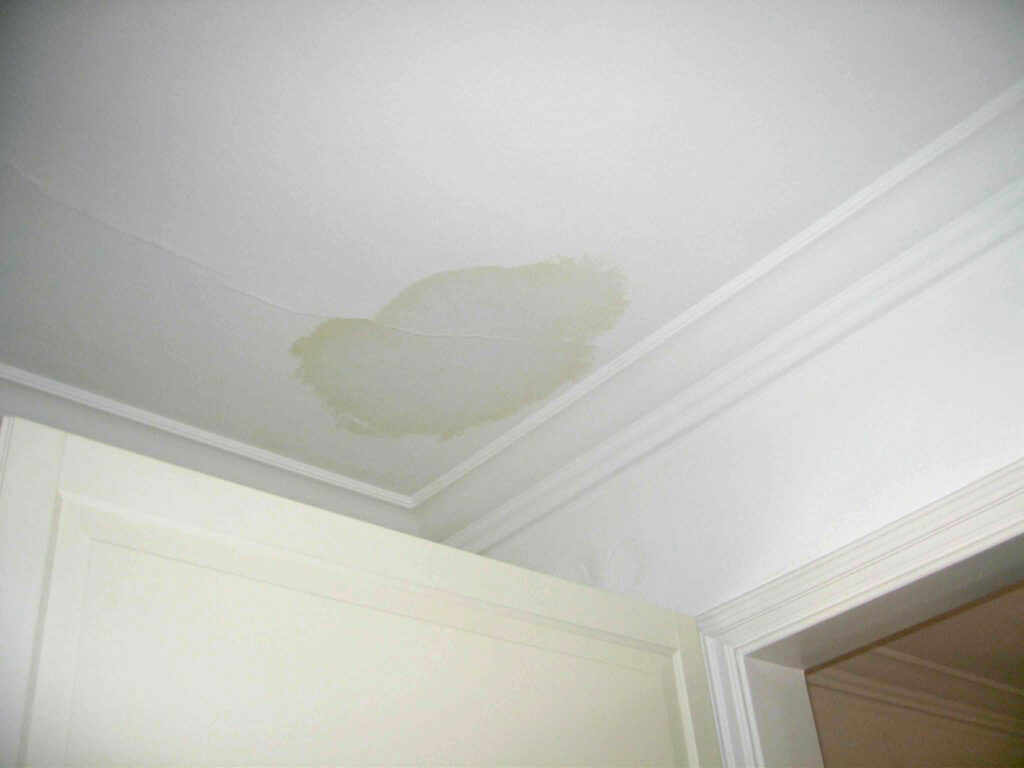
You spot a brown stain spreading across your bedroom ceiling. Your stomach drops. You’re already Googling roofers. Before you do anything — read this. In Minnesota, ceiling stains are just as likely to be an attic frost problem, a plumbing issue, or a failing HVAC component as they are an actual roof leak. Calling the wrong contractor costs you time, money, and the wrong fix.
This guide walks you through how to actually diagnose what’s happening in your home — and tells you who to call when you figure it out.
The short version: In Minnesota, ceiling stains are caused by attic frost, plumbing, or HVAC roughly as often as they’re caused by an actual roof leak. This guide helps you figure out which one you’re dealing with before you call anyone.
Why Minnesota Is Different From Every Other State
Most roofing content online is written for moderate climates. Minnesota is not a moderate climate. We swing from 95°F humid summers to −30°F polar vortex winters, and that extreme temperature delta creates conditions you simply won’t encounter in Georgia or Arizona.
Here’s the core physics: heat rises, cold wins at the building envelope. When you’re running your thermostat at 72°F — or, honestly, the 76°F a lot of Minnesota households actually run in January — while it’s −15°F outside, your home is trying to push warm, moisture-laden air upward. Your attic is the first place it goes if the air barrier isn’t tight.
That warm interior air carries significant moisture. When it hits cold attic surfaces, it drops that moisture as condensation — or at extreme temperatures, as frost. Come the first warming trend, the frost melts. That meltwater has to go somewhere. Straight down into your ceiling drywall, usually. Brown stain. No roof leak involved.
This isn’t an edge case. It’s one of the most common misdiagnoses we see in the Twin Cities every spring.
The 4 Real Causes of Ceiling Stains in Minnesota
Before calling any contractor — including us — run through these four categories. Each has different causes, different fixes, and different specialists.
1. Attic Frost Accumulation
This is the big one in Minnesota and the most commonly misdiagnosed. Frost forms in your attic when warm, humid interior air finds a pathway through your ceiling: a recessed light without an airtight cover, an attic hatch with no gasket, bathroom exhaust fans that vent into the attic instead of outside (more common than you’d think), or poorly sealed top plates where framing meets drywall.
The sequence goes like this. Frost accumulates first on nail heads because metal is the coldest surface in the attic — you’ll often see rust halos on the tips of roofing nails when you get up there. It then builds on metal ventilation pipes and fan housings. With enough moisture load over a long cold stretch, it spreads to the roof sheathing and sometimes the trusses. When the temperature finally rises, all of that melts at once.
How to spot the pattern: Stains that appear in late winter or very early spring, often right after the first warming trend. Multiple stains in different rooms simultaneously. Staining near interior walls where framing acts as a thermal bridge. The stain has nothing to do with whether it rained recently. How attic frost forms and where it accumulates in Minnesota winters -15F outside ATTIC SPACE LIVING SPACE – 72-76F interior vent pipe warm air rising meltwater – ceiling stain Nail heads (frost first) Frost accumulation Metal vents (freeze too)
Who fixes this
An insulation contractor or air sealing specialist. Sometimes an HVAC contractor if improperly vented exhaust fans are the culprit. A new roof will not fix an attic frost problem.
Related: Our complete guide to ice dams in Minnesota — a related but distinct problem that also starts in the attic.
2. Plumbing Condensation or a Slow Drain Leak
Uninsulated cold water supply pipes running through unconditioned attic space will sweat in summer. That condensation drips. A slow leak at a supply line joint, a drain connection, or a wax ring can also drip steadily for weeks before it becomes visible on your ceiling.
These stains typically appear in bathrooms and kitchens directly below known plumbing runs, or near interior walls where pipes travel vertically between floors. The key tell: the stain appears in summer or year-round — not only during cold snaps. A faint musty smell is another indicator, since slow drip moisture tends to pool in enclosed spaces and breeds mildew faster than a typical roof leak.
Who fixes this
A licensed plumber. If there’s any doubt whether the pipes are the issue, a home inspector with a moisture meter can often confirm it without tearing into drywall.
3. HVAC Issues — Including the Humidifier Problem
Minnesota winters are brutally dry. Interior relative humidity drops fast when it’s cold. So homeowners run humidifiers — sometimes whole-home units tied to the furnace, sometimes individual room units, sometimes both. Add in daily shower steam and cooking vapor and you’re pumping significant moisture into your home’s air.
If your HVAC system is malfunctioning — a stuck humidistat pumping excess moisture, a cracked evaporator coil drain pan, or a whole-home humidifier with a failing saddle valve — you can generate ceiling staining that looks exactly like a roof leak. Some Minnesota homes also have air handlers installed in attic spaces (less common, but it happens), and any condensate drain issue from those units drips straight down.
Who fixes this
Your HVAC contractor. Check your whole-home humidifier’s drain line first — it’s often the culprit and it’s often overlooked.
4. An Actual Roof Leak
Yes, roof leaks are real. They’re just not the default explanation for ceiling stains in Minnesota — not until you’ve ruled out everything else. When it genuinely is a roof leak, the most common points of failure are:
- Flashing failures around chimneys, skylights, and pipe penetrations — the #1 entry point for water on most roofs
- Ice dams forcing water under shingles at the eave line — very common in Minnesota, especially on homes with poor attic insulation
- Failed pipe boot seals around plumbing vent stacks — these rubber boots crack and shrink over time and are a frequent source of leaks
- Wind or hail damage creating lifted or missing shingles that allow water infiltration
- Ridge vent or soffit intersections compromised by wind-driven rain
- Valley deterioration on older roofs where two roof planes meet
A true roof leak stain typically correlates directly with rain events — the stain grows or activates when it rains, not during cold snaps or thaw periods. It usually appears near exterior walls, directly beneath a known roof penetration (chimney, skylight, vent stack), or at the eave line after an ice dam event.
Who fixes this
A roofing contractor. If you think you have storm damage — hail, wind, ice dams — request a free inspection from Owl Roofing. We’re storm damage specialists serving the Twin Cities and we’ll give you a straight answer on what we find.
Diagnostic Cheat Sheet: What’s Causing Your Ceiling Stain?
| What you’re seeing | Season / trigger | Most likely cause | Who to call |
|---|---|---|---|
| Stain appears during or right after a rain event | During storm or within 24 hrs | Roof leak — flashing, storm damage, pipe boot | Roofer |
| Stain appears in Feb–April after a warm spell | Late winter / early spring thaw | Attic frost meltwater | Insulation |
| Multiple stains in different rooms at once | Winter or spring | Attic frost or HVAC moisture load | Insulation / HVAC |
| Stain near/above bathroom or kitchen, grows in summer | Summer or year-round | Plumbing condensation or drain leak | Plumber |
| Stain directly under a skylight or chimney | After rain | Failed flashing or skylight seal | Roofer |
| Stain near interior wall, no roof penetration above it | Winter | Attic frost at framing thermal bridge | Insulation |
| Slow-growing stain with musty smell | Any season | Slow plumbing leak or chronic condensation | Plumber |
| Stain at eave line, worst in late winter/spring | After cold stretch | Ice dam water infiltrating under shingles | Roofer |
| Stain appeared after installing new exhaust fan | Winter | Exhaust fan venting into attic, not outside | HVAC |
What to Do Before Calling Anyone: A 20-Minute Self-Audit
Grab a flashlight and your phone camera. This 20-minute check will help you figure out who to call — and will save you from paying for a roof inspection when your exhaust fan is the problem.
Step 1: Correlate the stain with weather
Pull up your weather history for the past 30 days. Did the stain appear or grow after a rain event? That points toward a roof leak. Did it show up during or after a cold snap, or bloom right after a warm-up in February or March? That points toward attic frost. Year-round with no weather correlation? Think plumbing.
Step 2: Get into the attic
If you can access the attic, do it after a cold week. Look for frost crystals on nail heads, frost or water staining on the roof sheathing or trusses, any signs of daylight coming through the roof, and any wet spots or active drips near the ceiling stain location. Photograph everything before anything melts or dries.
Step 3: Check directly above the stain
Is there plumbing running above the stained area? A bathroom, a kitchen, a laundry room on the floor above? Look for sweating pipes, rust staining on subfloor framing, or a slow drip. If you have a whole-home humidifier, check its drain pan and saddle valve while you’re at it.
Step 4: Look at the roof from the ground
You don’t need to get on the roof. From the ground, look for obviously missing, lifted, or damaged shingles. Check the visible flashing around the chimney, any skylights, and where the roof meets any walls. Look for dark staining or moss along valleys and eaves. If you’ve had hail or high winds recently and see granule accumulation in your gutters or obvious impact marks, that’s worth a professional look.
Step 5: Check your bathroom exhaust fans
This one gets missed constantly. Go outside and find where your bathroom exhaust fans are supposed to terminate — it should be a small vent cap on the exterior wall or through the roof. If you can’t find a vent cap, or if you find one that’s disconnected or frost-covered in winter, your fan is dumping humid air directly into the attic. That’s a guaranteed frost problem on a cold Minnesota winter.
The Attic Frost Deep Dive: What’s Actually Happening Up There
Because this is so specific to Minnesota and so commonly confused with roof leaks, it’s worth going deeper on how attic frost works and why the fix is almost never a new roof.
The fundamental issue is air movement, not insulation thickness. Most Minnesota homeowners have been told their attic needs more insulation — and often that’s true — but the bigger problem is usually air leakage. Warm interior air carries roughly 20 times more moisture per cubic foot than cold outdoor air. Even a relatively small gap in your ceiling’s air barrier can let enough warm air into the attic to create serious frost accumulation during a Minnesota cold stretch.
The most common air leakage points, in rough order of frequency:
- Bathroom exhaust fans — especially older ones with no backdraft damper, or fans that were installed by routing the duct into the attic space instead of through it to the exterior
- Recessed lighting (can lights) — older recessed lights are essentially open holes into the attic cavity. Even “airtight” models can fail over time.
- Attic hatches — most attic hatches are uninsulated and unsealed. Every time the attic hatch area warms up slightly, it convects air upward.
- Top plates at interior walls — where interior walls meet the ceiling, there are often unsealed gaps that allow air to migrate up through wall cavities into the attic.
- Electrical and plumbing penetrations — every wire and pipe that goes through the ceiling is a potential air pathway if it isn’t foam-sealed.
The fix for attic frost is air sealing — usually done by a building performance contractor or insulation specialist using spray foam at all penetration points — combined with verifying that bathroom exhaust fans are properly terminated to the exterior. Adding more insulation on top of unsealed penetrations is better than nothing but doesn’t address the root cause.
“The cold doesn’t create the problem. The warm, humid interior air does. Stop the air movement and you stop the frost. A new roof doesn’t fix air movement.”
For more on how attic conditions affect your roof’s lifespan, see our guide on attic ventilation in Minnesota homes.
Ice Dams: The Overlap Case
Ice dams deserve a mention here because they’re the one scenario that genuinely sits at the intersection of roofing and attic performance — and they’re responsible for a significant percentage of actual water damage in Minnesota homes during winter.
An ice dam forms when heat escaping through a poorly insulated or poorly ventilated attic warms the roof deck, melting snow on the upper portions of the roof. That meltwater runs down to the cold eave overhang where there’s no heat loss, refreezes, and builds up a ridge of ice. Subsequent meltwater backs up behind that ice dam and — because water finds any gap — forces its way under the shingles and into the structure.
The ceiling stain from an ice dam typically appears near exterior walls, specifically at or near the eave line. It often shows up in late winter or early spring when a warm day follows a long cold stretch. It looks exactly like an attic frost stain and exactly like a roof leak — because in a sense, it’s both.
This is where we can help
Ice dam damage is an area where we absolutely want to be involved. If you’re seeing eave-line staining after a Minnesota winter, get a free inspection from Owl Roofing. We’ll tell you honestly whether it’s the roof or the attic.
When to Call a Roofer (And When Not To)
We’re going to be straight with you because we’d rather send you to the right contractor than have you spend money on a roof inspection for an HVAC problem.
| Call a roofer if… | Don’t start with a roofer if… |
|---|---|
| The stain correlates directly with rain events | The stain appeared during a cold snap or right after a thaw — check attic frost first |
| The stain is at the eave line (possible ice dam damage) | You have multiple stains in different rooms — call insulation or HVAC |
| You’ve had recent hail or wind and see granule loss or obvious damage | The stain is near a bathroom or kitchen with no rain correlation — call a plumber |
| The stain is directly under a chimney, skylight, or plumbing vent stack | Your whole-home humidifier hasn’t been inspected recently — check that first |
| You can see daylight in your attic | You just installed a bathroom exhaust fan — verify it’s venting to the exterior |
| Your roof is over 20 years old and hasn’t been inspected | The stain is near an interior wall in winter — strong attic frost indicator |
If you go through this list and you’re still not sure, call us anyway. We give free inspections and we’ll tell you if it’s not a roofing issue. We’d rather be honest than do unnecessary work.
What a Roof Inspection Actually Involves
If you do have a legitimate roof concern, here’s what a professional inspection from Owl Roofing looks like — not a drive-by glance from a truck, and not a 10-minute ladder climb.
We walk the roof surface and check every penetration: chimney flashing, pipe boot seals, skylight frames, ridge vents, and any areas of obvious physical damage. We inspect the valleys, the eaves, and the rake edges. We get into the attic if accessible and look at the underside of the sheathing for evidence of active or historic moisture intrusion. We check for ice dam damage patterns at the eave and for any areas where the deck is soft, stained, or delaminating.
After the inspection, we give you a straight answer: here’s what we found, here’s what caused it, here’s what fixing it costs, and here’s whether insurance is likely to apply. No upsell on a full roof replacement if you need a $400 flashing repair.
If you’ve recently had hail or storm damage, see our guide on navigating a Minnesota roof insurance claim — including what adjusters look for and how to make sure nothing gets missed.
Frequently Asked Questions
How can I tell if my ceiling stain is old or active?
Press gently on the stained drywall. If it feels soft or spongy, there’s active or recent moisture. If it’s firm and the stain is a uniform yellowish-brown, it may be an old dried stain from a resolved issue. Active moisture is urgent; old dried stains still need diagnosis but aren’t an emergency.
Should I paint over the stain?
Not until you’ve found and fixed the source. Painting over an active moisture stain is cosmetic at best and can hide a worsening problem. Use a stain-blocking primer (Zinsser BIN or equivalent) after the source is fixed and the area is fully dry — usually 30+ days minimum.
Can attic frost damage my roof from the inside?
Yes. Repeated freeze-thaw cycles on roof sheathing accelerate delamination and rot. Chronic attic frost is a legitimate long-term threat to your roof structure — it just needs to be fixed from the inside, not the outside. An insulation contractor addresses the cause; a roofer addresses the consequences if the sheathing has already deteriorated.
What does a typical attic air sealing project cost in Minnesota?
Rough range is $1,500–$4,000 depending on home size, accessibility, and scope. Many Minnesota homeowners also qualify for rebates through Xcel Energy’s Home Energy Squad or CenterPoint Energy’s rebate programs, which can offset a meaningful portion of the cost.
Is attic frost covered by homeowners insurance?
Generally no — it’s considered a maintenance issue rather than sudden damage. Ice dam damage, on the other hand, is often covered under the dwelling portion of a standard homeowners policy, though coverage varies. Document everything and call your agent before you start any repairs.
My roof is only 5 years old. Can it still leak?
Yes. Age matters less than installation quality and whether the roof has sustained storm damage. A poorly installed pipe boot seal on a brand-new roof will fail. A hail event can compromise shingles regardless of age. Never assume a newer roof is immune to problems — get it inspected if you have a concern.
We give a hoot about your brown ceiling stains, but it might not be a roofing issue
Brown stain on your ceiling. Probably not your roof — especially if it showed up in winter or right after the first thaw. Minnesota’s climate creates a specific set of attic moisture problems that look exactly like roof leaks and aren’t. Before you call anyone, correlate the stain with the weather, get into the attic if you can, and check your bathroom exhaust fans and HVAC humidifier.
If after all of that you want a professional set of eyes on your roof, we’re here. Owl Roofing serves the Twin Cities metro and we specialize in storm damage — hail, wind, ice dams, the works. We’ll tell you honestly what we find, including if the problem isn’t the roof.
Storm damage specialists — Twin Cities
Not sure what’s going on with your roof?
We’ll come take a look. No charge.
Request a Free Roof Inspection →
Owl Roofing — We give a hoot.
Owl Roofing is a Twin Cities-based residential roofing company specializing in storm damage assessment and repair. We serve Minneapolis, St. Paul, and surrounding metro communities.

Recent Articles
Explore The Blog