


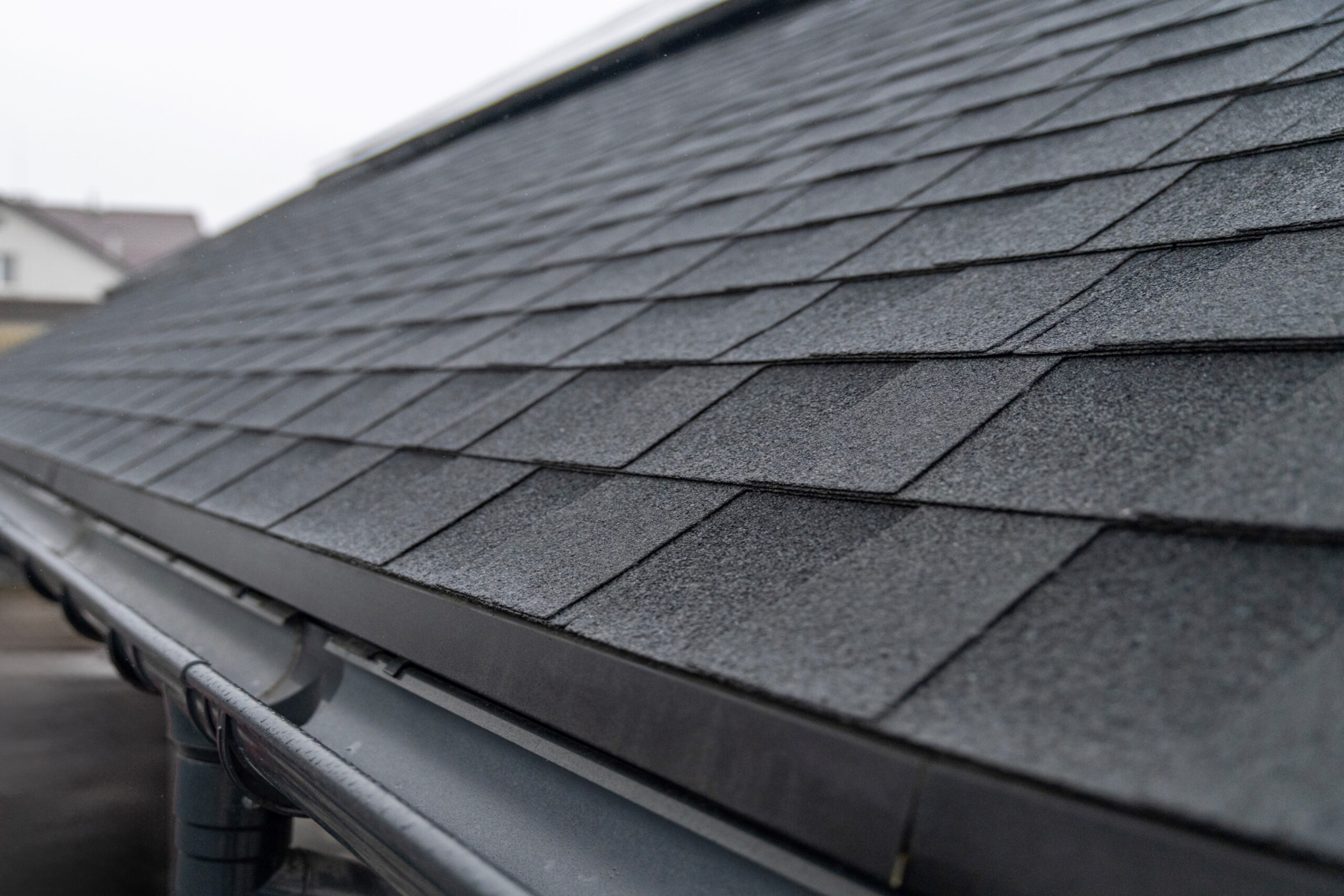
Composite Shingles: Cost, Types & How They Compare
 14min Read
 Posted 3.20.2026
Quick Answer
- Composite shingles: Synthetic roofing tiles made from a blend of polymer, rubber, fiberglass, and other materials designed to mimic premium natural products.
- Lifespan: 30â50 years, longer than standard asphalt shingles.
- Cost: $700â$1,500 per square (100 sq ft) installed â significantly more than asphalt.
- Best for: Homeowners who want the look of slate, wood shake, or tile without the weight, fragility, or maintenance.
- Key advantage: Premium appearance at a fraction of the weight of real slate or tile, often with Class 4 impact resistance.
Composite shingles bridge the gap between the look of premium roofing materials (natural slate, cedar shake, clay tile) and the practicality of a low-maintenance synthetic product. If you love the look of a slate or wood shake roof but don’t want the weight, fragility, or ongoing maintenance, composite shingles deserve serious consideration. Here’s everything you need to know before deciding.
What Are Composite Shingles?
Composite shingles are manufactured from a blend of synthetic materials — typically fiberglass, recycled rubber, plastic polymers, and pigments — engineered to replicate the texture and appearance of natural roofing products. The blend varies by manufacturer, but the result is a shingle that looks remarkably like real slate or wood shake while being lighter, more impact-resistant, and far easier to install and maintain.
The term “composite” sometimes causes confusion because standard asphalt shingles are also technically “composite” (fiberglass mat + asphalt + granules). In roofing industry usage, “composite shingles” specifically refers to these premium synthetic tiles that mimic slate or wood shake, not standard three-tab or architectural asphalt shingles.
Types of Composite Shingles
Synthetic Slate
The most popular category, designed to mimic the layered, textured look of natural slate. Products like DaVinci Roofscapes, Brava, and CertainTeed Belmont replicate the irregularity and color variation of real slate convincingly. They weigh 150â350 lbs per square — compared to 700â3,000 lbs for natural slate. This means most homes don’t need structural reinforcement, which is a massive advantage for retrofits.
Synthetic Wood Shake
Composite panels that mimic the rough-hewn look of cedar shake shingles. DaVinci Bellaforté Shake and Brava Cedar Shake are leading products. These are particularly popular in areas where real cedar shake is common but wildfire codes restrict its use, since composite alternatives can achieve Class A fire ratings that real wood can’t match.
Polymer/Rubber Shingles
Shingles made primarily from recycled rubber or plastic polymers. Often more affordable than fiberglass-based composites, with good impact resistance. EcoStar and Euroshield make respected products in this category.
Composite vs. Other Roofing Materials: Full Comparison
| Factor | Composite Shingles | Asphalt Arch. | Natural Slate | Cedar Shake |
|---|---|---|---|---|
| Cost (installed) | $700â$1,500/sq | $300â$600/sq | $1,500â$4,000/sq | $600â$1,200/sq |
| Lifespan | 30â50 yrs | 20â30 yrs | 75â200 yrs | 20â30 yrs |
| Weight (per square) | 150â350 lbs | 200â350 lbs | 700â3,000 lbs | 300â400 lbs |
| Fire rating | Class A | Class A | Class A | Class B/C |
| Impact resistance | Class 4 (most) | Class 3â4 | Poor (cracks) | Fair |
| Maintenance | Very low | Low | Low (when intact) | High |
| Appearance | Premium (mimics slate/shake) | Standard | Premium (real) | Premium (natural) |
| Structural req. | Standard | Standard | Reinforced (usually) | Standard |
Composite Shingle Cost: What Drives the Price
Composite shingles cost significantly more than asphalt shingles but considerably less than natural slate or tile. Expect $700â$1,500 per square installed, with total roof costs of $15,000â$35,000 for a typical 2,000 sq ft home. The wide range comes from several factors:
- Product quality and brand: DaVinci and Brava are premium-tier; generic or lesser-known brands may cost 30â40% less but with shorter warranties and less convincing appearance.
- Roof complexity: More valleys, hips, ridges, and penetrations increase both material waste and installation time.
- Tear-off: Removing the old roof adds $1â$3 per sq ft depending on layers and material type.
- Installation difficulty: Synthetic slate requires careful layout to maintain consistent lines — skilled crews are essential.
Composite Shingle Lifespan and Warranty
Most premium composite shingles carry 30â50 year limited warranties, with some manufacturers offering lifetime warranties. Unlike asphalt shingles, which can start to curl, crack, and lose granules after 15â20 years, quality composite shingles hold their color and shape far better. They don’t absorb moisture, which eliminates the moss and algae growth common on wood shake and prevents freeze-thaw damage that cracks natural slate.
When comparing warranties, pay attention to what’s actually covered. Many warranties prorate coverage after the first 10â15 years, meaning you get significantly less reimbursement if a product fails at year 25 compared to year 5. Look for non-prorated coverage and wind warranties of at least 110 mph.
Installation Considerations
Composite shingles install differently than asphalt shingles. Most products use an offset staggered layout that mimics natural slate or shake patterns. Proper installation requires:
- A solid, flat deck in good condition — no more than 1/4 inch per foot deflection.
- Ice and water shield in valleys and eave zones per manufacturer specs.
- Starter strips or trimmed panels at eaves — similar to asphalt starter shingles.
- Exposure and offset patterns specific to each product — installers must follow the manufacturer’s installation guide precisely.
- Proper fastener count and placement — composite panels handle wind loads differently than asphalt.
Is Composite Roofing Worth It?
For homeowners who want a premium-looking roof with minimal long-term maintenance, composite shingles often represent excellent value over time. The 30â50 year lifespan means one roof installation instead of two asphalt replacements. The Class 4 impact resistance can lower insurance premiums. And the lightweight construction makes installation possible on homes that couldn’t support real slate.
They’re not right for every budget — the upfront cost is real. But for a forever home where curb appeal and longevity matter, composite shingles are worth serious consideration alongside asphalt architectural shingles.
FAQ: Composite Shingles
Interested in Composite Shingles?
We install premium synthetic slate and shake shingles with manufacturer-certified crews. Get a free estimate and see product samples.
Request Composite Shingle EstimateComposite Shingles and HOA Approval
If your neighborhood has a homeowners association, composite shingles often require pre-approval before installation. Many HOAs specify “natural materials” in their CC&Rs without anticipating modern composite products. The good news: premium composite shingles like DaVinci’s product line are so convincing in appearance that HOAs routinely approve them once they see actual samples or completed nearby homes. Get HOA approval in writing before ordering materials — this protects you if there’s any dispute about appearance.
Composite Shingle Performance in Hail-Prone Regions
Composite shingles have become particularly popular in Colorado, Texas, Nebraska, and other hail-belt states for a specific reason: Class 4 impact resistance. Following costly hail seasons, many homeowners in these regions have upgraded from standard asphalt to composite shingles and seen their insurance claims drop dramatically even in significant hail events. The polymer construction simply absorbs impact differently than asphalt, which can lose large patches of granules from a single hailstone strike.
Several independent hail simulation studies have confirmed that Class 4-rated composite shingles show significantly less damage than asphalt in simulated hail impacts of 1.5 to 2 inches in diameter. For homeowners in hail-prone areas, the insurance savings from reduced claims — combined with premium discounts — often accelerate the payback period on the higher upfront cost.
Top Composite Shingle Brands: What to Know
The composite shingle market has several tiers. DaVinci Roofscapes is widely considered the premium standard for synthetic slate and shake, with the most convincing appearance and some of the longest warranties in the category. Brava offers a strong competing product with 50-year warranties and high recycled content. CertainTeed Belmont and GAF Camelot II provide architectural shingle companies’ takes on dimensional composite styles. For budget-conscious buyers, Owens Corning Duration Flex and similar products offer some composite-like properties at pricing closer to premium asphalt. Seeing physical samples side by side is important — product photography doesn’t capture texture and appearance variation accurately.
Composite Shingles for Historical Homes
One of the most compelling use cases for composite shingles is on historical homes where natural slate or wood shake is historically appropriate but impractical for contemporary installation. A Victorian-era home that originally had slate roofing, for example, may not have the structural framing to support new natural slate (which can weigh 800â1,500 lbs per square). Synthetic slate in an appropriate color and texture provides visual authenticity without structural modification.
Many historical preservation boards have approved composite shingles for buildings in historic districts when the products are sufficiently convincing in appearance. Some jurisdictions have specific approval processes for synthetic alternatives; check with your local historical commission before selecting products to ensure you’re choosing something that will pass review. Product documentation with photographs of completed installations in similar contexts is helpful in these review processes.
Selecting Colors for Composite Shingles
Composite shingles come in a wide range of colors designed to mimic natural materials: slate grays, blue-blacks, greens, burgundies, and earth tones for synthetic slate; weathered grays, honey tones, and cedar browns for synthetic shake. The color consistency in composite shingles is actually more controllable than in natural materials — you won’t get the batch-to-batch variation that can affect natural slate deliveries.
When selecting colors, consider the color of your home’s siding, trim, and hardscape. Request large physical samples (not just small chips) and view them in different light conditions — exterior roofing colors look different in morning light, overcast conditions, and direct afternoon sun. Many manufacturers have color visualization tools on their websites, but seeing actual samples on or near your home gives the most accurate preview.
📍 Owl Roofing Serves the Entire Twin Cities Metro
Andover · Anoka · Apple Valley · Arden Hills · Big Lake · Blaine · Bloomington · Brooklyn Center · Brooklyn Park · Burnsville · Champlin · Chanhassen · Chaska · Columbia Heights · Coon Rapids · Cottage Grove · Crystal · deephaven · Delano · Eagan · East Bethel · Eden Prairie · Excelsior · Farmington · Forest Lake · Fridley · Golden Valley · Ham Lake · Hastings · Hopkins · Hugo · Inver Grove Heights · Lake Elmo · Lakeville · Lino Lakes · Mahtomedi · Maplewood · Mendota Heights · Minneapolis · Minnetrista · Mound · Mounds View · New Brighton · New Hope · North Oaks · North St. Paul · Oak Grove · Oakdale · Plymouth · Prior Lake · Ramsey · Richfield · Robbinsdale · Rosemount · Roseville · Saint Paul · Savage · Shakopee · Shoreview · South St. Paul · St. Louis Park · St. Michael · St. Paul · Stillwater · Vadnais Heights · Victoria · Waconia · wayzata · West St. Paul · White Bear Lake · woodbury
Licensed Minnesota roofing contractor · Free inspections · 10-year workmanship warranty · Get a free estimate →
