


Hail Damage Repair Cost Calculator (Minnesota)
 3min Read
 Posted 7.27.2026
🦉 Hail Damage Repair Cost Calculator
Estimate repair vs. replacement cost — and whether insurance should be involved.
Light damage assumes slope repair; moderate and severe assume full replacement (insurers rarely approve partial replacement once bruising crosses slopes — shingle matching is nearly impossible). Minnesota’s average hail claim now runs close to $30,000. Documentation quality decides claims: chalk-marked photos, test squares, and a contractor at the adjuster meeting.
Get a Free Hail Inspection →What Hail Damage Repair Actually Costs in Minnesota
Hail repair costs live in two different worlds. Small, contained damage — a dozen bruised shingles on one slope, a dented vent cap — is a $1,500–$4,500 repair. But once bruising spreads across multiple slopes, the realistic remedy becomes full replacement, and the bill follows roof size: at today’s Twin Cities pricing (~$600 per square for architectural asphalt), a typical 1,800 sq ft home runs $12,000–$16,500. That jump — repair to replacement — is exactly why hail is an insurance conversation in Minnesota, where the average hail claim now approaches $30,000. The calculator above estimates both the project cost and how it splits between your deductible and your insurer.
How to Tell If Hail Damage Is Repairable or Total
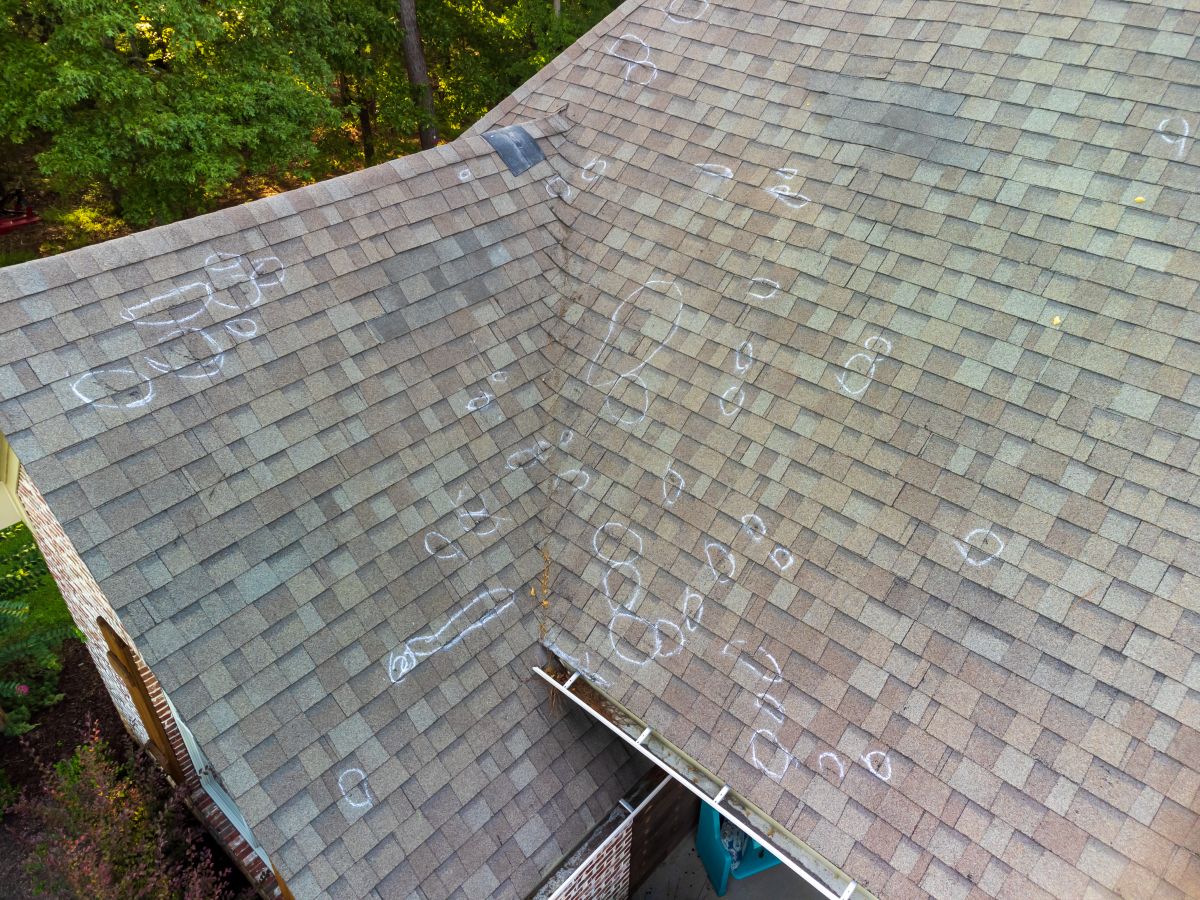
Adjusters count hits in a 10×10 test square. A handful of bruises on one slope can justify repair; 8+ hits per square across slopes typically totals the roof. The practical problem with partial repairs is matching — shingle colors weather and get discontinued, so a repaired slope often looks patched and can even raise resale questions. Insurers know this, which is why widespread bruising almost always becomes full replacement. What matters most in that determination is documentation: date-stamped, chalk-circled photos of every elevation, soft-metal dents (gutters, vents, flashing) that corroborate the storm, and a contractor present at the adjuster meeting. Our guide to identifying hail damage on shingles shows what bruising actually looks like.
Hail Damage You Can’t See From the Ground
Fresh hail bruises rarely look dramatic — a bruise is granule loss over fractured fiberglass mat, not a hole. The damage is functional: the mat cracks, the shingle sheds granules at that spot for years, and the roof ages out a decade early. This is why hail damage without leaks is still damage, and why waiting until it leaks can push you past your policy’s claim window — most Minnesota policies allow one to two years from the storm date. If your neighborhood took a hit, get inspected within weeks, not seasons.
Your Deductible Math (The Part That Surprises People)
Minnesota policies have shifted hard from flat deductibles to percentage wind/hail deductibles — typically 1–2%, sometimes 5%, of your home’s insured value. On a $400,000 home, a 2% deductible means the first $8,000 is yours. The calculator runs your numbers; the takeaway is universal: know your deductible before you file. If damage lands near the deductible line, an inspection-first approach protects your claims history. If it is a total, the deductible is a fraction of the project and the claim is clearly worth it. We break down the filing sequence in how to file a Minnesota roof claim.
Beware the Storm-Chaser Playbook
After every major Twin Cities hail event, out-of-state trucks appear with door-knockers promising “free roofs.” Some are legitimate; many vanish before warranty season. Red flags: pressure to sign an assignment-of-benefits on the spot, waived deductibles (illegal in Minnesota), and no local address you can drive to. A local contractor with a decade of local roofs is your leverage — before, during, and years after the claim. Our take on how roofers rip off homeowners names the tactics plainly.
Hail Repair Cost FAQs
How much does hail damage repair cost without insurance?
Spot repairs run $1,500–$4,500; full replacement follows normal roofing prices — use our roof cost calculator.
Does insurance cover hail damage to roofs in Minnesota?
Standard homeowner policies cover hail; the variables are your deductible type and replacement-cost vs. actual-cash-value coverage.
Will filing a hail claim raise my rates?
Weather claims are rated regionally more than individually — but a $0 payout claim still appears on your CLUE report, which is why inspect-first matters.
How long after hail can I file a claim?
Typically one to two years from the storm date in Minnesota — check your policy and do not wait for a leak.
What size hail damages a roof?
1″ (quarter-size) reliably bruises aging asphalt; smaller hail damages soft metals first. Our hail size guide has the full chart.
Storm rolled through? Owl Roofing inspects free, documents everything with photos, and meets your adjuster — schedule your hail inspection. 🦉
