How Roofers Rip You Off (and How Smart Minnesota Homeowners Avoid It)
 12min Read
 Posted 12.19.2025
Every industry has bad actors, but roofing has more than its share.
Maybe it’s the storm seasons.
Maybe it’s the high-dollar jobs.
Maybe it’s the fact that most homeowners can’t see the roof clearly.
Whatever the reason, too many Minnesota families get ripped off every year—overpriced quotes, sloppy installs, insurance games, and pressure tactics that turn an already stressful situation into a financial landmine.
You don’t need fear.
You need clarity.
Here’s exactly how roofers take advantage of homeowners, and how to stay five steps ahead.
The Most Common Ways Roofers Rip You Off
1. The “One-Line Quote” Trick
This is the classic move:
A roofer hands you a quote that says something like:
“Replace roof – $17,400.”
No materials.
No labor breakdown.
No ventilation details.
No underlayment type.
No flashing work.
Nothing.
One-line quotes hide shortcuts and inflate margins.
Smart move:
Never trust a quote without clear line items.
If it doesn’t list materials, ventilation, underlayment, flashing, cleanup, and warranty terms—it’s not a real quote.
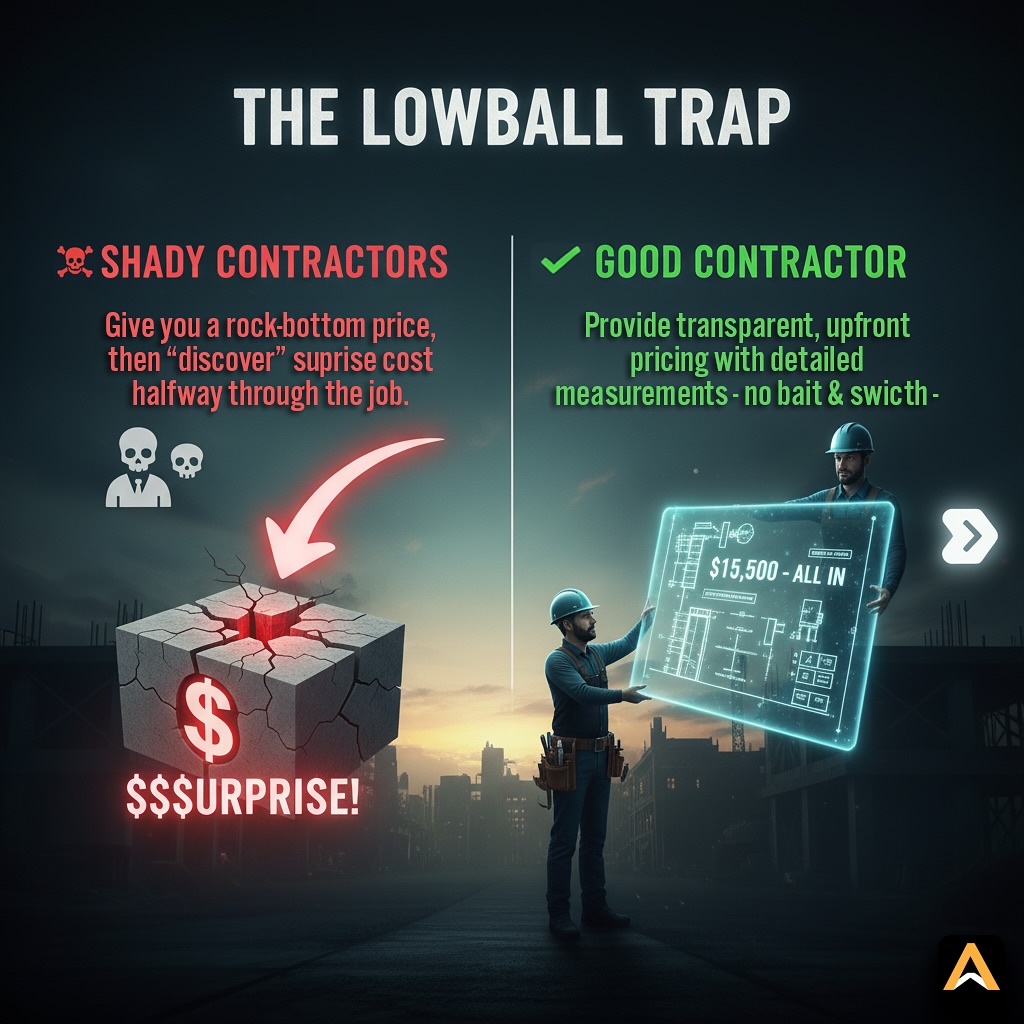
2. Low-Ball Pricing That Explodes Later
Some contractors intentionally bid lower than everyone else.
Why?
To win the job.
Then once the tear-off begins, the “unexpected costs” appear:
- Extra layers
- Decking replacement
- “Premium” underlayment you didn’t ask for
- Surprise disposal fees
- Mystery permit charges
And because your roof is opened up, you have little choice but to pay.
Smart move:
Ask, “What could raise the price after tear-off?”
If they can’t answer clearly, walk.
3. Overusing the Word “Damage” to Scare Homeowners
Some shady roofers use fear to upsell:
“You have major damage.”
“This is urgent.”
“You’re one storm away from disaster.”
“I wouldn’t sleep under this roof.”
Fear = pressure.
Pressure = overpaying.
Real damage has real evidence.
Smart move:
Always ask for photos and explanations in plain English.
A good roofer shows you everything.
A shady one hides behind big words and fear.
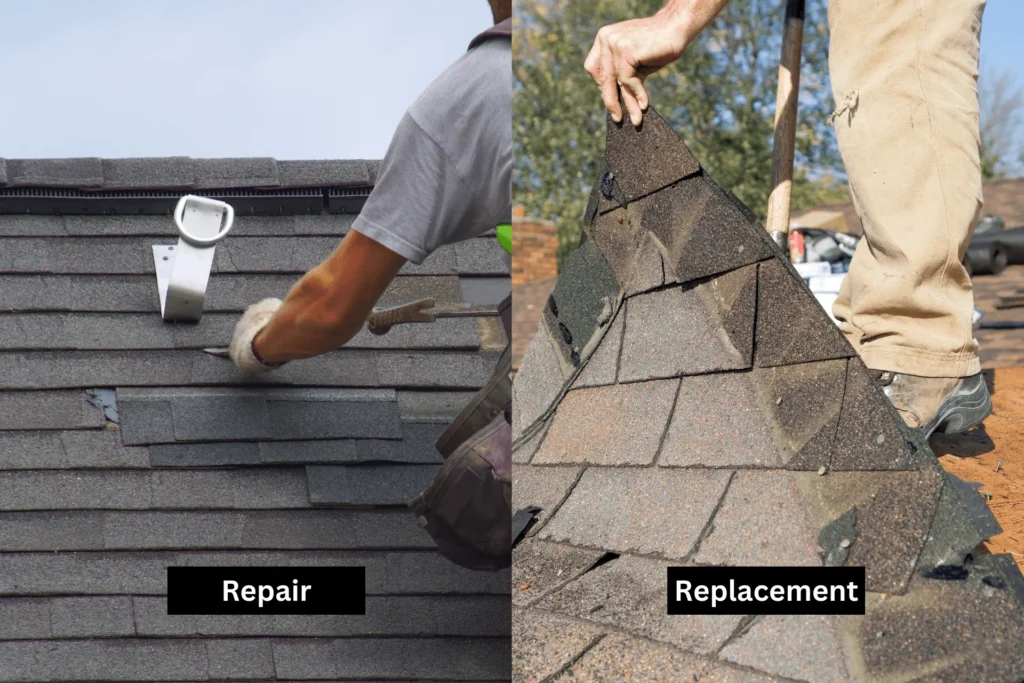
4. Upselling Entire Replacements When You Only Need Repairs
Many homeowners in good-faith call a roofer for a small leak—and get told they “need a whole new roof.”
Sometimes that’s true.
Often it’s not.
Smart move:
Ask, “Can this be repaired instead of replaced?”
If the answer is instantly “no,” with no explanation, that’s a red flag.
5. Using Cheap Materials While Charging Premium Prices
Some contractors quote “premium shingles” but install lower-grade versions.
Or they advertise “ice and water shield” but only install it in the absolute minimum areas.
Most homeowners never know.
Smart move:
Ask for specific material brands and product lines.
Not “architectural shingles”—which ones?
If they can’t tell you the exact model, they don’t intend to use it.
6. Ignoring Ventilation Because It Takes More Work
Poor ventilation is one of the biggest reasons roofs fail early.
Many contractors skip it because:
- It adds time
- It adds cost
- Homeowners don’t know to ask about it
Results:
Hot attic
Warped shingles
Ice dams
Premature failure
Smart move:
If they don’t evaluate your vent system, it’s not a complete quote.
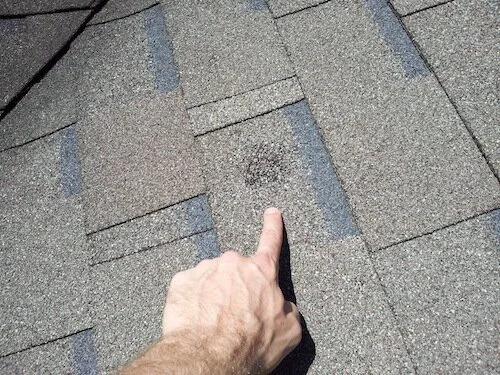
7. Overstating Hail Damage
Plenty of roofers “chase storms” and tell homeowners everything is hail damage.
They do this because insurance pays out more than retail work.
Smart move:
If you didn’t notice leaks, dents, granule loss, or widespread shingle bruising—be cautious.
A real roofer shows you the specific hits, not vague statements.
8. Forcing You Into Their Financing
Some roofers push aggressive financing because they get kickbacks from lenders.
Signals this is happening:
- Pressure to “sign today”
- No mention of other loan types
- Glossing over high APRs
- Very quick transitions into credit applications
Smart move:
Ask for all options: contractor financing, personal loans, HELOC, cash, and what’s best for your home—not what’s best for them.
9. Ghosting After the Job
This is the ugly part:
Some roofers vanish when there’s a warranty issue.
They don’t answer.
They don’t show up.
Sometimes the company disappears entirely.
Smart move:
Choose a roofer who documents everything, communicates clearly, and has a strong local presence—not a traveling storm crew.
What Ethical Roofers Do Differently
Legit roofing companies do things nearly every shady contractor avoids:
They give you transparent, line-item quotes.
They show photos of everything they found.
They offer repair options when possible.
They explain next steps clearly.
They talk about ventilation because it matters.
They respect your budget and your intelligence.
They act like your home is a real home—not a payout.
A great roofer protects your roof and your peace of mind.
Quick Checklist: How to Avoid Getting Ripped Off
Use this before hiring anyone:
- Do they give a detailed written estimate?
- Do they show photos and explain issues simply?
- Do they treat repairs as a real option?
- Do they evaluate ventilation?
- Do they use specific brands—not vague descriptors?
- Do they document the job before, during, and after?
- Are they local and responsive?
- Are they insured and willing to prove it?
- Do they pressure you?
If you feel “off,” trust it.
Most homeowners sense when something isn’t right.
The Safest Path Forward: Clarity First, Pressure Never
Roofing shouldn’t feel like walking into a trap.
It should feel like partnering with someone who wants your home to be safe, warm, and well cared for.
That’s why companies like Owl Roofing lead with clarity, communication, and honesty—not scare tactics or shortcuts.
Your home deserves someone who protects your nest with integrity, not someone who sees you as a quick payday.
FAQ: How Roofers Rip You Off (And How to Outsmart Every Trick)
How do I know if a roofer is lying about damage?
Ask for photos.
Real damage = clear images with explanations.
Shady roofers use words like “compromised,” “unstable,” “unsafe,” or “urgent” without proof.
If they can’t point to specific bruises, cracks, lifted shingles, or underlayment exposure, they’re bluffing.
Why do some roofers push full replacements when repairs are possible?
Because replacements pay more.
Repairs require skill and honesty.
Replacements are easier to sell and install.
A good roofer explains both options and tells you why one makes sense.
Is a super low bid always a scam?
Not always, but usually something’s missing.
Low bids often skip:
underlayment
ice and water shield
flashing
ventilation
cleanup
warranty support
They win the job upfront and make money later through surprise add-ons.
What should a real roofing quote include?
A legitimate quote has:
exact shingle brand and model
underlayment details
flashing replacement
ridge vent or soffit plan
ice and water coverage
tear-off details
decking replacement pricing
cleanup plan
timeline
warranty explanations
If something huge is missing, it’s not an honest estimate.
Do shady roofers actually reuse old materials?
Yes.
Some reuse old flashing or vents to save time and increase margin.
You pay for “new everything” and get half-new.
Always ask: “What is being reused?”
A good roofer will tell you upfront and show photos during the job.
How do roofers inflate decking charges?
They wait until the tear-off, then announce every sheet “needs replacing.”
You can’t see it, so they bank on fear.
Honest roofers price decking per sheet, take photos, and only replace what’s truly rotten.
What’s the deal with storm chasers?
Storm chasers follow hailstorms, knock aggressively, promise “free roofs,” then disappear when something goes wrong.
They use out-of-state crews, temporary LLCs, and no long-term warranty support.
Look for local licensing, Minnesota-based addresses, and real customer references.
Why do some roofers pressure homeowners to sign on the spot?
Because pressure kills your decision-making.
They use urgency to stop you from comparing quotes.
If someone says “sign now or the price changes,” that’s not a contractor — that’s a sales script.
Should a roofer climb my attic?
Yes.
Attic inspections reveal ventilation issues, moisture, mold, and heat imbalance.
If a roofer avoids the attic, they’re not giving a complete evaluation.
What tricks do roofers use to mess with insurance claims?
Some roofers:
inflate damage to chase insurance money
speak for the adjuster (illegal)
lock you into contracts early
submit sloppy documentation
promise coverage they can’t guarantee
Insurance claims are serious. A roofer should guide, not impersonate, an adjuster.
Do roofers get kickbacks for financing?
Sometimes, yes.
If a contractor pushes one lender aggressively, it may not be for your benefit.
Good roofers explain multiple options: contractor financing, HELOC, personal loan, or paying cash.
How do I know if my roofer will vanish after the job?
Look for these danger signs:
vague warranty language
no physical office
no long-term online reviews
no permit pulled
no job documentation
no dedicated project manager
If you chase them during the job, they will ghost you after the job.
Should roofers provide daily updates?
Absolutely.
Simple communication prevents misunderstandings and protects you from sloppy work.
The best roofers communicate before, during, and after the job with photos, timelines, and next steps.
How do homeowners get ripped off on materials?
By trusting vague terms: “architectural shingles,” “premium underlayment,” “high-end metal.”
Those words mean nothing without brand and model.
Always ask: “Which exact product are you installing?”
What’s the biggest roofing scam most people don’t see?
Skipping ventilation.
Ventilation is the backbone of roof performance.
Bad airflow shortens lifespan, voids warranties, and causes ice dams.
Shady contractors avoid it because it takes more labor and time.
Can a roofer really damage my roof on purpose?
It’s rare but not unheard of.
A few bad contractors create “damage” with hammers or pry bars to force replacements.
This is why documentation and picking a trusted local roofer matters.
The 10-Minute Roofer Vetting Checklist
Copy and paste this anywhere:
Ask for full line-item estimate.
Ask to see photos of all claimed issues.
Ask for brand + model for every material.
Ask about ventilation details.
Ask how decking charges are determined.
Ask to see before/after photo sets.
Ask if repair is an option.
Ask if they’re local and licensed.
Ask what could raise the price during the job.
Ask who handles communication and daily updates.
If they hesitate or dodge any of these questions, trust your instincts.

How Owl Roofing Stands Apart
Owl Roofing wins trust by doing the opposite of every shady tactic:
Every quote is line-item clear.
Every material is identified by brand and model.
Every inspection includes attic, ventilation, and photos.
Every customer gets repair vs replacement options.
Every job is documented from start to finish.
Every question gets a straight answer.
Every project is communicated clearly and kindly.
You deserve a roofer who treats your home like a nest worth protecting, not a quick payday. When other companies play games, Owl makes things calm, honest, and simple.
📍 Owl Roofing Serves the Entire Twin Cities Metro
Andover · Anoka · Apple Valley · Arden Hills · Big Lake · Blaine · Bloomington · Brooklyn Center · Brooklyn Park · Burnsville · Champlin · Chanhassen · Chaska · Columbia Heights · Coon Rapids · Cottage Grove · Crystal · deephaven · Delano · Eagan · East Bethel · Eden Prairie · Excelsior · Farmington · Forest Lake · Fridley · Golden Valley · Ham Lake · Hastings · Hopkins · Hugo · Inver Grove Heights · Lake Elmo · Lakeville · Lino Lakes · Mahtomedi · Maplewood · Mendota Heights · Minneapolis · Minnetrista · Mound · Mounds View · New Brighton · New Hope · North Oaks · North St. Paul · Oak Grove · Oakdale · Plymouth · Prior Lake · Ramsey · Richfield · Robbinsdale · Rosemount · Roseville · Saint Paul · Savage · Shakopee · Shoreview · South St. Paul · St. Louis Park · St. Michael · St. Paul · Stillwater · Vadnais Heights · Victoria · Waconia · wayzata · West St. Paul · White Bear Lake · woodbury
Licensed Minnesota roofing contractor · Free inspections · 10-year workmanship warranty · Get a free estimate →

Recent Articles
Explore The Blog