How Long Does a Roof Last? 8 Signs It’s Time to Replace
 16min Read
 Posted 8.10.2026
Understanding “how long does a roof last” starts with the material type: 3-tab asphalt shingles last 15 to 20 years, architectural asphalt shingles last 25 to 30 years, metal roofs last 40 to 80 years, slate and clay tile last 50 years or more, and cedar shakes last 30 to 40 years with proper treatment. Owl Roofing is a GAF and Owens Corning certified roofing contractor serving Vadnais Heights and surrounding Twin Cities communities, and the team helps homeowners identify when replacement is warranted based on roof age combined with visible signs of deterioration. This guide breaks down expected lifespans by material, walks through eight specific signs it’s time to replace, and covers what affects the actual service life your roof achieves.
- Lifespan by material: Real years of service for each roofing option.
- Eight replacement signs: Specific indicators your roof needs replacement.
- Lifespan factors: What determines whether your roof reaches its expected life.

How Long Does a Roof Last?
How long a roof lasts depends primarily on the roofing material, with secondary factors including installation quality, attic ventilation, climate exposure, and maintenance practices. Owl Roofing tracks actual service life on Vadnais Heights installations and finds material-specific lifespans align closely with national data when the roof is installed correctly and ventilated properly.
How Long Does an Asphalt Shingle Roof Last?
An asphalt shingle roof lasts 15 to 30 years depending on the shingle type and installation quality. The InterNACHI Standard Estimated Life Expectancy Chart for Homes lists 3-tab asphalt shingles at 20 years of expected service life and architectural asphalt shingles at 30 years. Owl Roofing finds Vadnais Heights architectural shingle roofs typically reach 25 to 30 years when installed with adequate ventilation and proper flashing, while 3-tab installations typically reach 15 to 20 years under the same conditions. Class 4 impact-rated shingles like GAF Timberline AS II match architectural lifespans while providing significantly better hail resistance, which supports Minnesota installations facing regular severe weather.
- 3-tab asphalt: 15 to 20 years in Minnesota conditions.
- Architectural asphalt: 25 to 30 years with proper installation.
- Class 4 impact-rated: 25 to 30 years with better hail resistance.
- InterNACHI standard: 20 and 30 years respectively for national reference.
How Long Do Other Roofing Materials Last?
Other roofing materials last significantly longer than asphalt shingles in most cases, with metal roofing reaching 40 to 80 years and slate or clay tile reaching 50 years or more per InterNACHI data. Owl Roofing installs standing seam metal roofing on Vadnais Heights homes for homeowners seeking the longest-lasting option available. Cedar shakes last 30 to 40 years when treated with preservatives and properly maintained. Synthetic composite shingles from manufacturers like DaVinci and Brava last 40 to 50 years with transferable warranties on most products. The longer-lasting materials cost more upfront but eliminate the cost of one or two asphalt replacement cycles over the same time period, often producing better long-term value for homeowners planning to stay in the home 30 years or longer.
- Metal roofing: 40 to 80 years per InterNACHI data.
- Slate and clay tile: 50 years or more with proper maintenance.
- Cedar shakes: 30 to 40 years with treatment.
- Synthetic composite: 40 to 50 years with transferable warranty.
8 Signs It’s Time to Replace Your Roof
Eight signs indicate that roof replacement is the right call rather than continued repair or delayed action. Owl Roofing evaluates each sign during free inspections in Vadnais Heights and surrounding areas, with multiple signs together confirming the replacement timing.
1. Your Roof Has Reached or Exceeded Its Expected Service Life
The roof at or past its expected service life is the most reliable single indicator that replacement is warranted. Owl Roofing verifies roof age through permit records, manufacturer date codes on the shingles, or homeowner documentation during Vadnais Heights inspections. Architectural asphalt shingles approaching year 25 typically show visible signs of aging that confirm the lifespan estimate. 3-tab shingles approaching year 18 to 20 commonly need replacement based on age alone. Roofs in significantly worse condition than expected for their age usually trace back to inadequate ventilation, poor installation quality, or storm damage that accelerated wear. Roofs still in good condition at the upper end of the expected lifespan range benefit from continued monitoring rather than immediate replacement.
- Architectural age threshold: 25 to 30 years typically requires replacement.
- 3-tab age threshold: 18 to 20 years typically requires replacement.
- Age verification: Permit records, date codes, or purchase documentation.
- Condition variation: Ventilation and installation quality affect actual lifespan.
2. Multiple Shingles Are Missing, Cracked, or Damaged
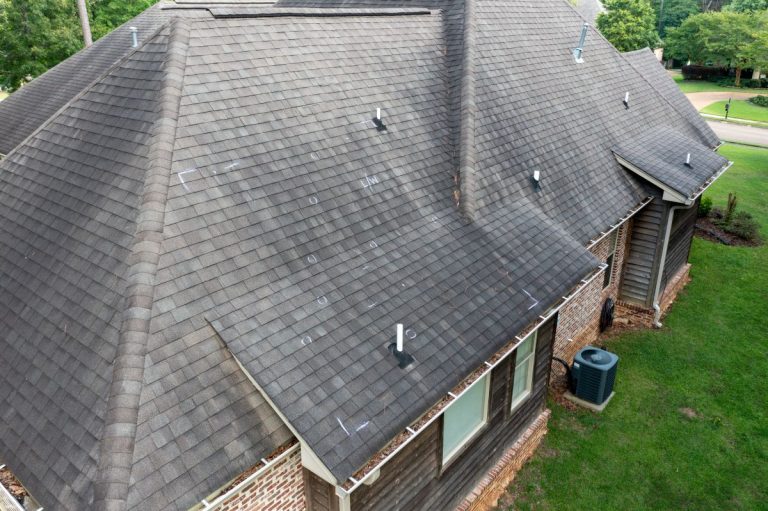
Multiple shingles missing, cracked, or damaged across the roof indicates widespread failure rather than localized damage that repair can address. Owl Roofing identifies widespread damage during Vadnais Heights inspections by examining every roof slope for missing shingles, torn shingle sections, and shingles that have cracked from age or storm exposure. Damage affecting fewer than 30 percent of shingles on a single slope typically qualifies for targeted repair, while widespread damage across multiple slopes usually indicates that the underlying shingle protection has failed. Wind uplift damage on multiple slopes also confirms that the shingle adhesive seals have released, which allows further damage during subsequent storms even without visible immediate impact.
- Widespread threshold: Damage across multiple slopes indicates system failure.
- Repair versus replacement: Under 30 percent on single slope favors repair.
- Adhesive seal failure: Wind damage indicates system-wide problem.
- Progressive damage: Compromised seals allow future damage during storms.
3. Shingles Are Curling, Cupping, or Buckling
Shingles curling, cupping, or buckling across the roof indicate that the asphalt has dried out, the shingle mat has lost flexibility, and the shingles are failing structurally. Owl Roofing identifies these signs on Vadnais Heights roofs by looking for shingle edges lifting away from the roof surface, shingles taking on a concave or convex shape, or shingles forming raised waves across the roof. The damage typically starts on the south and west facing slopes that receive the most sun exposure. Isolated curling on a few shingles can be addressed through targeted replacement, but widespread curling across the roof confirms that the asphalt has degraded and the entire roof needs replacement. Curled shingles also allow wind and water under the surface, accelerating further damage.
- Visual signs: Edges lifting, concave or convex shape, wave patterns.
- Sun exposure correlation: South and west slopes affected first.
- Localized vs widespread: Isolated curling repairable, widespread requires replacement.
- Cascading damage: Curled shingles allow wind and water intrusion.
4. Widespread Granule Loss and Bald Spots
Widespread granule loss and bald spots across the roof indicate that the asphalt is exposed to UV radiation and the shingle protection has failed. Owl Roofing finds widespread granule loss during Vadnais Heights inspections by looking for the bare asphalt mat showing through where the granule layer has worn away. Some granule loss is normal as shingles age, but widespread bald spots across the roof confirm that the shingle protection has reached the end of its service life. Granules also accumulate in significant quantities in gutters and downspouts when the loss is reaching the replacement threshold. Bare asphalt deteriorates rapidly once exposed, with the underlying mat reaching failure within months once protection is lost. Replacement is the only solution because granules cannot be reapplied to existing shingles.
- Bald spots visible: Bare asphalt showing through worn granule layer.
- Gutter accumulation: Significant granule volume in downspouts.
- No surface repair: Granules cannot be reapplied to existing shingles.
- Rapid deterioration: Bare asphalt fails within months of exposure.

5. Interior Ceilings Show Water Stains
Interior ceilings showing water stains, discoloration, or active drips indicate that water has penetrated the roof system and reached the living space below. Owl Roofing inspects interior conditions during every Vadnais Heights inspection because ceiling stains often reveal the first visible evidence of roof failure. Yellow or brown discoloration on ceilings indicates prior water damage even when the leak appears to have stopped. Active drips during or immediately after rain confirm ongoing water entry that requires immediate attention. Soft ceiling spots, sagging drywall, or peeling paint on upper-floor rooms all indicate that water has reached interior spaces. Water damage typically travels downward from the entry point, so the visible interior stain may not directly indicate where the leak originates on the roof.
- Yellow or brown stains: Standard water damage signature.
- Active drips: Ongoing water entry requiring immediate response.
- Soft or sagging spots: Water has compromised drywall.
- Downward travel: Stain location differs from roof entry point.
6. Daylight Is Visible Through the Attic Deck
Daylight visible through the attic deck indicates that the roof system has physical breaches allowing direct exposure between the exterior and the attic space. Owl Roofing inspectors check attic conditions during every Vadnais Heights roof inspection using a flashlight to examine the entire underside of the roof deck. Daylight through the deck confirms structural damage from impact, missing shingles that have exposed the deck, or separated sheathing at the seams. Any daylight visible through the deck confirms that immediate action is needed because the same openings allow water, insects, and small animals into the attic space. Multiple daylight points across the deck indicate widespread damage requiring full replacement rather than spot repair.
- Structural breach indicator: Physical opening between exterior and attic.
- Common causes: Impact damage, missing shingles, separated sheathing.
- Water and pest entry: Openings allow moisture and animals into attic.
- Multiple points: Widespread damage confirms replacement needed.
7. The Roof Deck Is Sagging
A sagging roof deck indicates serious problems that require both replacement and underlying structural repair. Owl Roofing identifies sagging during Vadnais Heights inspections by checking the roof line from the ground for visible dips between rafters, and examining the deck from inside the attic for visual bowing or separation. Sagging typically results from prolonged water damage, undersized framing, or excessive load from multiple shingle layers. Minor sagging can sometimes be corrected during replacement by addressing the underlying cause, while significant sagging requires structural assessment by a contractor or engineer before the new roof can be installed. Sagging is one of the more urgent replacement signs because continued deterioration accelerates as the structure weakens.
- Visible roof line dips: Most obvious sign visible from the ground.
- Common causes: Water damage, undersized framing, excess weight.
- Structural assessment: Required before replacement on significant sagging.
- Urgency factor: Sagging accelerates without intervention.
8. Escalating Repair Costs Year After Year
Escalating repair costs year after year indicate that the roof has reached the point where targeted repair is no longer cost-effective and full replacement delivers better long-term value. Owl Roofing performs cost-benefit analysis during Vadnais Heights inspections by comparing cumulative repair cost over the past three to five years against the value of full replacement. When annual repair costs exceed 10 to 15 percent of the cost of full replacement, the math typically favors replacement. Repeat repairs on aging roofs also never restore the underlying system performance, which means the roof continues to deteriorate even after each repair. Full replacement resets the warranty clock and delivers 25 to 30 years of service life rather than incremental years between increasingly frequent repairs.
- Annual cost threshold: 10 to 15 percent of replacement cost favors replacement.
- Cumulative analysis: Compare 3 to 5 year repair total against replacement value.
- System failure indicator: Multiple repair points show broader breakdown.
- Warranty reset: Replacement starts fresh 25 to 30 year warranty period.
What Affects How Long Your Roof Lasts?
Multiple factors beyond material type affect how long your roof lasts, with installation quality and ventilation being the two most important controllable factors. Owl Roofing addresses each factor during Vadnais Heights consultations to help homeowners understand what determines actual service life versus expected lifespan.
What Factors Determine Actual Lifespan?
The factors that determine actual roof lifespan include installation quality, attic ventilation, climate exposure, maintenance practices, and any storm damage the roof accumulates over time. Owl Roofing installs GAF and Owens Corning systems on Vadnais Heights homes with balanced ventilation, code-compliant fasteners, and proper flashing to support the roof reaching or exceeding its expected service life. Installation shortcuts such as improper nail placement, missing ice barrier, cheap flashing, or inadequate ventilation typically reduce actual service life by 20 to 40 percent below the expected range. Regular maintenance including gutter cleaning, debris removal, and prompt repair of small issues extends service life significantly compared to neglected roofs.
- Installation quality: Largest single controllable lifespan factor.
- Attic ventilation: Balanced airflow prevents heat and moisture damage.
- Climate exposure: Sun, wind, hail, and freeze-thaw accelerate wear.
- Maintenance impact: Regular care extends service life significantly.
How Does Minnesota Weather Affect Roof Life?
Minnesota weather affects roof life through severe seasonal temperature swings, freeze-thaw cycles, heavy snow loads, ice dam formation, hail impact, and high wind events. Owl Roofing installs Vadnais Heights roofs to handle these conditions with ice and water shield at every eave, balanced attic ventilation to prevent ice dam formation, Class 4 impact-rated options for hail resistance, and wind warranty coverage up to 130 mph on GAF Timberline HDZ shingles. Minnesota roofs typically achieve service life at the middle to upper end of the expected range when installed properly, though severe weather events can shorten lifespan significantly. Class 4 impact-rated shingles perform better than standard shingles in the Twin Cities market because the hail resistance protects the roof from damage that would shorten standard shingle lifespan.
- Freeze-thaw cycles: Repeated stress on shingle materials and flashing.
- Ice dam risk: Prevented by proper insulation and ventilation.
- Hail damage: Class 4 impact-rated shingles resist better than standard.
- Wind events: 130 mph warranty on GAF Timberline HDZ.
How Much Does Roof Replacement Cost in Vadnais Heights?
The cost of roof replacement in Vadnais Heights depends on shingle tier, roof size, complexity, and accessory selections. Owl Roofing provides itemized estimates that show each cost component separately so homeowners understand what each part of the replacement includes.
What Is the Typical Cost Range?
Typical roof replacement in Vadnais Heights costs $14,000 to $25,000 for a 2,000 square foot home, with typical Vadnais Heights replacements landing around $18,500 for GAF Timberline HDZ architectural shingles installed in 2026. Owl Roofing pricing includes complete tear-off, ice and water shield at every eave, synthetic underlayment, new flashing, GAF or Owens Corning shingles, ridge cap, ventilation upgrades as needed, and full cleanup. Budget 3-tab installations run $12,000 to $16,000 in Vadnais Heights, while Class 4 impact-rated installations run $20,000 to $26,000 and qualify for wind and hail insurance discounts of 5 to 30 percent. Insurance-approved storm damage replacements cost the homeowner only the policy deductible, typically $1,000 to $2,500 on standard Minnesota policies.
- Typical Vadnais Heights range: $14,000 to $25,000 for full replacement.
- Typical Vadnais Heights replacement: Around $18,500 for Timberline HDZ.
- Budget 3-tab: $12,000 to $16,000 in Vadnais Heights.
- Premium Class 4 impact-rated: $20,000 to $26,000 with insurance discount eligibility.
Owl Roofing in Vadnais Heights
Owl Roofing handles roof replacements across Vadnais Heights and surrounding Twin Cities communities with GAF and Owens Corning certified installations. The team provides honest assessments during inspections rather than upselling unnecessary replacement work.
Why Choose Owl Roofing for Roof Replacement?
Owl Roofing is a strong choice for roof replacement in Vadnais Heights because the team provides free pre-replacement inspections with no obligation to proceed, makes honest recommendations based on inspection findings rather than always recommending replacement, registers full manufacturer warranties with appropriate accessory packages, and completes installations with line-item transparency on every estimate. Owl Roofing crews follow manufacturer specifications on every installation to preserve warranty coverage, install complete roof systems including ventilation upgrades when needed, and provide written documentation of every layer installed. The team handles both repair and replacement work depending on what each Vadnais Heights roof actually needs.
- Free pre-replacement inspections: With written reports.
- Honest assessment: Repair or replacement based on findings.
- Manufacturer warranties: Full registration on every installation.
- Line-item transparency: Every cost component shown separately.

Frequently Asked Questions
How Long Does a Roof Last in Minnesota?
A roof lasts 15 to 80 years in Minnesota depending on the material, with architectural asphalt shingles reaching 25 to 30 years, metal roofing reaching 40 to 80 years, and 3-tab asphalt reaching 15 to 20 years. Owl Roofing installs GAF Timberline HDZ architectural shingles on most Vadnais Heights homes because the product delivers the strongest balance of cost, lifespan, and warranty coverage.
Do Different Shingle Colors Last Longer?
Different shingle colors last approximately the same length in most cases because modern manufacturing produces consistent lifespans across color options. Owl Roofing installs GAF and Owens Corning shingles in over 20 color choices for Vadnais Heights homes with no significant lifespan difference between darker and lighter options. Darker colors absorb more heat, which can accelerate aging slightly in warm climates, but Minnesota’s cold climate reduces the color impact on service life.
Can Regular Maintenance Extend My Roof’s Life?
Regular maintenance extends roof life significantly by preventing small issues from becoming major problems, keeping gutters and drainage functioning properly, and identifying damage early. Owl Roofing offers a maintenance program for Vadnais Heights homeowners that includes annual inspections, minor repair coverage, and priority scheduling for major weather events. Maintained roofs typically reach the upper end of their expected lifespan range while neglected roofs often fall to the lower end.
Should I Replace My Roof Before It Fails?
Replacing your roof before it fails makes sense when the roof is approaching the end of its expected service life because waiting for visible failure typically means interior damage from leaks that could have been prevented. Owl Roofing recommends Vadnais Heights homeowners plan for age-based replacement as a budgeted home maintenance item rather than waiting for emergencies. Insurance does not cover age-related replacement, only storm damage.
How Do I Know My Roof’s Age?
You know your roof’s age through permit records maintained by the city, manufacturer date codes stamped on the underside of shingles visible in the attic, or purchase documentation if you were the homeowner during the last replacement. Owl Roofing inspectors verify roof age during Vadnais Heights inspections using all three methods when documentation exists. Homes with no available age documentation can sometimes be dated approximately based on shingle weathering patterns and product identification.
Does Owl Roofing Offer Financing for Roof Replacement?
Owl Roofing offers third-party financing options for roof replacement in Vadnais Heights with terms designed to fit a range of household budgets. Financing applications are processed promptly and do not affect contract pricing or installation schedules. Owl Roofing walks every homeowner through available financing options during the estimate review so the path to approval is clear before signing.
Get Your Free Roof Inspection Scheduled
Owl Roofing handles roof replacements across Vadnais Heights and surrounding Twin Cities communities with GAF and Owens Corning certified installations, insurance claim coordination, emergency repair availability, free inspections, financing options, and a maintenance program designed to protect the roof investment for its full service life. Every Owl Roofing inspection includes an honest assessment based on roof age, damage extent, and remaining service life rather than always recommending replacement.
Contact Owl Roofing to schedule a free roof inspection for your Vadnais Heights home and find out how much service life your current roof has remaining.

Recent Articles
Explore The Blog