



Roofing Nails Guide: 6 Types, Sizes & Uses Explained
 15min Read
 Posted 8.03.2026
Roofing nails come in six main types that homeowners and contractors use for different applications: galvanized steel smooth shank nails for standard asphalt shingles, galvanized steel ring shank nails for enhanced wind resistance, stainless steel nails for premium corrosion resistance, copper nails for copper roofing and flashing, aluminum nails for aluminum components, and coil nails formatted for pneumatic gun installation. Owl Roofing is a GAF and Owens Corning certified roofing contractor serving Fridley and surrounding Twin Cities communities, and the team uses code-compliant roofing nails on every installation to preserve manufacturer warranty coverage and meet Minnesota building code. This guide explains each nail type, breaks down size selection and required nail counts, and covers what building code specifies for residential roofing fasteners.
- Six nail types: Distinct materials and shank designs for specific applications.
- Code requirements: What Minnesota building code and manufacturer warranties require.
- Size selection: How to choose the right nail length and gauge for your roof.
Roofing Nails Basics
Roofing nails basics matter because the fastener holding the shingle to the deck is the most critical component of the roof system, with improper nailing accounting for a significant share of premature roof failures. Owl Roofing follows manufacturer specifications and Minnesota building code for every fastener installed on Fridley roofs.
What Are Roofing Nails?
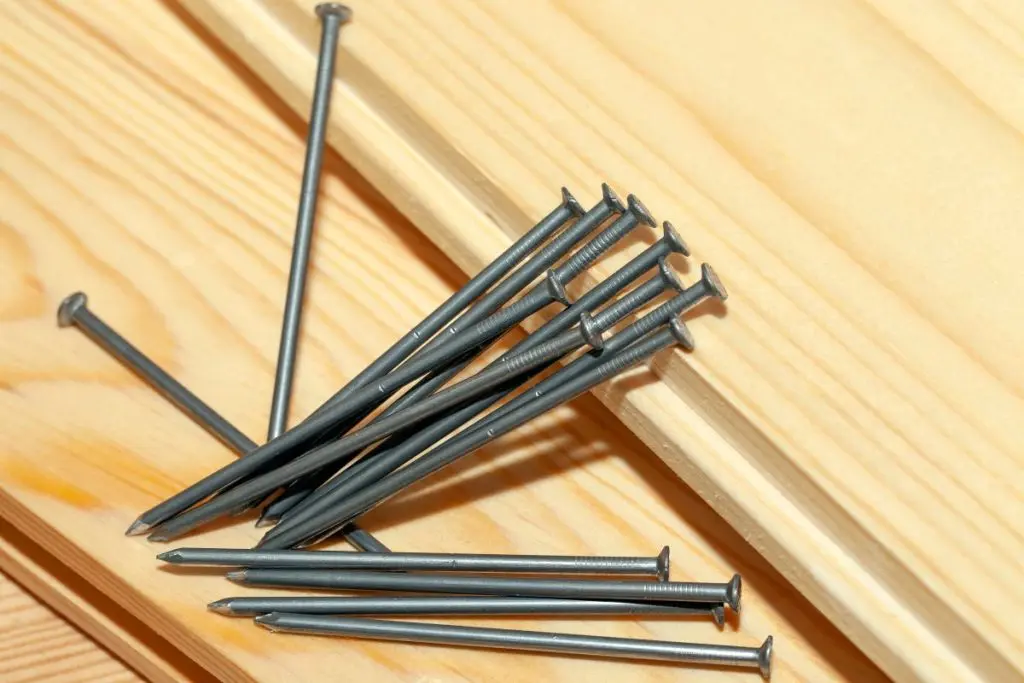
Roofing nails are corrosion-resistant fasteners specifically designed to attach roofing materials to the wood deck of a residential or commercial roof. Roofing nails differ from standard construction nails in three important ways: the head is significantly larger (typically 3/8 inch minimum) to distribute load across the shingle surface, the shank is shorter and thicker to hold in the wood deck without penetrating too deeply, and the material is always corrosion-resistant to survive decades of moisture and temperature exposure. Owl Roofing uses roofing nails meeting all Minnesota code requirements on every Fridley installation. Standard construction nails, drywall nails, or brad nails are not acceptable substitutes for roofing nails and void manufacturer warranties immediately when used.
- Large head: 3/8 inch minimum for load distribution across shingles.
- Short thick shank: Holds in deck without over-penetration.
- Corrosion-resistant material: Galvanized steel, stainless steel, aluminum, or copper.
- Not interchangeable: Standard construction nails void manufacturer warranties.
What Does Building Code Require for Roofing Nails?
Building code requires specific material, size, and installation standards for roofing nails used on Fridley homes. The International Residential Code, as adopted by Minnesota, specifies that fasteners for asphalt shingles shall be galvanized steel, stainless steel, aluminum, or copper roofing nails with a minimum 12-gauge shank and a minimum 3/8-inch diameter head, meeting the requirements of ASTM F1667. The nail length must be sufficient to penetrate through the roof sheathing or at least 3/4 inch into the roof sheathing when the sheathing is thicker than 3/4 inch. Staples are not permitted for shingle attachment under Minnesota code. Owl Roofing follows every code requirement on Fridley installations and documents the fastener specifications used on each job.
- Approved materials: Galvanized steel, stainless steel, aluminum, or copper.
- Minimum gauge: 12-gauge shank thickness.
- Head diameter: 3/8 inch minimum.
- Length rule: Through sheathing or 3/4 inch penetration minimum.
6 Types of Roofing Nails
Six main types of roofing nails serve residential roofing applications in Fridley. Owl Roofing selects the right nail type based on shingle product, roof application, and manufacturer warranty requirements.
1. Galvanized Steel Smooth Shank Roofing Nails
Galvanized steel smooth shank roofing nails are the most common fastener type for asphalt shingle installations in Fridley and surrounding Twin Cities communities. The nails feature a straight smooth shank without ridges or threads, a 3/8-inch head, and a galvanized zinc coating that protects the steel from corrosion. Owl Roofing uses galvanized smooth shank nails on standard residential asphalt shingle installations because the fastener meets all Minnesota building code requirements, works with pneumatic nail guns and hammers, and delivers consistent holding power across the roof surface. Standard sizes range from 1 inch to 2 inches in length, with 1.25 inch and 1.5 inch being the most common for asphalt shingle installations. The galvanized coating provides 15 to 30 years of corrosion resistance depending on the coating weight applied at manufacturing.
- Most common type: Standard fastener for asphalt shingles.
- Head diameter: 3/8 inch meeting code requirements.
- Length range: 1 to 2 inches for typical residential use.
- Corrosion resistance: 15 to 30 years from galvanized coating.
2. Galvanized Steel Ring Shank Roofing Nails
Galvanized steel ring shank roofing nails feature the same head and material as smooth shank nails but add horizontal ridges along the shank that significantly increase holding power. Owl Roofing recommends ring shank nails for Fridley installations in high-wind exposure zones because the ridges resist withdrawal much more effectively than smooth shank nails during severe weather events. Ring shank nails also work well when installing on roofs with older or softer decking where smooth shank nails might pull out over time. The nails typically cost 25 to 40 percent more than smooth shank nails but provide significantly better wind uplift resistance across the roof’s service life. GAF and Owens Corning both allow ring shank nails as an upgrade option on standard installations.
- Ring shank design: Horizontal ridges increase holding power.
- Wind resistance: Significantly better withdrawal resistance.
- Cost premium: 25 to 40 percent higher than smooth shank.
- Best for: High-wind exposure and older deck installations.
3. Stainless Steel Roofing Nails
Stainless steel roofing nails provide the highest corrosion resistance available for residential roofing and are used on premium installations, coastal environments, and applications where extended fastener life matters. Owl Roofing uses stainless steel nails for Fridley installations that require the highest tier of manufacturer warranty registration, installations near swimming pools where chlorine exposure accelerates corrosion, and applications where treated lumber comes in contact with the fasteners. Stainless steel nails typically cost 3 to 5 times more than galvanized steel nails but never rust and provide corrosion protection for the full lifetime of the roof. The nails come in the same 12-gauge minimum specifications as galvanized nails to meet code requirements.
- Highest corrosion resistance: No rust for the roof lifetime.
- Cost premium: 3 to 5 times galvanized steel cost.
- Best applications: Premium installations, pool areas, treated lumber.
- Warranty tier: Supports the highest manufacturer warranty registration.
4. Copper Roofing Nails
Copper roofing nails are specialty fasteners used specifically with copper roofing panels, copper flashing, and copper gutters to prevent galvanic corrosion between dissimilar metals. Owl Roofing uses copper nails on Fridley installations that include copper components because mixing copper with galvanized steel or aluminum creates electrical current between the metals in the presence of moisture, corroding both materials rapidly. Copper nails typically cost 5 to 10 times more than galvanized steel nails and are used only in the specific applications where copper matters. The nails come in the same size ranges as steel nails but with distinctive copper coloring that identifies the specialty use.
- Specialty application: Copper roofing, flashing, and gutters.
- Prevents galvanic corrosion: Same metal family prevents electrical current.
- Cost premium: 5 to 10 times galvanized steel cost.
- Not for standard shingles: Only used with copper components.
5. Aluminum Roofing Nails
Aluminum roofing nails are lightweight, corrosion-resistant fasteners used primarily with aluminum roofing components, aluminum flashing, and aluminum siding transitions where matching the metal type matters. Owl Roofing uses aluminum nails on Fridley installations with aluminum drip edge, aluminum gutters, and aluminum trim to prevent galvanic corrosion between different metals. Aluminum nails weigh significantly less than steel nails, which makes the fasteners easier to install by hand but requires slightly different pneumatic gun settings. The nails cost approximately 2 to 3 times more than galvanized steel and provide excellent corrosion resistance without the higher cost of stainless steel. Aluminum nails are not used for asphalt shingle attachment in most installations because galvanized steel offers stronger holding power.
- Lightweight fastener: Easier to install by hand.
- Aluminum components only: Matches metal type to prevent corrosion.
- Cost: 2 to 3 times galvanized steel cost.
- Not for shingles: Steel provides better holding power for shingles.
6. Coil Roofing Nails
Coil roofing nails are galvanized steel nails packaged in collated wire coils designed for use with pneumatic nail guns rather than hand hammering. Owl Roofing uses coil nails on Fridley installations because pneumatic guns install nails significantly faster than hand nailing while delivering consistent depth and holding power on every fastener. The nails come in coils of 120 to 480 nails per roll, with contractors selecting the coil size based on the specific nail gun model. Coil nails carry the same 3/8-inch head, 12-gauge shank, and galvanized coating as loose nails but with a small wire clip connecting the nails into the coil format. The wire clip disappears into the shingle during installation and does not affect the finished roof performance.
- Pneumatic gun format: Designed for professional installation speed.
- Same specifications: Meets all code requirements as loose nails.
- Coil sizes: 120 to 480 nails per roll depending on gun model.
- Faster installation: Significantly quicker than hand hammering.
Roofing Nail Sizes and Selection
Roofing nail sizes and selection depend on the shingle thickness, the deck thickness, and the specific application. Owl Roofing selects the right nail size for every Fridley installation based on the roof configuration and manufacturer specifications.
What Size Roofing Nails Do You Need?
You need roofing nails long enough to penetrate through the roof sheathing or at least 3/4 inch into the sheathing when the sheathing is thicker than 3/4 inch. Owl Roofing typically uses 1.25 inch nails for standard 3/8-inch OSB decking, 1.5 inch nails for 1/2-inch OSB or plywood decking, and 1.75 inch to 2 inch nails for thicker decking or when installing over an existing layer of shingles. Nail length calculation includes the shingle thickness (approximately 3/16 inch for architectural shingles), the underlayment thickness (approximately 1/16 inch), and the required deck penetration. Nails that are too short do not hold reliably, while nails that are too long can split the deck or protrude into the attic space where they create injury risk during future maintenance.
- 1.25 inch nails: Standard for 3/8-inch OSB decking.
- 1.5 inch nails: Standard for 1/2-inch OSB or plywood decking.
- 1.75 to 2 inch nails: Thicker decking or over-existing installations.
- Length calculation: Shingle plus underlayment plus 3/4 inch deck penetration.
How Many Nails Per Shingle Does Code Require?
Building code requires a minimum of 4 nails per asphalt shingle for standard installations, with 6 nails per shingle required in high-wind areas or when specified by the manufacturer for enhanced wind warranty coverage. Owl Roofing follows GAF and Owens Corning specifications for every Fridley installation, with GAF Timberline HDZ requiring 4 nails per shingle for standard installation and 6 nails per shingle for the 130 mph wind warranty. Each nail must be placed within the manufacturer-specified nail zone marked on the shingle to ensure proper holding. Improper nail placement, insufficient nail count, or nails placed outside the nail zone all void the manufacturer wind warranty and reduce actual wind performance significantly below the rated specifications.
- Minimum 4 nails: Standard installation per code.
- 6 nails required: High-wind areas and enhanced wind warranty.
- Nail zone placement: Marked area on each shingle for proper holding.
- Warranty impact: Improper nailing voids manufacturer wind warranty.
Roofing Nail Cost in Fridley
The cost of roofing nails in Fridley is a small portion of the total roof replacement cost, with the labor to install the nails properly being significantly more important than the fastener material cost. Owl Roofing includes all fastener costs in the itemized estimate on every installation.
What Does It Cost to Buy Roofing Nails?
Roofing nail material costs run $30 to $80 per box of 7,200 galvanized steel nails at typical retail prices in Fridley, with a 2,000 square foot home requiring approximately 6,000 to 12,000 nails total for the shingle installation. Owl Roofing purchases nails at contractor pricing and includes all fastener costs in the total roof replacement estimate rather than itemizing the small material cost separately. Ring shank nails run 25 to 40 percent higher, stainless steel nails run 3 to 5 times higher, copper nails run 5 to 10 times higher, and aluminum nails run 2 to 3 times higher than standard galvanized steel. The total nail cost on a typical Fridley residential installation runs $60 to $200 in materials.
- Galvanized retail: $30 to $80 per box of 7,200 nails.
- Total home nails: 6,000 to 12,000 nails on 2,000 square foot roof.
- Total nail material cost: $60 to $200 on typical Fridley installation.
- Included in estimate: Owl Roofing rolls fastener cost into total pricing.
What Does Roof Replacement Cost in Fridley?
Roof replacement in Fridley costs $14,000 to $25,000 for a typical 2,000 square foot home, with typical Fridley replacements landing around $18,500 for GAF Timberline HDZ architectural shingles installed in 2026. Owl Roofing pricing includes complete tear-off, ice and water shield at every eave, synthetic underlayment, new flashing, code-compliant roofing nails, GAF or Owens Corning shingles, ridge cap, ventilation upgrades as needed, and full cleanup. Budget 3-tab installations run $12,000 to $16,000 in Fridley, while Class 4 impact-rated installations run $20,000 to $26,000. Insurance-approved storm damage replacements cost the homeowner only the policy deductible, typically $1,000 to $2,500 on standard Minnesota policies.
- Typical Fridley range: $14,000 to $25,000 for full replacement.
- Typical Fridley replacement: Around $18,500 for Timberline HDZ.
- Budget 3-tab: $12,000 to $16,000 in Fridley.
- Premium Class 4: $20,000 to $26,000 with insurance discount eligibility.
Owl Roofing in Fridley
Owl Roofing handles roof installations across Fridley and surrounding Twin Cities communities with code-compliant nail selection and installation on every job. The team is GAF and Owens Corning certified.
Why Does Roofing Nail Quality Matter?
Roofing nail quality matters because the fastener holding the shingle to the deck determines how the roof performs during severe weather, how long the roof lasts before failure, and whether manufacturer warranty coverage remains valid. Owl Roofing uses code-compliant galvanized steel or upgrade-tier nails on every Fridley installation because improper nail selection or installation is one of the most common causes of premature roof failure and warranty disputes. Cheap fasteners, staples, or standard construction nails void manufacturer warranties immediately. Correct nailing pattern and nail zone placement determine actual wind performance regardless of how the shingle is rated. The nail is one of the smallest components of the roof but has an outsized impact on the roof’s long-term performance.
- Weather performance: Nail holding power drives wind resistance.
- Warranty coverage: Improper nails void manufacturer warranty immediately.
- Nailing pattern: Correct placement determines actual wind performance.
- Long-term impact: Small component with outsized performance influence.
Frequently Asked Questions
How Long Do Roofing Nails Last?
Roofing nails last 15 to 30 years for standard galvanized steel and the full lifetime of the roof for stainless steel or copper. Owl Roofing selects nail materials based on the expected lifespan of the shingle product, matching nail life to shingle life so both components reach the end of their service life together. Galvanized nails work well for standard asphalt shingle installations, while premium and metal roof installations benefit from stainless or copper nails.
Can I Use Regular Nails for a Roof Repair?
Regular construction nails should not be used for roof repair because standard nails lack the corrosion resistance, head size, and specific specifications required by manufacturer warranties and Minnesota building code. Owl Roofing uses code-compliant roofing nails on every Fridley repair, including small repairs that might seem too minor to matter. Using regular nails on any part of the roof void manufacturer warranty coverage on the affected sections.
Are Roofing Staples Allowed in Minnesota?
Roofing staples are not allowed for shingle attachment under Minnesota building code, which requires roofing nails meeting specific material and dimensional specifications. Owl Roofing uses only code-compliant roofing nails on Fridley installations because staples do not provide the required head diameter to distribute load across the shingle surface, do not meet ASTM F1667 standards, and void manufacturer warranties immediately when used.
How Does Owl Roofing Choose the Right Nail?
Owl Roofing chooses the right nail for each Fridley installation based on the shingle product being installed, the deck thickness and condition, the wind exposure of the specific home location, and the manufacturer warranty tier being registered. The default selection is galvanized steel smooth shank nails for standard architectural shingle installations, with upgrades to ring shank, stainless steel, or specialty nails when specific applications warrant them.
What Happens If Roofing Nails Are Installed Too Deep or Too Shallow?
Nails installed too deep create over-driven fasteners that tear through the shingle and provide no holding power, while nails installed too shallow leave the head above the shingle surface where wind can catch and lift the shingle. Owl Roofing uses pneumatic nail guns with proper depth calibration on every Fridley installation to prevent both problems. Correct nail depth places the head flush with the shingle surface without penetrating below the surface.
Do I Need Special Nails for Impact-Resistant Shingles?
Impact-resistant Class 4 shingles use the same nail specifications as standard architectural shingles, with code-compliant galvanized steel roofing nails serving as the standard fastener. Owl Roofing installs Class 4 shingles like GAF Timberline AS II on Fridley homes using the manufacturer-specified nail pattern, which typically requires 6 nails per shingle for the enhanced wind warranty. The nail type does not need to change for impact-resistant shingles.
Get Your Free Roof Inspection Scheduled
Owl Roofing handles roof installations across Fridley and surrounding Twin Cities communities with GAF and Owens Corning certified installations, insurance claim coordination, emergency repair availability, free inspections, financing options, and a maintenance program designed to protect the roof investment for its full service life. Every Owl Roofing installation uses code-compliant roofing nails with the manufacturer-specified pattern to preserve full warranty coverage and support long-term roof performance.
Contact Owl Roofing to schedule a free roof inspection for your Fridley home and get a written estimate that includes complete fastener specifications for your installation.

Recent Articles
Explore The Blog