


Metal Roofing in Minnesota: Types, Cost, and 50-Year Performance
 11min Read
 Posted 3.29.2026
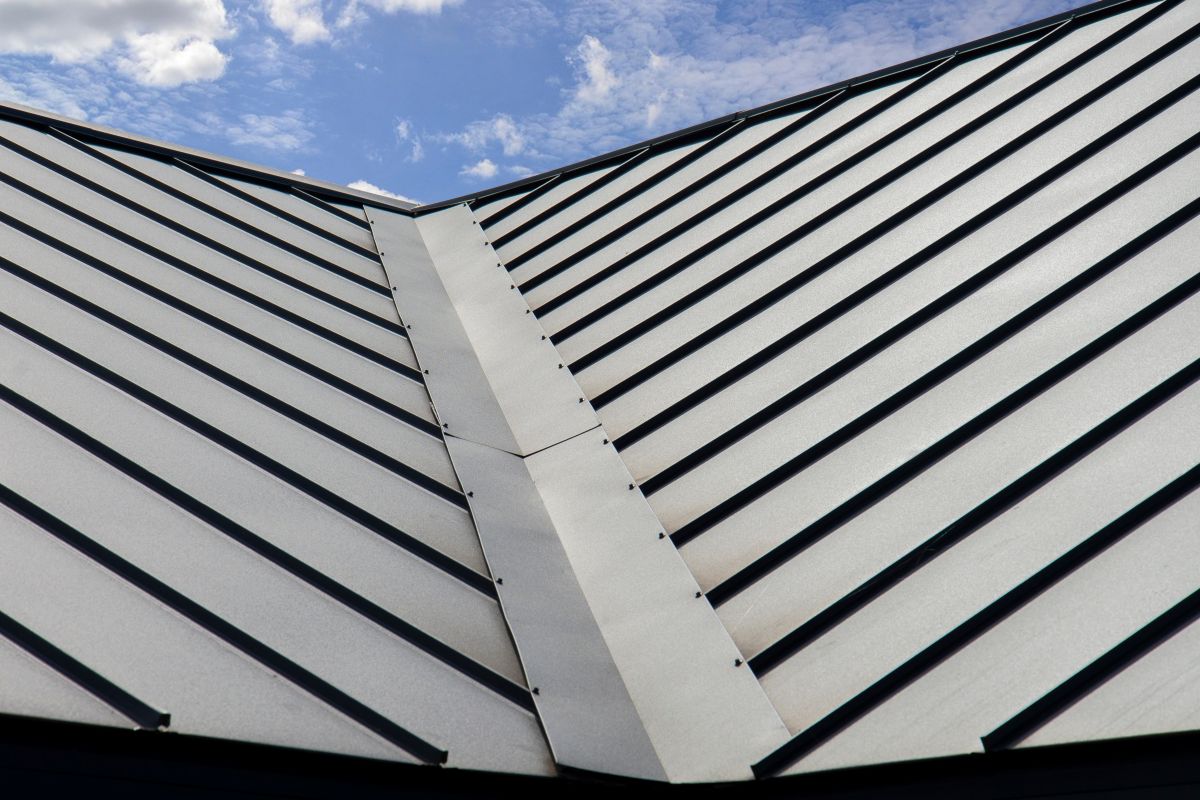
Metal roofing is the fastest-growing segment of the Minnesota residential roofing market. Once considered an agricultural or cabin material, standing-seam steel and aluminum systems have found a home in mainstream Twin Cities architecture — from modern new builds in Lakeville and Stillwater to restoration projects in historic Minneapolis neighborhoods. The appeal is practical: properly specified metal systems deliver 40-70 year lifespans in Minnesota’s demanding climate, shed snow efficiently, earn insurance premium discounts when UL 2218 Class 4 rated, and qualify for many manufacturer warranties that asphalt shingles can’t match. The caution is equally practical: metal costs 2-4x asphalt shingles upfront, installation quality varies widely, and the wrong system in the wrong application will cost more than it saves over a 30-year horizon.
- Standing seam is the preferred system for MN residential; mechanically locked panels with hidden fasteners.
- Expected lifespan: 40-70 years for properly installed steel or aluminum; copper and zinc longer.
- Typical Twin Cities cost: $9-$16 per square foot installed (roughly 2-3x asphalt shingles).
- Class 4 impact-rated metal qualifies for insurance discounts from most MN carriers.
- Metal sheds snow dramatically — often requires snow guards above entries, walkways, and HVAC units.
Types of Metal Roofing Used in Minnesota
| System | Profile | MN Residential Suitability | Typical Cost Installed ($/sq ft) |
|---|---|---|---|
| Standing seam steel (mechanical-lock) | Vertical panels with hidden clips, seamed at edges | Excellent — premium residential standard | $11-$16 |
| Standing seam aluminum | Same profile, aluminum alloy | Excellent for coastal-like corrosion concerns; lighter | $12-$17 |
| Standing seam snap-lock | Panels snap together; simpler install | Good; slightly less weather resistant than mechanical lock | $10-$14 |
| Corrugated / R-panel steel | Exposed-fastener panels with ridges | Fine for outbuildings, shops; discouraged residentially | $6-$11 |
| Stone-coated steel (Decra, Boral) | Stamped steel with embedded stone coating; mimics shingles/tile | Good; heavier; mimics aesthetic of shingles | $11-$17 |
| Metal shingle / shake | Stamped panels resembling traditional materials | Niche; higher waste factor | $10-$15 |
| Copper and zinc | Premium architectural metals | Historic and high-end | $25-$55+ |
For residential use in the Twin Cities metro, mechanical-lock standing seam in 24-gauge galvanized or Galvalume-coated steel is the workhorse. Panels are typically 1-1.75 inches tall, 12-18 inches wide, finished with Kynar 500/PVDF paint for color stability, and installed over a full synthetic underlayment plus ice-and-water shield per MN R905.1.1.
Why Metal Performs Well in Minnesota
- Wind resistance. Mechanical-seam panels rated to 120-180 mph; surpassed by virtually no shingle.
- Hail resistance. 24-gauge steel with UL 2218 Class 4 impact rating is among the most hail-tolerant residential materials available.
- Snow shedding. Smooth, hard surface sheds snow frequently, reducing roof snow loads and ice dam formation (when combined with proper attic detailing).
- Lifespan. 40-70 years with PVDF-coated steel or aluminum; often outlasts two asphalt shingle cycles.
- Fire rating. Class A fire-rated systems; non-combustible.
- Recyclability. Most metal roofing contains 25%+ recycled content and is fully recyclable at end of life.
Where Metal Falls Short
- Upfront cost. 2-3x the initial outlay of asphalt shingles for a comparable standing seam install.
- Installation complexity. Skilled metal crews are scarcer than shingle crews; a poor install can negate the longevity benefit.
- Snow shedding hazards. Uncontrolled snow slides endanger walkways, entries, decks, and HVAC equipment. Snow guards are essential over vulnerable zones.
- Denting from severe hail. Very large hail (2″+) can cosmetically dent lower-gauge metal; functional damage is rare, but appearance may suffer.
- Thermal expansion. Metal expands/contracts noticeably with temperature; standing seam systems must allow movement with clip-based fastening. Face-fastened systems fail here over decades.
- Repair difficulty. Localized damage repair is harder than shingle patching; color matching on older systems becomes impossible as paint weathers.
- Attic noise. With proper underlayment and decking, metal is not noisier than shingles; without underlayment (open-framing barn applications), it’s dramatically louder in rain.
Metal vs. Asphalt Shingles: The Real Comparison
| Factor | Standing Seam Metal | Premium Asphalt (Architectural Class 4) |
|---|---|---|
| Installed cost (2,000 sq ft home) | $18,000 – $32,000 | $12,000 – $20,000 |
| Expected lifespan | 40-70 years | 25-35 years (Class 4, quality install) |
| Hail performance | Excellent, rarely functional damage | Good with Class 4 rating |
| Wind rating | 120-180 mph | 110-150 mph (Class F-H) |
| Snow shedding | Rapid, unassisted | Moderate; snow accumulates |
| Insurance discount potential | 5-15% on impact portion | 5-15% with Class 4 rating |
| Warranty | 25-50 year paint, 40+ year substrate | Lifetime material, prorated after 10-15 yrs |
| Energy performance | Cool-roof reflective options reduce cooling load | Standard reflectance; cool shingles available |
| Resale value | Strong; differentiator in competitive market | Standard; not a differentiator |
The 40-Year Cost-of-Ownership Math
Over a 40-year ownership horizon on a typical 2,000 sq ft Twin Cities home, the total cost of ownership for premium asphalt often approaches or exceeds the cost of a well-installed standing-seam metal system once you account for replacement cycles. Example: a $16,000 asphalt roof with a 25-year life means one replacement during the 40-year window — 1.6x the initial cost to maintain. At $15,000 each time (inflation ignored for simplicity), total spend is $31,200 minimum. A $25,000 standing-seam roof installed once and still performing at year 40: $25,000. This back-of-envelope math ignores insurance discounts, storm-deductible avoidance, and resale premium — all of which favor metal. That said, not every homeowner plans a 40-year hold, and the upfront capital is real. Metal is often the right choice for forever homes and homes in hail-prone suburbs.
Snow Guards: Non-Negotiable in Minnesota
The same feature that makes metal shed snow rapidly becomes a hazard when snow and ice avalanche off the roof onto people, pets, cars, decks, or mechanical equipment. Minnesota metal installs must plan snow retention as a primary design element. Options include clamp-on or bolted snow guards (individual pads, typically 1 per 5-6 sq ft of roof), continuous snow fences (a horizontal pipe at the eave), and architectural snow cleats. Locations requiring retention: above entry doors, over walking paths and driveways, above HVAC condensers, over lower adjoining roof sections, and over decks or patios.
Metal Roofs and Ice Dams: Better, Not Immune
Metal sheds snow faster and more cleanly than shingles, which reduces ice dam formation — but doesn’t eliminate it. The fundamental cause of ice dams (warm attic + cold eave) applies equally to metal roofs. A poorly insulated attic under a metal roof will still form ice at the eave, just often in smaller quantities. The full ice-dam prevention protocol — air sealing, R-60 insulation, balanced R806 ventilation, R905.1.1-compliant ice-and-water shield — remains essential. See our Minnesota ice dam prevention guide for the full protocol.
Insurance and Hail Policies for Metal
Most Minnesota homeowners policies cover metal roofs the same as any other roofing material for sudden covered perils (wind, hail, falling trees). However, some carriers add a “cosmetic damage exclusion” to metal roof policies — covering functional damage (penetration, seam failure) but not denting or paint scuffing from hail. Before installing metal, confirm with your insurance agent whether this exclusion exists on your policy and whether you can buy it off. Class 4 impact-rated metal roofs often qualify for an impact discount of 5-15% on the roof-covered portion of premium.
Installation Details That Matter
- Clip spacing. Concealed clips at 16-24″ maximum, allowing thermal movement of panels.
- Full synthetic underlayment (not 15# or 30# felt) — felt traps condensation and accelerates decking rot.
- R905.1.1 ice-and-water shield at eaves, valleys, and around all penetrations.
- Butyl tape or sealant at endlaps, if panel length requires.
- Pre-formed flashings at ridge, eave, rake, and valleys — not field-bent unless necessary.
- Penetrations with EPDM pipe boots rated for metal.
- Ridge vent compatible with standing seam — most manufacturers have proprietary systems.
- Slight overhang at eaves to direct water into gutters, not behind fascia.
- Drip edge (MN R908) sized for metal profile.
Sound Myth: Metal and Noise
Homeowners often ask whether a metal roof will be louder during rain. In Minnesota residential installations over solid plywood decking with synthetic underlayment and an insulated attic below, metal is essentially no louder than asphalt shingles from inside the home. The “noisy metal roof” stereotype dates from agricultural and barn roofs installed directly over open framing — a different assembly entirely. If the metal roof is installed over a properly decked, insulated assembly, noise is a non-issue.
Colors and Cool Roof Options
Metal roof paint is typically PVDF (Kynar 500) — the most color-stable paint technology available. Colors range from matte blacks, bronzes, and grays that complement modern architecture to traditional reds and greens for farmhouse aesthetics. Many PVDF finishes are also Cool Roof Rating Council certified, reflecting more solar heat than traditional roofs. For Minnesota summer cooling load, a cool-rated metal roof can reduce attic temperatures 15-30°F, cutting AC use. Winter heat gain is a lesser concern in MN but still a secondary benefit in shoulder seasons.
Metal for Specific Minnesota Architecture
- Modern farmhouse builds: Standing seam is the aesthetic benchmark.
- Contemporary / mid-century: Standing seam complements clean horizontal lines.
- Traditional colonial, Tudor, craftsman: Stone-coated steel mimicking slate or shake is often more appropriate than flat standing seam.
- Cabin / lake property: Corrugated or standing seam depending on aesthetic goals; metal is standard in cabin country for fire resistance and low maintenance.
- Accessory structures (garages, sheds): Exposed-fastener corrugated is fine and cost-effective.