





Pre-Purchase Roof Inspection in Minnesota: What Home Buyers Need to Check
 14min Read
 Posted 4.17.2026
Of all the big-ticket systems in a home — roof, HVAC, electrical, plumbing, foundation — the roof is the one most often under-inspected during the purchase process. A general home inspector’s report typically devotes a single page to the roof, with photos taken from the ground and a summary like “appears to be in serviceable condition, estimated 5–10 years remaining life.” In Minnesota, that level of detail on a roof is inadequate. Our freeze-thaw climate, hail frequency, and ice-dam risk profile mean roofs can look fine from the ground while being months away from a leak, or already leaking in ways that only show up when you climb into the attic with a flashlight.
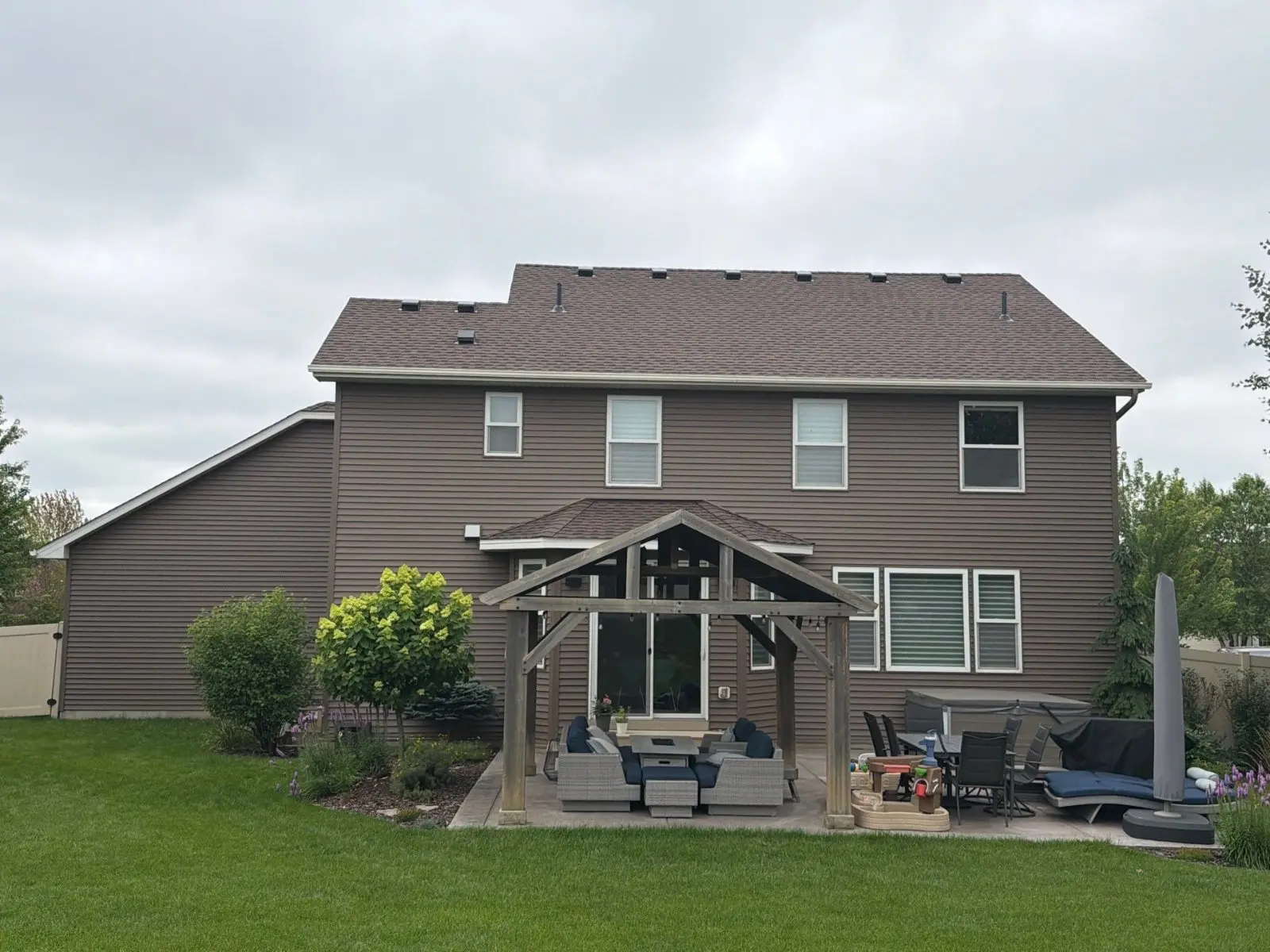
This guide explains why a separate roof inspection is worth commissioning during a home purchase, what a proper inspection covers, how to use it in negotiation, and how to avoid the most expensive surprises in the first 24 months after move-in.
- Lawn swept 3x with magnets
- Storm restoration specialists
- We actually answer: (651) 977-6027
 5.0 · 90+ reviews
 Accredited
Owl is the local family-owned roofer that actually cares.
250+ Twin Cities families have trusted us with their homes. Book a free inspection and see why.
★★★★★“We couldn’t be happier with how everything turned out. From the beginning to the end, the whole experience was great.”
Rob Larson, Local Homeowner + Owl Customer
A real person calls you back, usually within the hour.
Why a General Home Inspection Is Not Enough
Minnesota general home inspectors are excellent generalists. They’re trained to evaluate a broad range of home systems against a standard inspection checklist (InterNACHI, ASHI, or state standards). On a typical 3-hour inspection, the roof might get 10–15 minutes of attention — and depending on steep pitch, icy conditions, or the inspector’s preference, they may evaluate the roof entirely from the ground with binoculars.
The inspector is not a roofer. They can tell you “I see curling shingles, missing granules, and a suspect area near the chimney” but they typically cannot tell you whether the flashing was properly step-flashed, whether the ice-and-water shield extends the correct distance past the interior wall, whether the attic is ventilated to code, or whether the roof decking under the shingles is rotted. A roofer-conducted inspection answers all of those questions.
When to Commission a Dedicated Roof Inspection
- Home is 12+ years old with original roof (getting close to asphalt shingle end-of-life)
- Home has any insurance claim history on the roof (hail or wind claim in the last 10 years)
- Home is in a known hail corridor (nearly all of Minnesota — especially Stearns, Hennepin, Dakota, Scott, and southern counties)
- Roof has been replaced in the last 5 years (to verify quality of a recent install)
- Home has had any interior water stains, roof repairs, or insurance claims in the disclosure
- Home is a flip or recently-rehabbed property (flip quality is variable)
- Home has complex roof geometry (hip-and-valley with dormers, skylights, multiple planes)
- Home has known attic/ventilation issues flagged by the general inspector
In our experience, virtually every Twin Cities home purchase over $300,000 benefits from a specialty roof inspection — the $350–$500 fee is trivial relative to the transaction and the cost of an unplanned roof replacement.
What a Proper Roof Inspection Covers
A specialty Minnesota roof inspection should include all of the following:
- Roof walk (weather permitting): inspector physically walks all accessible roof surfaces to evaluate shingle condition.
- Shingle age verification: from product-line markings or from records of permits pulled.
- Granule loss evaluation: checking gutters and roof surface for granule accumulation (a sign of end-of-life or hail damage).
- Hail damage inspection: measuring strike counts per 10×10 test squares, differentiating hail from other impact types.
- Wind damage inspection: looking for lifted, creased, or missing shingles.
- Flashing inspection: step flashing, chimney flashing, skylight flashing, vent pipe boots, kick-out flashings.
- Valley inspection: for splits, debris accumulation, or shingle wear.
- Penetration sealing: all plumbing vents, electrical masts, satellite mounts, and other penetrations.
- Eave and drip edge: presence, condition, overhang.
- Attic inspection: deck underside for stains, rot, nail pops, daylight; insulation level and condition; ventilation (intake + exhaust) adequacy.
- Ice-dam history indicators: staining patterns on deck underside along eaves; gutter damage; insulation water marks.
- Photographic report: labeled photos of every significant finding, with location annotations.
- Remaining useful life estimate: honest assessment in years, with confidence range.
- Budget estimate for any identified repairs, plus ballpark for eventual full replacement.
Pre-Purchase Inspection Cost and Timing
| Scope | 2026 MN Cost | Typical Timeline |
|---|---|---|
| Basic ground-and-ladder inspection | $150–$300 | 45–60 min |
| Standard roof walk + attic + report | $350–$500 | 90–120 min |
| Detailed inspection with drone + moisture scan | $500–$850 | 2–3 hours |
| Infrared (thermal) roof scan (for flat/low-slope) | $400–$750 add-on | Additional 45 min |
| Post-hail specialty claim inspection | $350–$600 | 1.5–2 hours |
Schedule the specialty roof inspection during your inspection contingency period — typically 10–14 days in a standard Minnesota residential purchase agreement. Ideally, the inspection happens right after the general home inspection so findings can roll into the same response to the seller. See our related guide on annual roof inspection checklists for ongoing inspection standards post-purchase.
Red Flags to Watch For in Listings
- “Newer roof” without a specific year — often means “not the original but I’m not sure exactly when”
- “Roof replaced in [year] with 50-year shingles” — verify the permit and the actual shingle product; “50-year” shingles are essentially marketing and most come with limited-lifetime (not 50-year) warranties
- Seller disclosure of any hail/storm insurance claim in the past 10 years
- Interior photos showing water stains on ceilings (no matter how faint)
- “As-is” sale with roofing specifically mentioned as exclusion
- Listing notes solar panels were installed but no mention of when the roof was last replaced
- Active moisture, ice dams, or mold mentioned anywhere in disclosures
Minnesota’s seller property disclosure statement (required for most 1–4 unit residential sales under Minn. Stat. 513.52 through 513.60) requires sellers to disclose known material facts about the property, including roofing issues they have knowledge of. Sellers occasionally under-disclose — which is why your independent inspection matters.
Common Findings on Minnesota Pre-Purchase Inspections
| Finding | Frequency (est.) | Typical Severity | Typical Fix Cost (2026) |
|---|---|---|---|
| Missing or undersized kick-out flashings | ~40% of homes pre-2012 | Moderate to high | $180–$350/location |
| Reused flashings on recent re-roof | ~25% of budget re-roofs | Moderate | $1,200–$3,500 to redo |
| Inadequate attic ventilation (under 1:300) | ~35% | Moderate | $800–$2,400 |
| Cracked EPDM pipe boots | ~60% of homes 10+ yrs old | High (silent leaks) | $175–$450 per boot |
| Unrepaired hail damage | ~20% (storm corridors higher) | High | Full replacement often |
| Ice-dam damage evidence (attic) | ~30% | Moderate | $500–$4,500 depending |
| Ridge cap missing or damaged | ~20% | Moderate | $350–$1,200 |
| Skylight leaks / failed seals | ~15% of homes with skylights | High | $800–$2,500/skylight |
Note: these findings are common even on homes that passed a general home inspection with a clean bill of health on the roof. A specialty inspection finds issues a general inspector typically doesn’t.
Using the Inspection in Negotiation
When a specialty roof inspection flags significant issues during your inspection contingency period, you have four negotiation options:
- Request repairs — seller fixes specified items before closing. Practical for smaller items ($500–$3,000 of flashing, boot, or ventilation work).
- Price reduction — seller credits you the estimated cost of needed work, often favored when you want to choose your own roofer. Practical for medium to large items.
- Full replacement — seller replaces the roof before closing, often through their insurance if a storm claim applies. Practical when the roof is clearly end-of-life.
- Walk away — terminate the purchase agreement under the inspection contingency. Practical when the discovered issues exceed your risk tolerance.
In the current Minnesota market (spring 2026), our observation is that sellers most often prefer price reductions over doing the repair work themselves — it’s less coordination burden and lets the buyer control quality. But if the issue is a hail claim that hasn’t been pursued yet, getting the seller to file the claim before closing (so they pay the deductible) and transferring the claim proceeds at closing is often the best structure.
What to Do After Closing
Even if the roof passes inspection cleanly, set yourself up for long-term success:
- File the inspection report with your closing documents — it’s your baseline for future comparisons.
- Verify warranty transferability if the roof was recently replaced. Most shingle warranties require written transfer within 60 days of closing. See our roof warranty transfer guide.
- Photograph the roof annually from consistent angles — drone shots if you have one — to track changes.
- Get a baseline attic moisture reading with a hygrometer during the first fall and spring after move-in.
- Confirm gutter cleaning schedule — plan for twice yearly at minimum.
- File claims promptly if a storm hits in year one — insurance companies often look closely at claims within 12 months of a policy starting.
For a full post-move-in maintenance schedule, see our seasonal roof maintenance calendar.
Twin Cities Storm Record, Community by Community
Local weather is the real test for any roof, siding or window choice. HailTrace, the storm-mapping service roofers and insurance adjusters rely on, has logged storm days since 2011 when hail of 0.75 inch or larger, or winds of 60 mph or more, crossed the center of each community below. The average is about 22 per community.
Damaging storm days at the center of each community, 2011 to 2026. Source: HailTrace event history, pulled November 2026.
| Community | Storm days | Hail days | Largest hail |
|---|---|---|---|
| Edina | 27 | 19 | 1.75″ (August 9, 2020) |
| Minneapolis | 26 | 22 | 2.5″ (August 11, 2023) |
| Arden Hills | 24 | 19 | 1.25″ (June 19, 2026) |
| Roseville | 23 | 18 | 1.75″ (June 19, 2026) |
| Eagan | 23 | 18 | 1.75″ (August 6, 2013) |
| New Brighton | 22 | 16 | 1.25″ (June 19, 2026) |
| Plymouth | 22 | 16 | 1.75″ (August 11, 2023) |
| Shoreview | 21 | 15 | 1.5″ (May 15, 2017) |
| White Bear Lake | 21 | 15 | 1.25″ (May 19, 2022) |
| Maple Grove | 21 | 16 | 2.5″ (August 5, 2019) |
| Bloomington | 21 | 15 | 2″ (August 6, 2013) |
| Lakeville | 21 | 16 | 2.5″ (May 7, 2014) |
| Fridley | 20 | 15 | 1.5″ (August 5, 2019) |
| Woodbury | 20 | 14 | 1.75″ (May 19, 2022) |
| Saint Paul | 19 | 13 | 1.75″ (May 19, 2022) |
| Blaine | 15 | 13 | 3″ (July 26, 2019) |
July 27 and 28, 2025 hit almost everyone
Back-to-back storms on July 27 and 28, 2025 brought 71 to 73 mph winds across most of the north metro. If your roof was on the house that week and nobody has looked at it, it’s worth a free inspection.
Not sure what your roof has been through? Book a free inspection and we’ll document what we find with photos either way.
When Twin Cities Homeowners Call
Of our 1,441 Twin Cities requests in 2026, 1,036 (72%) came June through September, right behind the summer storms. The busiest month was August, with 268.
Twin Cities inspection and quote requests to Owl Roofing by month, March to October 2026.
After a big storm, every roofer’s schedule fills up at once. Getting on the calendar early means a calmer decision and better install dates.
Frequently Asked Questions
Who pays for a pre-purchase roof inspection in Minnesota?
The buyer, as part of due diligence — typically scheduled during the inspection contingency window. If the inspection finds significant issues, negotiation may shift the cost of repairs or replacement to the seller, but the inspection fee itself is a buyer expense.
Do I need a roof inspection if the seller had one recently?
Usually yes — a seller-paid inspection represents the seller’s interests and may be months old. Your independent inspection gives you unbiased assessment and lets you ask for specific detail relevant to your purchase decision.
What if the seller won’t allow a roof walk?
Unusual, but it happens on steep or icy roofs for liability reasons. In that case, request a drone-based inspection plus attic-side inspection. Both together still give better coverage than a general home inspection alone.
Are drone roof inspections as good as a roof walk?
For visual condition assessment, modern drones are excellent. For physical tests (lifting shingles, checking seal strength, sounding for soft deck), a walk is necessary. A hybrid approach — drone for overall survey, selective walk for specific checks — is common on complex roofs.
Can I use my homeowner’s insurance claim as a substitute for inspection?
An insurance adjuster’s inspection focuses on whether covered damage has occurred — not on overall roof condition. You still want a specialty roofer’s inspection for general assessment, especially if considering the purchase of a home with a recent claim.
What’s the remaining-life estimate on a typical Minnesota shingle roof?
Standard 3-tab shingles typically reach end-of-life at 18–22 years in Minnesota. Architectural shingles (25–30 year): 20–28 years. Premium architectural (50-year): 25–35 years. Hail exposure shortens all of these significantly. See our roof lifespan by material guide.
Should I decline a house because of a failing roof?
Not necessarily — a failing roof is often a negotiation opportunity. The cost of roof replacement is a known quantity ($14,500–$22,000 for a typical Twin Cities home); asking the seller for a commensurate price reduction or full replacement lets you proceed with eyes open. Walking away is warranted only when the seller refuses to negotiate and the roof is close to catastrophic failure.
Where These Numbers Come From
- Owl Roofing job records: all Twin Cities projects in our CRM for the 2026 season. Prices are signed contract values for roof-only replacements, excluding insurance jobs. We don’t share addresses or customer details.
- HailTrace: storm event history at the center of each listed Twin Cities community, 2011 to 2026, counting hail of 0.75 inch or larger and winds of 60 mph or more. Pulled November 2026.
