Starter Shingles: What They Are & Why They Matter
 13min Read
 Posted 2.28.2026
Quick Answer
- Starter shingles: First course of shingles laid at the eave (roof edge), with nailing strip exposed upward.
- Purpose: Seal against wind uplift and water infiltration at the most vulnerable roof edge.
- Difference from regular shingles: Laid upside down (nail line facing up) so the regular course above covers and seals the nails.
- Cost: Included in roof material cost (no extra charge if done properly).
- Consequence of skipping: Roof blow-off, water leaks at eaves, voided warranty.
- DIY mistake: Installing regular shingles at eaves without starters is common and causes early failure.
Starter shingles are one of those unglamorous roofing details that homeowners never notice—until they’re missing. Then the problems come fast: high winds rip shingles off the eave, water leaks in at the edge, and suddenly you’re looking at thousands in repairs. Understanding starter shingles and why they matter protects your investment.
What Are Starter Shingles?
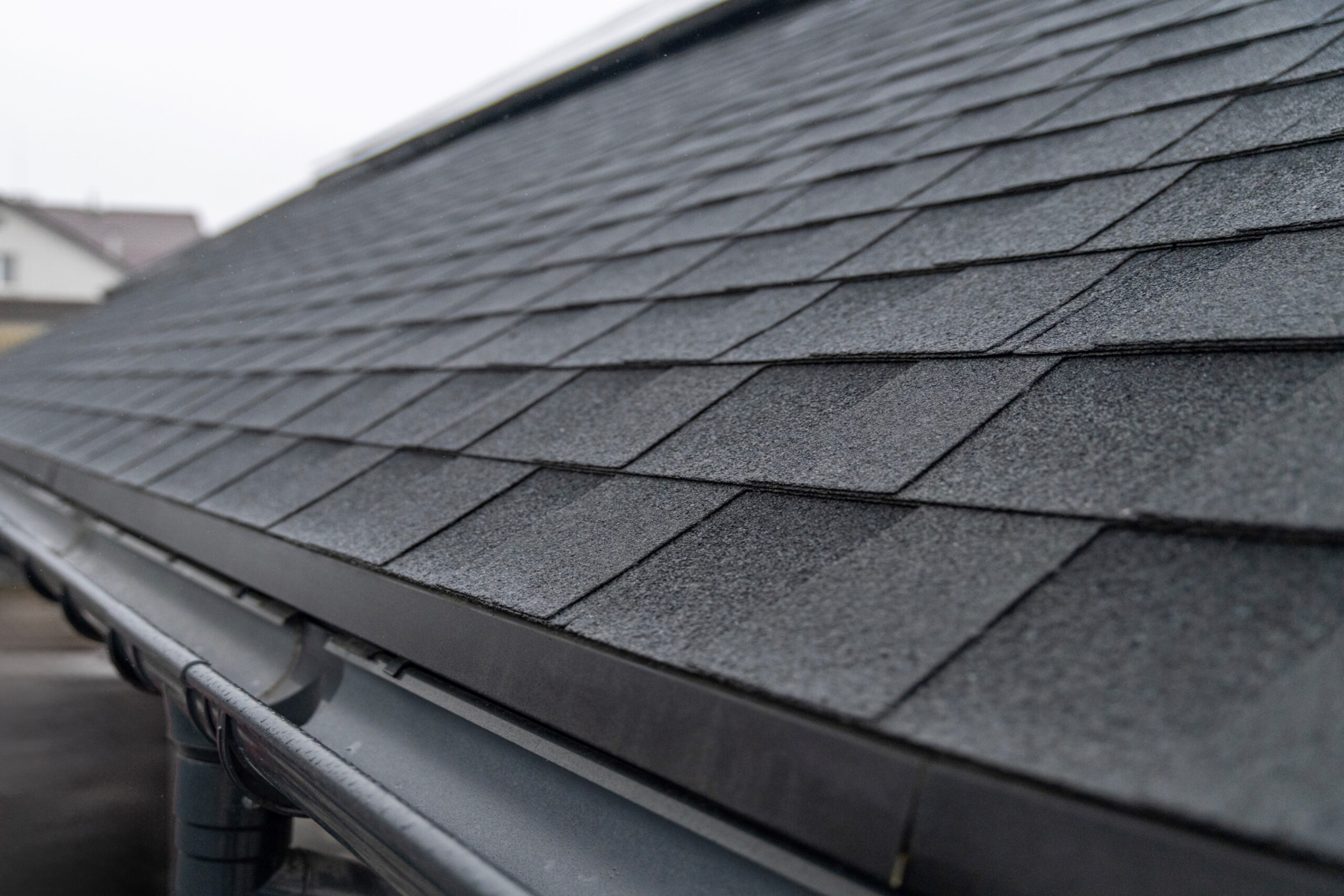
Starter shingles are the first course of shingles installed at the lower edge of your roof (the eave). They’re laid with the nailing strip facing UP (opposite of how regular shingles face). The regular first course of shingles is then laid above and slightly offset, so the tabs of the regular shingles cover the nail line of the starter shingles, creating a sealed, watertight connection.
Why Starter Shingles Matter
Wind uplift protection: The eave is the most vulnerable to wind. Wind pushes up from below, trying to lift shingles. Starters ensure the first course is nailed securely with the nails covered and sealed by the course above.
Water sealing: Water runs downslope. At the eave, it needs to drain off the roof cleanly. Starter shingles and the offset first course create proper overlap, preventing water from running under shingles at the edge.
Warranty requirement: Roofing manufacturers require starter shingles for warranty validity. Install without starters and you’ve voided the warranty.
Starter Shingle Cost
Starter shingles typically cost $0.50-$1 per sq ft extra (material and labor). A 2,000 sq ft roof (eave perimeter about 150-200 linear feet) might use 4-5 bundles of starters at roughly $50-100 per bundle. Total cost: $200-$500 for starters and installation. This is negligible compared to a full roof cost ($7,000-$15,000) but critical for durability.
DIY Roofing: The Starter Mistake
Many DIY roofers make the mistake of installing regular shingles as the first course without starters. They see this as efficient (no “wasted” shingles) but it’s the wrong approach. Regular shingles laid at the eave have the nailing line at the top, which gets exposed to weather and wind. Water can run under the nailing line; wind can lift the nails directly.
If you’re doing a roof yourself, buy the right amount of starter shingles and use them correctly. It takes an extra 30 minutes for the eave course but prevents years of problems.
Starter Material Types
Cut starter: Existing shingles cut and flipped upside down. Works fine and is economical.
Dedicated starter: Shingles manufactured specifically as starters (without top tabs). Cleaner appearance, slightly higher cost.
Roll starter: Roofing underlayment starter roll (self-adhesive). Sometimes used as an alternative, but traditional starter shingles are preferred.
Most contractors use cut starters (regular shingles flipped and cut to length at the eave) because it’s cost-effective and proven.
What Owl Roofing Customers Actually Say
Real, verified Google reviews from real customers Owl Roofing maintains a 5.0 Google rating with 90+ five-star reviews.
Noah is the real deal. After our insurance denied our roof claim and the first roofer walked away, Noah showed up the next day and said he thought he could get us a new roof. He delivered. He got us a roof covered by insurance after it had already been declined. We came up with a nickname for him: “The Roof Whisperer.”
— Tyler Moberg, verified Google review
I am an Independent Insurance Agency owner and have worked with Noah on several roof projects. The homeowners have been extremely satisfied with the quality of work and craftsmanship Noah and his crews have provided. From filing the claim to replacing the roof and cleaning up the job site, Noah and his crew are the best!
— Fred Zappa, Independent Insurance Agency Owner
We used Owl Roofing for a repair on our roof in Brooklyn Park, and I was blown away by how good they were. Every member of the team communicated well about the process. Their price transparency was super helpful. They got the work done very fast, and the team was professional and very kind.
— Matt Brown, Brooklyn Park (verified Google review)
Noah and his team are outstanding! His clear communication, professionalism, and workmanship are top-notch. I recommend Owl Roofing to all my clients, friends, and family.
— Christine Westlund, verified Google review
It didn’t feel like dealing with a big company — it felt like working with people who actually care about the homes and community in the North Oaks and Shoreview area. Great people, great communication, and really solid work.
— Cody Warren, verified Google review
FAQ: Starter Shingle Questions
- Do I really need starter shingles if I’m doing a DIY roof?
- What if my contractor says starters aren’t necessary?
- Can I add starter shingles to an existing roof?
- Do starter shingles come in different colors to match my roof?
Getting a Roof Replaced? Ensure Proper Installation.
Verify that your contractor plans to use starter shingles and install them correctly. We inspect eave installation as part of our quality assurance. Ask us or your contractor questions about starters before work begins.
Starter Shingles at Rakes: Not Just for Eaves
Most homeowners (and some roofers) think of starter shingles only at the eave (the bottom edge of the roof). But the rake edges — the sloping sides of a gable roof — also need starter treatment. At the rake, starter shingles are installed along the side edge before the main field shingles, ensuring that wind-driven rain can’t get under the first shingle at the roof’s edge.
Rake starters are installed with the self-sealing strip facing in toward the field of the roof, so the first course of field shingles bonds to them via the adhesive strip. This creates the same sealed edge protection at the rake that eave starters create at the bottom. Skipping rake starters is less commonly caught during installation but causes the same vulnerability: shingle tabs at the edge that aren’t adhered and can lift in wind.
How to Install Starter Shingles Correctly
Dedicated Starter Products vs. Cut Shingles
There are three approaches to starter shingles that contractors use:
Purpose-made starter strips (like GAF Pro-Start, CertainTeed SwiftStart, or Owens Corning Starter Strip) are manufactured specifically for this purpose — they have a continuous adhesive strip along one edge and no tabs to cut off. These are the cleanest option and eliminate variation, but cost slightly more than cutting your own.
Cut starters involve taking a full architectural shingle and removing the tab portion by cutting along the top of the slot. You’re left with a strip with the adhesive sealing strip at the bottom, which is then flipped (adhesive facing up) and installed at the eave. This is economical and perfectly effective.
Roll starter products are available from some manufacturers — a roll of rubberized membrane with an adhesive strip designed to serve as starter. These are used most often in high-wind zones or on difficult roof sections where traditional shingle starters are awkward to handle.
- How many bundles of starter shingles do I need?
- Can starter shingles be reused from an old roof?
Getting a New Roof? Ask About Our Installation Standards.
We always install manufacturer-spec starter shingles at eaves and rakes. It’s part of every job, not an add-on.
📍 Owl Roofing Serves the Entire Twin Cities Metro
Andover · Anoka · Apple Valley · Arden Hills · Big Lake · Blaine · Bloomington · Brooklyn Center · Brooklyn Park · Burnsville · Champlin · Chanhassen · Chaska · Columbia Heights · Coon Rapids · Cottage Grove · Crystal · deephaven · Delano · Eagan · East Bethel · Eden Prairie · Excelsior · Farmington · Forest Lake · Fridley · Golden Valley · Ham Lake · Hastings · Hopkins · Hugo · Inver Grove Heights · Lake Elmo · Lakeville · Lino Lakes · Mahtomedi · Maplewood · Mendota Heights · Minneapolis · Minnetrista · Mound · Mounds View · New Brighton · New Hope · North Oaks · North St. Paul · Oak Grove · Oakdale · Plymouth · Prior Lake · Ramsey · Richfield · Robbinsdale · Rosemount · Roseville · Saint Paul · Savage · Shakopee · Shoreview · South St. Paul · St. Louis Park · St. Michael · St. Paul · Stillwater · Vadnais Heights · Victoria · Waconia · wayzata · West St. Paul · White Bear Lake · woodbury
Licensed Minnesota roofing contractor · Free inspections · 10-year workmanship warranty · Get a free estimate →

Recent Articles
Explore The Blog