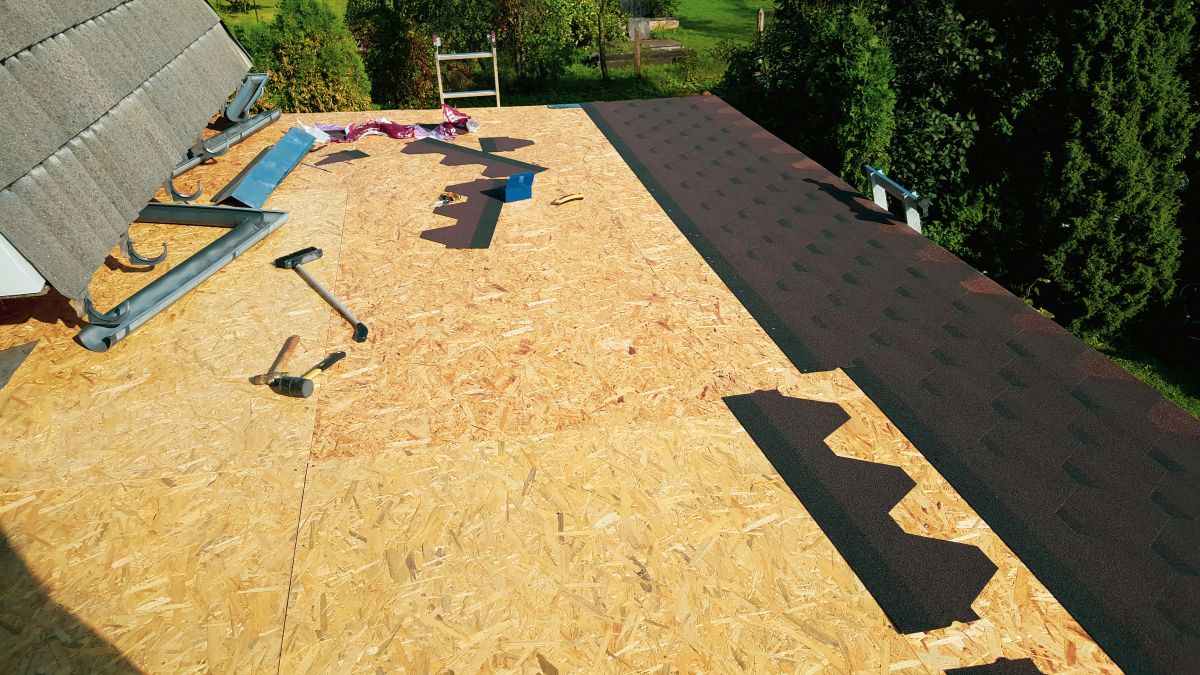
Twin Cities Roof Replacement Timeline: How Long Does a Reroof Actually Take?
 10min Read
 Posted 5.02.2026
How long does a Twin Cities roof replacement actually take, from the moment you sign the contract to the moment you write the final check? It’s the question every homeowner wants answered before scheduling, and it’s the one most contractors give a vague answer to. The honest answer depends on five variables: roof size, roof complexity, material choice, contractor scheduling backlog, and weather. For a typical Twin Cities single-family home doing a standard architectural shingle reroof, the on-roof work is 2–4 days. The full timeline from signing to completion is usually 4–8 weeks because of permit lead time, material order, and weather-window scheduling.
For premium materials — synthetic slate, standing seam metal, real cedar — the on-roof time stretches to 8–12 days and the lead time can run 8–12 weeks. Knowing what to expect at each stage prevents the most common homeowner frustration: not knowing whether a delay is normal or a sign of a contractor problem.
At Owl Roofing in Shoreview we run reroofs across the Twin Cities every week. Noah Bergland sets each project’s master schedule and personally walks the homeowner through the timeline before tear-off. This guide reflects what an actual reroof looks like start-to-finish, not the marketing-pamphlet version.
TL;DR
For a typical 2,500–3,500 sq ft Twin Cities home with architectural asphalt: 1–2 days for tear-off + dry-in, 2–3 days for shingle install, 1 day for cleanup and final flashing. Total on-roof time: 3–5 working days. Total signing-to-completion timeline: 4–8 weeks. Premium materials (synthetic slate, metal, cedar) double the on-roof time and add 4 weeks to the front-end lead time. Major delays come from weather, supplier backorders, and permit review — not from the actual installation.
Day-by-day timeline of a standard Twin Cities reroof
Day 1 (8 AM – 5 PM): Tear-off and dry-in
The crew arrives between 7 and 8 AM with a dump trailer and a magnetic nail sweeper. Yard, landscaping, and HVAC equipment get covered with tarps and plywood. Tear-off begins at the highest point and works down, with shingles, underlayment, and drip edge stripped to the bare deck. By midday the deck is exposed and the carpenter inspects for rotten plywood, soft spots, or anything else that needs to be replaced before new underlayment goes on. Damaged decking gets cut out and replaced (extra cost, typically billed at $80–$120 per sheet of plywood).
By late afternoon the deck is dried in: ice and water shield down at eaves, valleys, and penetrations; synthetic underlayment across the field; new drip edge along eaves and rakes. The home is watertight overnight even if no shingles are on yet.
Day 2 (8 AM – 5 PM): Starter, field, and ridge installation
Hand-sealed starter strip goes on the eaves and rakes. Shingles install from bottom up, working both slopes simultaneously when crew size allows. A typical four-person crew can install 18–22 squares of architectural shingles in a day, so a 25-square home is usually fully shingled by end of day 2. Ridge cap goes on last, over the open ridge cut for ventilation.
Day 3 (8 AM – 3 PM): Final flashing and cleanup
Step flashing at chimneys and walls. Pipe boots installed and sealed. Drip edge corners crimped and sealed. The crew sweeps the yard with a magnetic nail bar twice — once after lunch, once at end of day. A second sweep happens the next morning. Job foreman walks the homeowner through the finished roof and notes any items needing follow-up.
For a simple roof under 25 squares, the entire on-roof phase often compresses to 2 days. For a 4,000+ sq ft home with multiple dormers and valleys, the same scope can stretch to 5 or 6 days. The pattern stays the same — tear off, dry in, install, flash, clean — but the duration scales with surface area and complexity.
What affects the timeline beyond size
| Variable | Typical impact on timeline |
|---|---|
| Roof complexity (dormers, valleys, hips) | +1 to +3 days |
| Steep pitch (10:12 or higher) | +1 to +2 days |
| Multiple stories | +1 day |
| Decking replacement | +0.5 to +2 days |
| Premium material (synthetic slate, metal) | +5 to +9 days |
| Weather delays | +1 day per weather day |
| Detached structures (garage, shed) | +0.5 day each |
Material-specific timelines
Architectural asphalt shingles
Standard 30-year architectural: 2–4 working days for a typical home. Class 4 impact-resistant shingles add a few hours because they’re heavier and slower to install but are still well within a 4-day window. Asphalt is the fastest material to install, period. Most reroofs in the Twin Cities run on architectural shingles.
Standing seam metal
Standing seam adds 4–6 days to a typical timeline because the panels are custom-fabricated to length on-site (with a portable roll-former) and each panel installs slower than shingles. A 3,000 sq ft metal reroof is typically 6–9 working days. Snow guards and chimney flashing add another half-day. Our standing seam cost guide covers the full process.
Synthetic slate (DaVinci, F-Wave, Brava)
Synthetic slate installs slower than asphalt because each tile is placed and nailed individually, and most premium installs use a more elaborate underlayment system. Plan on 8–12 days for a 3,000 sq ft synthetic slate reroof. Color matching across batches and field-cutting around penetrations adds time. DaVinci installations we run in the Twin Cities typically land at 9–10 working days.
Real cedar shake
The slowest install. Real cedar requires hand-selection of shakes, careful course alignment, and traditional spaced sheathing or breathable underlayment. Plan on 10–15 working days for a 3,000 sq ft cedar reroof. We rarely recommend real cedar over synthetic equivalents in our market because the performance gap doesn’t justify the additional install time and ongoing maintenance.
Pre-construction lead time
The on-roof work is the visible part. The bigger timeline is everything that happens before tear-off begins:
- Inspection and quote (1–2 weeks): on-site walk, scope written, bid delivered. Some contractors are faster but quality scopes take time to write.
- Contract signing and material selection (1 week): color choice, accessory selection, contract signed.
- Permit pull (1–3 weeks): most Twin Cities cities pull permits in 5–10 business days. Some HOA-controlled jurisdictions require architectural review on top, which adds 1–3 weeks.
- Material order and delivery (1–4 weeks): standard shingles ship within a week. Premium products like synthetic slate or specific metal colors can run 4–8 weeks.
- Schedule into crew rotation (1–4 weeks): summer is peak season, so July reroofs scheduled in May are common.
End-to-end: typical reroof signs in May, materials arrive in early June, work happens in mid-June. Premium projects with synthetic slate or HOA review often sign in March for a July install.
Weather-window scheduling in Minnesota
Asphalt shingles can be installed year-round in Minnesota, but installation conditions matter:
- Below 40°F: shingle adhesive doesn’t activate properly. Hand-sealing is required for cold-weather installs.
- Below 20°F: shingles become brittle and crack during cutting. Most contractors avoid installs at this temperature.
- Active precipitation: tear-off can’t proceed because the deck must stay dry.
- Snow on roof: tear-off requires shoveling first; it adds time and risk.
Most Twin Cities crews run heavy schedules from mid-April through early November. November and December are typically possible weather permitting; January through March are emergency-only for most contractors. National Weather Service Twin Cities publishes the climate data that informs scheduling.
Post-install timeline
After the crew leaves:
- Day +1: project foreman returns for a final walk-through and second magnetic sweep
- Day +1 to +14: warranty paperwork submitted to manufacturer (for system warranties like GAF Golden Pledge)
- Day +30 to +60: final inspection by city building department (in jurisdictions that require it)
- Year +1: many premium contractors include a one-year follow-up walk to verify everything is sealed and intact through the first freeze-thaw cycle
What real homeowners say
“Owl signed our project in April, materials arrived in early June, crew was on the roof June 10–13. Total on-roof time was four days for our 3,200 sq ft house with two dormers. They gave us a written timeline up front and hit every milestone.” — John Wharton
What Owl Roofing Customers Actually Say
Real, verified Google reviews from real customers Owl Roofing maintains a 5.0 Google rating with 30+ five-star reviews.
Noah is the real deal. After our insurance denied our roof claim and the first roofer walked away, Noah showed up the next day and said he thought he could get us a new roof. He delivered. He got us a roof covered by insurance after it had already been declined. We came up with a nickname for him: “The Roof Whisperer.”
— Tyler Moberg, verified Google review
I am an Independent Insurance Agency owner and have worked with Noah on several roof projects. The homeowners have been extremely satisfied with the quality of work and craftsmanship Noah and his crews have provided. From filing the claim to replacing the roof and cleaning up the job site, Noah and his crew are the best!
— Fred Zappa, Independent Insurance Agency Owner
We used Owl Roofing for a repair on our roof in Brooklyn Park, and I was blown away by how good they were. Every member of the team communicated well about the process. Their price transparency was super helpful. They got the work done very fast, and the team was professional and very kind.
— Matt Brown, Brooklyn Park (verified Google review)
Noah and his team are outstanding! His clear communication, professionalism, and workmanship are top-notch. I recommend Owl Roofing to all my clients, friends, and family.
— Christine Westlund, verified Google review
It didn’t feel like dealing with a big company — it felt like working with people who actually care about the homes and community in the North Oaks and Shoreview area. Great people, great communication, and really solid work.
— Cody Warren, verified Google review
Frequently asked questions
How long does a roof replacement take in the Twin Cities?
For a typical 2,500–3,500 sq ft asphalt reroof: 3–5 working days on the roof, 4–8 weeks total signing-to-completion. Premium materials extend to 8–12 working days and 8–14 weeks total.
What happens if it rains during my reroof?
The crew dries in the deck before leaving each day, so the home is watertight even if work is paused. Active rain pauses tear-off and shingle install. Most weather delays add 1–2 days to the schedule.
Can a reroof happen in winter?
Yes, with the right detail. Hand-sealing is required below 40°F. Most contractors avoid installs below 20°F. Premium installers schedule winter work for emergency situations or when summer slots are full.
What’s the difference between the contract date and the install date?
Permit lead time, material order, and crew scheduling typically add 4–8 weeks between signing and tear-off. Premium materials and HOA review can extend this to 12 weeks.
Will I need to be home during the reroof?
No, but plan to stay off the property during active tear-off because of debris and noise. The crew can complete the entire scope without homeowner presence as long as they have access to the yard and a power outlet.
Where to start
If you’re trying to plan around a specific timeline (closing on a sale, summer event, weather window), the earlier you sign the contract the more flexibility you have. Premium projects benefit from 8–12 week lead times. Standard reroofs can sometimes happen in 4 weeks if a crew opening exists.
Request a free Owl Roofing quote with your target timeline noted up front and we’ll walk you through what’s achievable. You can also explore our reroof cost guide, our premium exteriors guide, our roofing services, and our brand library.