



Roof Moss Removal: Best Methods & 8 Tips for Homeowners
 15min Read
 Posted 8.26.2026
Effective roof moss removal starts with understanding that moss traps moisture against the shingle surface, lifts shingle edges, and shortens roof lifespan when left untreated, with the safest approach for homeowners combining gentle chemical treatment applied from a ladder or the ground with tree trimming and preventive measures rather than climbing onto the roof surface. Owl Roofing is a GAF and Owens Corning certified roofing contractor serving Forest Lake and surrounding Twin Cities communities, and the team handles professional moss removal and prevention on residential roofs where safe access requires proper equipment and experience. This guide covers eight safe homeowner tips for roof moss removal, explains the best methods professionals use, and breaks down what removal costs in Forest Lake.
- Eight safe homeowner tips: Actions you can take without climbing on the roof.
- Professional methods: What experienced roofers use for safe moss removal.
- Prevention strategy: How to stop moss from returning after removal.

Roof Moss Removal Basics
Roof moss removal basics focus on identifying moss correctly, applying safe treatment methods, and preventing regrowth through changes to the roof environment. Owl Roofing evaluates moss situations during free inspections in Forest Lake and surrounding areas to identify the best treatment approach for each specific roof.
What Is Roof Moss and Why Does It Grow?
Roof moss is a primitive flowerless plant that grows in thick green or brown tufts on shaded roof sections where moisture stays on the shingle surface long enough for the plant to establish. The Oregon State University Extension Service notes that mosses represent approximately 12,000 species worldwide, with common roof moss types including Dicranoweisia cirrata and Bryum capillare that thrive on damp, shaded surfaces. Moss typically starts growing on north-facing slopes where sunlight is limited, in valleys where debris and moisture collect, under overhanging trees that shade the roof and drop debris, and in older sections of roof where the shingle protection has worn down. Forest Lake homes with significant tree cover face particular moss pressure because the trees provide both the shade and the moisture retention that moss needs to grow.
- Primitive plant: Not algae or lichen, requires different treatment.
- Common species: Dicranoweisia cirrata and Bryum capillare on roofs.
- Growth conditions: Shade, moisture, and organic debris.
- Twin Cities pattern: North slopes and tree-shaded areas most affected.
How Does Moss Damage a Roof?
Moss damages a roof by trapping moisture against the shingle surface, lifting shingle edges as the moss grows underneath, holding organic debris that decomposes and accelerates shingle deterioration, and creating slip hazards during any roof access. Owl Roofing finds that moss damage on Forest Lake roofs typically develops over 2 to 5 years from initial growth to visible damage, with widespread moss coverage shortening remaining roof lifespan by 20 to 30 percent. Trapped moisture accelerates shingle aging by preventing the roof from drying properly between rainfall events. Lifted shingle edges allow wind-driven rain under the shingle surface, which produces leaks and interior water damage. The organic debris that moss traps combines with the moisture to create ideal conditions for further shingle deterioration.
- Moisture trapping: Prevents shingles from drying properly.
- Edge lifting: Moss growth lifts shingle edges from the deck.
- Organic decomposition: Traps debris that accelerates shingle aging.
- Lifespan reduction: 20 to 30 percent shorter service life with widespread moss.
8 Tips for Safe Roof Moss Removal
Eight specific tips help Forest Lake homeowners address roof moss safely without climbing on the potentially dangerous roof surface. Owl Roofing recommends completing safe homeowner tips first, then calling for professional inspection and treatment when the moss extends beyond what ground-level and ladder-based work can address.
1. Identify Moss vs. Algae vs. Lichen From the Ground
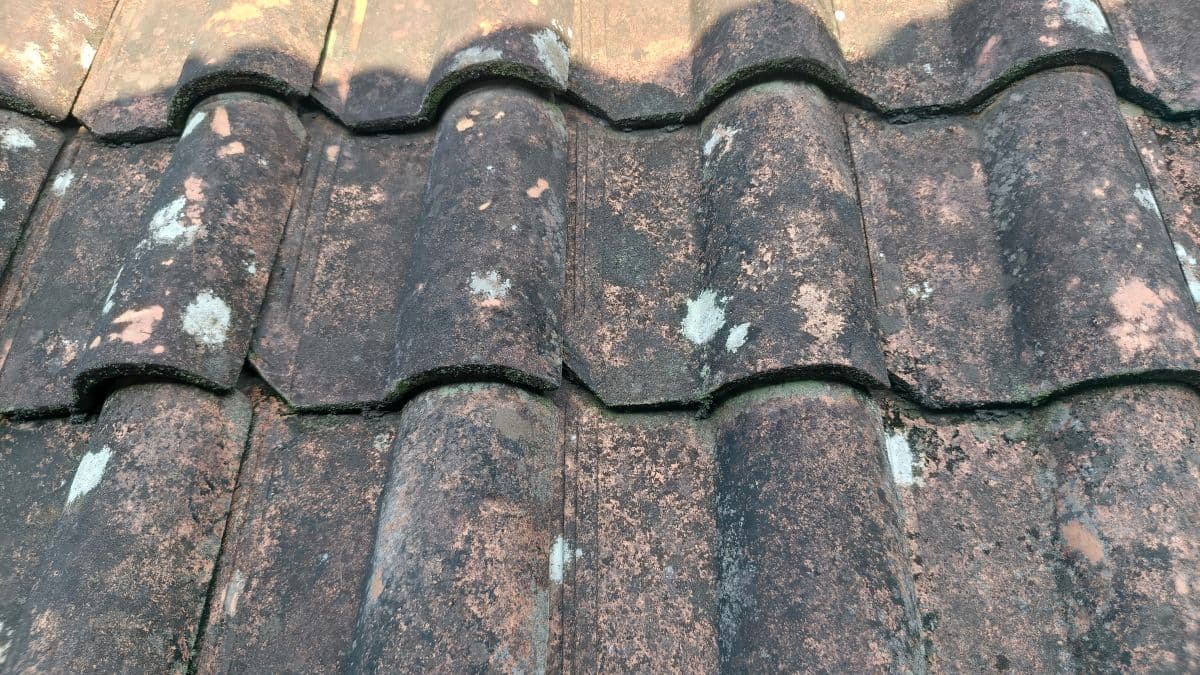
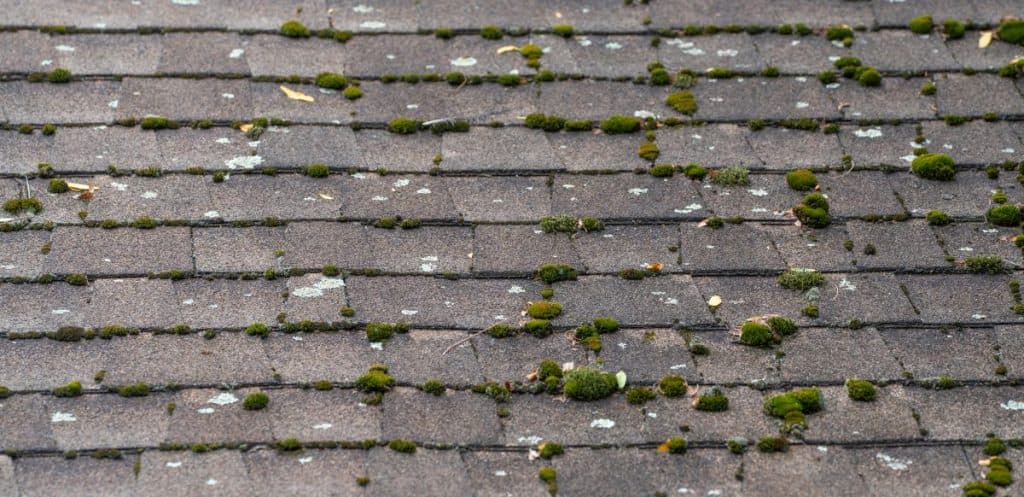
Identifying moss versus algae versus lichen from the ground helps homeowners select the right treatment approach because each organism responds to different removal methods. Owl Roofing helps Forest Lake homeowners identify what they are dealing with during inspections. Moss appears as thick green or brown tufts that stand up from the shingle surface, holds moisture like a sponge, and grows most heavily in shaded areas. Algae appears as dark streaks or stains flowing down the roof surface, typically starting from ridge caps and flowing toward the eaves. Lichen appears as flat crusty patches that can be gray, green, or orange and are extremely difficult to remove. Correct identification determines whether treatment focuses on moss removal, algae cleaning, or lichen prevention.
- Moss: Thick tufts, standing up, sponge-like moisture retention.
- Algae: Dark streaks flowing down the roof surface.
- Lichen: Flat crusty patches, gray, green, or orange.
- Treatment differs: Each organism responds to different methods.
2. Never Pressure Wash a Roof
Never pressure washing a roof is one of the most important safety rules for moss removal because high-pressure water strips granules from asphalt shingles, forces water under shingle edges, damages sealant, and voids manufacturer warranties immediately. Owl Roofing sees Forest Lake roofs damaged by pressure washing every season, with homeowners often shocked to learn that the cleaning technique that seemed safe actually shortened their roof’s lifespan significantly. Even lower-pressure settings on typical residential pressure washers exceed the safe pressure for asphalt shingle surfaces. Any moss removal that requires water application should use a gentle garden hose spray at ambient pressure, never a pressure washer at any setting.
- Granule stripping: Removes protective shingle layer.
- Water intrusion: Forces moisture under shingle edges.
- Warranty voiding: Manufacturer warranties exclude pressure washing damage.
- Alternative: Garden hose at ambient pressure only.
3. Avoid Walking on a Moss-Covered Roof
Avoiding walking on a moss-covered roof protects homeowners from serious fall injuries because moss creates an extremely slippery surface that is far more dangerous than a dry shingle roof. Owl Roofing recommends Forest Lake homeowners never attempt to walk on a moss-covered roof surface because the combination of moss slipperiness and the underlying shingle grip loss creates ideal conditions for falls. Even professional roofers approach moss-covered roofs with special safety equipment and treat the surface before any walking is attempted. Homeowners with moss growth should complete inspection and treatment from the ground level, from a securely positioned ladder at the roof edge, or by hiring professionals with proper safety equipment.
- Fall risk: Moss surfaces are extremely slippery.
- Professional caution: Even experienced roofers use special safety equipment.
- Ladder-based work: Alternative access from roof edge when needed.
- Professional recommendation: Hire experienced help for surface access.
4. Use a Manufacturer-Approved Moss Cleaner
Using a manufacturer-approved moss cleaner protects both the roof and any remaining warranty coverage while effectively killing the moss. Owl Roofing recommends Forest Lake homeowners use approved moss cleaners rather than homemade bleach or vinegar solutions because manufacturer-approved products are formulated to kill moss without damaging shingles. Zinc sulfate solutions and potassium salts of fatty acids are two commonly recommended treatments per Oregon State University Extension guidance. Household bleach can damage shingles, harm nearby plants, and stain siding when it runs off the roof. The moss cleaner should be applied when rain is not expected for 24 to 48 hours to allow the treatment to work properly.
- Approved products: Zinc sulfate and potassium salts of fatty acids.
- Avoid harsh chemicals: Bleach damages shingles and nearby plants.
- Application timing: Apply when no rain is expected for 24 to 48 hours.
- Warranty protection: Approved products preserve manufacturer coverage.
5. Trim Overhanging Tree Branches
Trimming overhanging tree branches addresses the root cause of most moss growth by increasing sunlight and reducing debris accumulation on the roof surface. Owl Roofing recommends Forest Lake homeowners trim branches that hang directly over the roof back to at least 10 feet of clearance from the roof edge. Trees shade the roof surface, drop leaves and needles that create organic debris where moss establishes, and prevent the roof from drying properly between rainfall events. Removing the shade and debris source reduces moss regrowth after removal treatment. Trimming should be done during dormant winter months when possible to reduce stress on the trees. Some trees may require professional arborists for large branches or tall trees.
- Sunlight increase: Reduces the shade that moss needs.
- Debris reduction: Fewer leaves and needles on the roof.
- Drying improvement: Roof surface dries faster between rain events.
- Clearance target: At least 10 feet from roof edge.
6. Improve Attic Ventilation
Improving attic ventilation reduces roof surface temperature during summer and prevents ice dam formation during winter, both of which affect moss growth conditions. Owl Roofing evaluates ventilation during every Forest Lake inspection because inadequate ventilation contributes to moss problems by keeping the roof surface warm and damp. Balanced intake ventilation from soffit vents combined with exhaust ventilation from ridge vents creates airflow that helps dry the roof surface faster. Minnesota code requires balanced ventilation at a 1:150 or 1:300 ratio of net free ventilation area to attic floor area. Homes with inadequate or unbalanced ventilation typically benefit from ventilation upgrades during any roof maintenance or replacement work.
- Balanced airflow: Intake and exhaust ventilation working together.
- Roof surface drying: Better ventilation speeds drying after rain.
- Code requirement: 1:150 or 1:300 ratio per Minnesota code.
- Upgrade opportunity: Address during roof maintenance or replacement.
7. Install Zinc or Copper Strips at the Ridge
Installing zinc or copper strips at the roof ridge provides ongoing moss and algae prevention because rainwater carries small amounts of the metal down the roof surface, which inhibits growth of moss, algae, and lichen. Owl Roofing installs zinc strips along the ridge on Forest Lake homes with recurring moss problems because the treatment provides multi-year prevention with a single installation. The strips install under the top course of shingles or ridge cap with a small portion exposed to rainwater. Copper strips work more effectively than zinc but cost more, while zinc strips provide adequate protection at lower cost. The strips typically extend along the full length of the roof ridge to provide protection across all slopes below.
- Rainwater activation: Metal dissolves slightly with each rainfall.
- Multi-year protection: Single installation provides extended prevention.
- Zinc vs copper: Copper works better but zinc is more affordable.
- Full-ridge installation: Extends along entire roof peak.
8. Consider Algae-Resistant Shingles at Replacement
Considering algae-resistant shingles at replacement time addresses moss and algae prevention permanently because the shingles include copper technology that inhibits organic growth for the life of the roof. Owl Roofing installs GAF Timberline HDZ shingles with StainGuard Plus Algae Protection on most Forest Lake replacements because the products come with a 25-year limited warranty against algae discoloration and reduce moss habitat by keeping the roof surface less hospitable to organic growth. GAF Timberline UHDZ shingles offer 30-year algae protection with 10 percent more copper microcapsules. The algae-resistant technology addresses the primary cause of dark streaks on roofs while also making conditions less favorable for moss establishment.
- StainGuard Plus warranty: 25 years on Timberline HDZ.
- StainGuard Plus PRO: 30 years on Timberline UHDZ.
- Copper technology: Inhibits organic growth for the shingle lifetime.
- Long-term prevention: Best solution when roof replacement is due.
Best Methods for Professional Moss Removal
Professional moss removal uses safe access techniques, appropriate cleaning products, and post-removal treatments that homeowners typically cannot replicate safely. Owl Roofing handles moss removal on Forest Lake roofs where the moss extends beyond what safe homeowner methods can address.
What Methods Do Professionals Use?
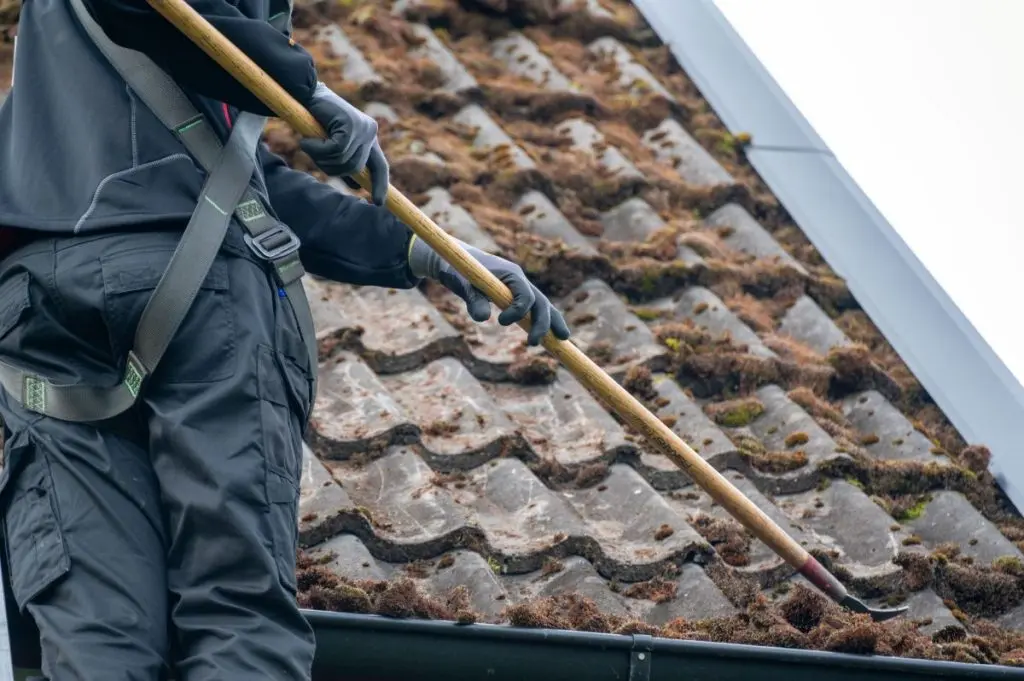
Professional moss removal methods include safe roof access using proper safety equipment, chemical treatment with approved moss killers, gentle physical removal using soft brushes rather than pressure washers, thorough debris cleanup after treatment, and preventive treatment application to slow regrowth. Owl Roofing crews use these methods on Forest Lake moss removal jobs because the combination produces effective results without damaging the shingle surface. The chemical treatment is applied first and allowed to work for the recommended time before physical removal begins. Physical removal uses soft brushes worked downward from the ridge toward the eave to avoid lifting shingle edges. After removal, a preventive treatment is applied to slow regrowth from any remaining moss spores.
- Safe access: Proper safety equipment for surface work.
- Chemical treatment: Approved moss killers applied first.
- Soft-brush removal: Downward strokes prevent shingle damage.
- Preventive treatment: Applied after removal to slow regrowth.
When Should You Hire a Professional?
You should hire a professional for moss removal when the moss coverage extends across large sections of the roof, when the roof pitch exceeds 6:12 which is steeper than safe ladder work allows, when the home is two stories or higher, when the moss has already lifted shingles significantly, or when previous moss removal attempts have not solved the problem. Owl Roofing handles professional moss removal in Forest Lake with all the safety equipment and product knowledge needed to complete the work safely. Homeowners attempting DIY removal on steep, tall, or extensively moss-covered roofs face serious fall risk plus the possibility of damaging shingles further through improper technique.
- Large coverage: Widespread moss beyond ladder reach.
- Steep pitch: Roofs over 6:12 pitch require professional access.
- Multi-story homes: Height increases fall risk significantly.
- Recurring problems: Multiple treatments needed for persistent moss.
How Much Does Roof Moss Removal Cost in Forest Lake?
The cost of roof moss removal in Forest Lake depends on the roof size, the extent of moss coverage, the roof accessibility, and whether preventive treatments are included. Owl Roofing provides itemized estimates for moss removal work.
What Is the Typical Cost Range?
Typical professional roof moss removal in Forest Lake costs $400 to $1,500 for a standard single-family home depending on roof size and moss coverage extent, with basic treatment landing at approximately $600 to $800 for typical Forest Lake homes. Owl Roofing pricing includes safe roof access, chemical treatment application, physical moss removal, debris cleanup, and preventive treatment to slow regrowth. Larger homes, roofs with heavy moss coverage, or homes requiring specialty access equipment for tall multi-story roofs may run higher. Full roof replacement including algae-resistant shingle installation typically costs $14,000 to $25,000 for a typical 2,000 square foot Forest Lake home, providing a long-term solution to recurring moss problems.
- Typical moss removal range: $400 to $1,500 in Forest Lake.
- Standard treatment cost: Approximately $600 to $800.
- Zinc strip installation: Additional $300 to $800 for prevention.
- Full roof replacement: $14,000 to $25,000 for permanent solution.
Owl Roofing in Forest Lake
Owl Roofing handles professional roof moss removal and prevention across Forest Lake and surrounding Twin Cities communities. The team is GAF and Owens Corning certified and handles both moss treatment and complete roof replacement when the underlying condition warrants replacement.
Why Choose Owl Roofing for Moss Removal?
Owl Roofing is a strong choice for roof moss removal in Forest Lake because the team uses proper safety equipment for roof access, applies manufacturer-approved cleaning products, provides free pre-treatment inspections with no obligation to proceed, and offers prevention services including zinc strip installation and algae-resistant shingle upgrades. Owl Roofing inspectors identify whether moss removal alone is sufficient or whether the underlying roof condition warrants replacement. Full replacement with GAF StainGuard Plus algae-resistant shingles provides a long-term solution to recurring moss and algae problems while resetting the roof service life clock for another 25 to 30 years.
- Proper safety equipment: Trained crews with roof access experience.
- Approved products: Manufacturer-safe cleaning solutions.
- Free inspections: Pre-treatment assessment at no cost.
- Prevention services: Zinc strips and algae-resistant shingle upgrades.
Frequently Asked Questions
Can I Remove Moss From My Roof Myself?
Homeowners can perform limited moss removal from ground level or a securely positioned ladder using gentle spray application of approved moss cleaner. Owl Roofing recommends Forest Lake homeowners avoid climbing onto moss-covered roofs because the surfaces are extremely slippery and dangerous. Any moss removal that requires walking on the roof surface should be performed by professionals with proper safety equipment.
Does Bleach Kill Roof Moss?
Bleach kills roof moss but damages shingles, harms nearby plants, stains siding, and often voids manufacturer warranty coverage. Owl Roofing recommends Forest Lake homeowners use manufacturer-approved moss cleaners like zinc sulfate solutions or potassium salts of fatty acids instead of bleach. Approved products kill moss effectively without the collateral damage that bleach causes to the roof, landscaping, and adjacent surfaces.
How Often Should Roof Moss Be Removed?
Roof moss should be inspected annually and treated whenever new growth appears on the roof surface. Owl Roofing recommends Forest Lake homeowners with recurring moss problems schedule annual maintenance treatments to prevent moss from establishing significant coverage. Preventive measures including zinc strip installation and tree trimming reduce the frequency of removal needed.
Will Moss Removal Damage My Roof?
Moss removal will not damage the roof when performed correctly with approved products and gentle removal techniques. Owl Roofing uses methods that preserve shingle integrity during Forest Lake moss removal, including chemical treatment first, soft brush removal in downward strokes, and post-removal cleanup. Improper removal techniques such as pressure washing, harsh scraping, or upward brushing can damage shingles significantly.
Do Zinc Strips Really Prevent Moss?
Zinc strips do prevent moss and algae growth when installed at the roof ridge because rainwater carries dissolved zinc down the roof surface, which inhibits organic growth. Owl Roofing installs zinc strips on Forest Lake homes with recurring moss problems as an ongoing prevention measure. Copper strips work more effectively but cost more, while zinc strips provide adequate protection at lower cost.
Should I Replace My Roof If I Have Moss?
You should replace the roof if moss has damaged shingles significantly, if the underlying roof is over 20 years old, if repair costs are accumulating annually, or if targeted moss removal has not solved recurring problems. Owl Roofing evaluates each Forest Lake moss situation to identify whether removal alone is sufficient or whether replacement with algae-resistant shingles provides better long-term value.
Get Your Free Moss Removal Inspection Scheduled
Owl Roofing handles roof moss removal across Forest Lake and surrounding Twin Cities communities with GAF and Owens Corning certified installations, insurance claim coordination, emergency repair availability, free inspections, financing options, and a maintenance program designed to protect the roof investment for its full service life. Every Owl Roofing consultation identifies whether moss removal, prevention measures, or full replacement provides the best solution for the specific roof condition.
Contact Owl Roofing to schedule a free roof inspection for your Forest Lake home.

Recent Articles
Explore The Blog