



3d Printed Roofing & Construction, Roofing Robots, and the Future of Roofing
 11min Read
 Posted 1.13.2026
If you’ve seen a “3D printed house” headline and wondered, “Cool… but what about the roof?”, you’re asking the right question.
Here’s the honest state of play in 2024–2026:
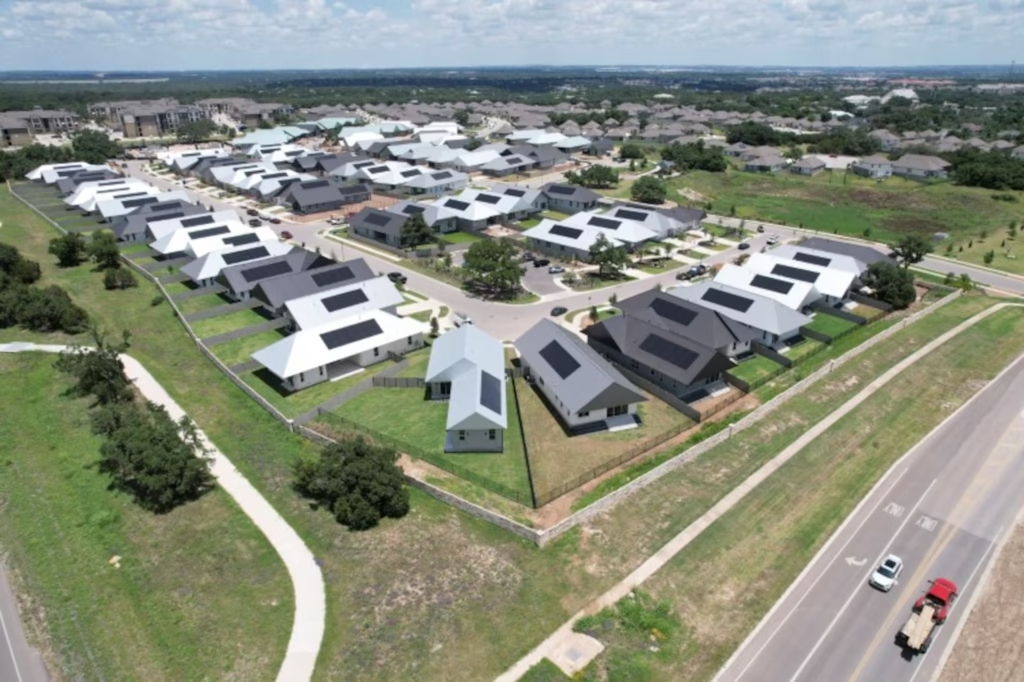
- Most real-world 3D printed buildings today print the walls, then finish the roof with familiar methods (trusses, decking, shingles, metal, etc.). Reuters’ reporting on ICON’s ~100-home Wolf Ranch neighborhood is a clean example of that reality.
- Roof printing is emerging, but it’s harder than printing walls, because roofs want long spans, precise geometry, and water-tight details. Even the companies pushing the frontier talk about “roof structures” as a capability they’re building toward.
- Roofing robots are real and getting better, starting with asphalt shingle installation assistance and inspection automation.
This article covers what’s verifiable, what’s hype, and what’s likely coming sooner than people think.
Quick definitions (so everything below stays clear)
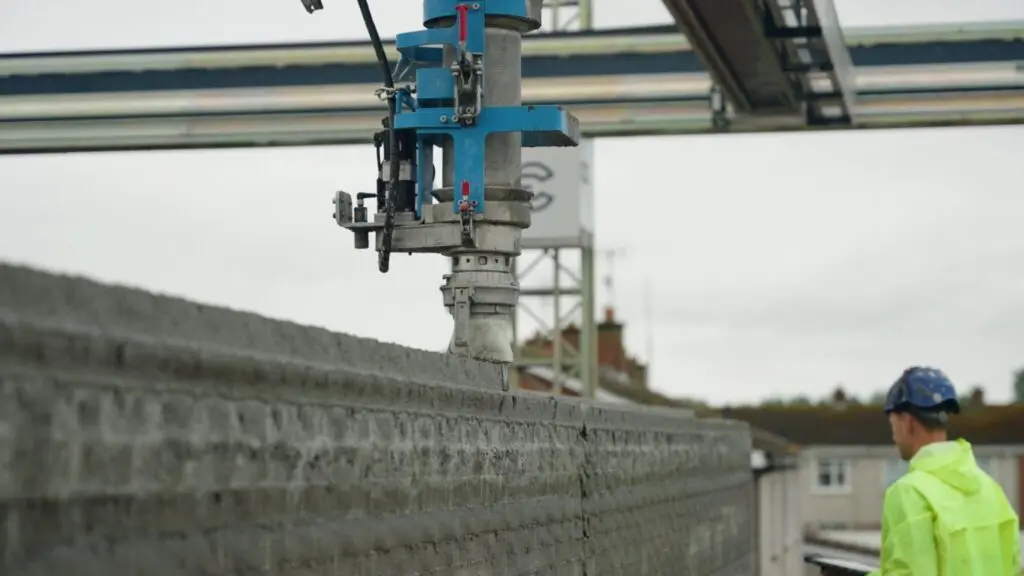
Construction 3D printing (3DCP): A large gantry or robotic arm extrudes a cementitious mix or other material in layers to form walls or structural elements.
3D printed roof (today): Usually means a 3D printed structure that still has a traditionally built roof. True “printed roof structures” exist mostly as prototypes, pilot projects, or specific structural forms.
The real info on 3D printed roofs (what exists right now)
1) The most common “3D printed roof” is still a normal roof
In most current projects, the printer produces wall systems, and crews install a conventional roof afterward.
That’s not a flaw. It’s a practical compromise. Roofs require:
- precise drainage planes
- clean tie-ins at penetrations (pipes, vents, skylights)
- predictable fastening and warranty-able assemblies
Wall printing is the easiest chunk to automate first. Large-scale communities like ICON’s Wolf Ranch illustrate this “print walls, finish normally” approach at scale.
2) Printed roof structures are being pursued, but they constrain design
ICON has publicly described its next-gen system (“Phoenix”) as capable of printing “foundations and roof structures,” and even published pricing ranges that include foundation + roof in the package.
But there’s a physics problem: printing in layers makes large flat spans tricky without supports. Analysts following ICON have pointed out that truly printed roofs often imply steeper slopes and more constrained shapes to remain self-supporting during printing.
So yes, printed roofs are “possible.” The question is “possible in what shapes, at what cost, and with what inspection and code pathway?”
3) Roof-adjacent printing is already happening in serious research
Some of the most promising “roof printing” work is happening as printed formwork + thin shells/vaults (think structural geometry that gets strength from shape), not as a printed version of plywood + shingles.
Example: research prototypes using 3D-printed clay formwork for thin-vaulted green roof concepts.
That matters because it points to a future where:
- roofs become lighter
- material use drops
- shapes become more structurally efficient
But it’s still early.
3D printing construction methods happening now (what’s actually scaling)
1) Gantry printers printing wall systems (the dominant method)
COBOD’s systems are widely used in projects globally, and their project announcements give real, measurable claims about schedule reduction.
- Ireland social housing (Grange Close): COBOD reports wall printing in 12 printing days, and the “structure” completed in 18 days including setup/takedown, with reported time reductions versus conventional methods.
- Germany serial housing reference project (DREIHAUS): COBOD/PERI communications describe 30% faster and ~10% more cost-effective outcomes, plus a printing speed claim of ~1 m² in ~5 minutes.
2) Multi-story printing is moving from “wow demo” to “real deployments”
- COBOD highlighted a 3-story printed building completion in Canada (nidus3D).
- ICON’s Phoenix system is explicitly positioned as multi-story capable (up to ~27 feet tall in their comms) and aimed at scaling enclosure printing.
3) Standards are catching up (this is a big deal)
One reason construction tech stalls is that inspectors and building departments need a clear path.
ISO/ASTM released ISO/ASTM 52939:2023, focused on qualification principles and quality assurance for additive manufacturing in construction.
Translation: the industry is building the rulebook that makes this easier to approve and repeat.
Roofing robots (the stuff that actually changes roofing first)
Roofing is dangerous. In BLS-related reporting, roofers show up near the top of fatality-rate lists, with 2022 cited around 57.5 per 100,000 FTE and 2023 cited around 51.8 per 100,000 FTE in trade reporting.
That reality is why the first meaningful roofing robots focus on:
- reducing time on the roof
- reducing repetitive high-risk tasks
- making crews more productive without needing more people
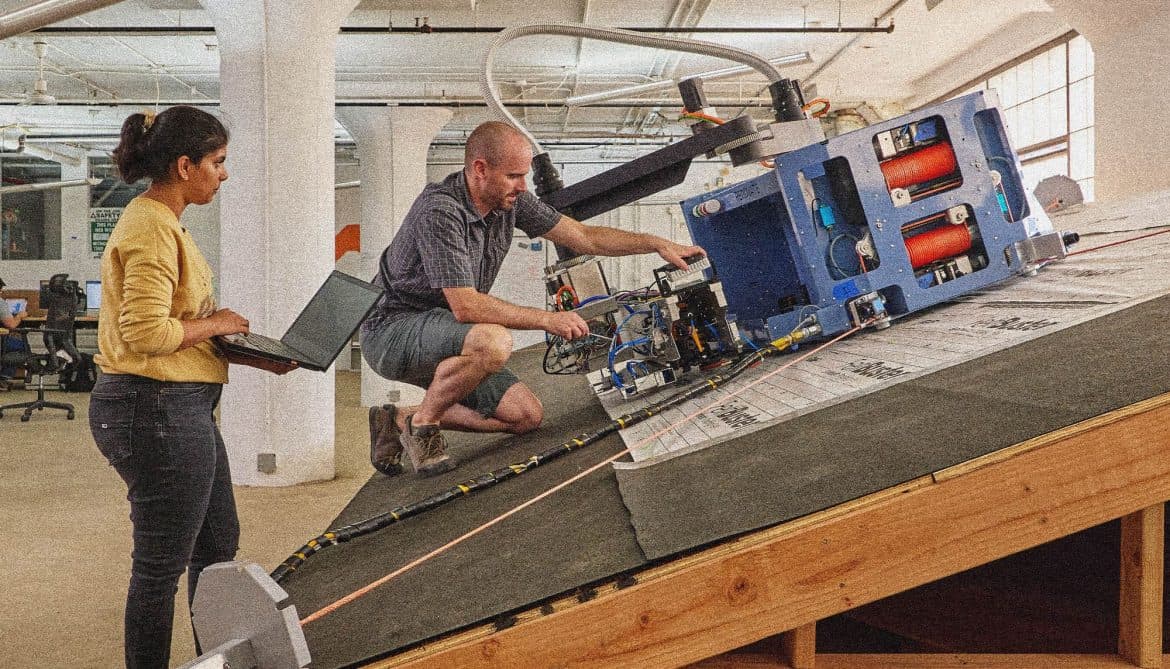
1) Rufus, the shingle-installation robot (Renovate Robotics)
Renovate Robotics’ “Rufus” is one of the most visible roofing automation projects right now.
Multiple industry outlets describe it as an automated system aimed at asphalt shingle installation, operated by a technician, with claims like:
- “double productivity” (roofing trade coverage)
- “three times faster than a human roofer” (Robot Report / RBR coverage of the company)
- a cable/anchoring approach with a technician controlling via tablet and the robot handling nailing placement logic (trade coverage)

Important reality-check: this is not “send the robot, fire the crew.” Most descriptions frame it as crew augmentation, not replacement.
2) Drone + AI inspection is already mainstream-adjacent
The “robot” most homeowners will encounter first is a drone.
EagleView has been pushing drone-based roof inspection workflows with AI anomaly detection and digital roof modeling. They also publish accuracy claims for measurement products (example: roof line/area/slope accuracy numbers near ~98% in their materials).
Gecko Robotics also launched a drone-based commercial roof inspection system called StratoSight, targeting automation at scale for commercial roofs.
What this changes fast:
- faster inspections after storms
- better documentation for claims
- less ladder time for homeowners and crews
“Future of roofing” tech that will matter even if we never print shingles
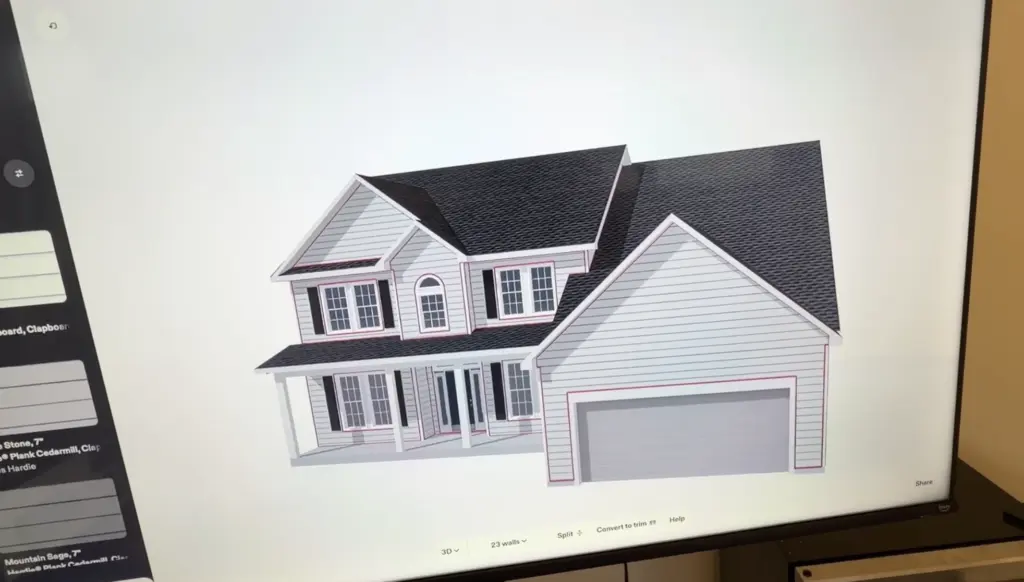
1) Solar shingles and integrated roof energy systems
This isn’t sci-fi. It’s just early-market reality.
GAF Energy launched a next-gen Timberline Solar ES 2 and claims 23% more power than the prior version, with reporting also citing 57 watts per shingle for ES 2.
Tesla continues to market Solar Roof as an integrated roof + energy product line.
This matters for roofing companies because “roof” and “energy” are slowly merging into one buying decision.
2) Materials science: better underlayments, impact ratings, adhesives, airflow
A lot of the “future” is boring in the best way:
- better tear resistance
- better ice/water performance
- better ventilation design
- better hail resistance pathways
It won’t trend on TikTok. It will save homeowners thousands.
3) The quiet revolution: data, documentation, and speed
The biggest shift you’ll feel in the next few years:
- faster quoting
- more precise scopes
- cleaner documentation
- shorter cycle times from storm to check
Robots are part of that. But so is software, aerial measurement, and standardized processes.
Will we actually see 3D printed roofs on normal houses?
Here’s the most grounded answer:
What’s likely in the next 3–7 years
- More “printed enclosure” projects (walls + more structural pieces) in controlled developments
- More standardization via ISO/ASTM pathways and local code adoption
- Robots that speed up parts of roofing, starting with shingles and inspection
What’s less likely soon
- Printing an entire roof system that still needs to be waterproof, ventilated, repairable, and warranty-friendly in the same way modern roofing assemblies are today.
Roofing is not just structure. Roofing is water management. That is why this will move slower than the headlines suggest.
FAQs people actually ask (and the straight answers)
Are there real 3D printed houses?
Yes. There are real neighborhoods and real pilot projects. Reuters covered ICON nearing completion of a ~100-home 3D printed neighborhood in Texas.
Are the roofs 3D printed too?
Usually, no. Most projects print walls and finish roofs with standard methods. Printed roof structures are a developing capability, not the default.
Are roofing robots real or just demos?
Real, but early. Renovate Robotics’ Rufus has been publicly demonstrated and covered widely, with performance claims and an “assist the crew” framing.
Why is roofing automation such a big deal?
Because roofing stays near the top of dangerous jobs by fatality rate in industry coverage tied back to BLS data. Lower ladder time and fewer repetitive high-risk tasks is a big win.
What this means for homeowners in Minnesota
Most Minnesota homeowners won’t buy a “3D printed roof” anytime soon.
But you will benefit from the spillover:
- better inspection options
- better documentation
- faster project timelines
- better products (including integrated solar in some cases)
And when storms hit, the basics still matter most:
- clean flashing details
- correct ventilation
- ice-and-water strategy
- a crew that does not cut corners when nobody’s watching
The part nobody says out loud: tech is cool, but craft still wins
Even in a future with robots and printers, the best roof is still built by people who:
- tell you the truth about your roof
- document everything
- protect the home during the job
- stand behind the work when something is off
That’s the promise we built Owl Roofing around.
If you want a local, family-owned team that uses modern tools where they help, and proven methods where they matter, we’d love to help you protect your nest.
Owl Roofing
Calm communication. Clean installs. No mystery meat decisions.
Call to action: If you’re in Ramsey County or the northeast Twin Cities and you want a clear plan for your roof, reach out for an inspection and a scope you can understand on the first read.
📍 Owl Roofing Serves the Entire Twin Cities Metro
Andover · Anoka · Apple Valley · Arden Hills · Big Lake · Blaine · Bloomington · Brooklyn Center · Brooklyn Park · Burnsville · Champlin · Chanhassen · Chaska · Columbia Heights · Coon Rapids · Cottage Grove · Crystal · deephaven · Delano · Eagan · East Bethel · Eden Prairie · Excelsior · Farmington · Forest Lake · Fridley · Golden Valley · Ham Lake · Hastings · Hopkins · Hugo · Inver Grove Heights · Lake Elmo · Lakeville · Lino Lakes · Mahtomedi · Maplewood · Mendota Heights · Minneapolis · Minnetrista · Mound · Mounds View · New Brighton · New Hope · North Oaks · North St. Paul · Oak Grove · Oakdale · Plymouth · Prior Lake · Ramsey · Richfield · Robbinsdale · Rosemount · Roseville · Saint Paul · Savage · Shakopee · Shoreview · South St. Paul · St. Louis Park · St. Michael · St. Paul · Stillwater · Vadnais Heights · Victoria · Waconia · wayzata · West St. Paul · White Bear Lake · woodbury
Licensed Minnesota roofing contractor · Free inspections · 10-year workmanship warranty · Get a free estimate →

Recent Articles
Explore The Blog