


12 Signs You Need a New Roof (Minnesota Edition): How to Spot Roof Failure Before It Leaks
 15min Read
 Posted 2.26.2026
Quick answer: You probably need a new roof if you have two or more of the following: your roof is over 20 years old, shingles are curling/cracking/missing, you see granules in gutters, there are dark streaks or sagging areas, your attic shows water stains or daylight, your energy bill jumped, or a recent hail/wind event left dents or bruises on shingles. One sign is usually a repair. Two or more — especially on an older roof — usually means replacement. This guide gives you 12 specific signs, a DIY inspection checklist, and a decision framework.
Minnesota is brutal on roofs. Freeze-thaw cycles, ice dams, 70-mph straight-line winds, and an average 4–7 significant hail events per year in the Twin Cities all work together to age shingles faster than in most of the country. A “30-year” architectural shingle in Phoenix will last 30 years. In the Twin Cities, the same shingle installed the same way typically gives you 22–28 years. Knowing the warning signs before a leak shows up inside your house can save you thousands in damage and get your insurance claim filed while the evidence is still fresh.
12 Signs You Need a New Roof (In Order of Severity)
1. Your Roof Is Over 20 Years Old (and You Don’t Know When It Was Installed)
Age is the single most predictive indicator. Most Minnesota asphalt roofs installed pre-2000 are running on borrowed time. Even if yours looks fine from the ground, a 25+ year-old shingle has lost most of its protective oils, and the next hail event will almost certainly total it. Don’t have install records? Ask your city’s building department for a permit history — they usually have records going back 20–30 years.
2. Curling, Cupping, or Clawing Shingles
Healthy shingles lay flat. Curling edges (“clawing”) or upturned corners (“cupping”) mean the shingle has lost its asphalt binding and is starting to fail. Curling is almost always age-related or from poor attic ventilation. Once it starts, it progresses across the whole roof within 2–3 years.
3. Cracked, Broken, or Missing Shingles
A few cracks on sun-baked southern exposures are normal on an aging roof. But widespread cracking — especially diagonal cracks across multiple shingles — is “thermal splitting” and signals the mat is failing. Missing shingles after high wind events are an immediate red flag: wind-rated shingles shouldn’t blow off unless they’re end-of-life or were improperly nailed.
4. Granules in Gutters and Downspouts
A handful of granules after a rain is normal for new shingles (the “loose factory granules” shedding). But a steady stream of granules — enough to line the bottom of your gutters or puddle near the downspout splash zones — means the UV-protective layer of your shingles is wearing through. Once granules are gone, shingles degrade exponentially faster.
5. Dark Streaks, Stains, or Moss Growth
Black streaks are usually algae (Gloeocapsa magma), which feeds on limestone filler in shingles. It’s mostly cosmetic if caught early but holds moisture against the shingle, accelerating degradation. Green patches are moss — which actively lifts shingles and traps water underneath, leading to decking rot.
6. Dimples, Bruises, or Cracked Mat from Hail
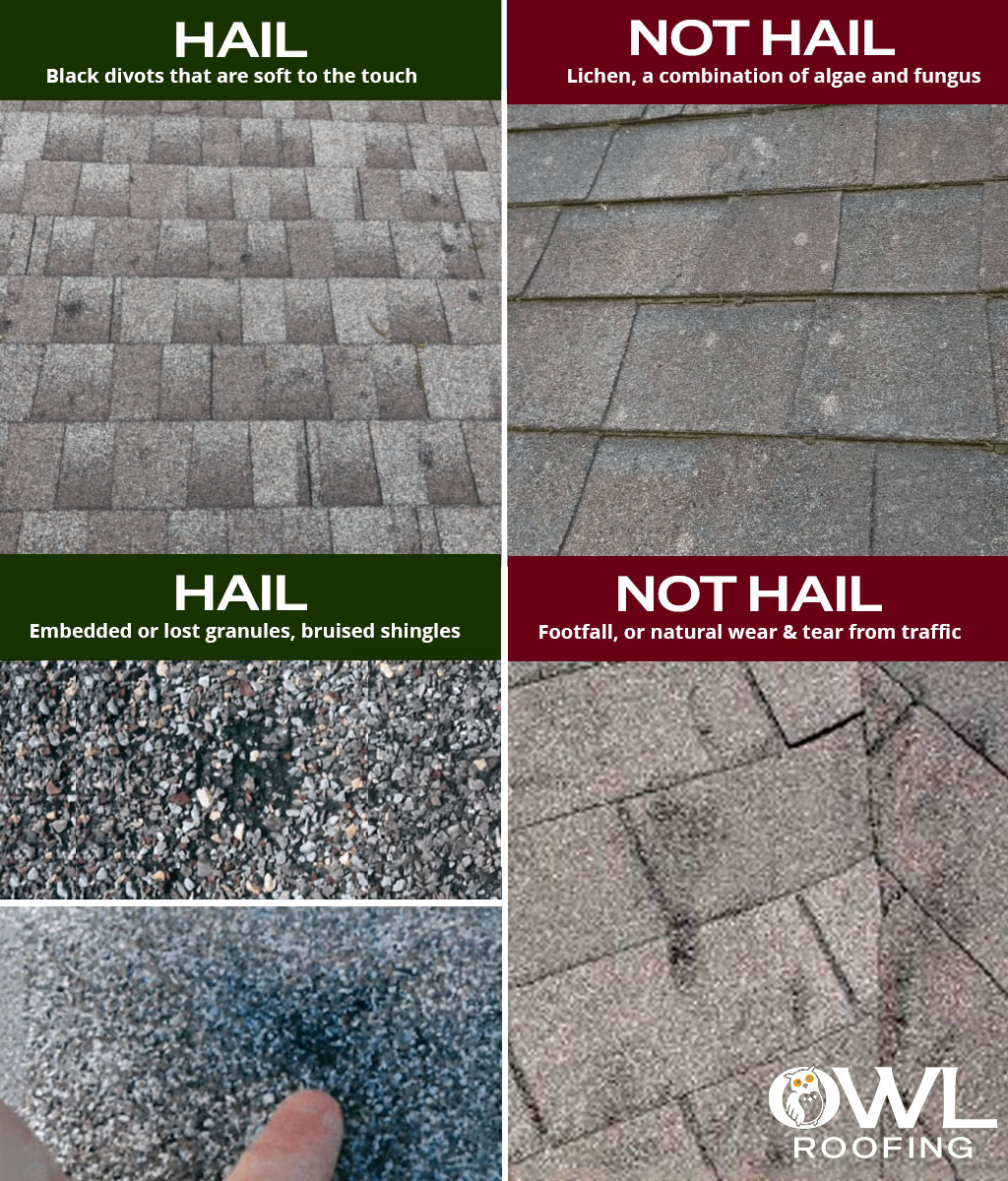
Hail damage is the #1 replacement trigger in Minnesota. Look for circular depressions the size of quarters or larger, cracks in the shingle mat when you flex it, and granule loss concentrated in dot patterns. Even if the damage looks minor, hail destroys the sealant bond and cuts 10+ years off a shingle’s life. Our deep dive on how to identify hail damage on shingles walks through what adjusters actually look for.
7. Sagging Rooflines or Spongy Decking
If you can see any sagging, bulging, or dipping when you look at the roof from the street, the decking is structurally compromised — likely from prolonged water intrusion or failed trusses. This is a replace-now situation; patching shingles over rotten decking creates a liability and makes the eventual replacement cost 30–50% more.
8. Water Stains, Rings, or Drips Inside the House
Brown or yellow rings on ceilings, bubbling paint on upper walls, or actual drips during heavy rain mean the water has already made it through. By the time a leak shows indoors, it has been getting past the roof for weeks or months. Waiting makes drywall, insulation, and framing replacement much more expensive than the roof work itself.
9. Daylight or Moisture in the Attic
Grab a flashlight and check your attic on a bright day. If you see daylight through the decking, or if the underside of the decking shows black mold, water staining, rusted nails (“shiners”), or damp insulation — you’ve got active water intrusion. This is the cheapest place to catch a roof failure, because you see the damage before it affects living space.
10. Ice Dams Forming Every Winter
Ice dams form when attic heat escapes through a poorly ventilated roof, melts snow, and re-freezes at the cold eaves. Chronic ice dams are usually a sign of inadequate insulation, blocked intake venting, missing ice and water shield, or all three. The water that backs up behind an ice dam is the #1 cause of winter interior damage in Minnesota — and repeated events shorten roof life by 5–10 years.
11. Rising Energy Bills Without Explanation
A 10–20% unexplained jump in summer cooling or winter heating costs often traces back to roof and attic issues: compromised underlayment, insufficient ridge venting, or water-damaged insulation. If your furnace/AC hasn’t changed but your bill has, the roof is a prime suspect.
12. Neighbors Are Getting New Roofs
Seriously. If three or four houses on your block are suddenly getting tear-offs at the same time, a storm likely hit your zip code. The same storm that damaged their roofs probably damaged yours — and insurance claims have a deadline (typically 1 year in Minnesota). Get an inspection before the clock runs out. For more on what hail actually damages, see our guide on what size hail damages a roof.
Repair vs. Replace: A Decision Matrix
| Situation | Age Under 12 Years | Age 12–18 Years | Age 18+ Years |
|---|---|---|---|
| 1–2 missing shingles from wind | Repair ($300–$800) | Repair ($400–$1,200) | Lean replace |
| Isolated leak, small area | Repair ($500–$2,500) | Repair + inspection | Replace |
| Hail damage, 10%+ of roof | File claim, likely replace | Replace (claim) | Replace (claim) |
| Widespread granule loss | Inspect + monitor | Start planning replace | Replace |
| Curling across 3+ planes | Ventilation fix + monitor | Replace | Replace |
| Water stains in ceiling | Leak repair | Inspect decking + repair | Replace |
| Sagging or spongy decking | Structural inspection | Replace | Replace urgently |
Still unsure? Our repair vs. replacement decision guide walks through the math on each scenario, and the 25% rule applies here: Minnesota code usually forces replacement when damage exceeds one-quarter of the roof surface.
DIY Ground-Level Inspection Checklist
You don’t have to climb the roof. Most warning signs are visible from the ground, a second-story window, or inside your attic. Do this walkthrough every spring and every fall:
- Walk the perimeter. Look for missing shingles, curled edges, dark streaks, and visibly sagging areas. Use binoculars for a closer look.
- Check the gutters. After a rainstorm, scoop a handful of gutter debris. If it’s half granules, your shingles are shedding.
- Photograph the roof from each side. Save the photos with a date. Next year, compare — progression tells you everything.
- Inspect the attic on a bright day. Flashlight off. Look for pinholes of daylight, water stains on decking, rusted nail tips (“shiners”), compressed or damp insulation.
- Inspect the attic during/after heavy rain. Wet decking or insulation = active leak.
- Check ceilings on top floor and stairwell ceilings. Rings, bubbling paint, or discoloration means water has made it through.
- Inspect flashing around chimneys, skylights, and vent pipes. Cracked sealant, rust, or gaps are common leak points.
- Listen during storms. Drips, ticking from the attic, or unusual creaking are warning signs.
If any three items on this checklist come back positive, schedule a professional inspection. Real inspections are usually free — reputable contractors build them into their sales process rather than charging for them.
What a Professional Inspection Finds That You Won’t
A certified inspector walks the roof (or uses a drone), and checks things that aren’t visible from the ground:
- Soft decking. Walking the roof reveals spongy areas where OSB is delaminating under the shingles.
- Hail bruising on the shingle mat. From the ground, a hail dimple can look like a factory mark. A HAAG-certified inspector flexes the mat to find cracks.
- Failed sealant bonds. Shingles that should be glued to the one below can be lifted cleanly — this is catastrophic but invisible from 30 feet below.
- Flashing compromise. Microfractures, rust, separating seams, and failed counter-flashing around chimneys.
- Vent boot decay. Rubber vent boots crack at 7–10 years. This is the single most common leak source on Minnesota homes and is always missed in a ground-level inspection.
- Ridge vent failure. Lifted ridge vents allow wind-driven rain into the attic.
- Ice and water shield coverage. Most inspectors can tell you if existing coverage meets current code.
Time-Sensitive Signs (Act This Week)
These warning signs mean water is actively coming in or structural damage is accelerating. Don’t wait for the next quote cycle:
- Active drips during rain
- Visible sagging anywhere on the roofline
- Wet insulation or dark mold in the attic
- Fresh water stains expanding on ceilings
- Shingles found in the yard after a wind event (file the claim same day)
- Chunks of ice breaking off eaves + interior ceiling staining in winter
Can You Delay? When It’s Okay to Wait
If your roof is showing mild age-related signs but no active leaks, no hail damage, and no structural issues, you can usually budget and plan for replacement over 6–24 months. Key conditions for safe delay:
- No interior water stains, drips, or mold
- No spongy decking or sagging
- Granule loss is moderate, not severe
- You don’t have a current hail or storm claim opportunity
- Your area hasn’t had a major storm in the past 12 months
Use the delay time well: get three quotes, pick a contractor you trust, and schedule the work for the next available September–October window. Understand the 2026 Minnesota roof pricing and the typical timeline so you can plan around both cost and schedule.
What to Do Next
If you scored 2+ warning signs on the list above, the next step is a professional inspection. You want an inspector who will:
- Physically walk the roof (or use a calibrated drone)
- Document with dated photos of each plane and every penetration
- Flex-test shingles for hail bruising
- Inspect the attic for water staining and insulation condition
- Give you a written report — repair, replace, or monitor — with specific line items
If you’d like that kind of inspection on your Twin Cities home, contact our team. We’ll walk the roof, photograph every plane, check the attic, and give you a written report — repair, replace, or monitor. No sales pitch, no “while we’re here” upsells. Just the facts, and a quote if you actually need one.
The Bottom Line
Roofs rarely fail suddenly. They warn you — with granules, curling edges, ceiling stains, and neighborhood claim spikes after storms. Catching those signs at years 18–22 gives you a 6–24 month planning window, the best contractor pricing, and the chance to schedule the work in ideal Minnesota weather. Missing those signs until water is dripping on your bed means an emergency tarp, a rushed quote, and 30% more in total cost between the roof and the interior repair.
Pay attention every spring and fall. Walk the perimeter. Check the attic. Count your warning signs. Two or more? Time to get a professional opinion.
What Owl Roofing Customers Actually Say
Real, verified Google reviews from real customers Owl Roofing maintains a 5.0 Google rating with 30+ five-star reviews.
Noah is the real deal. After our insurance denied our roof claim and the first roofer walked away, Noah showed up the next day and said he thought he could get us a new roof. He delivered. He got us a roof covered by insurance after it had already been declined. We came up with a nickname for him: “The Roof Whisperer.”
— Tyler Moberg, verified Google review
I am an Independent Insurance Agency owner and have worked with Noah on several roof projects. The homeowners have been extremely satisfied with the quality of work and craftsmanship Noah and his crews have provided. From filing the claim to replacing the roof and cleaning up the job site, Noah and his crew are the best!
— Fred Zappa, Independent Insurance Agency Owner
We used Owl Roofing for a repair on our roof in Brooklyn Park, and I was blown away by how good they were. Every member of the team communicated well about the process. Their price transparency was super helpful. They got the work done very fast, and the team was professional and very kind.
— Matt Brown, Brooklyn Park (verified Google review)
Noah and his team are outstanding! His clear communication, professionalism, and workmanship are top-notch. I recommend Owl Roofing to all my clients, friends, and family.
— Christine Westlund, verified Google review
It didn’t feel like dealing with a big company — it felt like working with people who actually care about the homes and community in the North Oaks and Shoreview area. Great people, great communication, and really solid work.
— Cody Warren, verified Google review
Frequently Asked Questions
What are the top signs my roof needs to be replaced?
Top signs include age over 20 years, curling or cupping shingles, missing/cracked shingles, heavy granule loss in gutters, dark streaks or moss, sagging rooflines, interior water stains, daylight in the attic, chronic ice dams, and recent hail damage. Two or more signs typically means replacement, especially on an older roof.
How do I know if my roof has hail damage?
Look for circular dimples (quarter-size or larger), granule loss in dot patterns exposing dark asphalt, cracks in the mat when you flex a shingle, and dents on soft metals like gutters, downspouts, and vent caps. If neighbors are filing claims, yours probably qualifies too. File within 1 year of the storm to meet Minnesota claim deadlines.
How long does an asphalt shingle roof last in Minnesota?
A properly installed architectural asphalt shingle roof lasts 22–28 years in Minnesota — a few years less than the shingle’s rated lifespan due to freeze-thaw cycles and hail exposure. 3-tab shingles last 15–20 years. Metal and cedar shake last 40+ years.
Can I replace only part of my roof?
Yes, but only if damage is under 25% of the total roof area and the remaining shingles are under 10 years old with a matching manufacturer style. Minnesota’s 25% rule typically forces full replacement for larger damage areas. Partial replacement also creates color and age mismatch that hurts resale value.
Is a leaky roof always a sign of replacement?
Not always. A single leak from a failed pipe boot or flashing on a young roof (under 12 years old) is usually a $400–$1,500 repair. Multiple leaks, leaks that return, or leaks on a 18+ year old roof almost always point to whole-roof replacement because the underlying shingles are near end-of-life.
Will insurance pay for a new roof if mine is old?
Yes, if the damage is storm-related (hail, wind, tree impact) — age doesn’t disqualify a claim. However, some carriers cap payouts at Actual Cash Value (depreciated price) on roofs over 15 years old, rather than full replacement cost. Check your policy for “ACV vs. RCV” language before assuming the full cost is covered.
Should I get a roof inspection before selling my house?
Yes. A pre-listing roof inspection costs nothing from most Minnesota contractors, and having a written report lets you price the house correctly. If the roof is near end-of-life, you can either replace pre-sale for stronger marketing or credit the buyer at closing — either approach beats surprise buyer demands during escrow.
