


Are Black Shingles a Bad Idea Pros and Cons
 13min Read
 Posted 1.09.2026
Are Black Shingles a Bad Idea? Pros and Cons for Twin Cities Homeowners
Here’s something that might surprise you: that gorgeous black roof you’ve been eyeing could actually save you money on winter heating—or cost you a small fortune in summer AC bills. The difference? It all depends on how you approach the decision. For Twin Cities homeowners weighing the black shingles pros cons debate, the answer isn’t as simple as “yes” or “no.” It’s about understanding how dark roofing performs in our specific climate and making a choice that works for your home, your budget, and your sanity.
Black shingles are having a moment right now. Drive through Shoreview, Roseville, or any neighborhood in the metro, and you’ll notice more charcoal and onyx roofs than ever before. They look sharp. They photograph beautifully. But do they make sense for Minnesota? Let’s dig into the real trade-offs so you can make a decision you won’t regret in five years.
Why Your Shingle Color Actually Matters
Your roof isn’t just a hat for your house—it’s doing serious work up there. According to the National Roofing Contractors Association (NRCA), roofing accounts for about 40% of your home’s exterior surface area. That’s a massive amount of real estate that’s constantly interacting with sunlight, rain, snow, and everything else Minnesota throws at us.
The Insurance Institute for Business & Home Safety (IBHS) has spent years studying how roofing choices affect everything from energy bills to storm damage claims. Their research is clear: the color and material of your shingles have a measurable impact on your home’s performance. This isn’t just about aesthetics—though we’ll get to that. It’s about protection, efficiency, and long-term costs.
So when you’re weighing black shingles pros cons, you’re really asking: how will this roof perform during a -20°F January morning AND a 95°F August afternoon? Because in the Twin Cities, you’re going to get both. Often within the same week, it seems.
The Case FOR Black Shingles

Curb Appeal That Actually Pays Off
The feature: Black shingles create a bold, sophisticated look that works with almost any home style—from modern builds in Woodbury to century-old Victorians in St. Paul.
The advantage over alternatives: While tan or gray shingles tend to blend into the background, black makes a statement. It creates crisp contrast against siding, highlights architectural details like dormers and gables, and photographs exceptionally well (great for future resale listings).
The real benefit to you: This isn’t just vanity. The National Association of Realtors (NAR) reports that exterior projects like new roofing can recover about 107% of their cost in resale value. A striking roof that makes buyers stop their car? That’s money in your pocket when it’s time to sell. Your neighbors might even start asking who did your roof—always a nice feeling.
Winter Performance That Makes Sense Here
The feature: Dark shingles absorb significantly more solar energy than light-colored alternatives. On a sunny winter day, a black roof can be 20-30 degrees warmer than its lighter counterpart.
The advantage over alternatives: That absorbed heat has to go somewhere—and some of it transfers into your attic space. More importantly, it helps melt snow accumulation faster and can reduce the formation of ice dams along your eaves.
The real benefit to you: Anyone who’s dealt with ice dams knows they’re not just annoying—they’re expensive. Water backing up under your shingles can cause thousands of dollars in damage to insulation, ceilings, and walls. The IBHS emphasizes that preventing ice dams is one of the most effective ways to avoid costly winter repairs. A black roof won’t eliminate the risk entirely (proper attic ventilation and insulation matter more), but it can help. For a Minnesota home, that’s a legitimate advantage.
They Hide Wear Better Than You’d Think
The feature: Black and dark-colored shingles are manufactured to maintain their appearance over time, using fade-resistant granules and UV-stable materials.
The advantage over alternatives: Light-colored shingles show every streak of algae, every bit of dirt, and every discoloration from weathering. Black shingles? Not so much. That dark color is forgiving in ways that beige simply isn’t.
The real benefit to you: According to IBHS data, durable roofing can save homeowners up to 30% on maintenance costs over the roof’s lifetime. When your roof looks good longer without constant cleaning or early replacement, you keep more money in your pocket. Plus, you’re not the neighbor with the streaky, sad-looking roof. Nobody wants to be that neighbor.
The Case AGAINST Black Shingles
Summer Cooling Costs Are Real
The feature: The same heat absorption that helps in winter works against you from June through August. Black shingles can reach surface temperatures of 150-170°F on hot summer days.
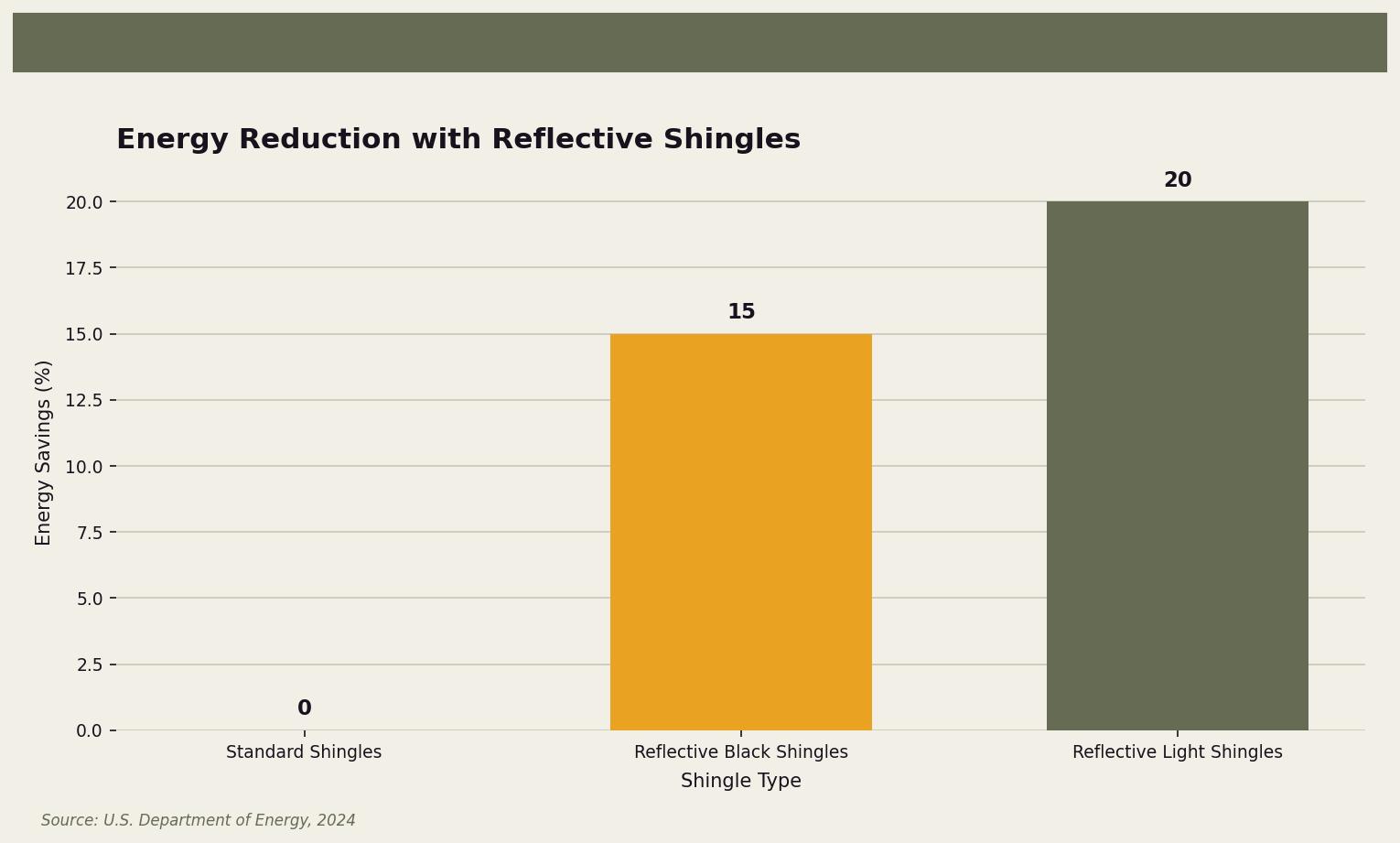
The disadvantage compared to alternatives: Light-colored “cool roof” shingles reflect more solar radiation, keeping roof surface temperatures significantly lower. The U.S. Department of Energy notes that reflective roofing materials can reduce roof surface temperature by up to 50°F.
The real impact on you: Higher roof temperatures mean your attic gets hotter, which means your air conditioning works harder. The Department of Energy estimates that reflective roofing can decrease cooling energy use by 15-20%. If you’re already fighting high summer electric bills, a black roof might make that battle harder to win.
Now, here’s the nuance: Minnesota summers are intense but relatively short. We’re not Phoenix. The cooling cost increase might be $50-150 over a summer season for most homes—noticeable, but not catastrophic. Whether that matters to you depends on your priorities and your home’s specific situation.
Potential Impact on Shingle Lifespan
The feature: Thermal cycling—the expansion and contraction of materials as temperatures change—is harder on roofing materials than constant temperature would be.
The disadvantage compared to alternatives: Because black shingles experience more extreme temperature swings (very hot in summer sun, then cooling rapidly at night), they may experience slightly more thermal stress than lighter alternatives.
The real impact on you: In practice, this is less of an issue than it used to be. Modern shingles are engineered to handle these cycles. But if you’re comparing two identical-quality shingles—one black, one light—the light one might have a slight edge in longevity. We’re talking maybe a year or two difference over a 25-30 year roof life. Worth knowing, but probably not a dealbreaker.
Not Every Home Style Benefits
The feature: Black is a bold, high-contrast color that draws the eye upward.
The disadvantage in some situations: On homes with complex rooflines, multiple levels, or architectural quirks, a black roof can emphasize those features in unflattering ways. It can also make smaller homes feel top-heavy or visually unbalanced.
The real impact on you: Before committing to black, look at photos of similar homes in your neighborhood with dark roofs. Better yet, drive around and see them in person. What looks stunning on a large colonial might overwhelm a modest rambler. This is purely aesthetic—but aesthetics matter when you’re looking at your house every day for the next few decades.
How Black Shingles Perform in Twin Cities Weather

Let’s get specific about what our climate demands from a roof. The Twin Cities experience temperature swings that would make most building materials want to file a complaint with HR. We’re talking -30°F wind chills in January and 100°F heat indices in July—sometimes with violent storms in between.
The NRCA recommends selecting shingles with high durability ratings, particularly ones tested for resistance to freeze-thaw cycles. This matters more than color, frankly. A high-quality black shingle will outperform a cheap light-colored shingle every time.
Winter considerations: Black shingles can help with snow melt and ice dam prevention, but they’re not a substitute for proper attic insulation and ventilation. If your attic is poorly insulated, heat escaping from your living space causes ice dams—regardless of shingle color. The shingle color is a bonus, not a solution.
Summer considerations: Our summers are hot but not endless. The cooling cost increase from black shingles is real but manageable for most homeowners. If you have excellent attic insulation and a radiant barrier, the impact is even smaller.
Storm considerations: Color has zero impact on how your roof handles hail, wind, or heavy rain. What matters is the shingle’s impact rating, wind resistance, and installation quality. Don’t let anyone tell you that one color is “tougher” than another—that’s not how materials science works.
Modern Solutions: Getting the Best of Both Worlds
Here’s something worth knowing: shingle technology has come a long way. You’re no longer stuck choosing between “looks great” and “performs well.”
Reflective granule technology: Many manufacturers now offer black and dark-colored shingles with specially engineered granules that reflect infrared radiation—the wavelengths that cause heat buildup—while still absorbing visible light (which is what makes them look black). The U.S. Department of Energy confirms these products can significantly reduce heat absorption without changing the appearance.
Cool roof ratings: Look for shingles with an Energy Star certification or a high Solar Reflectance Index (SRI) rating. These products are independently tested to confirm their cooling performance.
Premium product lines: Higher-end shingles from brands like GAF, Owens Corning, and CertainTeed often include these reflective technologies as standard features. You’ll pay a bit more upfront, but the performance benefits and extended warranties often justify the investment.
Making the Right Choice for Your Home
Here’s a practical framework for deciding whether black shingles make sense for your situation:
- Consider your home’s orientation. A roof that faces south gets significantly more sun exposure. If your roof has a large south-facing slope, the heat absorption issue is more pronounced.
- Evaluate your attic situation. Good insulation and ventilation minimize the impact of roof color on your energy bills. If your attic is well-sealed, you have more flexibility in shingle choice.
- Think about your priorities. Do you value aesthetics highly? Are you concerned about winter ice dams? Are summer cooling bills already a pain point? There’s no wrong answer—just your answer.
- Look at your neighborhood. What colors are common nearby? What looks good on homes similar to yours? A roof that fits the neighborhood context tends to age better aesthetically and can help with resale.
- Get a professional opinion. A reputable local roofer can assess your specific situation—roof orientation, attic conditions, existing ventilation—and give you realistic expectations for how different shingle colors will perform on YOUR home.
Also, request an energy audit if you haven’t had one recently. Understanding your home’s current efficiency situation helps you make smarter decisions about any upgrade, roofing included.
The Bottom Line on Black Shingles
So, are black shingles a bad idea? Not inherently. They’re a choice with trade-offs—like every roofing decision.
Black shingles make sense if: You love the look, you’re choosing a quality product with modern reflective technology, your home has good attic insulation, and you’re okay with potentially modest increases in summer cooling costs.
Black shingles might not be ideal if: You’re already struggling with high summer electric bills, your attic insulation is poor and you’re not planning to upgrade it, or the look just doesn’t complement your home’s style.
The best choice is the informed choice. Now you have the information to make one that works for your home, your budget, and your preferences.
Need Help Deciding? We’re Happy to Talk It Through
If you’re still weighing your options—or if you’ve decided black shingles are the way to go and you want them installed right—we’d love to help. At Owl Roofing, we’ve worked on hundreds of roofs across Shoreview and the entire Twin Cities metro, and we’ve seen how different shingle colors perform in our specific climate over the years. We’ll give you an honest assessment of what makes sense for your home, walk you through the options, and answer any questions without the pressure.
Give us a call at 651-977-6027 or visit owlroofing.com/ to schedule a free consultation. We’re local, we’re not going anywhere, and we genuinely want your roof to serve you well for decades.
Protect Your Nest.
📍 Owl Roofing Serves the Entire Twin Cities Metro
Andover · Anoka · Apple Valley · Arden Hills · Big Lake · Blaine · Bloomington · Brooklyn Center · Brooklyn Park · Burnsville · Champlin · Chanhassen · Chaska · Columbia Heights · Coon Rapids · Cottage Grove · Crystal · deephaven · Delano · Eagan · East Bethel · Eden Prairie · Excelsior · Farmington · Forest Lake · Fridley · Golden Valley · Ham Lake · Hastings · Hopkins · Hugo · Inver Grove Heights · Lake Elmo · Lakeville · Lino Lakes · Mahtomedi · Maplewood · Mendota Heights · Minneapolis · Minnetrista · Mound · Mounds View · New Brighton · New Hope · North Oaks · North St. Paul · Oak Grove · Oakdale · Plymouth · Prior Lake · Ramsey · Richfield · Robbinsdale · Rosemount · Roseville · Saint Paul · Savage · Shakopee · Shoreview · South St. Paul · St. Louis Park · St. Michael · St. Paul · Stillwater · Vadnais Heights · Victoria · Waconia · wayzata · West St. Paul · White Bear Lake · woodbury
Licensed Minnesota roofing contractor · Free inspections · 10-year workmanship warranty · Get a free estimate →
