


Attic Insulation Calculator: Bags, Inches & R-Value
 6min Read
 Posted 7.17.2026
🦉 Attic Insulation Calculator
Find your gap to R-49 and the bags of blown-in insulation it takes to close it.
Assumes blown cellulose at ~R-3.5/inch, one bag per ~40 sq ft at 3.5″ added depth (adjusted for your gap), and ~$14/bag. Blower rental is usually free with 20+ bags. Air sealing before insulating matters more than any of these numbers — see below.
Ask About Insulation With a Free Inspection →How the Attic Insulation Calculator Works
Insulation math has two halves. First, your current R-value: existing depth × the R-per-inch of what is up there (blown fiberglass ~2.5, cellulose ~3.5, batts ~3.2). Second, the gap: Minnesota code requires R-49 in attics, and the Department of Energy recommends R-60 for our climate zone. The calculator finds your gap, converts it to inches of blown cellulose, and — because cellulose is sold by the bag — tells you how many bags close it, with a DIY material cost. Enter your attic’s square footage and what you can see between the joists.
How Much Insulation Do I Need in a Minnesota Attic?
R-49 minimum, R-60 ideally — which translates to roughly 14–17 inches of blown cellulose or 17–22 inches of blown fiberglass from the drywall up. Most Twin Cities homes built before 2000 have 4–8 inches, putting them at R-10 to R-20: less than half of code. The quick visual test: if you can see your joists, you need more insulation, full stop. Our Minnesota R-value guide covers what code requires in detail.
Blown-In Insulation Calculator Math: Bags, Depth, and Coverage
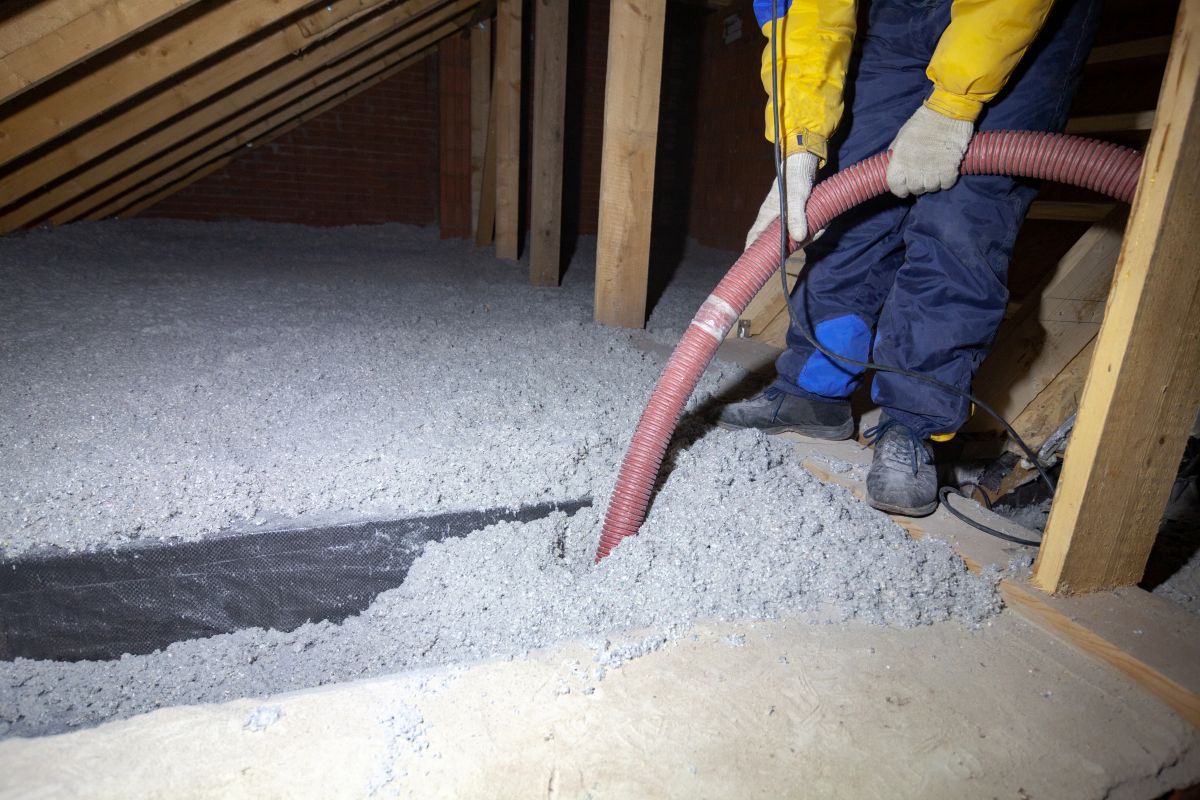
Cellulose coverage charts on the bag are the ground truth, but the working rule is one ~25 lb bag per 40 sq ft at 3.5 inches of settled depth. A 1,500 sq ft attic going from R-15 to R-49 needs about 10 inches added — roughly 105 bags, or $1,400–$1,600 in material. Professional installs in the Twin Cities typically run $1.50–$2.50 per sq ft for a top-up, which includes proper depth markers, baffles, and dams around hatches and flues — the details DIY jobs most often miss.
Air Sealing First: The Step That Beats the Math
Here is the part every energy auditor wishes homeowners knew: insulation slows heat conduction, but warm air leaking into your attic through top plates, wire penetrations, bath fans, and the attic hatch carries far more heat — and moisture — than conduction ever will. That moist air is what frosts your roof deck, feeds mold, and builds the ice dams that wreck Minnesota eaves. Seal the leaks with foam and caulk first, then insulate. Blowing 16 inches over unsealed leaks is like putting a parka over a wet shirt.
Insulation and Ventilation Work as a Team
Deep insulation with choked-off airflow creates a damp attic; strong airflow over thin insulation creates a cold house. You want both: R-49+ on the floor and balanced intake/exhaust ventilation above it, with baffles keeping soffit vents clear at the eaves — where deep blown insulation loves to slump. Run our attic ventilation calculator to get the airflow half of the equation right. Getting both right is the single most effective ice-dam prevention there is, and it stretches shingle life too.
What It Costs — and What It Pays Back
A professional air-seal-plus-top-up on a typical Twin Cities attic runs $2,000–$4,500. Between Minnesota utility rebates (often $300–$600 for attic work), federal tax credits covering 30% of insulation costs up to $1,200/year, and heating savings of 10–20%, payback commonly lands in the 3–7 year range — before counting the avoided cost of an ice dam claim. Check your utility’s rebate page before scheduling; some require a pre-audit.
Attic Insulation FAQs
How many inches of blown insulation equals R-49?
About 14 inches of cellulose (R-3.5/inch) or 19–20 inches of blown fiberglass (R-2.5/inch).
How many bags of insulation do I need for 1,000 sq ft?
Going from bare to R-49: roughly 100 bags of cellulose. Topping up from R-20: about 60.
Can I add new insulation over old?
Yes — as long as the old material is dry and mold-free. Never bury knob-and-tube wiring or recessed lights not rated IC.
Is cellulose or fiberglass better for blown-in?
Cellulose packs more R per inch and resists air movement better; blown fiberglass is lighter and cheaper per bag. Both work when installed to depth.
Does attic insulation stop ice dams?
Combined with air sealing and ventilation, it is the core of the fix — ice dams are a heat-loss problem before they are a roof problem.
Roof and attic are one system. Owl Roofing checks insulation depth and ventilation on every inspection, free — schedule yours. 🦉
