




Can Missing Shingles Cause Leaks Yes and Why
 12min Read
 Posted 11.21.2025
Can Missing Shingles Cause Leaks? Yes, and Here’s Why
That dark spot on your ceiling? It didn’t appear overnight. Somewhere above your head, a shingle blew off during last month’s windstorm — and now every raindrop has a direct path into your home. If you’re a Twin Cities homeowner staring at water damage and wondering how this happened, you’re not alone. Missing shingles are one of the most common (and most preventable) causes of roof leaks in Minnesota.
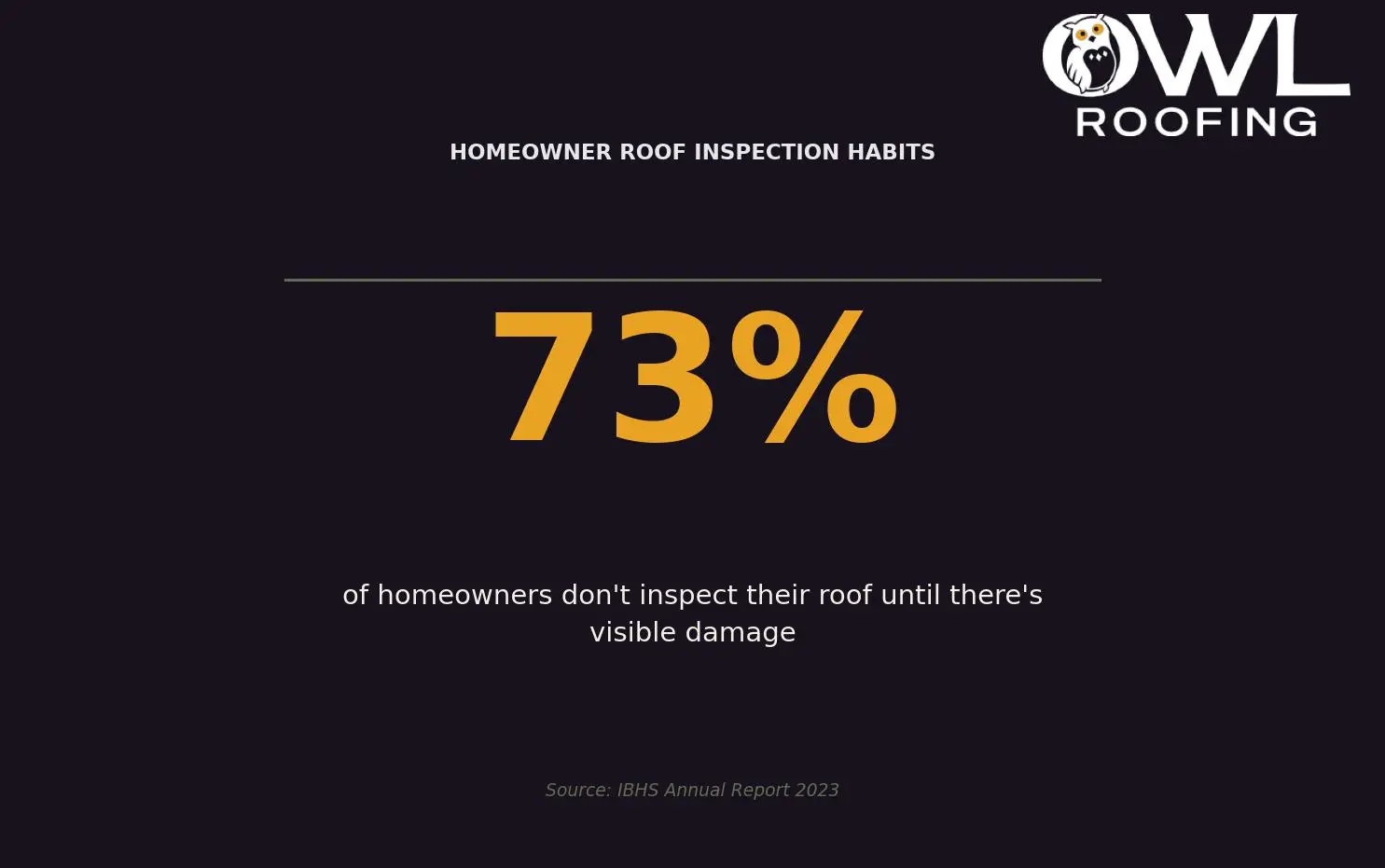
Here’s the frustrating part: most homeowners don’t notice missing shingles until water is already dripping onto their furniture. A report by the Insurance Institute for Business & Home Safety (IBHS) found that 73% of homeowners don’t look at their roofs until there’s visible damage. By then, a $200 shingle repair has often turned into a $2,000 ceiling restoration project.
Let’s break down exactly how a few missing shingles can lead to serious leaks — and what you can do about it before Minnesota’s next storm rolls through.
The Situation: Why Missing Shingles Are a Bigger Deal Than They Look
From the ground, a missing shingle might look like a minor cosmetic issue. Maybe you spot a dark patch on your roof while pulling into the driveway, shrug, and make a mental note to “deal with it later.” We get it — life is busy, and your roof isn’t exactly top of mind when the kids need to get to soccer practice.
But here’s what’s actually happening up there: that missing shingle has left a gap in your roof’s armor. And in Minnesota, gaps are invitations. Rain, snow, ice, and wind are all looking for a way in — and they just found one.
According to the National Roofing Contractors Association (NRCA), roofs should be inspected at least twice a year. That might sound excessive until you realize what’s at stake. Your roof isn’t just shingles — it’s a layered system designed to keep water out. When one layer fails, the others start working overtime. And eventually, they fail too.
What Shingles Actually Do
Think of shingles as your roof’s raincoat. They’re the outermost layer, designed to take the beating from weather so the rest of your roof doesn’t have to. Each shingle overlaps the one below it, creating a system that channels water down and away from your home. It’s simple, effective, and works beautifully — until a piece goes missing.
When a shingle disappears, that overlap is broken. Now, instead of water flowing harmlessly down to your gutters, it’s pooling in the exposed spot. And water is patient. It will find every crack, every nail hole, every tiny gap in the underlayment beneath. A report by the National Association of Realtors (NAR) confirms that even a small section of missing shingles can leave your entire roof vulnerable to water intrusion.
The Domino Effect: From One Missing Shingle to Real Damage
Here’s how the timeline typically plays out:
- Day 1: A strong wind catches the edge of an older shingle and rips it off. You probably don’t notice.
- Week 2: Rain hits the exposed underlayment. The felt paper or synthetic barrier beneath the shingle starts absorbing moisture.
- Month 2: That moisture has nowhere to go. It seeps into the roof deck (the plywood beneath everything). The wood starts to soften.
- Month 4: Water finally makes it through the roof deck and into your attic. If you’re lucky, you spot it here. If not…
- Month 6: That water stain appears on your ceiling. Mold may already be growing in your attic insulation. What started as a missing shingle is now a full-blown interior damage situation.
This isn’t worst-case-scenario fear-mongering. This is just how water works. It’s relentless, and it doesn’t take breaks.
The Task: Understanding the Real Risks
So you’ve got missing shingles. What’s actually at stake? Let’s talk numbers, because the damage goes beyond a stained ceiling.
Immediate Damage You’ll Notice
The first signs are usually cosmetic but alarming:
- Water stains on ceilings or walls
- Peeling paint or bubbling drywall
- Drips during or after rainstorms
- Damp spots in your attic
These are your warning signs. If you’re seeing any of these, water has already made it past your roof’s defenses.
Long-Term Damage You Might Not See
The hidden damage is where things get expensive:
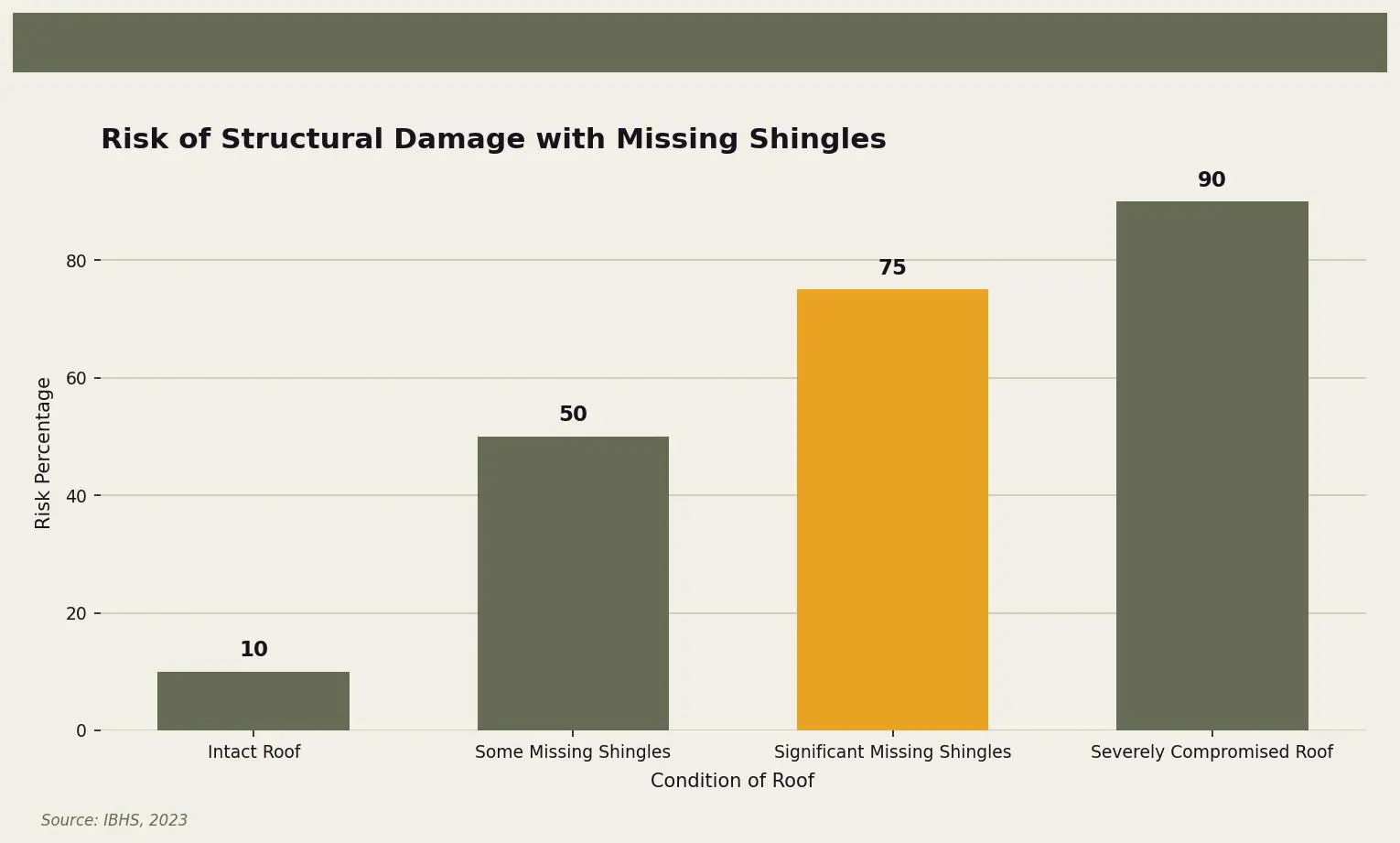
- Structural deterioration: According to the IBHS, roofs with missing shingles are 50% more likely to suffer structural damage during extreme weather events compared to fully intact roofs. That’s not a small increase — that’s a coin flip on whether your roof holds up in the next big storm.
- Mold growth: Moisture trapped in your attic creates perfect conditions for mold. Beyond the health risks (respiratory issues, allergies, headaches), mold remediation typically costs between $1,500 and $9,000 depending on severity.
- Insulation damage: Wet insulation doesn’t insulate. Your heating bills climb while your comfort drops.
- Electrical hazards: Water and wiring don’t mix. Leaks near electrical systems can create fire risks or short out entire circuits.
Repair vs. Replacement: The Real Math
Homeowners often ask us: “Should I just replace the missing shingles, or do I need a whole new roof?”
Here’s the honest answer: it depends on how much of your roof is affected and how old your shingles are.
Replacing a few shingles makes sense when:
- The damage is isolated to a small area
- Your roof is less than 15 years old
- The surrounding shingles are in good condition
- The underlayment and deck haven’t been compromised
A full replacement makes more sense when:
- More than 25% of your roof is affected (per NRCA guidelines)
- Your shingles are near the end of their lifespan
- You’re seeing signs of widespread deterioration
- You’ve had multiple repairs in recent years
The NRCA suggests that if more than a quarter of your roof needs work, replacement is often more economical in the long run. You get a uniform appearance, consistent protection, and — importantly — a fresh warranty.
The Minnesota Factor: Why This Hits Different Here
If you’ve lived in Shoreview or anywhere in the Twin Cities for more than one winter, you know our weather doesn’t mess around. And that weather makes missing shingles even more dangerous than they’d be in, say, Arizona.
The Freeze-Thaw Cycle
Here’s what happens in a typical Minnesota winter: snow lands on your roof, melts slightly during the day, then refreezes at night. That water that seeped into the gap left by your missing shingle? It freezes too. And when water freezes, it expands.
That expansion pushes against the surrounding shingles, loosening their grip. It widens cracks in the underlayment. It forces its way deeper into the roof deck. By spring, what was one missing shingle might be three or four — plus a compromised layer beneath them.
This freeze-thaw cycle is why Minnesota roofs take more abuse than roofs in milder climates. It’s also why addressing missing shingles before winter is so critical.
Snow Load Stress
The Twin Cities average about 54 inches of snow per year. That snow adds weight to your roof — and compromised areas bear that weight poorly. According to the Federal Emergency Management Agency (FEMA), roofs in snowy regions should have well-maintained shingles to prevent snowmelt leaks. When snow melts on a roof with missing shingles, that water goes straight down into the vulnerable spot instead of running off properly.
Ice Dams: Minnesota’s Specialty
Ice dams form when heat escapes through your roof, melting snow that then refreezes at the eaves. The resulting ice ridge traps water on your roof, and that water will find any available entry point — like the spot where your shingle used to be. Missing shingles near the edge of your roof are especially problematic for this reason.
The Action Plan: What to Do When You Spot Missing Shingles
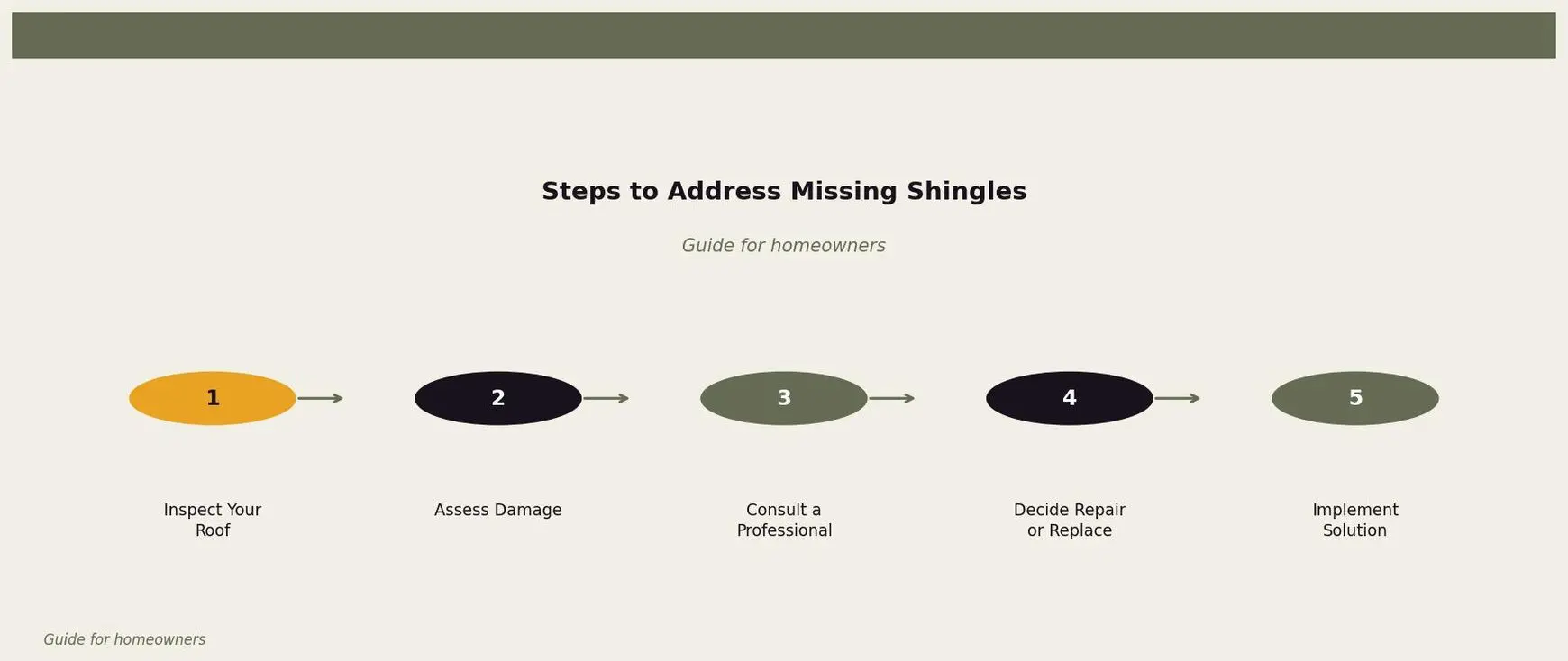
Found a gap in your roof? Here’s exactly what to do, step by step.
Step 1: Assess What You Can See
Grab binoculars and look at your roof from the ground (please don’t climb up there yourself — it’s not worth the risk). Look for:
- Obvious gaps where shingles should be
- Shingles that are curling, cracked, or lifting at the edges
- Dark patches that might indicate moisture damage
- Shingle granules collecting in your gutters (a sign of widespread wear)
Step 2: Check Your Attic
If you can safely access your attic, look for:
- Daylight coming through the roof (an obvious sign of gaps)
- Water stains on the underside of the roof deck
- Damp or discolored insulation
- Any musty smells that might indicate mold
Step 3: Document Everything
Take photos of any damage you can see, both inside and outside. If you end up filing an insurance claim, this documentation will be valuable. Note the date you first noticed the damage.
Step 4: Call a Professional
Here’s where a lot of homeowners hesitate — but don’t. A professional inspection can tell you exactly what you’re dealing with and what it’ll take to fix it. A good roofer will:
- Safely inspect the entire roof, not just the obvious problem spots
- Check the underlayment and decking for hidden damage
- Give you honest options: repair, partial replacement, or full replacement
- Provide a clear, itemized estimate
Step 5: Make a Decision and Act
Once you have a professional assessment, make your decision and move forward. The longer you wait, the more damage accumulates. In Minnesota, timing matters — getting repairs done before winter (or before the spring thaw) can save you significant headaches.
Prevention: Keeping Your Shingles Where They Belong
The best leak is the one that never happens. Here’s how to keep your shingles intact:
- Schedule biannual inspections: Spring and fall are ideal. You’ll catch problems early, before they become expensive.
- Trim overhanging branches: Branches scraping against shingles can loosen them. They also drop debris that holds moisture against your roof.
- Clean your gutters: Clogged gutters cause water to back up under shingles. Keep them clear, especially before winter.
- Address minor damage immediately: A cracked shingle today is a missing shingle after the next storm. Fix small problems before they grow.
- Ensure proper attic ventilation: Good airflow reduces the temperature differential that causes ice dams. It also prevents moisture buildup that can deteriorate shingles from below.
The Result: A Roof That Actually Protects Your Home
When your shingles are intact and your roof is properly maintained, everything works the way it should. Rain runs off. Snow melts and drains. Wind hits a solid surface with no gaps to exploit. Your attic stays dry, your insulation stays effective, and your ceilings stay stain-free.
That’s not just comfort — that’s protecting your investment. Your home is likely the biggest purchase you’ll ever make. Keeping the roof in good shape is one of the most straightforward ways to protect that investment.
Ready to Check Your Roof? We’re Right Here in Shoreview.
If you’ve spotted missing shingles — or you can’t remember the last time you looked — we’d be happy to take a look. Owl Roofing is a family-owned company based right here in Shoreview, serving homeowners throughout the Twin Cities. Tim, Bea, Noah, and Anya have over 15 years of combined experience, and we’ve seen every type of shingle damage Minnesota weather can dish out.
We’re not a franchise, and we’re definitely not storm chasers who’ll disappear after the job. We’re your neighbors. We look at your roof, tell you exactly what it needs, and get it done right. No pressure, no confusing estimates, no runaround.
Give us a call at 651-977-6027 or visit owlroofing.com/ to schedule a free inspection. Let’s make sure those missing shingles don’t turn into a bigger problem.
Protect Your Nest.
📍 Owl Roofing Serves the Entire Twin Cities Metro
Andover · Anoka · Apple Valley · Arden Hills · Big Lake · Blaine · Bloomington · Brooklyn Center · Brooklyn Park · Burnsville · Champlin · Chanhassen · Chaska · Columbia Heights · Coon Rapids · Cottage Grove · Crystal · deephaven · Delano · Eagan · East Bethel · Eden Prairie · Excelsior · Farmington · Forest Lake · Fridley · Golden Valley · Ham Lake · Hastings · Hopkins · Hugo · Inver Grove Heights · Lake Elmo · Lakeville · Lino Lakes · Mahtomedi · Maplewood · Mendota Heights · Minneapolis · Minnetrista · Mound · Mounds View · New Brighton · New Hope · North Oaks · North St. Paul · Oak Grove · Oakdale · Plymouth · Prior Lake · Ramsey · Richfield · Robbinsdale · Rosemount · Roseville · Saint Paul · Savage · Shakopee · Shoreview · South St. Paul · St. Louis Park · St. Michael · St. Paul · Stillwater · Vadnais Heights · Victoria · Waconia · wayzata · West St. Paul · White Bear Lake · woodbury
Licensed Minnesota roofing contractor · Free inspections · 10-year workmanship warranty · Get a free estimate →
