


Do Lighter Shingles Reduce Heat in Your Home
 12min Read
 Posted 12.11.2025
Do Lighter Shingles Reduce Heat in Your Home?

Here’s a number that might make you sweat: traditional dark shingles can absorb up to 90% of the sun’s energy beating down on your roof. That’s like wrapping your house in a thermal blanket—in July. If you’ve ever wondered why your upstairs feels like a sauna while your AC runs nonstop, your roof color might be the culprit you never suspected.
For Twin Cities homeowners trying to stay comfortable through our increasingly brutal summers, this isn’t just trivia—it’s money walking out the door (or, more accurately, radiating through the ceiling). The good news? There’s a surprisingly simple fix that doesn’t involve replacing your entire HVAC system or moving to Duluth.
The Situation: Your Roof Is Working Against You
Picture this: It’s late July in Shoreview. The temperature hits 92°F, humidity is hovering around “swamp,” and you’re inside with every window shade drawn and the thermostat cranked down to 68. But somehow, the second floor still feels like you’re standing too close to a bonfire. Sound familiar?
Most homeowners blame old windows, poor insulation, or an aging AC unit. And sure, those things matter. But here’s what often gets overlooked: your roof is the largest surface area of your home exposed to direct sunlight. According to the U.S. Department of Energy, traditional dark-colored shingles absorb 70-90% of the solar energy that reaches them. All that absorbed heat has to go somewhere—and it goes straight down into your attic, then your living spaces.
The result? Your air conditioner fights a losing battle against a roof that’s essentially acting as a solar collector. You’re paying to cool a house that’s actively heating itself from the top down. It’s like trying to keep ice cream frozen while someone holds a hair dryer over the bowl.
The Task: Finding a Smarter Roof Solution
So what’s a heat-weary homeowner to do? The task is clear: find a way to reduce the amount of solar heat your roof absorbs without sacrificing durability, aesthetics, or your entire home improvement budget.
This is where light-colored shingles—sometimes called “cool roof” shingles—enter the conversation. The concept is straightforward: lighter colors reflect more sunlight, which means less heat transfer into your home. But does the science actually back this up? And more importantly, does it make sense for Minnesota’s unique climate, where we need to think about winter performance too?
Let’s dig into the data.
The Action: How Light Shingles Actually Work
The Science of Reflectivity
Light-colored shingles work on a principle you probably learned in middle school science class: light colors reflect sunlight, dark colors absorb it. But the difference is more dramatic than you might expect.
According to the National Roofing Contractors Association (NRCA), light shingles can reflect 30-40% of solar energy, compared to just 10-20% reflectivity from darker shingles. That’s roughly double the reflective power. When you’re talking about hundreds of square feet of roof surface baking under direct sun for 8-10 hours a day, that difference adds up fast.
The Cool Roof Rating Council—yes, that’s a real organization—certifies roofing materials based on two key metrics: solar reflectance (how much sunlight bounces off) and thermal emittance (how efficiently the material releases absorbed heat). Modern reflective shingles are engineered with special granules that enhance both properties. They’re not just lighter in color; they’re designed at the material level to reject heat.
Here’s a stat that puts it in perspective: a study by the Lawrence Berkeley National Laboratory found that switching from dark to light-colored shingles can reduce roof surface temperatures by up to 50 degrees Fahrenheit. Fifty degrees. That’s the difference between a roof that’s literally too hot to touch and one that’s merely warm.
What This Means for Your Energy Bills
A cooler roof means your attic stays cooler. A cooler attic means less heat radiating down into your living spaces. Less heat infiltration means your AC doesn’t have to work as hard. It’s a straightforward chain reaction with real financial implications.
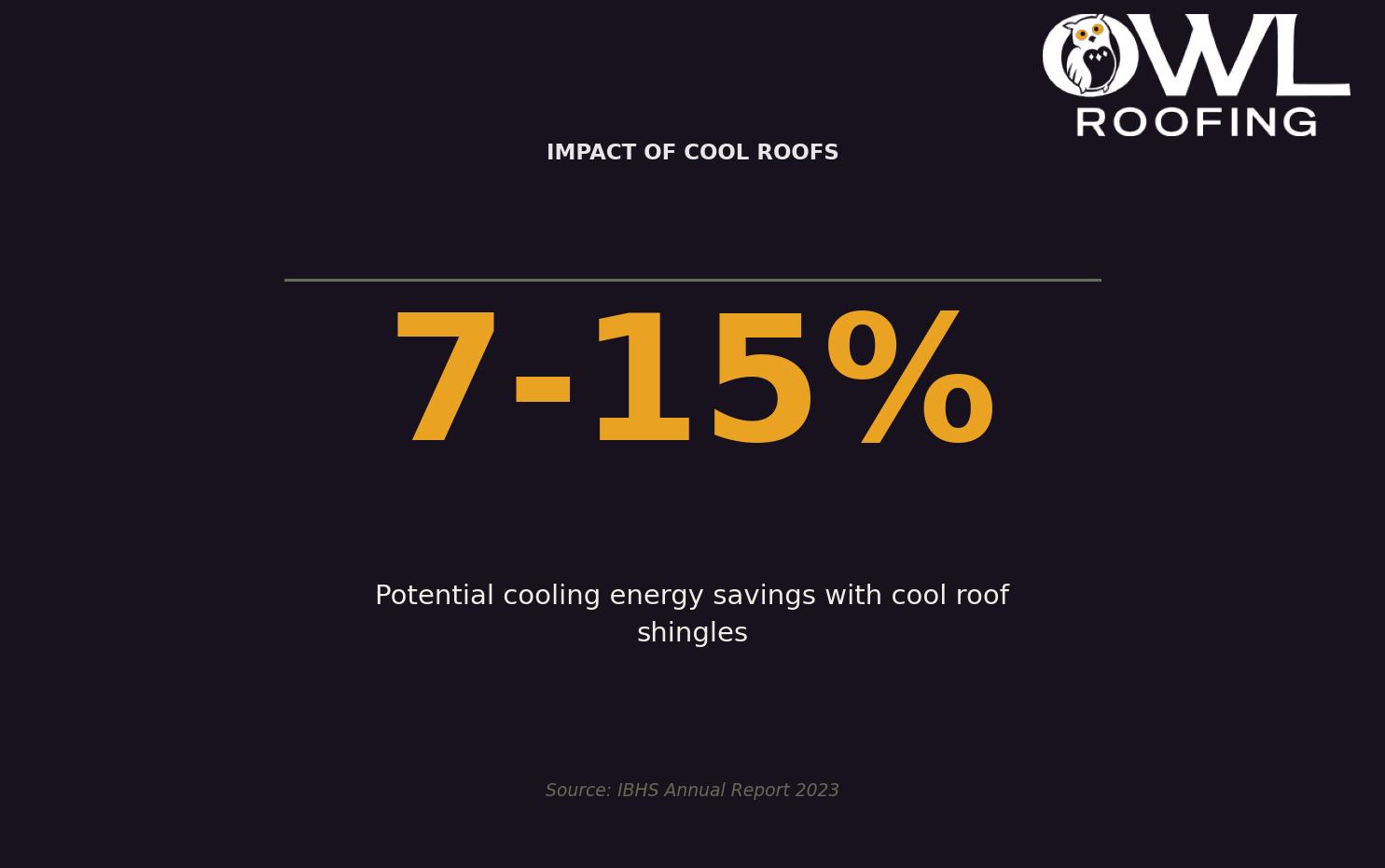
The Insurance Institute for Business & Home Safety (IBHS) reports that homes with cool roofs can see cooling energy savings of 7-15%. Now, 7-15% might not sound earth-shattering until you look at your July and August electricity bills. If you’re spending $300-400/month on summer cooling (not unusual for larger Twin Cities homes), that’s potentially $20-60 in monthly savings during peak season. Over a 20-year roof lifespan, those savings compound.
But here’s the part that often gets overlooked: your HVAC system is working less hard. That means fewer repairs, less wear and tear, and potentially a longer lifespan for your air conditioning equipment. Replacing an AC unit costs thousands. Anything that delays that expense is worth considering.
Beyond Color: What Makes Cool Shingles “Cool”
It’s worth noting that modern reflective shingles aren’t just about slapping a lighter color on standard materials. The engineering goes deeper.
Manufacturers like GAF, Owens Corning, and CertainTeed have developed shingles with specialized reflective granules that bounce back infrared radiation—the part of sunlight that carries the most heat—even in colors that appear darker to the eye. So you’re not limited to white or beige if that doesn’t fit your home’s aesthetic. Some “cool roof” shingles come in medium tones that still outperform traditional dark shingles by a significant margin.
That said, the physics don’t lie: lighter is still better when it comes to pure reflectivity. If maximum heat rejection is your goal, those tans, light grays, and whites will outperform anything in the charcoal family.
The Minnesota Factor: Year-Round Performance

Here’s where things get interesting for those of us living through Twin Cities winters. A reasonable question comes up: “If light shingles reflect heat in summer, don’t they also reflect heat in winter when I actually want warmth?”
It’s a fair point, and the answer is nuanced.
Yes, technically, dark shingles absorb more solar heat in winter too. But here’s the catch: during Minnesota winters, your roof is often covered with snow (which is white and reflective anyway), daylight hours are drastically shorter, and the sun sits at a much lower angle. The solar gain from dark shingles in January is minimal compared to the solar absorption happening in July when the sun is high, days are long, and temperatures are already warm.
According to U.S. Census data, homes in the Midwest spend about 22% more on heating and cooling than the national average. The bulk of that “extra” expense comes from heating, which is primarily driven by insulation quality, air sealing, and furnace efficiency—not roof color. Your shingles have far more impact on cooling costs than heating costs.
There’s another Minnesota-specific benefit worth mentioning: temperature stability. Our notorious freeze-thaw cycles—where temperatures swing above and below freezing repeatedly through late winter and early spring—are hard on roofs. Ice dams form when heat from inside the home melts snow on the roof, which then refreezes at the eaves. A roof that stays more temperature-stable (neither too hot nor too cold) can help reduce the severity of ice dam formation. Light shingles don’t absorb as much heat from the sun during those sunny winter days, which can actually help maintain more consistent roof temperatures.
Making the Decision: Is It Right for Your Home?
So should you run out and rip off your current roof for lighter shingles? Not necessarily. Like most home improvement decisions, context matters.
When Light Shingles Make the Most Sense
- You’re already due for a roof replacement. If your shingles are 15-20+ years old and showing wear, this is the perfect time to factor color into your decision.
- Your home runs hot in summer. If you’re constantly battling high cooling bills or uncomfortable upstairs rooms, reflective shingles can be part of the solution.
- You have poor attic insulation. Light shingles and good insulation work together. If your attic insulation is lacking, reflective shingles provide an extra layer of defense.
- Your roof has minimal shading. Homes with large, unshaded roof surfaces benefit most from reflective materials. If mature trees shade most of your roof, the impact will be less dramatic.
When It Might Matter Less
- Your roof is heavily shaded. Trees provide natural cooling, so reflective shingles won’t add as much value.
- Your current roof is relatively new and in good shape. Don’t tear off a functional roof just for the color change. Wait until replacement is needed.
- You have excellent attic insulation and ventilation. A well-insulated, properly ventilated attic already minimizes heat transfer, reducing the marginal benefit of reflective shingles.
The ROI Question
The National Association of Realtors (NAR) suggests that homeowners can recoup up to 68% of their investment in energy-efficient roofing through increased home value. That’s in addition to the ongoing energy savings you’ll see month after month. In a market where buyers increasingly care about efficiency and sustainability, a cool roof can be a selling point.
The Bigger Picture: Environmental Impact
Beyond personal savings, there’s a broader benefit worth mentioning. When thousands of homes in a metropolitan area reduce their cooling demands, the cumulative effect on the power grid is significant. Peak electricity demand—usually on hot summer afternoons when everyone’s AC is maxed out—puts enormous strain on power infrastructure. Reducing that demand helps avoid blackouts and reduces the need for “peaker” power plants (often the dirtiest, least efficient plants that only run during high-demand periods).
The North American Roofing Association emphasizes that energy-efficient roofing can also help reduce urban heat islands—the phenomenon where developed areas become significantly warmer than surrounding rural areas due to all that heat-absorbing concrete, asphalt, and yes, dark roofing. In the Twin Cities metro, this effect is real and measurable. More reflective roofs across the region could help moderate urban temperatures for everyone.
Your Next Steps
If you’re considering a roof replacement or simply want to understand your options, here’s a practical roadmap:
- Assess your current situation. How old is your roof? What color are your current shingles? How does your home handle summer heat?
- Research your options. Look into cool roof-rated shingles from reputable manufacturers. Compare reflectivity ratings, not just colors.
- Get a professional inspection. A roofing expert can evaluate your roof’s condition, your attic ventilation, and help you weigh the costs and benefits for your specific home.
- Think holistically. Shingle color is one piece of the puzzle. Consider attic insulation, ventilation, and your HVAC system as part of the overall efficiency picture.
- Make a decision that fits your timeline and budget. If replacement is imminent, factor reflectivity into your choice. If your roof has years left, start planning for when the time comes.
The bottom line? Light shingles really do reduce heat in your home. The science is solid, the savings are real, and for Twin Cities homeowners dealing with increasingly hot summers, it’s an option worth serious consideration. A smarter roof means a more comfortable home, lower energy bills, and less strain on the systems working hard to keep you cool.
Ready to Talk About Your Roof?
At Owl Roofing, we've spent years helping Twin Cities homeowners figure out exactly what their roofs need—and what they don't. We've seen firsthand how the right shingle choice can make a real difference in home comfort and energy costs. If you're curious whether light-colored or cool roof shingles make sense for your home, we're happy to take a look and give you a straight answer. No pressure, no sales pitch—just honest guidance from neighbors who happen to know roofing. We're based right here in Shoreview and serve the entire Twin Cities metro. Give us a call at 651-977-6027 or visit owlroofing.com/ to schedule a conversation. Protect Your Nest.
📍 Owl Roofing Serves the Entire Twin Cities Metro
Andover · Anoka · Apple Valley · Arden Hills · Big Lake · Blaine · Bloomington · Brooklyn Center · Brooklyn Park · Burnsville · Champlin · Chanhassen · Chaska · Columbia Heights · Coon Rapids · Cottage Grove · Crystal · deephaven · Delano · Eagan · East Bethel · Eden Prairie · Excelsior · Farmington · Forest Lake · Fridley · Golden Valley · Ham Lake · Hastings · Hopkins · Hugo · Inver Grove Heights · Lake Elmo · Lakeville · Lino Lakes · Mahtomedi · Maplewood · Mendota Heights · Minneapolis · Minnetrista · Mound · Mounds View · New Brighton · New Hope · North Oaks · North St. Paul · Oak Grove · Oakdale · Plymouth · Prior Lake · Ramsey · Richfield · Robbinsdale · Rosemount · Roseville · Saint Paul · Savage · Shakopee · Shoreview · South St. Paul · St. Louis Park · St. Michael · St. Paul · Stillwater · Vadnais Heights · Victoria · Waconia · wayzata · West St. Paul · White Bear Lake · woodbury
Licensed Minnesota roofing contractor · Free inspections · 10-year workmanship warranty · Get a free estimate →
- Lawn swept 3x with magnets
- Storm restoration specialists
- We actually answer: (651) 977-6027
 5.0 · 90+ reviews
 Accredited
Owl is the local family-owned roofer that actually cares.
250+ Twin Cities families have trusted us with their homes. Book a free inspection and see why.
★★★★★“We couldn’t be happier with how everything turned out. From the beginning to the end, the whole experience was great.”
Rob Larson, Local Homeowner + Owl Customer
A real person calls you back, usually within the hour.
