Articles
GAF Timberline HDZ Charcoal: Full Color Guide
 10min Read
 Posted 10.06.2026
Charcoal is GAF’s near-black, dark gray blend — it reads almost black from the curb but shows gray and brown undertones up close in direct sun. The three siding pairings that work best with it are white or cream with black trim, warm gray or greige, and navy. It’s one of the most-ordered colors on the Timberline HDZ line for a reason: it’s dark enough to look sharp and modern, but it isn’t actually black, which gives it more flexibility against brick, stone, and siding than a true black shingle has.
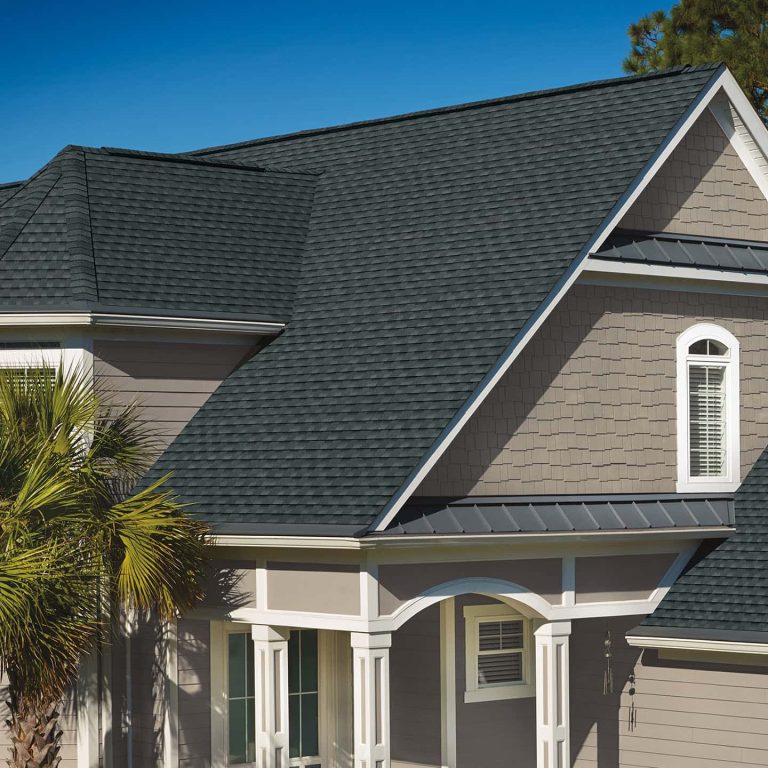
If you’re deciding between Charcoal and Moire Black specifically: choose Moire Black if you want a shingle that is unambiguously black in every light. Choose Charcoal if you want that near-black look from the street with a little more depth and warmth up close, and slightly more flexibility pairing against brick or warm-toned stone.
 ★★★★★
GAF Timberline HDZ Charcoal: What It Really Looks Like (and How to Pair It)
We’ve installed a lot of Charcoal roofs around the Twin Cities, and we get the same two questions on almost every one: does it actually look black, and does a dark roof cause problems with Minnesota winters and summers. Both deserve real answers, not marketing copy.Charcoal in person: street distance vs. up close
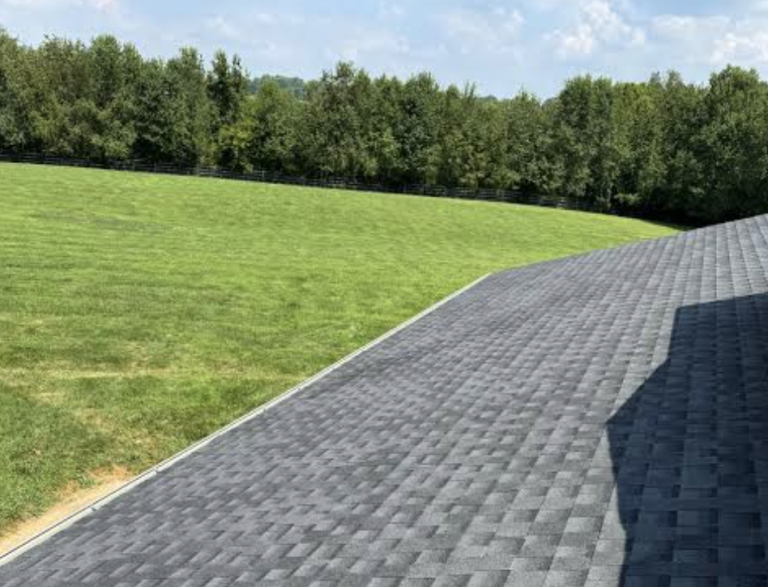
From the street or the sidewalk, Charcoal looks like a near-black roof. The blend is dark enough that most people describe it as black until they get close. That’s actually the main reason homeowners choose it — it gives a home the graphic, high-contrast look of a black roof without being a flat, one-note black. Get closer, or look at it in full sun, and the blend opens up. GAF’s Timberline HDZ shingles use a granule blend and the brand’s “shadow line” design to add depth, so instead of a single flat tone you see dark gray, charcoal-brown, and near-black granules mixed together. On an overcast Minnesota day, Charcoal looks more uniformly dark gray-black. In direct afternoon sun, especially in summer, the blend shows more visible texture and a hint of brown/warm undertone in the highlights. This matters for two practical reasons:- Don’t choose it off a screen. GAF’s own color guide specifically warns that color and blend are hard to reproduce accurately online or in print — look at a full-size shingle sample, ideally outdoors, before you commit.
- Lighting changes the read. A Charcoal roof on a north-facing slope in shade will look noticeably more “black” than the same roof on a south-facing slope getting full sun.
The best siding and trim pairings for Charcoal
Charcoal is one of the more versatile dark colors on the market because its undertone is neutral gray rather than warm or cool-leaning, which means it doesn’t fight with most siding colors the way a true black can clash with warm-toned brick.| Siding/trim | Why it works |
|---|---|
| White or cream siding, black trim | The classic modern-farmhouse look; Charcoal roof reads as an extension of the black trim/window package |
| Black-trim farmhouse (board and batten, white or gray) | High contrast, very popular on new construction and remodels in the Twin Cities right now |
| Gray siding (any shade) | Charcoal roof + gray siding is monochrome and low-risk; works on both traditional and modern elevations |
| Greige siding | Charcoal’s neutral gray base doesn’t clash with greige’s warm undertone the way true black sometimes can |
| Navy siding or shutters | Navy and charcoal-black both read as “dark neutral,” so they pair without competing |
| Red brick | Charcoal is dark enough to ground red brick without introducing a second competing color, the way a brown or green roof can |
| Natural stone (gray or tan) | Works with both; Charcoal’s gray undertone echoes gray stone, and its near-black punch contrasts cleanly with tan/buff stone |

Charcoal vs. Moire Black vs. Pewter Gray vs. Slate
These are the four colors people most often confuse with Charcoal or cross-shop against it.| Color | Tone | How it compares to Charcoal |
|---|---|---|
| Charcoal | Dark gray/near-black blend with brown-gray undertones | The baseline — reads near-black at a distance, shows gray/brown blend up close |
| Moire Black | True black blend, minimal color variation | Darker and flatter than Charcoal; almost no visible blend variation even up close; the choice if you want zero ambiguity about “is this black” |
| Pewter Gray | Medium-dark blue-gray | Noticeably lighter and cooler than Charcoal; reads as gray from the street, not near-black; better fit with cooler-toned siding (blue-gray, white, cool greige) |
| Slate (where offered in a given shingle line) | Blue-gray, similar depth to Pewter Gray in many lines | Closer to Pewter Gray than to Charcoal; check the specific product line since “Slate” naming varies by manufacturer and shingle series |
Dark roofs and heat: what the data actually says
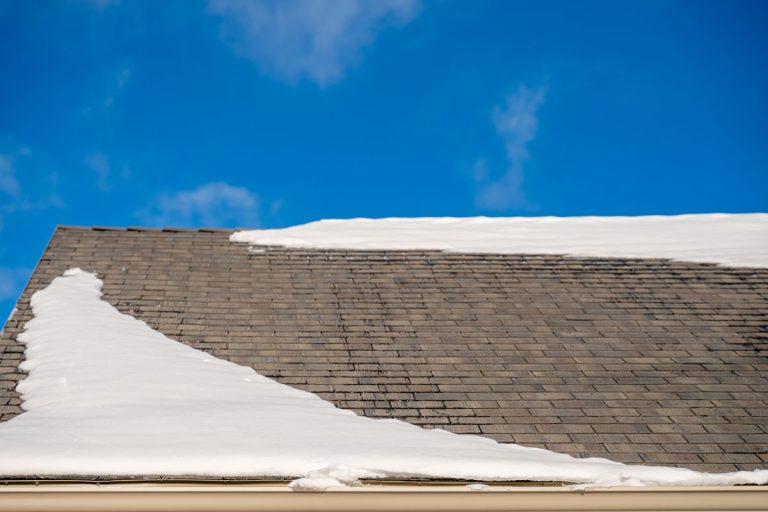
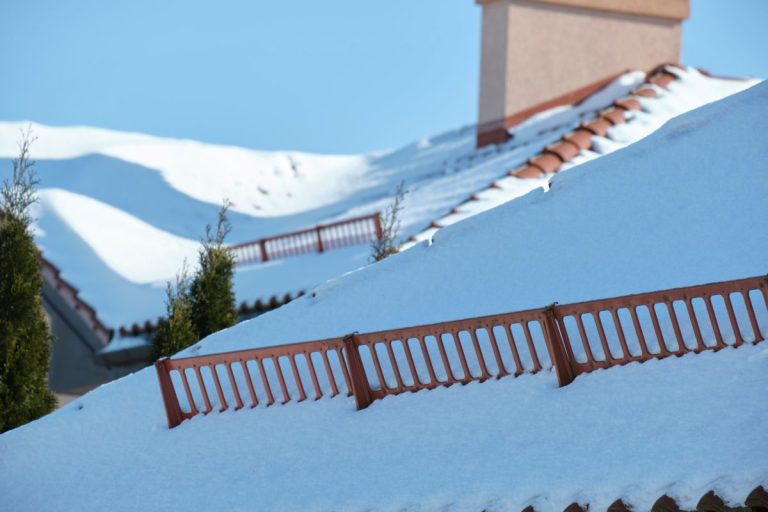
This is the question we get the most, and it has a real, researched answer rather than a guess. On the roof surface itself, in summer sun, dark roofs do run hotter than light roofs. Reflective “cool roof” products can keep a rooftop surface up to 50°F cooler than a conventional dark roof surface, per GAF’s own materials on its reflective shingle line. That’s a surface-temperature figure, not an attic or indoor-air-temperature number, and “up to” marks a maximum under ideal conditions, not a typical result. In a heating-dominated climate like Minnesota, that summer heat gain is only half the picture — and it can work in your favor in winter. The EPDM Roofing Association, an industry group representing membrane manufacturers, published a white paper arguing that in colder climate zones, a reflective “cool roof” can lose some or all of its summer cooling-energy savings to a higher winter heating bill, since a dark roof absorbs more solar heat in the cold months when you want that heat. The group’s position is industry-funded and specific to commercial low-slope membranes, not asphalt shingles, but the underlying building-science logic — reflectivity trades summer cooling savings against winter heating costs — applies broadly to dark versus light roofing in a cold climate. The honest summary for a Minnesota homeowner: a dark asphalt shingle roof like Charcoal will run warmer on the surface on a sunny July afternoon than a light-colored roof, but shingle roofs over a properly insulated and ventilated attic are not where most homes lose or gain the bulk of their heating/cooling energy — insulation and air-sealing in the attic floor matter far more than shingle color for your energy bill. We’ve never had a customer in the Twin Cities report a meaningful cooling-cost problem specifically traceable to a dark shingle color, and homeowners switching from a lighter asphalt shingle to Charcoal are not seeing it show up as a line-item change on their energy bill. On snow and ice: a darker roof can shed a light snow cover slightly faster on sunny days because it absorbs more solar heat than a light-colored shingle — but that same heat absorption is also the mechanism behind ice dams when attic heat escapes unevenly into snow cover. Shingle color is a minor factor in ice dam formation compared to attic insulation and ventilation; a well-insulated attic with full soffit-to-ridge ventilation outperforms any shingle color choice for ice dam prevention.Does Charcoal fade or show granule loss?
Asphalt shingles lose granules gradually over their service life as a normal part of aging — that’s true of every color, not something specific to Charcoal. Because Charcoal is a dark, multi-tone blend, granule loss and UV fading tend to show up less obviously than on a solid lighter color, since the blend already has tonal variation built in. A 10-year-old Charcoal roof will typically look slightly lighter and less uniform than the day it was installed, which is normal weathering, not a defect — if you’re seeing bald spots (shingle fiberglass mat showing through with no granules at all) or shingle curling, that’s a sign of a roof nearing the end of its service life and worth a professional look, not just a color question.FAQ
Is GAF Timberline HDZ Charcoal actually black? No. It’s a dark gray blend that reads near-black from the street and in overcast light, but up close in direct sun you can see gray and brown-gray granules mixed in. If you want a shingle that’s unambiguously black in every lighting condition, GAF’s Moire Black is the closer match. What siding color looks best with Charcoal shingles? White or cream siding with black trim, gray or greige siding, and navy accents are the three most reliable pairings. Charcoal’s neutral undertone also works over red brick and most natural stone. Is Charcoal the same as Pewter Gray? No. Pewter Gray is a noticeably lighter, cooler blue-gray that reads as gray rather than near-black from the street. Charcoal is darker and reads near-black at a distance. Does a dark roof like Charcoal cause higher cooling bills in Minnesota? The roof surface itself runs warmer in direct summer sun than a light-colored roof would. But attic insulation and ventilation have a far bigger effect on your home’s heating and cooling costs than shingle color does, and in a cold climate, the extra winter heat absorption from a dark roof is a modest offset against any summer cooling effect. Will Charcoal shingles fade over time? All asphalt shingles lose some granules and show some color change as they age. Because Charcoal is a dark multi-tone blend, this weathering tends to be less visually obvious than on a solid lighter color. Does Charcoal cost more than other Timberline HDZ colors? No — color does not change the price of Timberline HDZ shingles. Pricing is driven by the shingle line, roof size, and installation complexity, not the color selected. Noah · Co-founder 5.0 · 90+ reviews  Accredited
- Lawn swept 3x with magnets
- Storm restoration specialists
- We actually answer: (651) 977-6027
5.0 · 90+ reviewsAccreditedOwl is the local family-owned roofer that actually cares.
250+ Twin Cities families have trusted us with their homes. Book a free inspection and see why.
★★★★★“We couldn’t be happier with how everything turned out. From the beginning to the end, the whole experience was great.”
Rob Larson, Local Homeowner + Owl Customer
A real person calls you back, usually within the hour.

Recent Articles
Explore The Blog