


Hip vs Gable vs Mansard Roofs: Which Is Best for Minnesota?
 11min Read
 Posted 4.16.2026
When Minnesota homeowners plan a new build, addition, or total roof redesign, the choice of roof form — gable, hip, mansard, gambrel, shed — is usually framed as a purely aesthetic decision. It’s not. The roof form dramatically affects wind uplift resistance, snow shedding behavior, attic ventilation requirements, ice-dam vulnerability, and total roofing cost. In a 4,000-square-foot footprint home, switching from gable to hip roof can add $8,000–$14,000 to the roofing budget but can also cut insurance premiums significantly in high-wind regions and extend roof life.
This guide explains each major residential roof form, its performance characteristics in Minnesota’s specific climate conditions, the typical cost differential, and which forms are code-compliant for various modifications like solar, skylights, and habitable attic conversions.
Gable Roofs: The American Default
A gable roof has two sloped surfaces that meet at a horizontal ridge line, with vertical triangular wall sections (the “gables”) at each end of the house. It’s by far the most common residential form in North America because it’s structurally simple, inexpensive to frame, easy to shingle, and leaves a large attic volume for storage, HVAC, or conversion.
- Pros: cheapest to build and re-roof; sheds snow and water efficiently along two slopes; generous attic volume; straightforward ventilation (ridge vent + soffit intake).
- Cons: vertical gable walls are vulnerable to wind uplift in high winds, especially on one- and two-story homes without proper bracing; siding on the gable end must be maintained separately.
- Best for: most Minnesota homes, especially lower-budget new construction and straightforward additions.
A properly engineered gable roof in Minnesota handles snow load and wind fine as long as the gable-end walls are adequately braced (required by IRC R802 and Minnesota amendments). On older homes, we sometimes see inadequate gable bracing — a retrofit that can be done during re-roofing.
Hip Roofs: Best Wind Performance
A hip roof has four sloped surfaces (sometimes more on complex homes) with no vertical end walls. The roof slopes down toward all four exterior walls of the house. “Hipped” refers to the sloped end sections replacing the triangular gable walls.
Structurally, hip roofs are the best-performing form for high-wind regions. Without vertical gable walls to catch wind, the hip form naturally deflects wind over and around the structure. Hip roofs are standard on hurricane-rated construction in Florida, for example. In Minnesota, the benefit is less dramatic (we get windstorms but not hurricanes), but straight-line winds from severe thunderstorms are a real risk — and hip roofs perform measurably better.
- Pros: excellent wind resistance; balanced snow shedding in all four directions; naturally covers porches and wrap-around elements; all exterior walls sheltered by roof overhang.
- Cons: more complex framing (more rafters, more valleys, more material); smaller attic volume; more valleys = more leak points; more waste factor in shingles.
- Best for: higher-end homes; wind-exposed sites (open prairie, lakefront); coastal or hurricane-prone regions.
Mansard Roofs: Rare in Minnesota, and for Good Reason
A mansard (also called French roof) has two slopes per side: a very steep lower slope (often nearly vertical, 65°–80°) and a very shallow upper slope (5°–10°, often barely pitched). The style originated in 19th-century France as a way to create habitable top-floor rooms that didn’t count as a full story for taxation purposes. In American architecture, mansards saw a resurgence in the 1960s–1980s but are relatively uncommon in Minnesota residential construction.
- Pros: creates full-height habitable space on the top floor; distinctive architectural look.
- Cons: very expensive to build and re-roof (two slope systems per side); the shallow upper section is effectively a low-slope roof with all the snow/ice issues that brings in Minnesota; the steep lower slope is essentially a wall and requires specialty flashing and siding attention; difficult to ventilate properly; structural complexity.
- Best for: very limited Minnesota use — mostly historic restorations and specific architectural statements.
If you own an existing mansard roof in Minnesota, you’ll want the upper (low-slope) section treated like a flat roof — TPO, EPDM, or modified bitumen rather than shingles. See our detailed guide on flat and low-slope roofing in Minnesota. The lower (steep) section gets shingles or specialty siding shingles.
Gambrel Roofs: The “Barn” or “Dutch Colonial” Style
A gambrel has two slopes per side on a gable-shaped frame (not all four sides like a mansard). The lower slope is steeper, the upper slope shallower. It’s the classic “barn roof” form and is seen on Dutch Colonial residential homes from the early 20th century.
- Pros: maximum interior volume on a given footprint (same principle as mansard but with gable ends, which simplifies construction); attractive traditional aesthetic.
- Cons: wind vulnerability similar to gable (large vertical gable walls); slope transition creates a horizontal “knee-wall” detail where leaks are common; more complex than a plain gable.
- Best for: Dutch Colonial restorations; outbuildings and barns; architectural statements.
Side-by-Side Comparison
| Criterion | Gable | Hip | Mansard | Gambrel |
|---|---|---|---|---|
| Wind resistance | Fair | Excellent | Fair | Fair |
| Snow shedding (MN) | Good | Good | Poor (upper section) | Good (lower), poor (upper) |
| Ice-dam risk | Moderate | Moderate | High | Moderate |
| Attic volume | Large | Smaller | Max interior use | Very large |
| Ventilation ease | Easy | Easy | Difficult | Moderate |
| Construction cost (rel.) | 1.0× | 1.3–1.5× | 2.0×+ | 1.3–1.5× |
| Re-roof cost (rel.) | 1.0× | 1.2–1.4× | 1.8–2.5× | 1.3–1.6× |
| Solar-friendly? | Very | Somewhat | Poor (low upper section) | Limited |
How Roof Form Affects Minnesota Snow Load Behavior
Minnesota’s ground snow load ranges from 35 psf in the far southern counties to 70+ psf in the northeastern counties. Roofs must be engineered to this load under ASCE 7 (referenced by IRC R301.2). Pitch matters: snow stays on steep slopes longer and sheds efficiently from mid-pitch slopes. Gable and hip roofs at 6/12 to 9/12 pitch shed snow evenly. Mansard upper sections (nearly flat) accumulate snow and are subject to drifting — a real concern in Minnesota.
Drifting snow is especially consequential on complex roof forms where one roof plane terminates above another — the lower plane gets loaded with drifted snow that far exceeds ground snow load. Hip roofs tend to have more step-down transitions than simple gables, creating more drifting risk zones. A structural engineer reviewing any complex new-construction roof in Minnesota should run drift calculations per ASCE 7-16 Section 7.7.
For more on pitch and slope code minimums, see our Minnesota roof pitch and slope guide.
Ventilation Requirements by Roof Form
Attic ventilation per IRC R806 requires 1 sq ft of net free ventilating area per 300 sq ft of attic floor (1:300 rule), split between intake (soffits) and exhaust (ridge/gable/box vents).
- Gable: easy. Ridge vent + soffit vents + optional gable-end vents. Most flexible.
- Hip: manageable. Ridge vent covers less length (short hip ridges) than on a gable; requires adequate soffit intake all around; sometimes needs box vents to supplement ridge vent.
- Mansard: difficult. The near-flat upper section creates a small, hard-to-vent attic space. Specialty low-slope vents or mechanical ventilation often required.
- Gambrel: moderate. Usually works with a combination of ridge, gable-end, and soffit venting but requires careful design.
For our full attic ventilation guide, see Minnesota attic ventilation code.
Re-Roofing Cost Implications (2026 Twin Cities)
| Roof Form | 1,800 sq ft Home (Arch Shingle) | Notes |
|---|---|---|
| Simple gable (2-plane) | $14,500–$19,000 | Baseline |
| Hip roof (4-plane) | $17,000–$22,500 | +10–20% for extra valleys, waste, hip and ridge |
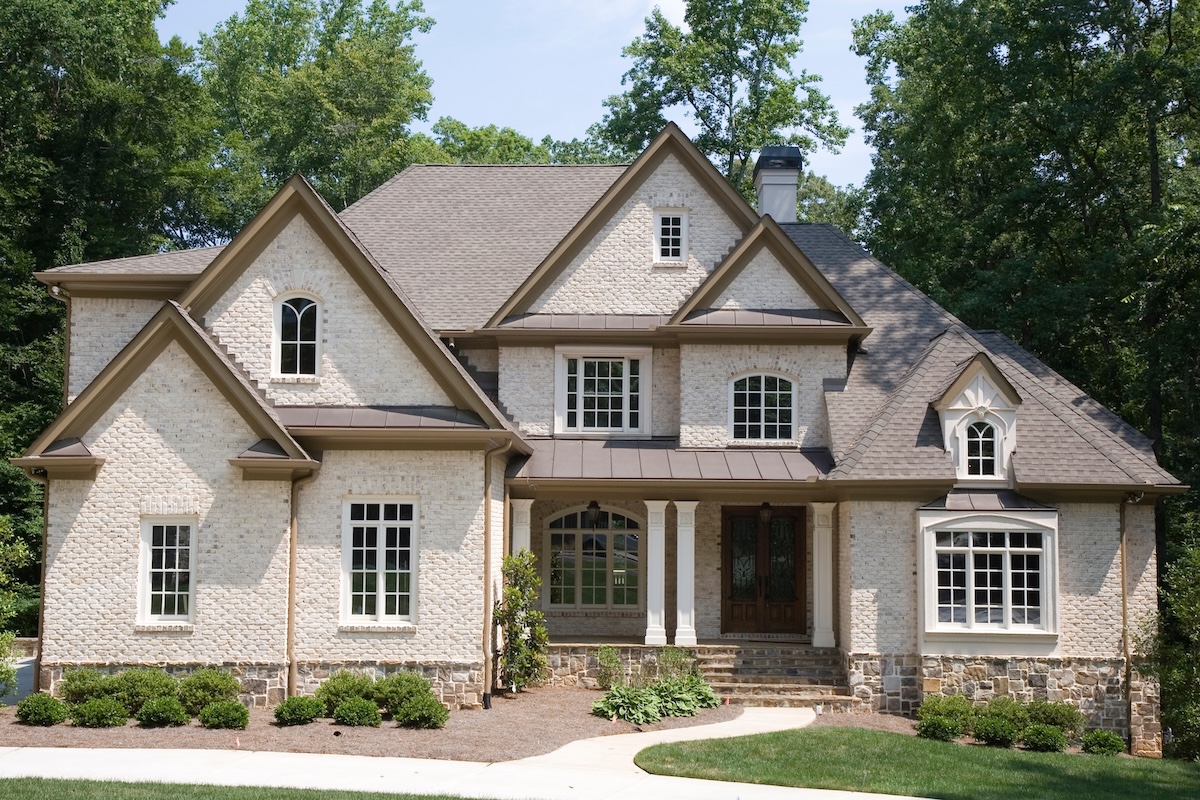
| Complex hip-and-valley with dormers | $21,000–$28,500 | +30–50% for cut-up geometry |
| Gambrel (barn-style) | $18,500–$25,000 | Two-pitch system, specialty flashing at break |
| Mansard (shingles on steep + flat on upper) | $28,000–$42,000 | Two roofing systems required; complex |
Converting Between Roof Forms
Homeowners occasionally ask whether they can convert a gable to a hip (or vice versa) during a re-roof. The answer: it’s possible but expensive — $15,000–$45,000+ in structural modifications for a typical home, because you’re re-engineering the roof framing, changing the eave detailing, potentially modifying the gable-end walls, and re-siding. It’s almost never cost-justified for purely aesthetic reasons. It can be cost-justified in rare cases when combined with a larger remodel that adds a second story, changes the ridge orientation, or creates additional living space.
The most common retrofit we see is converting a low-pitch shed or garage roof to a gable or hip during an addition — which is almost always done as part of a larger project. Standalone roof-form conversions are unusual.
Which Roof Is Right for Your Minnesota Home?
For new construction and additions, here’s our quick decision guide:
- Gable: best default for budget-conscious new construction, straightforward additions, and any home where attic volume, solar potential, or ventilation ease is a priority.
- Hip: best for wind-exposed sites (lakefronts, open prairie, western MN), higher-end construction, and homes where covered wrap-around porches or matching overhangs are architecturally important.
- Gambrel: historic Dutch Colonial restorations; outbuildings, barns, and accessory structures.
- Mansard: existing mansard preservation only — rarely a good choice for new MN construction.
- Shed: modern architectural styles; garages and small additions; always pair with proper low-slope roofing systems if the pitch drops below 2:12.
For a full conversation about material choice once you’ve chosen the form, see our best roofing materials for Minnesota guide and our shingle brand comparison.
Frequently Asked Questions
Is a hip roof better than a gable roof for Minnesota?
Technically yes for wind resistance, but the added cost (~15–20%) and reduced attic volume make gable roofs the more common practical choice. Hip is best for wind-exposed lakefront or prairie sites.
Why don’t I see many mansard roofs in Minnesota?
The near-flat upper slope accumulates snow and is prone to leaks; the steep lower slope is hard to shingle; ventilation is difficult; and the style peaked in American construction in the 1970s and fell out of favor. Plus, mansards are very expensive to re-roof.
Can I convert my gable roof to a hip roof?
Yes, but it’s structural work — typically $15,000–$45,000+ in framing modifications beyond the re-roof itself. Rarely cost-justified as a standalone change.
Does insurance charge more for gable vs hip roofs?
In Florida and coastal areas, yes — hip roofs get significant wind-mitigation discounts. In Minnesota, the insurance differential is typically small. Some carriers offer wind-resistant roof discounts that apply regardless of roof form if impact-rated shingles are installed.
Which roof form is best for solar?
Gable roofs with south-facing slopes are ideal. Hip roofs can work but have smaller uninterrupted slope sections. Mansards are poor for solar. See our Minnesota solar roofing guide.
Which roof form handles ice dams best?
Simple forms — plain gable and plain hip — handle ice dams comparably well. Complex geometry with many valleys (cut-up hip-and-valley with dormers) and low-slope sections (mansards, low-pitch shed additions) increase ice-dam risk. See our ice dam prevention guide.
Is a gambrel roof a good choice in Minnesota?
It’s fine with proper construction — the slope-change “break” on each side needs specific flashing attention, and the lower steep slope requires appropriate shingle-attachment for wind. It’s most common on Dutch Colonial homes and outbuildings in Minnesota.
