




How Fast Should You Repair Roof Damage
 11min Read
 Posted 11.25.2025
How Fast Should You Repair Roof Damage?
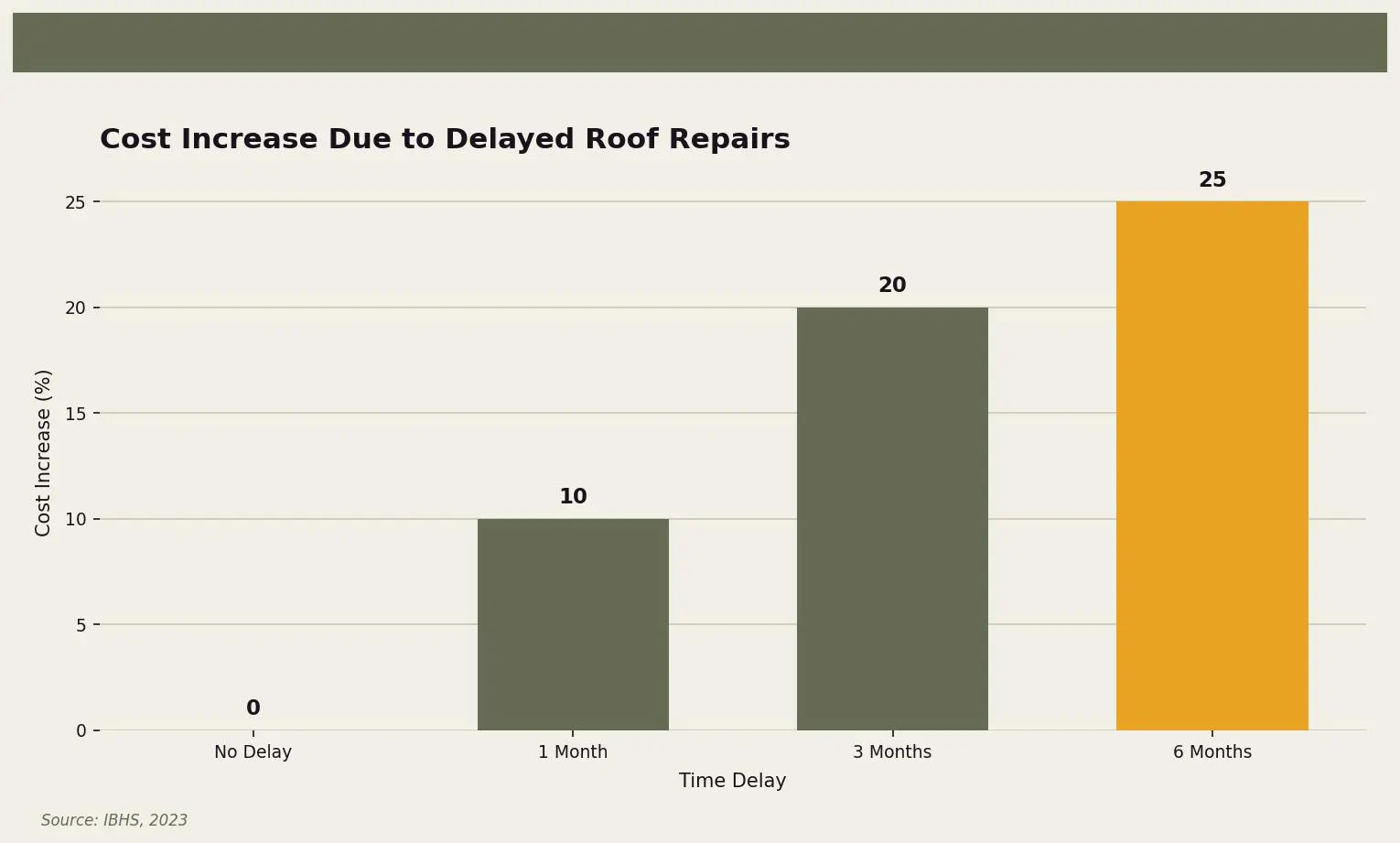
That small leak you’ve been ignoring? It’s costing you money right now. According to the Insurance Institute for Business & Home Safety (IBHS), every month you wait to fix roof damage can increase your total repair costs by up to 25%. For Twin Cities homeowners, where freeze-thaw cycles work overtime on your shingles, the clock starts ticking the moment damage occurs.
Here’s the bottom line: minor damage needs attention within weeks, moderate damage within days, and severe damage requires immediate action. Everything else—the mold, the energy bills, the home value hit—flows from that simple timeline.
Why Waiting Costs More Than Fixing
Let’s talk about what’s actually happening while you’re debating whether to call someone about that water stain on your ceiling.
Water doesn’t wait. The IBHS reports that mold can start growing within 48 hours of water exposure. Not 48 days—48 hours. That’s less time than a long weekend. And once mold takes hold in your attic or walls, you’re not just dealing with a roofing problem anymore. You’re dealing with a health hazard and a much bigger bill.
Then there’s your heating bill. The U.S. Department of Energy found that compromised roofing materials can cause insulation loss that bumps your energy costs up by 30%. So that $200 repair you’re putting off? It might be costing you $50 extra every month in heating during a Minnesota winter. Do that math over a season, and the “savings” from waiting disappear fast.
The National Roofing Contractors Association (NRCA) puts it plainly: leaking roofs are one of the biggest causes of building deterioration, period. Not foundation issues. Not electrical problems. Leaks. Because water finds every crack, every gap, every vulnerable spot in your home—and it doesn’t stop until you stop it.
The Real Cost of “I’ll Get To It Later”
Your Wallet Takes the First Hit
Small problems become expensive problems with remarkable speed. A few missing shingles after a storm might cost a couple hundred dollars to fix today. Leave them for a few months, and now water has been seeping into your roof deck. Suddenly you’re replacing plywood, dealing with potential mold remediation, and watching a minor repair turn into a major project.
The IBHS data breaks this down clearly: no delay means baseline costs. Wait a month, and costs increase by about 10%. At three months, you’re looking at 20% more. By six months? That 25% increase we mentioned—and that’s assuming nothing catastrophic happens in between.
Your Home’s Value Takes the Second
Planning to sell your house someday? The National Association of Realtors (NAR) found that homes with visible roof damage sell for an average of 10% less than comparable homes with well-maintained roofs. On a $400,000 Twin Cities home, that’s $40,000 left on the table because of deferred maintenance.
Buyers notice roofs. Home inspectors definitely notice roofs. And in a competitive market, a roof that’s been neglected gives buyers leverage to negotiate you down—or walk away entirely.
Your Peace of Mind Takes the Third
There’s something nobody talks about with delayed roof repairs: the stress tax. Every time it rains hard, you’re wondering. Every windstorm, you’re checking. Every snowmelt, you’re looking for new water stains. That mental load adds up, and it’s completely avoidable.
Your Damage Timeline: How Fast Is Fast Enough?
Minor Damage: A Few Weeks
What counts as minor? We’re talking:
- A few missing or cracked shingles
- Small areas of granule loss
- Minor flashing issues
- Tiny leaks that show up as small ceiling stains
These feel ignorable because they’re not dramatic. No gushing water, no obvious holes in your roof. But the NRCA warns that these “small” issues are exactly how bigger problems start. A missing shingle exposes the underlayment. The underlayment degrades. Water reaches the roof deck. And now you’re not fixing a shingle—you’re fixing structural damage.
Give yourself a few weeks to get a contractor out, get an estimate, and get the work scheduled. Don’t let “a few weeks” turn into “a few months” because life got busy.
Moderate Damage: Days, Not Weeks
Moderate damage is harder to ignore:
- Multiple missing shingles in one area
- Visible sagging in your roofline
- Leaks that produce actual dripping water
- Storm damage that’s exposed underlayment or decking
- Damaged or missing flashing around chimneys and vents
This is the “call today, schedule this week” category. The IBHS emphasizes that moderate damage leaves your home actively exposed to the elements. Every day of delay is another day for water, wind, and debris to make things worse.
If you’re seeing active leaks during rain, don’t wait for the storm to pass and then forget about it when the sun comes out. That’s how moderate damage becomes severe damage.
Severe Damage: Right Now
Severe damage is unmistakable:
- Large sections of missing roofing material
- Visible holes or structural damage
- Major storm damage from hail, wind, or fallen trees
- Significant water intrusion during any rainfall
- Collapsed or seriously sagging roof sections
This is emergency territory. Tarp it, call your insurance company, and get a roofer out the same day if possible. Severe damage doesn’t just threaten your roof—it threatens everything under it, including your family’s safety.
Why Twin Cities Roofs Have It Harder
If you’ve lived through a Minnesota winter, you already know our weather doesn’t mess around. But here’s a number that might surprise you: according to the Minnesota Department of Natural Resources, our region experiences over 50 freeze-thaw cycles annually.
Fifty. Times. A. Year.
Every single one of those cycles is working on your roof. Water gets into tiny cracks during the thaw, then freezes and expands, making those cracks bigger. Ice dams form at your eaves, forcing water under your shingles. Heavy snow loads stress your roof structure. Then everything melts, and the cycle starts again.
This is why roof damage in Minnesota doesn’t stay minor for long. What would be a small issue in a milder climate becomes a bigger problem faster here. Those “few weeks” you have to address minor damage? They shrink considerably when a polar vortex is on the forecast.
Our summers aren’t exactly gentle either. Severe thunderstorms, straight-line winds, and hail are regular visitors to the Twin Cities. The storm season from May through August can turn a perfectly good roof into an insurance claim in about 20 minutes.
The Inspection Gap: Why Most Damage Gets Worse
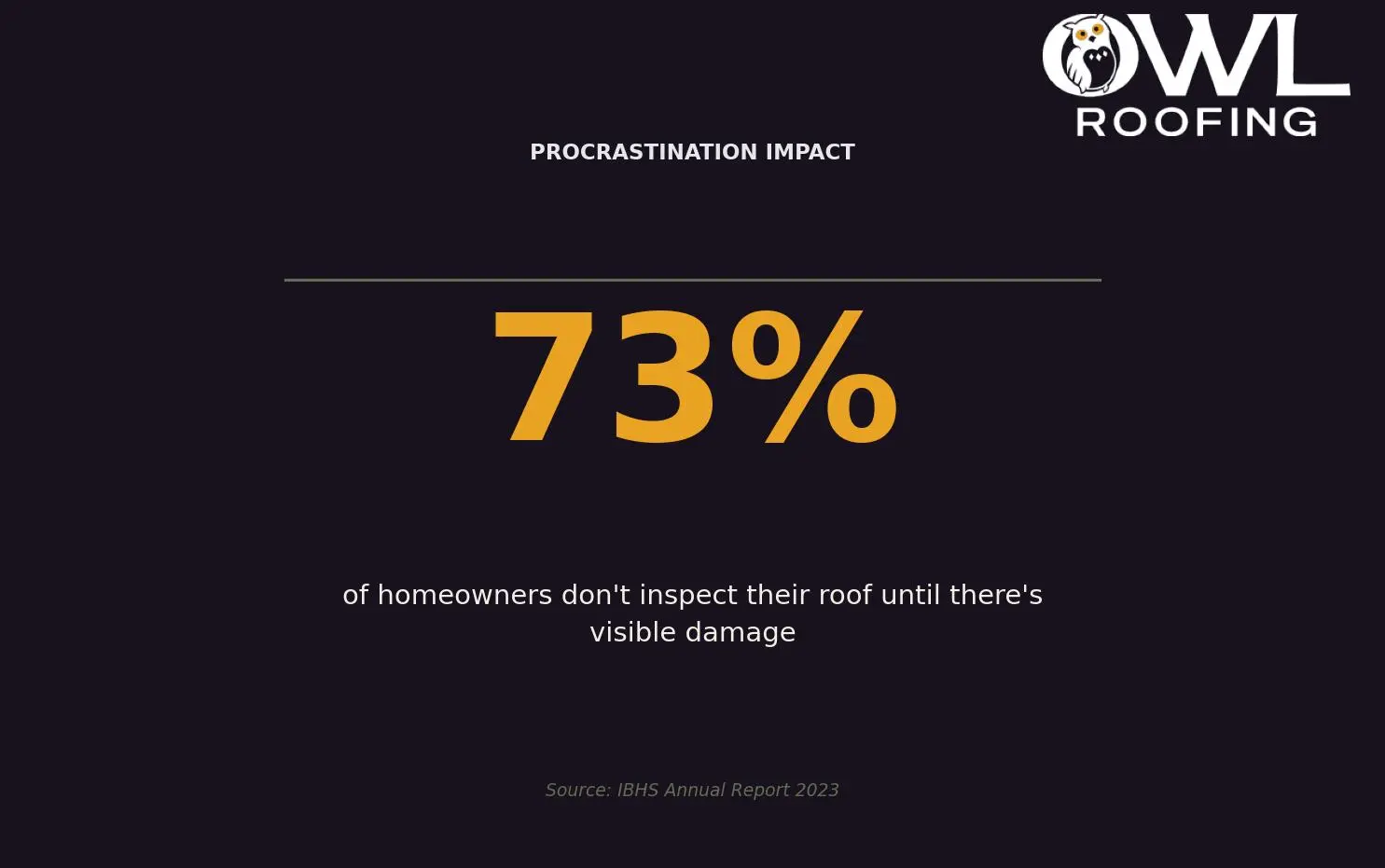
Here’s a stat that explains a lot: according to the IBHS Annual Report 2023, 73% of homeowners don’t inspect their roof until there’s already visible damage inside their home.
Think about what that means. By the time most people realize they have a roof problem, water has already made it through the roofing material, through the underlayment, through the roof deck, through the attic, and into their living space. That’s a lot of damage that happened while everything looked fine from the ground.
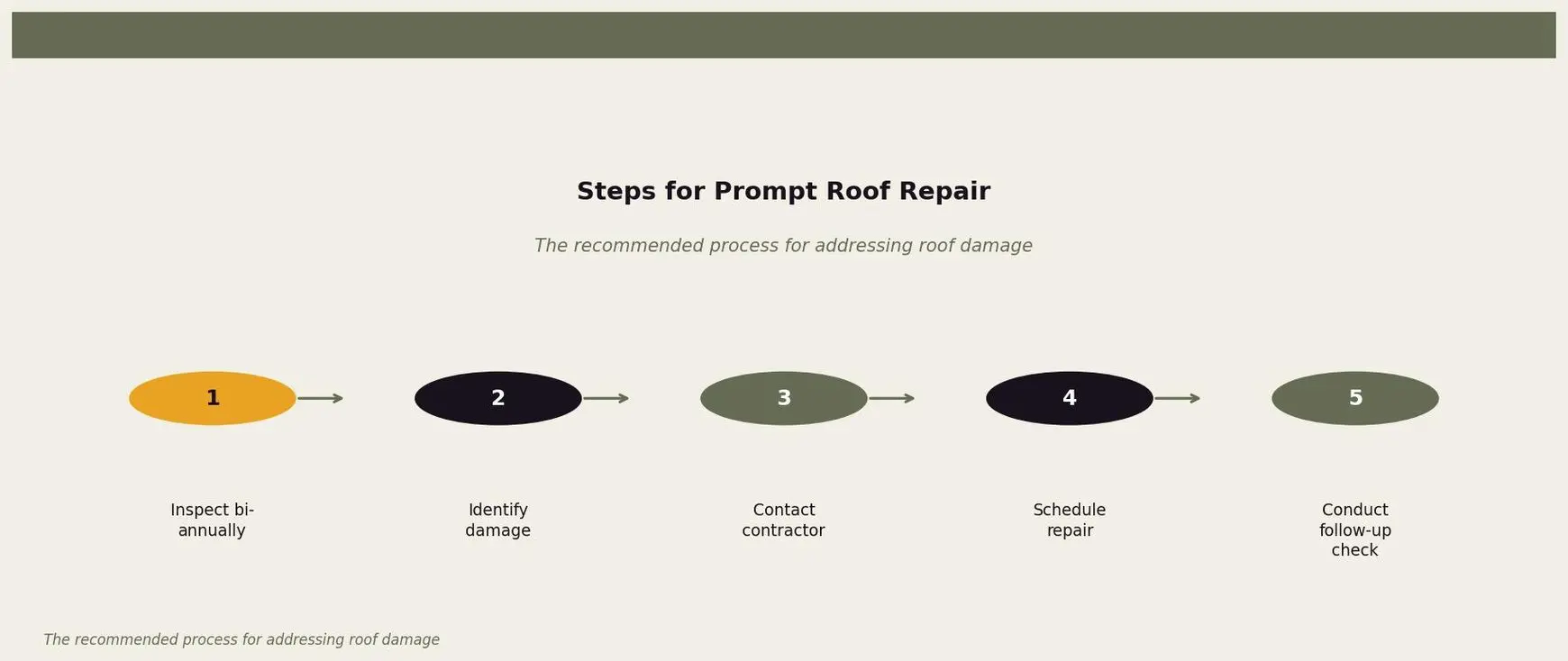
The IBHS recommends inspecting your roof twice a year—once in spring after the snow and ice have done their worst, and once in fall before winter sets in again. You don’t need to climb up there yourself (please don’t, unless you know what you’re doing). A good pair of binoculars and a walk around your house can reveal a lot. Look for:
- Missing, cracked, or curling shingles
- Dark spots or streaks that might indicate algae or moisture
- Granules collecting in your gutters (a sign your shingles are degrading)
- Damaged flashing around chimneys, vents, and skylights
- Sagging areas or visible wear patterns
Inside your house, check your attic if you can access it. Look for daylight coming through the roof boards, water stains, or any musty smells that might indicate moisture problems.
What To Do When You Find Damage
Okay, you’ve spotted something that doesn’t look right. Here’s your action plan:
Step 1: Document everything. Take photos from multiple angles, note the date, and write down what you observed. This matters for insurance claims and for getting accurate repair estimates.
Step 2: Assess the urgency. Use the timeline above—minor, moderate, or severe? This determines how fast you need to move.
Step 3: Contact a reputable local contractor. Get someone who knows Twin Cities weather and building codes. Avoid the storm chasers who show up after every hailstorm and disappear after cashing your check.
Step 4: Get a clear estimate. A good contractor will explain exactly what’s wrong, what needs to be fixed, and what it will cost. No surprises, no pressure tactics.
Step 5: Schedule the repair. Don’t let the estimate sit in a drawer. Book the work while the damage is still contained.
Step 6: Follow up. After repairs are complete, do a visual check yourself and ask the contractor about any maintenance that will help prevent future issues.
Prevention Beats Repair Every Time
The cheapest roof repair is the one you never need. Regular maintenance extends your roof’s lifespan and catches small issues before they become expensive emergencies. Simple things make a real difference:
- Keep your gutters clean so water drains properly
- Trim back tree branches that hang over your roof
- Address attic ventilation issues that can cause ice dams
- Fix small problems immediately instead of waiting
- Schedule professional inspections if you’re not comfortable checking yourself
Your roof is designed to protect everything underneath it—your family, your belongings, your investment. It does that job quietly, day after day, storm after storm. The least we can do is pay attention when it needs a little help.
Ready To Take Care of Your Roof?
If you’ve noticed damage—or if it’s just been a while since anyone took a good look at your roof—we’re happy to help. At Owl Roofing, we’re a family-owned company right here in Shoreview, serving neighbors throughout the Twin Cities. Tim and Bea Brown and Noah and Anya Bergland started this company because we believe homeowners deserve straight answers and honest work from people who’ll still be here next year.
We’ve seen every type of roof damage Minnesota weather can dish out, from hail-pocked shingles to ice dam disasters. We’ll tell you exactly what your roof needs—and just as importantly, what it doesn’t. No pressure, no upselling, just a clear picture of where things stand.
Give us a call at 651-977-6027 or visit owlroofing.com/ to schedule an inspection. We’d rather catch a small problem now than watch it become a big one later.
Protect Your Nest.
📍 Owl Roofing Serves the Entire Twin Cities Metro
Andover · Anoka · Apple Valley · Arden Hills · Big Lake · Blaine · Bloomington · Brooklyn Center · Brooklyn Park · Burnsville · Champlin · Chanhassen · Chaska · Columbia Heights · Coon Rapids · Cottage Grove · Crystal · deephaven · Delano · Eagan · East Bethel · Eden Prairie · Excelsior · Farmington · Forest Lake · Fridley · Golden Valley · Ham Lake · Hastings · Hopkins · Hugo · Inver Grove Heights · Lake Elmo · Lakeville · Lino Lakes · Mahtomedi · Maplewood · Mendota Heights · Minneapolis · Minnetrista · Mound · Mounds View · New Brighton · New Hope · North Oaks · North St. Paul · Oak Grove · Oakdale · Plymouth · Prior Lake · Ramsey · Richfield · Robbinsdale · Rosemount · Roseville · Saint Paul · Savage · Shakopee · Shoreview · South St. Paul · St. Louis Park · St. Michael · St. Paul · Stillwater · Vadnais Heights · Victoria · Waconia · wayzata · West St. Paul · White Bear Lake · woodbury
Licensed Minnesota roofing contractor · Free inspections · 10-year workmanship warranty · Get a free estimate →
