


Is a Small Roof Leak a Big Problem
 13min Read
 Posted 11.18.2025
Is a Small Roof Leak a Big Problem?
That little brown spot on your ceiling? The one you’ve been meaning to “keep an eye on” for the past few months? It’s not sitting still. While you’re hoping it stays small, water is working 24/7 behind your walls, soaking into insulation, warping wood, and inviting mold to set up shop. Here in the Twin Cities, where we get hammered with 50+ inches of snow each winter and endure endless freeze-thaw cycles, that tiny drip has big ambitions.
The good news? Catching a small roof leak early is one of the smartest moves you can make as a homeowner. The bad news? Most people don’t. They wait. And waiting turns a $400 fix into a $5,000 nightmare—or worse. Let’s talk about why small roof leaks deserve your immediate attention, what happens when they don’t get it, and exactly what you can do to protect your home before Minnesota’s next weather tantrum.
The “Before” Picture: What Happens When You Ignore a Small Leak
Here’s a scenario that plays out in homes across Shoreview, Roseville, and the rest of the Twin Cities every single year:
You notice a small water stain after a heavy rain. Maybe a little discoloration in the corner of a bedroom ceiling. It’s about the size of a coffee mug. No big deal, right? The rain stops, the spot dries out, and life goes on. You tell yourself you’ll deal with it “when it gets worse” or “after the holidays” or “next spring.”
But here’s what’s happening while you’re waiting:
- Day 1-2: Water soaks into your attic insulation, reducing its R-value and making your HVAC system work harder. Your energy bills start creeping up, though you might not connect the dots yet.
- Days 3-7: Mold spores—which are everywhere, all the time—find the moisture and start colonizing. According to the EPA, mold can begin growing within 24 to 48 hours of moisture exposure. You can’t see it yet, but it’s there.
- Weeks 2-4: Wood components in your attic and roof structure begin absorbing water. The National Roofing Contractors Association (NRCA) warns that this moisture causes wood rot, which weakens the structural integrity of your entire roof system.
- Months 1-3: That coffee-mug-sized stain becomes a dinner-plate-sized stain. The drywall starts to sag. The mold colony has spread. And now you’re not just fixing a leak—you’re replacing drywall, treating mold, and possibly reinforcing structural components.
This isn’t fear-mongering. This is physics and biology doing exactly what they do. Water follows gravity. Mold follows moisture. And repair costs follow neglect.
The Numbers Don’t Lie: Why “Small” Doesn’t Mean “Cheap”
Let’s talk dollars and cents, because that’s often what finally gets homeowners to act.
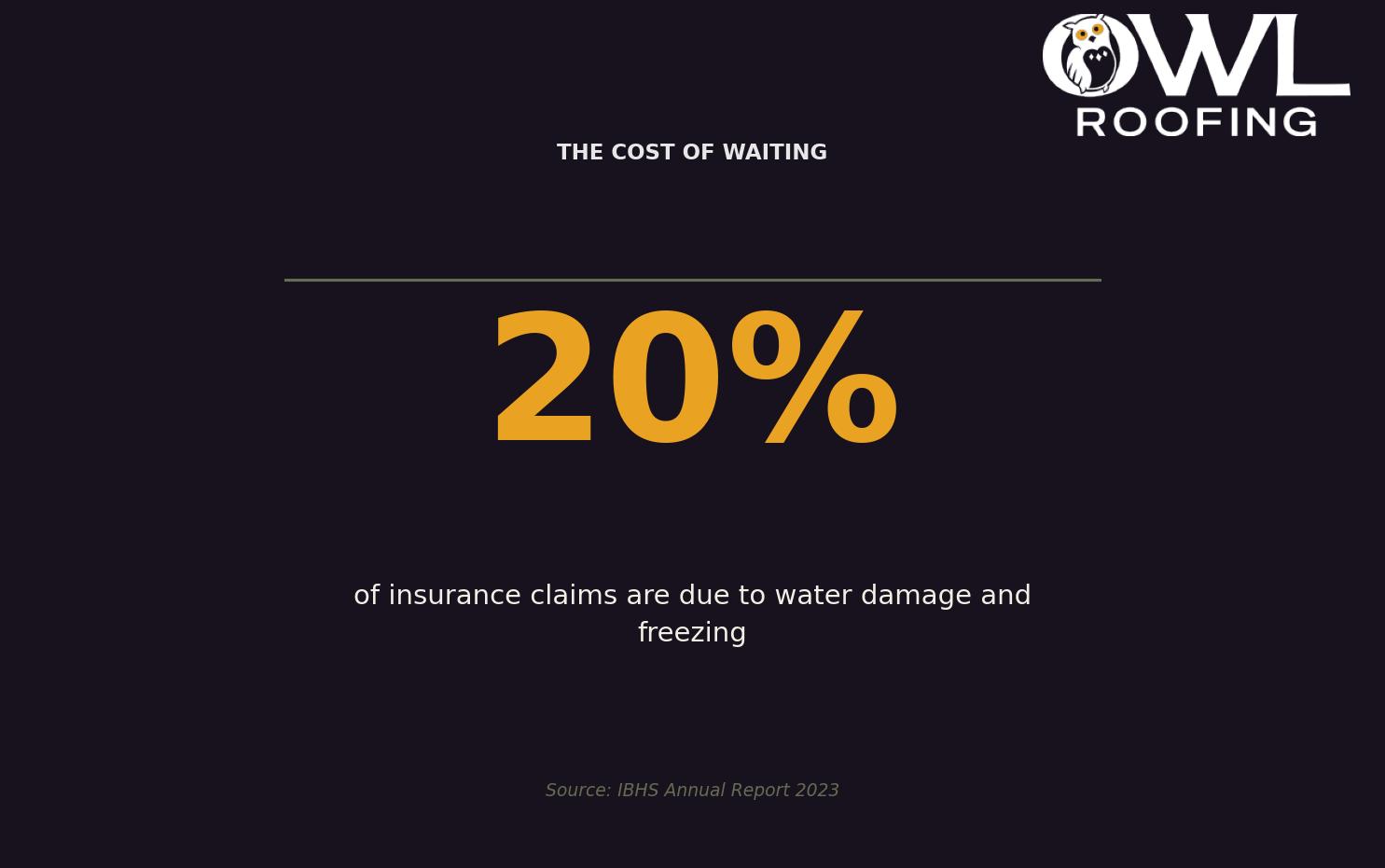
According to the Insurance Institute for Business and Home Safety (IBHS), water damage and freezing account for almost 20% of all homeowner insurance claims. The average claim? Around $10,849. That’s not for catastrophic flooding—that includes all those “small” leaks that people ignored until they couldn’t anymore.
Here’s the cost comparison that should keep you up at night:
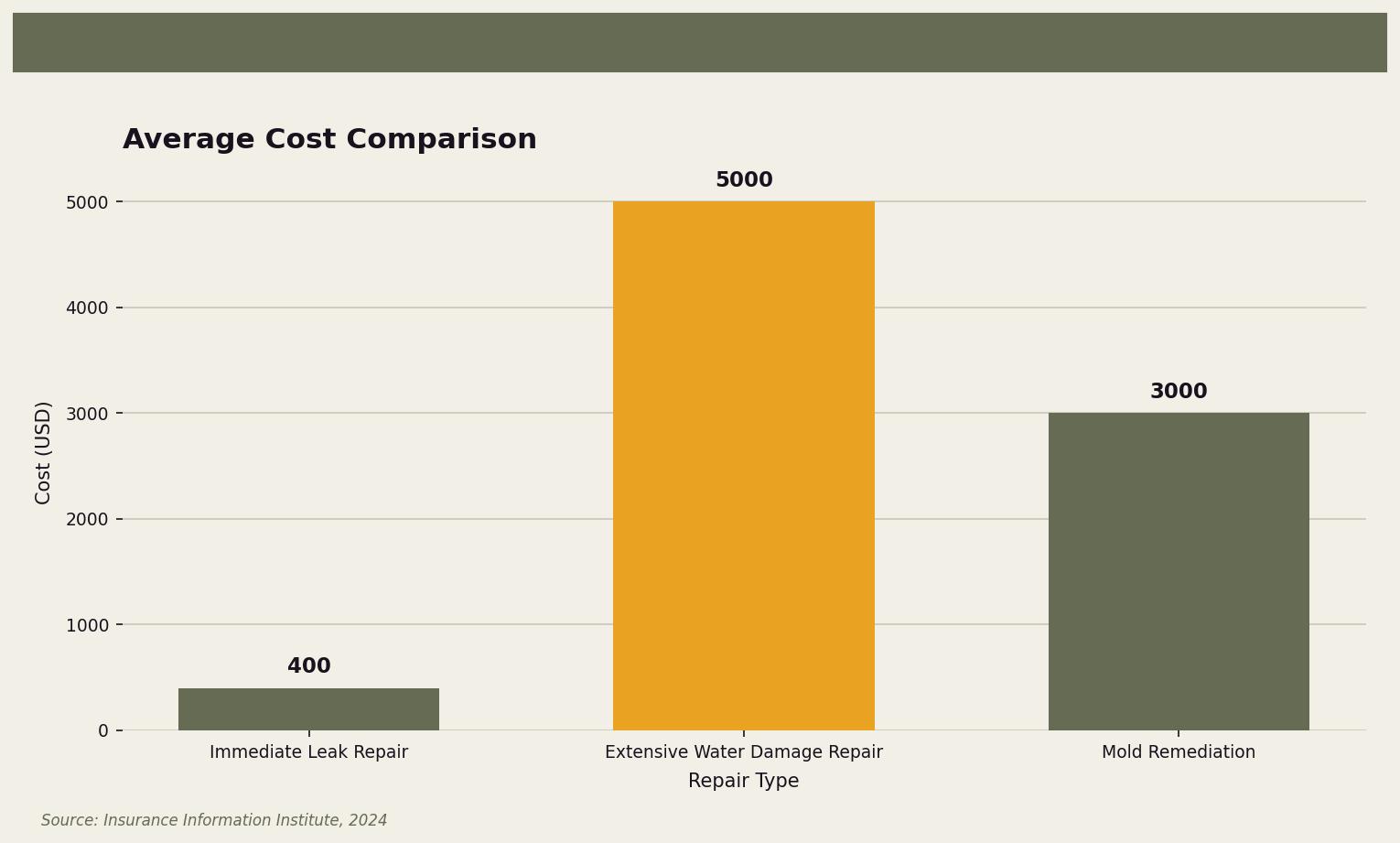
- Immediate leak repair: Approximately $400 (Insurance Information Institute)
- Extensive water damage repair: $5,000+ (and that’s before we talk about mold)
- Mold remediation: $500 to $6,000, depending on how far it’s spread
So you can pay $400 now, or you can pay $8,000-$11,000 later. That’s not a tough math problem. But somehow, the “later” option wins way too often because the leak looks small and harmless—and because life is busy and roofs are out of sight, out of mind.
There’s also your home’s value to consider. The National Association of Realtors (NAR) reports that untreated water damage can decrease a home’s value by up to 25%. If you’re planning to sell in the next few years—or even if you’re not—that’s a massive hit to your biggest investment.
The Health Risks Lurking Behind Your Walls
Money isn’t the only thing at stake. Let’s talk about what happens when mold moves in.
The Centers for Disease Control and Prevention (CDC) states that mold exposure can cause nasal stuffiness, throat irritation, coughing, wheezing, and eye irritation. For people with allergies, asthma, or compromised immune systems, the effects can be much more severe—including serious respiratory infections.
Here’s the kicker: you might not even know mold is the problem. Symptoms often mimic seasonal allergies or a lingering cold. You might be popping antihistamines and wondering why you feel lousy all winter, never connecting it to that little roof leak you’ve been ignoring.
Mold is sneaky. It grows in dark, damp spaces—exactly the kind of spaces created by a roof leak. By the time you see visible mold, the colony is already well-established. And once it’s in your walls, attic, or insulation, remediation isn’t just about cleaning surfaces. It often means removing and replacing building materials entirely.
Why Twin Cities Roofs Have It Harder
If you live in Shoreview, Blaine, Maplewood, or anywhere in the metro, your roof deals with conditions that roofs in milder climates simply don’t face. And those conditions make small leaks more dangerous, not less.
The Freeze-Thaw Problem
Minnesota’s freeze-thaw cycles are brutal on roofs. Here’s how it works: water seeps into a tiny crack or gap. Temperatures drop, and that water freezes. When water freezes, it expands—by about 9%. That expansion widens the crack. Then temperatures rise, the ice melts, and more water flows into the now-larger gap. Repeat this cycle dozens of times each winter, and a hairline crack becomes a significant breach.
According to the NRCA, these freeze-thaw cycles can turn minor roof vulnerabilities into major leak sources in a single season. A leak that barely dripped in October might be pouring by March.
The Ice Dam Factor
The Twin Cities averages over 50 inches of snow each year. All that snow on your roof creates ideal conditions for ice dams—those thick ridges of ice that form at the edge of your roof and prevent melting snow from draining properly. When water backs up behind an ice dam, it can seep under your shingles and into your home, even if your roof has no other damage.
If you already have a small leak, ice dams make everything worse. They create additional entry points for water and increase the volume of water trying to find its way into your house. It’s a compounding problem that gets worse every winter you don’t address it.
The Humidity Swing
Our summers are humid. Our winters are dry (indoors, at least, with the heat running). This constant shift between humid and dry conditions stresses roofing materials and can cause seals to fail faster than in more stable climates. It also means that moisture from a leak can get trapped during humid months and cause damage even after the leak itself has temporarily stopped dripping.
The “After” Picture: Life With a Properly Maintained Roof
Now let’s paint a different picture. One where you catch that small leak early—or better yet, prevent it from happening in the first place.
In this scenario:
- Your energy bills stay predictable because your insulation is dry and doing its job.
- Your family breathes easy—literally—because there’s no hidden mold colony releasing spores into your air.
- Your home’s value is protected because there’s no water damage lurking behind the walls, waiting to show up on an inspection report.
- Your stress level stays low because you’re not dealing with emergency repairs in the middle of January when contractors are slammed and prices are at their peak.
- Your roof lasts longer because small issues get fixed before they become structural problems.
This isn’t some fantasy scenario. It’s what happens when homeowners stay proactive about roof maintenance. And honestly? It doesn’t take much effort. It just takes attention and action.
The Bridge: Your Roof Leak Action Plan
So how do you get from “worried about that water stain” to “confident my roof is solid”? Here’s a straightforward action plan:
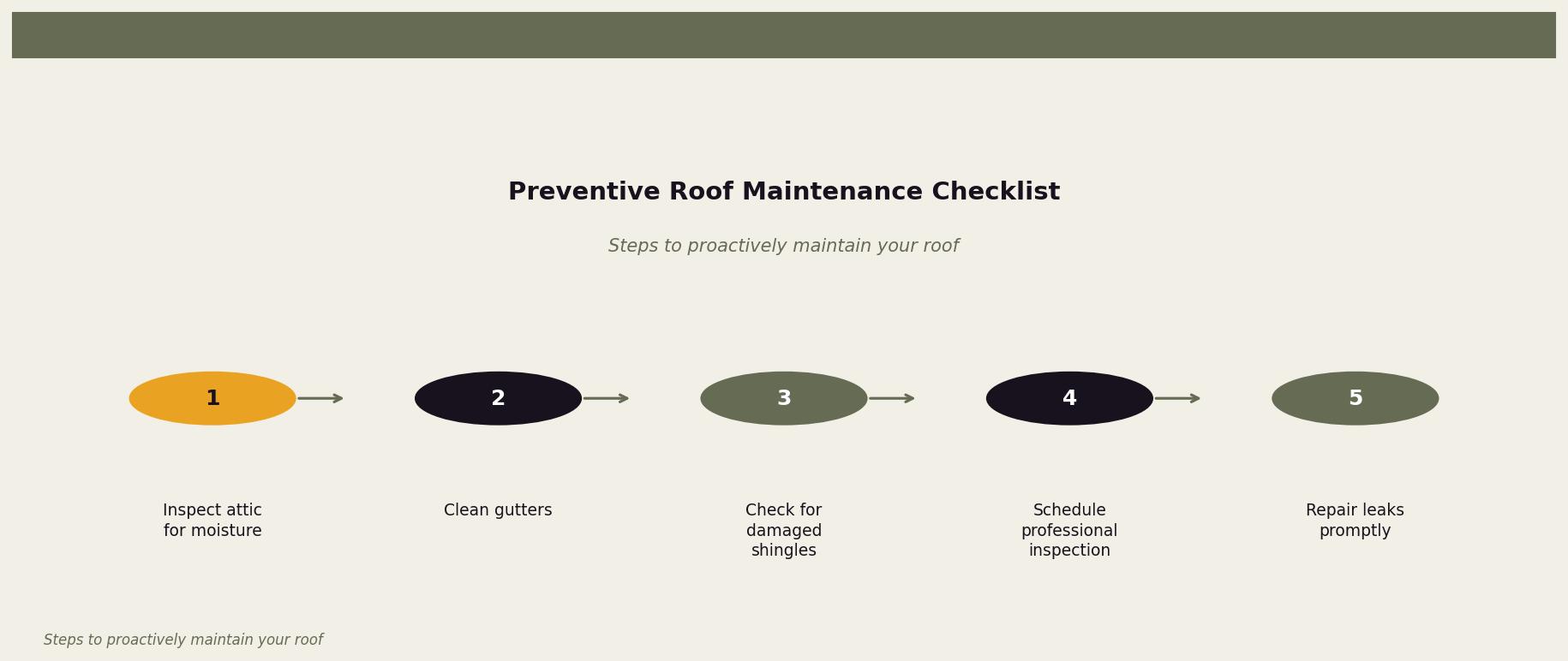
Step 1: Inspect Your Attic
Grab a flashlight and head up there. Look for:
- Dark stains or streaks on the underside of the roof deck
- Damp or compressed insulation
- Any visible daylight coming through (obvious problem)
- Musty odors (often indicates mold growth)
- Water stains on rafters or trusses
Do this on a dry day first, then again during or immediately after a rain. Some leaks only show themselves when water is actively flowing.
Step 2: Check Your Ceilings and Walls Inside
Water doesn’t always drip straight down. It can travel along rafters, pipes, and electrical wiring before finding a place to pool or drip. That stain in your bedroom might have originated from a leak twenty feet away. Look for:
- Discoloration (brown or yellow spots)
- Bubbling or peeling paint
- Warped or sagging drywall
- Visible mold (black, green, or white spots)
Step 3: Examine Your Roof From the Ground
You don’t need to climb up there (and honestly, unless you’re experienced, you shouldn’t). Use binoculars or a camera with good zoom to look for:
- Missing, cracked, or curling shingles
- Damaged flashing around chimneys, vents, or skylights
- Clogged or sagging gutters
- Debris accumulation
Step 4: Call a Professional for a Real Inspection
Self-inspections are a good start, but they have limits. A professional roofer knows where to look, what to look for, and how to assess damage you might miss. They can get on the roof safely, check flashing details, evaluate shingle condition up close, and give you an honest assessment of what needs attention now versus what can wait.
Get an inspection at least once a year—ideally in fall before winter hits, or in spring after the snow melts. If you’ve had a major storm with high winds or hail, schedule an inspection after that too.
Step 5: Maintain Your Gutters
Clogged gutters cause water to back up under your shingles. In winter, they contribute to ice dams. Clean them at least twice a year—once in late spring after the cottonwood fluff settles, and again in late fall after the leaves drop. Make sure downspouts are directing water away from your foundation, not pooling next to it.
Step 6: Don’t Wait to Repair
If an inspection reveals a problem—even a small one—fix it. That’s the whole point. A $400 repair in September beats a $5,000 emergency in February every single time.
When to Be Especially Vigilant
Some situations call for extra attention:
- After major storms: High winds can lift shingles. Hail can crack them. Even if everything looks fine from the ground, damage might be present.
- If your roof is over 15 years old: Asphalt shingles typically last 20-30 years, but they become more vulnerable to leaks as they age.
- If you’re buying or selling a home: A roof inspection should be part of any real estate transaction. Surprises help no one.
- If you notice any interior water signs: Don’t “wait and see.” Investigate immediately.
The Bottom Line on Small Roof Leaks
A small roof leak problem is absolutely a big deal—not because of what it is today, but because of what it becomes tomorrow. Water is patient. It doesn’t care about your schedule or your budget. It just keeps working, day after day, weakening your home’s structure, growing mold, and adding zeros to your eventual repair bill.
The Twin Cities climate makes this even more urgent. Freeze-thaw cycles, heavy snow loads, and ice dams mean that small vulnerabilities become big problems faster here than in gentler climates. But it also means that proactive homeowners—the ones who inspect, maintain, and repair promptly—protect themselves from the worst of it.
Don’t let a minor drip turn into a major disaster. Your home is worth the attention. So is your family’s health. And honestly? So is your peace of mind.
Ready to Protect Your Home? Let’s Talk.
If you've spotted a water stain, noticed a musty smell in your attic, or just realized it's been a while since anyone looked at your roof, we'd love to help. At Owl Roofing, we're a family-owned company based right here in Shoreview, serving neighbors throughout the Twin Cities. Tim, Bea, Noah, and Anya—we've seen every kind of roof leak Minnesota winters can cause, and we've helped homeowners catch small problems before they turned into big ones. We'll look at your roof, tell you exactly what's going on, and give you a straight answer about what it needs. No pressure, no runaround. Just honest advice from people who live here too. Give us a call at 651-977-6027 or visit owlroofing.com/ to schedule an inspection. Protect Your Nest.
📍 Owl Roofing Serves the Entire Twin Cities Metro
Andover · Anoka · Apple Valley · Arden Hills · Big Lake · Blaine · Bloomington · Brooklyn Center · Brooklyn Park · Burnsville · Champlin · Chanhassen · Chaska · Columbia Heights · Coon Rapids · Cottage Grove · Crystal · deephaven · Delano · Eagan · East Bethel · Eden Prairie · Excelsior · Farmington · Forest Lake · Fridley · Golden Valley · Ham Lake · Hastings · Hopkins · Hugo · Inver Grove Heights · Lake Elmo · Lakeville · Lino Lakes · Mahtomedi · Maplewood · Mendota Heights · Minneapolis · Minnetrista · Mound · Mounds View · New Brighton · New Hope · North Oaks · North St. Paul · Oak Grove · Oakdale · Plymouth · Prior Lake · Ramsey · Richfield · Robbinsdale · Rosemount · Roseville · Saint Paul · Savage · Shakopee · Shoreview · South St. Paul · St. Louis Park · St. Michael · St. Paul · Stillwater · Vadnais Heights · Victoria · Waconia · wayzata · West St. Paul · White Bear Lake · woodbury
Licensed Minnesota roofing contractor · Free inspections · 10-year workmanship warranty · Get a free estimate →
