




What Happens if Shingles Blow Off in a Storm
 12min Read
 Posted 1.15.2026
What Happens If Shingles Blow Off in a Storm?
You wake up after a nasty Minnesota storm, grab your coffee, and look outside—only to see shingles scattered across your lawn like confetti from a party nobody wanted. Here’s the thing most homeowners don’t realize: those missing shingles aren’t just an eyesore. They’re an open invitation for water to walk right into your home.
And water doesn’t knock. It seeps, spreads, and silently destroys everything in its path.
When shingles blow off, what happens next depends entirely on how quickly you act. Leave it alone for a few days? You might be looking at soggy insulation. A few weeks? Mold could be setting up shop in your attic. A few months of Minnesota freeze-thaw cycles? Now you’re talking structural damage and a repair bill that makes your stomach drop.
Let’s break down exactly what’s at stake, what’s happening to your roof right now, and what you can do about it—before a missing shingle turns into a missing chunk of your savings account.
The Real Cost of “It’s Just a Few Shingles”
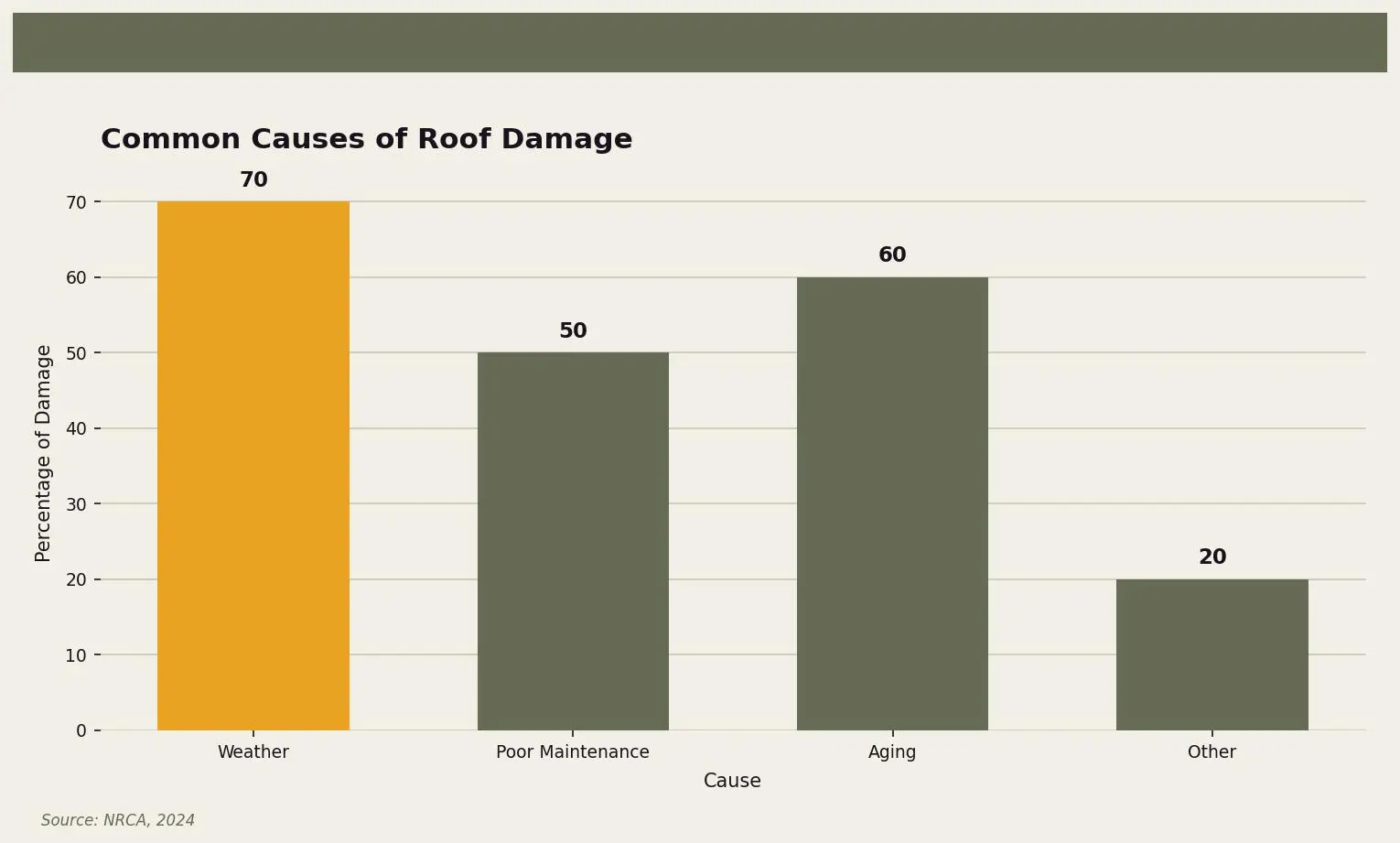
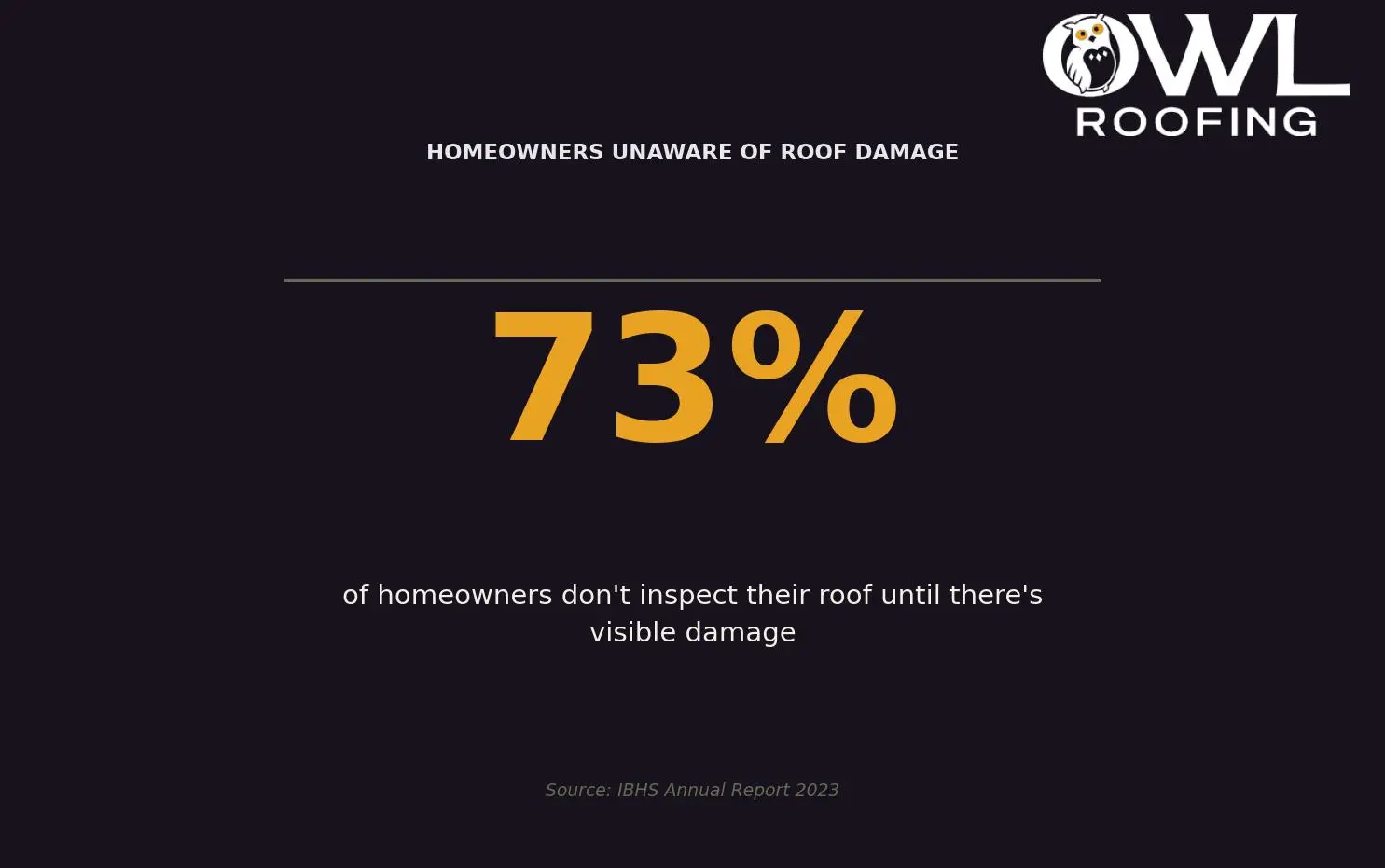
Here’s a stat that should grab your attention: according to the Insurance Institute for Business & Home Safety (IBHS), water damage and leaks account for more than 70% of homeowners’ insurance claims. And a huge portion of those claims start with something as “small” as missing shingles.
That bare spot on your roof? It’s not waiting patiently for you to get around to fixing it. Right now, it’s working against you. Every rain shower, every morning dew, every bit of melting snow is finding its way under your remaining shingles, soaking into your underlayment, and looking for a path into your home.
The National Roofing Contractors Association (NRCA) doesn’t mince words here—they emphasize that prompt action is crucial to prevent further damage. Because once water gets in, it doesn’t just stay in one spot. It travels along rafters, pools in unexpected places, and creates problems that are expensive to find and even more expensive to fix.
And if you’re thinking “I’ll just wait until spring” or “I’ll deal with it when I have time”—that delay could cost you. According to the National Association of Realtors (NAR), an aging or damaged roof can decrease your home’s resale value by up to 10%. On a $400,000 Shoreview home, that’s $40,000 vanishing because of procrastination.
What’s Actually Happening to Your Roof Right Now
The First 24-48 Hours: The Clock Starts Ticking
The moment those shingles left your roof, your home’s first line of defense disappeared with them. Underneath your shingles sits the underlayment—a water-resistant barrier that’s designed to be a backup, not the main event. It can handle some moisture for a short time, but it’s not meant to be exposed to the elements long-term.
If rain comes before you’ve addressed the damage, water starts seeping through nail holes, seams, and any weak spots in that underlayment. It reaches your roof deck (the wooden boards underneath everything), and wood plus water equals trouble.
The First Week: Damage You Can’t See Yet
Here’s where things get sneaky. Water that made it past your underlayment is now soaking into your roof deck. But you probably won’t see any signs inside your home yet. The water is spreading, being absorbed by insulation, traveling along wooden beams, and generally making itself at home in places you can’t easily access.
Your attic insulation—that fluffy stuff keeping your heating bills manageable during Minnesota winters—is basically a sponge. Once it gets wet, it loses its insulating power. Which means your furnace works harder, your energy bills climb, and you’re paying for damage you don’t even know you have yet.
Weeks to Months: The Compounding Problem
This is where Minnesota’s climate becomes your roof’s worst enemy. Our infamous freeze-thaw cycle turns small problems into big ones fast. Water that seeped into cracks expands when it freezes, making those cracks bigger. Then it thaws, seeps deeper, freezes again, expands again—and suddenly you’ve got gaps and damage that weren’t there before.
The NRCA emphasizes that even minimal shingle loss can accelerate the aging of your entire roof system. What might have been a roof with another 10 years of life could now need full replacement in 3-5 years. That’s not just damage—that’s thousands of dollars in lost roof lifespan.
And let’s talk about mold. Minnesota might not be Florida, but we’ve got plenty of humidity in our basements and attics. Give mold a damp, dark space and a few weeks of time, and it’ll spread. Mold remediation isn’t cheap, it’s disruptive, and it’s a health hazard—especially for kids, elderly family members, or anyone with respiratory issues.
Your Options: Quick Fixes vs. Real Solutions
The Tarp-and-Pray Approach
After a storm, you might be tempted to grab a tarp, climb up there, and cover the damaged area yourself. We get it—you want to protect your home, and you want to do it now.
Here’s the reality check: tarping can buy you a little time, but it’s not a solution. Tarps tear, blow off, and trap moisture underneath. They’re also tricky to secure properly, especially on a steep or wet roof. And if you’re not comfortable with heights or don’t have the right safety equipment, you’re putting yourself at serious risk.
The IBHS recommends proper replacement of blown shingles—not patches, not tarps—to ensure your roof’s integrity is actually restored. Temporary solutions can also create complications with your insurance claim. If an adjuster sees a tarp job that’s made things worse or hidden damage, you might find yourself paying out of pocket for repairs that should have been covered.
DIY Shingle Replacement
If you’re handy, you might be wondering if you can just replace the shingles yourself. It’s possible—if you have the right tools, matching shingles, and experience working on roofs. But here’s what most DIY videos don’t show you:
- Damage often extends beyond what you can see from the ground. That “few missing shingles” situation might actually involve damaged underlayment, lifted shingles nearby, or compromised flashing.
- Improper installation can void manufacturer warranties and create new leak points.
- Minnesota’s variable weather means you might start a project on a nice day and find yourself stuck on a roof when conditions change.
- Working on a roof without proper safety equipment is genuinely dangerous—falls are a leading cause of home injury deaths.
Professional Assessment and Repair
Hiring a professional to replace blown shingles is typically the smartest move for a few reasons. An experienced contractor can assess the full extent of the damage—not just what’s visible, but what’s hiding underneath. They can check your underlayment, inspect the roof deck for soft spots, examine flashing around vents and chimneys, and identify shingles that might look okay but are actually compromised.
Here’s something that might surprise you: the NAR notes that a new roof can recover about 107% of the cost upon resale. That’s one of the few home improvements that actually pays for itself and then some. Even if you’re not selling soon, maintaining your roof is protecting one of your biggest investments.
A professional repair also gives you documentation—something your insurance company wants to see, and something future buyers will appreciate when you eventually sell.
Minnesota Weather: Why Location Matters
Roofing advice from Arizona or Florida doesn’t always apply here. The Twin Cities area has its own unique challenges that make roof maintenance especially critical.
According to the Minnesota Department of Natural Resources, our fluctuating temperatures can exacerbate shingle damage significantly. A single Minnesota winter can put your roof through dozens of freeze-thaw cycles. Each one stresses your shingles, tests your flashing, and gives water new opportunities to find its way in.
Summer storms in Shoreview and the greater metro area can bring high winds, hail, and heavy rain—sometimes all in the same afternoon. We’ve all watched those dark clouds roll in from the west and thought “here we go again.” Your roof takes the brunt of every one of those storms.
Then there’s the snow load issue. Heavy, wet Minnesota snow sitting on a compromised roof creates weight stress in exactly the places where you can least afford it. And when that snow melts, guess where all that water goes? Right toward any gap, crack, or missing shingle it can find.
All of this means that what might be a “wait and see” situation in a milder climate becomes an “act now” situation here. Our weather doesn’t give roofs a break, and it doesn’t give homeowners much grace period for repairs.
Your Storm Damage Action Plan
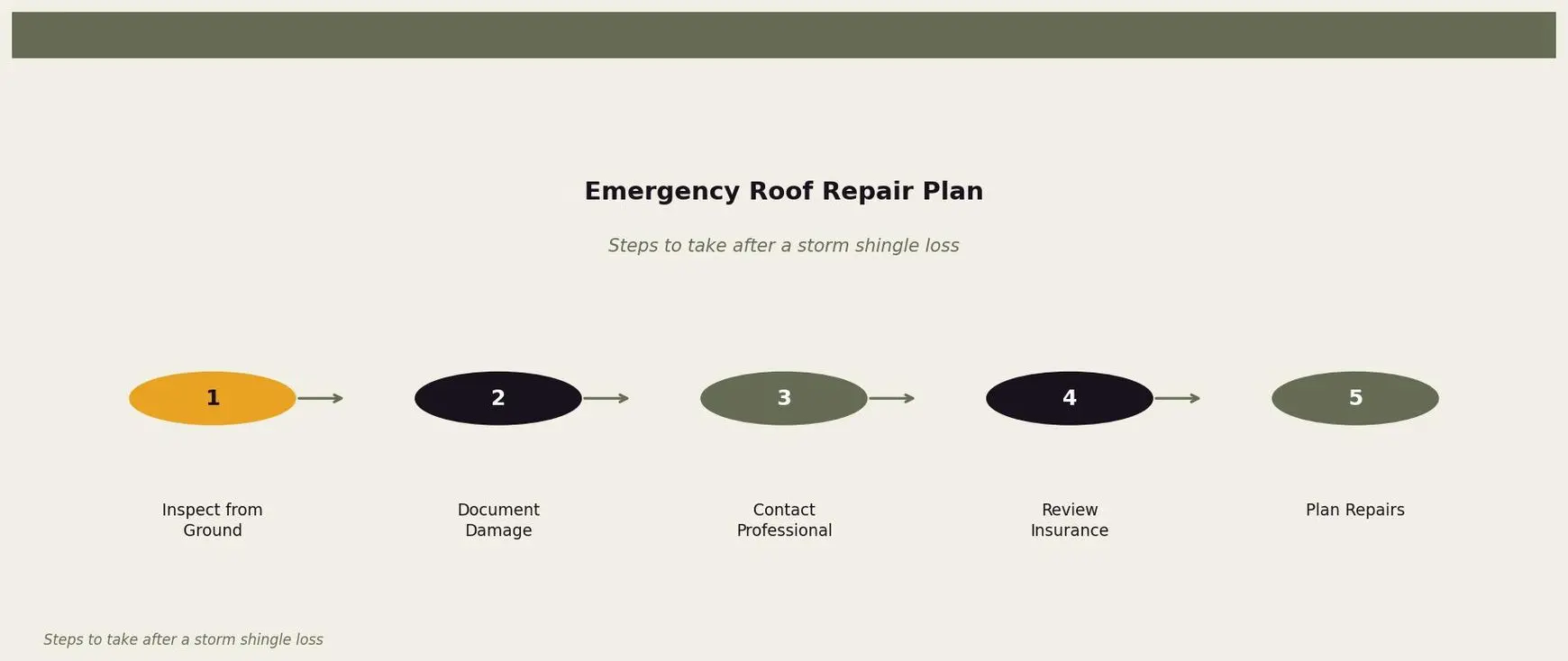
If your shingles blew off during a storm, here’s exactly what to do—step by step:
Step 1: Safe Ground-Level Inspection
Stay off the roof, especially if it’s wet or you’re not experienced. Walk around your home and look up. Note any visible missing shingles, exposed areas, or debris. Check your gutters for shingle granules—excessive granules mean your shingles are deteriorating even if they haven’t blown off yet.
Step 2: Document Everything
Grab your phone and take photos. Lots of them. Get pictures of missing shingles, any debris in your yard, damage to gutters or siding, and anything that looks “off.” Date-stamped photos are gold for insurance claims. If it’s safe, take a few photos from upstairs windows for a different angle.
Step 3: Prevent Further Damage (Carefully)
If water is actively coming into your home, do what you can to minimize interior damage—move furniture, set up buckets, protect valuables. If you can safely place a tarp over the damaged area from a ladder without getting on the roof itself, that’s reasonable. But don’t take risks.
Step 4: Call a Professional
Contact a roofing contractor for a thorough inspection. A good contractor will look beyond the obvious damage and give you an honest assessment of what needs repair versus what’s still solid. They’ll also provide documentation you can use for your insurance claim.
Step 5: Contact Your Insurance Company
Review your homeowner’s policy and file a claim if the damage warrants it. Many storm damage repairs are covered, but you’ll need documentation. Your roofing contractor can often help coordinate with your insurance adjuster.
Step 6: Plan and Execute Repairs
Once you have an assessment and know what insurance will cover, move forward with repairs. Don’t delay—every day you wait, you’re gambling with Minnesota weather.
Ready to Protect Your Home?
Look, we’ve been roofing in Shoreview and across the Twin Cities for over 15 years now. Tim and Bea, Noah and Anya—we’ve seen what happens when storm damage gets ignored. We’ve also seen the relief on homeowners’ faces when they catch a problem early and fix it right.
If you’ve got shingles in your yard or bare spots on your roof, give us a call at 651-977-6027. We’ll come out, take a look, and tell you exactly what your roof needs—no pressure, no scare tactics. Just honest answers from neighbors who actually live here.
You can also learn more at owlroofing.com/. We’re family-owned, locally rooted, and we’re not going anywhere. Not a franchise, not storm chasers—just a crew that believes in doing the job right.
Protect Your Nest.
📍 Owl Roofing Serves the Entire Twin Cities Metro
Andover · Anoka · Apple Valley · Arden Hills · Big Lake · Blaine · Bloomington · Brooklyn Center · Brooklyn Park · Burnsville · Champlin · Chanhassen · Chaska · Columbia Heights · Coon Rapids · Cottage Grove · Crystal · deephaven · Delano · Eagan · East Bethel · Eden Prairie · Excelsior · Farmington · Forest Lake · Fridley · Golden Valley · Ham Lake · Hastings · Hopkins · Hugo · Inver Grove Heights · Lake Elmo · Lakeville · Lino Lakes · Mahtomedi · Maplewood · Mendota Heights · Minneapolis · Minnetrista · Mound · Mounds View · New Brighton · New Hope · North Oaks · North St. Paul · Oak Grove · Oakdale · Plymouth · Prior Lake · Ramsey · Richfield · Robbinsdale · Rosemount · Roseville · Saint Paul · Savage · Shakopee · Shoreview · South St. Paul · St. Louis Park · St. Michael · St. Paul · Stillwater · Vadnais Heights · Victoria · Waconia · wayzata · West St. Paul · White Bear Lake · woodbury
Licensed Minnesota roofing contractor · Free inspections · 10-year workmanship warranty · Get a free estimate →
