Minneapolis Roofing Code Guide 2026: Rules & Permits
 15min Read
 Posted 6.12.2026
Understanding Minneapolis roofing code requirements is essential for homeowners planning a roof replacement, repair, or new installation in 2026 because the city enforces specific permit, inspection, and material standards based on the Minnesota State Building Code. The City of Minneapolis Construction Code Services division reviews every residential reroofing permit and follows the Minnesota Residential Code, which incorporates the International Residential Code with state amendments. This guide walks through what the code actually requires, when permits are needed, how inspections work, and what homeowners across Minneapolis MN and surrounding areas should know before starting any roofing work.
- Permit requirements: When Minneapolis requires a roofing permit and how to apply.
- Code compliance: What ice barriers, ventilation, and decking standards apply to your roof.
- Inspection process: How the city reviews and approves completed roofing work.
What Is the Minneapolis Roofing Code?
The Minneapolis roofing code is the body of building regulations enforced by the City of Minneapolis Construction Code Services division that governs how residential roofs must be designed, installed, and inspected. The code is based on the Minnesota State Building Code, specifically the Minnesota Residential Code which adopts the International Residential Code with Minnesota-specific amendments published by the Minnesota Department of Labor and Industry.
Where Do Minneapolis Roofing Code Requirements Come From?
Minneapolis roofing code requirements come from a layered regulatory framework that starts at the state level and includes local enforcement protocols. The Minnesota State Building Code, codified at Minnesota Rules Chapter 1309, adopts the International Residential Code as the baseline for one-family and two-family dwellings, including Chapter 9 which covers roof assemblies. The City of Minneapolis enforces these requirements through its Construction Code Services division and publishes a roofing requirements document for one- and two-family dwellings available through the city’s official website. All Minnesota cities and counties that enforce a building code are required to adopt the state code, which means homeowners across Minneapolis MN and surrounding areas face consistent standards even when crossing municipal boundaries.
- Minnesota State Building Code: The statewide baseline adopted by all Minnesota municipalities.
- International Residential Code Chapter 9: Sets the technical standards for roof assemblies.
- City of Minneapolis enforcement: Local plan review, permit issuance, and inspections.
- DLI fact sheets: Minnesota Department of Labor and Industry publishes additional roofing guidance.
Why Does the Minneapolis Roofing Code Matter?
The Minneapolis roofing code matters because it protects homeowners by setting minimum safety and performance standards for roof assemblies, ventilation, ice protection, and structural integrity. Compliance is also tied to insurance coverage, since claims involving non-permitted work or code violations can be denied or reduced. Code compliance protects resale value as well, because home inspections during a sale frequently flag unpermitted roof work as a defect that must be resolved before closing. For homeowners across Minneapolis MN and surrounding areas, working with a contractor who handles permits and code compliance is the simplest way to avoid headaches later.
- Safety standards: Minimum requirements for installation, materials, and structural performance.
- Insurance protection: Permitted work supports future claim approvals.
- Resale value: Documented compliance prevents issues during home inspections.
- Weather performance: Code standards address the specific demands of Minnesota winters.
When Is a Minneapolis Roofing Permit Required?
A Minneapolis roofing permit is required for any residential reroofing project that involves removing and replacing the roof covering on a one-family or two-family dwelling. The Minnesota State Building Code requires permits for reroofing existing dwellings consistently across all Minnesota municipalities, and Minneapolis enforces this through its Construction Code Services division.
Which Roofing Projects Require a Permit?
Most residential roofing work in Minneapolis requires a permit before any installation begins, and Owl Roofing pulls the required permits as a standard part of every roofing contract. Full roof replacements with new shingles always require permits, including standard tear-off and replacement of asphalt shingle roofs on one-family and two-family homes. Structural work such as repairing or replacing roof decking, rafters, or trusses also requires a permit because it affects the load-bearing capacity of the roof. Changing the roof covering material, such as switching from asphalt shingles to metal roofing, requires a permit and may also require additional plan review. Major repairs that exceed a small localized fix are typically permitted as well, with the city’s threshold determined on a case-by-case basis.
- Full reroofing: Tear-off and replacement of the entire roof covering requires a permit.
- Structural work: Replacement of decking, rafters, or trusses requires permits.
- Material changes: Switching roof covering type triggers permit and plan review.
- Major repairs: Larger repair scopes typically require permits.
Are There Roofing Projects That Don’t Require Permits?
Some very small roofing repairs may not require a permit in Minneapolis, though homeowners should always verify with the city before assuming an exemption applies. Replacement of a few damaged shingles after a wind event, patching a small isolated leak, or emergency tarping to prevent further water damage typically fall below permit thresholds. The line between repair and reroofing is based on scope, and any work that touches more than a small localized area generally requires a permit. Homeowners across Minneapolis MN and surrounding areas should call 311 or contact Construction Code Services at 612-673-3000 to confirm whether a specific project requires a permit before starting any work.
- Small shingle replacement: A few damaged shingles after wind damage.
- Localized leak patching: Small isolated repair work.
- Emergency tarping: Temporary weather protection after a storm.
- Verification recommended: Always confirm with the city before assuming exemption.
7 Key Minneapolis Roofing Code Requirements
The Minneapolis roofing code includes specific technical requirements that must be met during every reroofing project. The numbered list below walks through the most important requirements that affect material selection, installation, and inspection across Minneapolis MN and surrounding areas.
1. Ice Barrier Requirement
Minnesota’s climate makes ice dam protection one of the most important elements of any roofing code requirement, and Minneapolis enforces strict ice barrier standards. The International Residential Code, as adopted by Minnesota, requires that an ice barrier be installed at all eaves on roofs with slopes less than 8:12 in regions where the average daily temperature in January is 25 degrees Fahrenheit or less, which includes all of Minneapolis. The ice barrier must extend from the lowest edges of all roof surfaces to a point at least 24 inches inside the exterior wall line of the building. Approved ice barrier materials include self-adhering polymer-modified bitumen sheets installed directly to the roof deck. Owl Roofing installs ice and water shield on every eave of every replacement to ensure compliance with this requirement across Minneapolis MN and surrounding areas.
- Coverage area: 24 inches inside the exterior wall line from the eave edge.
- Material standard: Self-adhering polymer-modified bitumen sheet.
- Slope trigger: Required on roofs with slopes less than 8:12 in the Minneapolis climate zone.
- Code source: International Residential Code Section R905 as adopted by Minnesota.
2. Roof Deck Inspection and Repair
The Minneapolis roofing code requires that roof decking be sound, structurally adequate, and free of significant defects before new roofing materials are installed. The code prohibits installation of new shingles over damaged, rotted, or structurally compromised decking because the new roof cannot perform as intended if the underlying substrate fails. During reroofing, the contractor must inspect the exposed decking after tear-off and replace any damaged sheathing before underlayment installation begins. Inspectors specifically check for decking integrity during the rough inspection on permitted projects. Owl Roofing documents all decking conditions with photos and bills any required replacement at the per-sheet rate specified in the original contract.
- Sound decking required: New shingles cannot be installed over damaged sheathing.
- Tear-off exposure: Decking inspected after the old roof is removed.
- Per-sheet billing: Replacement decking billed transparently per the contract.
- Inspector verification: City inspectors verify decking condition during rough inspection.
3. Underlayment Standards
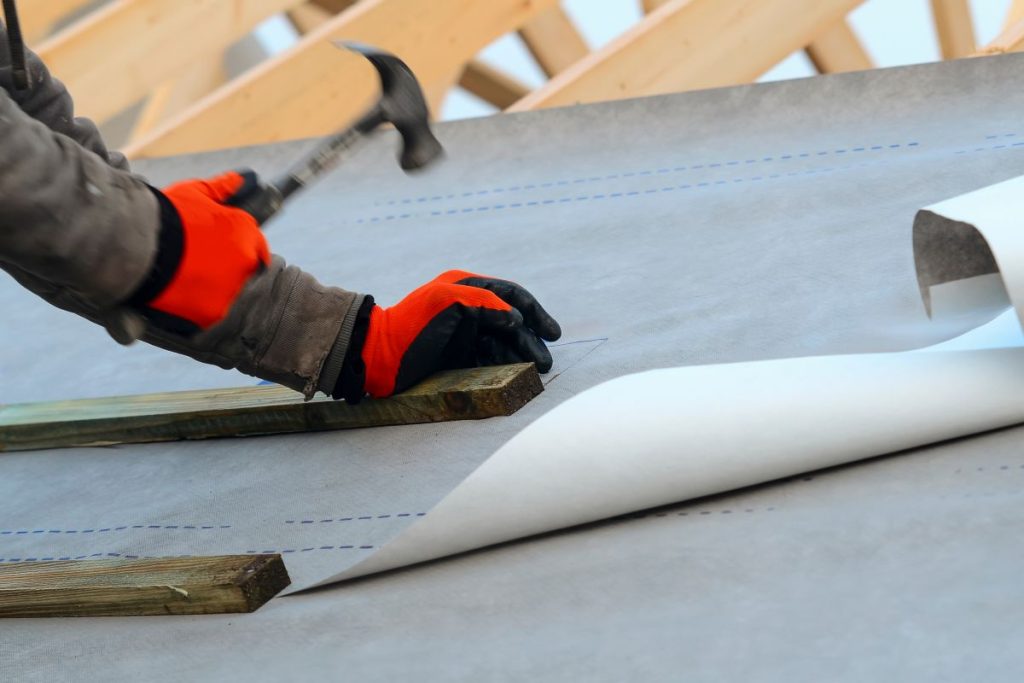
The Minneapolis roofing code requires that approved underlayment be installed across the entire roof deck before shingles are applied. The International Residential Code requires either Type I asphalt-saturated felt or an approved synthetic underlayment meeting ASTM D226 or equivalent standards. Underlayment must be installed in a specific overlapping pattern with minimum horizontal laps of 2 inches and minimum end laps of 4 inches, fastened in place to keep it secure during shingle installation. Synthetic underlayments have largely replaced traditional felt on professional installations because they are lighter, stronger, and resist tearing during installation. Owl Roofing uses approved synthetic underlayment on every roof system to meet code and to support full manufacturer warranty registration.
- Approved material: ASTM D226 felt or approved synthetic underlayment.
- Overlap requirement: 2 inch horizontal lap and 4 inch end lap minimums.
- Full coverage: Entire roof deck must be covered before shingles.
- Synthetic preferred: Most professional installations now use synthetic underlayment.
4. Roof Ventilation Requirements
The Minneapolis roofing code requires balanced attic ventilation on most residential roofs to control moisture, prevent ice dams, and extend shingle life. The International Residential Code, as adopted by Minnesota, requires a minimum net free ventilation area of 1 square foot for every 150 square feet of attic floor area, or 1 to 300 with balanced intake and exhaust ventilation. Intake ventilation typically comes from soffit vents along the eaves, while exhaust ventilation typically comes from ridge vents along the roof peak or from gable vents. The balance between intake and exhaust matters because unbalanced systems do not move air properly and can actually pull conditioned air out of the home. Owl Roofing evaluates existing ventilation during every inspection and recommends upgrades when needed for homeowners across Minneapolis MN and surrounding areas.
- Net free area: 1:150 or 1:300 with balanced intake and exhaust.
- Intake source: Typically soffit vents along the eaves.
- Exhaust source: Typically ridge vents or gable vents.
- Balance critical: Intake and exhaust must work together properly.
5. Number of Roof Layers Allowed
The Minneapolis roofing code follows the International Residential Code’s limit on the number of roof covering layers allowed on a residential structure. Section R908 of the IRC limits asphalt shingle roofs to a maximum of two layers of roof coverings, meaning a homeowner cannot install a third layer on top of two existing layers and must complete a full tear-off instead. The code also prohibits installation of new shingles over existing roofs that are buckled, cupped, badly worn, or otherwise unable to provide a sound substrate. Even when a layover is technically allowed, Owl Roofing recommends full tear-off in nearly every case because layovers void most manufacturer enhanced warranties and prevent decking inspection.
- Two-layer maximum: Code prohibits more than two layers of asphalt shingles.
- Substrate condition: Existing layer must be sound to support a layover.
- Tear-off recommended: Standard practice for warranty access and inspection visibility.
- Code source: IRC Section R908 as adopted by Minnesota.
6. Flashing Installation Standards
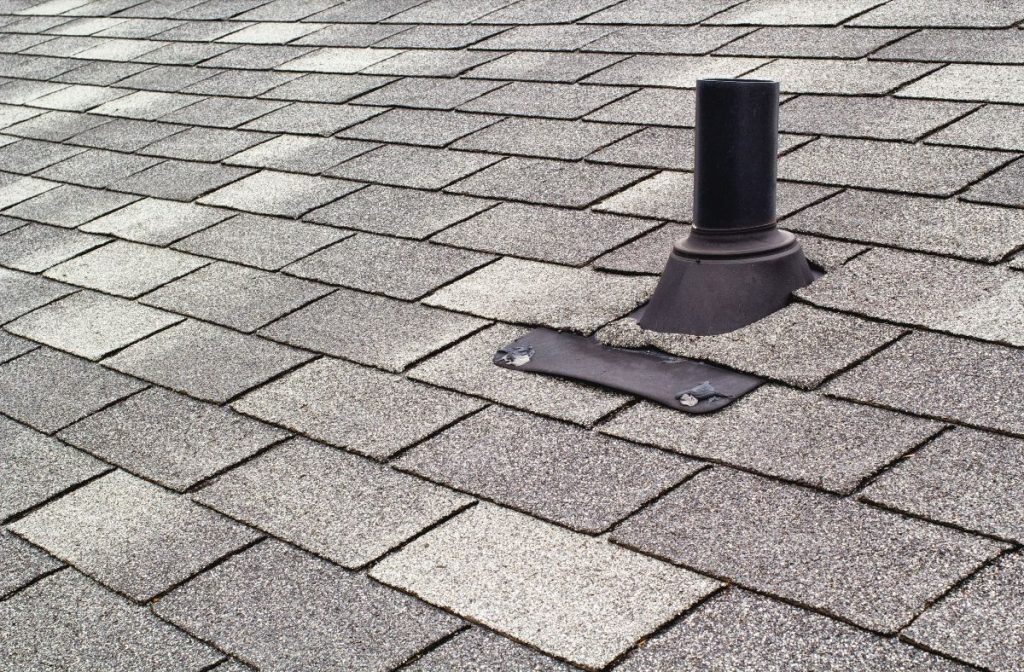
The Minneapolis roofing code requires that flashing be installed at every roof penetration and intersection to prevent water intrusion at the most vulnerable points of the roof system. Flashing is required at chimneys, plumbing vents, skylights, valleys, sidewalls, and any other location where the roof surface meets another structure or penetration. Material must be corrosion-resistant, with galvanized steel, aluminum, copper, or lead being the most common options approved under the code. Reusing old flashing is permitted only when it is in good condition and meets current standards, though Owl Roofing typically replaces all flashing during a full reroofing job to support manufacturer warranty registration. Improperly installed flashing is one of the most common reasons roofs leak prematurely.
- Required locations: Chimneys, vents, skylights, valleys, and wall intersections.
- Approved materials: Galvanized steel, aluminum, copper, or lead.
- Replacement preferred: Most professional installs replace all flashing during reroofing.
- Leak prevention: Flashing protects the highest-risk points on the roof.
7. Fire and Wind Resistance Ratings
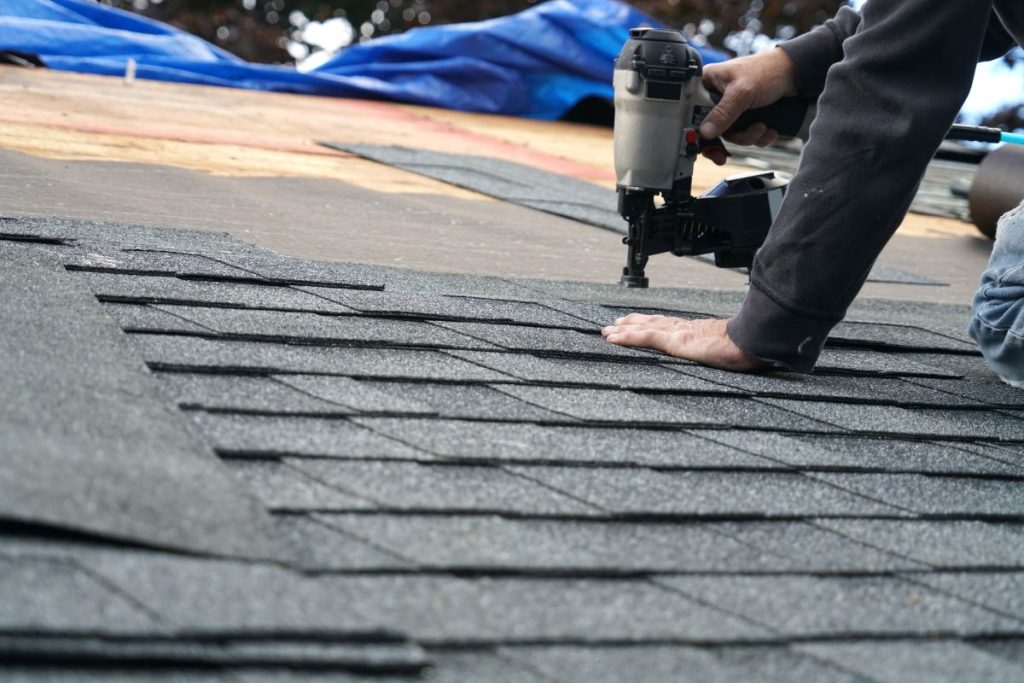
The Minneapolis roofing code requires that all roof coverings meet minimum fire and wind resistance standards under UL 790 and ASTM testing protocols. Asphalt shingles must carry a UL 790 Class A, B, or C fire rating, with Class A being the highest residential rating and the standard for most modern architectural shingles. Wind resistance is governed by ASTM D7158 or ASTM D3161, with most architectural shingles carrying ratings of 110 to 130 mph or higher when installed with the required nail pattern. Code-compliant installations require the manufacturer-specified number of nails per shingle, typically 4 to 6 depending on the product and wind zone. Owl Roofing installs every shingle to manufacturer specification, which protects both code compliance and warranty registration across Minneapolis MN and surrounding areas.
- Fire rating: UL 790 Class A, B, or C required for residential shingles.
- Wind rating: ASTM D7158 or D3161 testing required for code compliance.
- Nail pattern: Manufacturer specification must be followed for code and warranty.
- Class A standard: Most modern architectural shingles meet the highest fire rating.
How Does the Minneapolis Roofing Inspection Process Work?
The Minneapolis roofing inspection process is administered by the Construction Code Services division and involves scheduled visits from city inspectors during and after the roof installation. Inspections verify that the work meets the code requirements outlined in the permit and provide official documentation of compliance for the homeowner.
What Do Minneapolis Inspectors Check?
Minneapolis inspectors check key elements of the roof installation to confirm code compliance, with the specific scope depending on the permitted work. The inspector typically reviews ice barrier coverage at the eaves, underlayment installation across the deck, flashing at all penetrations including chimneys and vents, ventilation systems, and the final shingle installation. Inspectors also verify that any decking replacement was completed properly before new materials went on top. The contractor handles scheduling the inspection and meets the inspector on site to walk through the completed work. The inspector’s name and contact information appear on the permit document, and the contractor reaches out directly to coordinate. Owl Roofing handles inspection scheduling and coordination as a standard part of every permitted roofing job across Minneapolis MN and surrounding areas.
- Ice barrier verification: Confirms proper coverage at eaves.
- Underlayment check: Verifies approved material and installation pattern.
- Flashing inspection: Reviews flashing at chimneys, vents, and valleys.
- Final shingle review: Confirms manufacturer specifications were followed.
What Happens If a Roof Fails Inspection?
If a Minneapolis roof inspection identifies code violations, the contractor must correct the issues before the permit can be closed and the work approved. Common reasons for failed inspections include missing or improperly installed ice barrier, inadequate ventilation, improper flashing installation, or use of non-approved materials. After corrections are completed, the contractor schedules a reinspection with the city to verify compliance. Failed inspections can delay the timeline, but they also protect the homeowner by ensuring the finished roof meets the standards required for performance and insurance coverage. Owl Roofing’s installation standards aim to pass inspections on the first visit, which keeps schedules on track for homeowners across Minneapolis MN and surrounding areas.
- Correction required: Code violations must be fixed before permit closure.
- Reinspection process: Second visit verifies that corrections are complete.
- Common failures: Ice barrier, ventilation, and flashing issues lead the list.
- First-pass goal: Quality installations pass inspection without rework.
Frequently Asked Questions
Do I Need a Permit to Replace My Roof in Minneapolis?
Yes, the Minnesota State Building Code requires a permit to reroof an existing dwelling, and the City of Minneapolis enforces this requirement through its Construction Code Services division. Permits may be obtained by either the homeowner or a contractor licensed by the Minnesota Department of Labor and Industry. Verify current fees and timelines with the city before starting any work.
Can I Install My Own Roof in Minneapolis?
Yes, Minnesota allows homeowners to perform roofing work on their own primary residence, but the work must still comply with all Minneapolis roofing code requirements and pass city inspections. Homeowners pulling their own permits accept full responsibility for code compliance and inspection scheduling. Most homeowners choose to work with a licensed contractor for liability, warranty, and quality reasons.
Are Ice Barriers Required Under Minneapolis Roofing Code?
Yes, the International Residential Code as adopted by Minnesota requires ice barriers at all eaves on roofs in regions where the January average daily temperature is 25 degrees Fahrenheit or less, which includes all of Minneapolis. The ice barrier must extend from the lowest edge of the roof to a point at least 24 inches inside the exterior wall line. Self-adhering polymer-modified bitumen sheet is the standard approved material.
How Long Does a Minneapolis Roofing Permit Last?
Minneapolis construction permits are generally valid for a defined construction period, typically 180 days from issuance with extensions available under certain conditions. Permits must be active when work begins and remain valid through final inspection. Homeowners should confirm current timelines with Construction Code Services at 612-673-3000 before starting any work.
Does the Minneapolis Roofing Code Require Specific Materials?
The Minneapolis roofing code does not require specific brands but does require that all roofing materials meet the standards of the International Residential Code, including UL 790 fire ratings and ASTM standards for underlayment and ice barrier products. Approved materials include asphalt shingles, metal roofing, and other roof coverings that meet the applicable performance standards. Owl Roofing uses only code-approved materials from major manufacturers like GAF and Owens Corning.
Who Enforces the Minneapolis Roofing Code?
The City of Minneapolis Construction Code Services division enforces the roofing code through plan review, permit issuance, and on-site inspections during installation. Construction Code Services is located in the Public Service Building at 505 Fourth Ave. S., Room 320, and can be reached at 612-673-3000. The Minnesota Department of Labor and Industry oversees statewide code adoption and contractor licensing.
Why Owl Roofing Is the Right Choice for Minneapolis Roofing Code Compliance
Navigating the Minneapolis roofing code is straightforward when you work with a contractor who handles permits, inspections, and code compliance as a standard part of every job. Owl Roofing combines GAF certified installation expertise with insurance claims specialization, emergency repair availability, fast turnaround, free inspections, financing options, and a maintenance program designed to protect the roof investment across Minneapolis MN and surrounding areas. Every Owl Roofing installation includes permit pulls, inspection coordination, and full documentation so homeowners never have to chase city paperwork on their own.
Ready to get a roof that meets every Minneapolis code requirement? Reach out to Owl Roofing today to schedule a free inspection.

Recent Articles
Explore The Blog