




Roof Leak Repair: What to Do, What It Costs, and How to Fix It the Right Way
 8min Read
 Posted 12.19.2025
A roof leak is one of the most stressful issues a homeowner can face.
Whether it’s a slow drip or a sudden stain on the ceiling, water entering your home creates urgency — and understandably so.
Most Roof Leak Repairs Could Be Avoided
From a roofer’s perspective, roof leaks demand attention not because they always mean you need a new roof, but because once water gets inside, damage can spread quickly to insulation, decking, drywall, and interior finishes. The sooner the leak is controlled, the better the outcome and the cheaper the repair.
Ideally, roof leaks are prevented through regular roof inspections that identify small issues before they turn into bigger problems. However, leaks don’t always give warning. When they do happen, Owl Roofing is always happy to help homeowners navigate roof leak repair with clarity, honesty, and care.

Why Roof Inspections Matter (And What Happens When They’re Skipped)
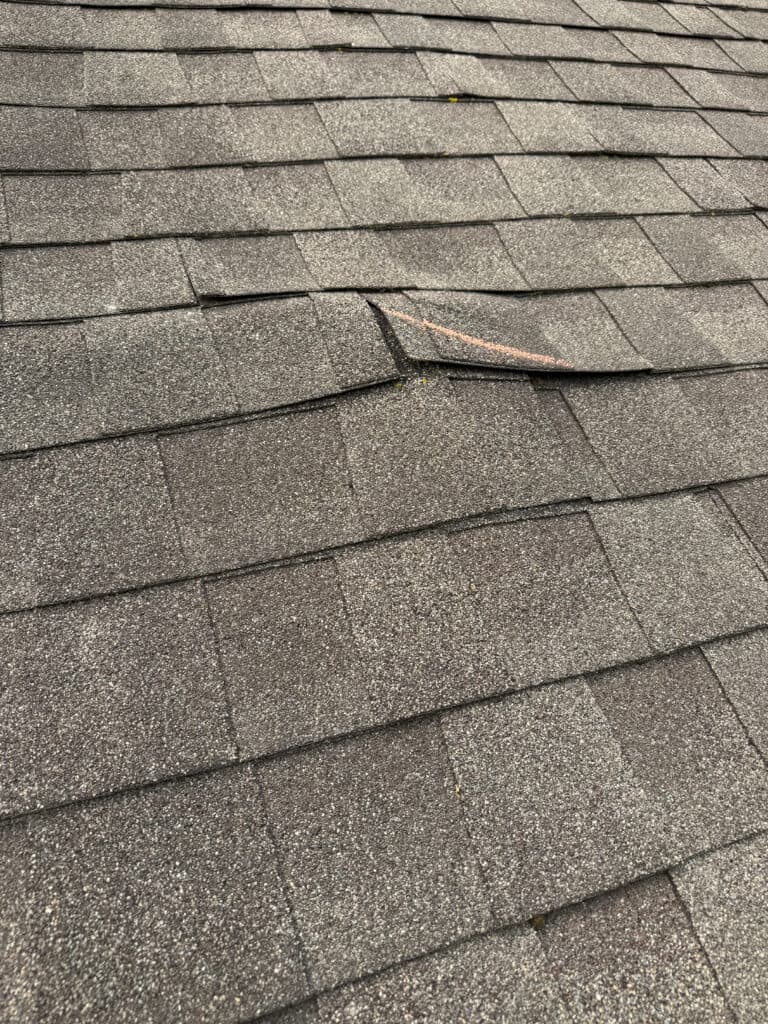
The purpose of a roof inspection is simple: identify potential problem areas before they allow water into your home. Small issues like loose flashing, a torn boot, damaged shingles, or seal failures are often easy to address early.
That said, not every roof gets inspected regularly — and sometimes damage occurs suddenly due to storms or falling debris. When a roof leak happens, there’s no judgment. The focus shifts from prevention to protection and proper roof leak repair.
What to Do When a Roof Leak Happens
When a leak occurs, the priority is stopping active water intrusion as quickly and safely as possible. This prevents further damage and gives homeowners peace of mind while next steps are determined.
Emergency Tarping Is the First Priority for Roof Leak Repairs
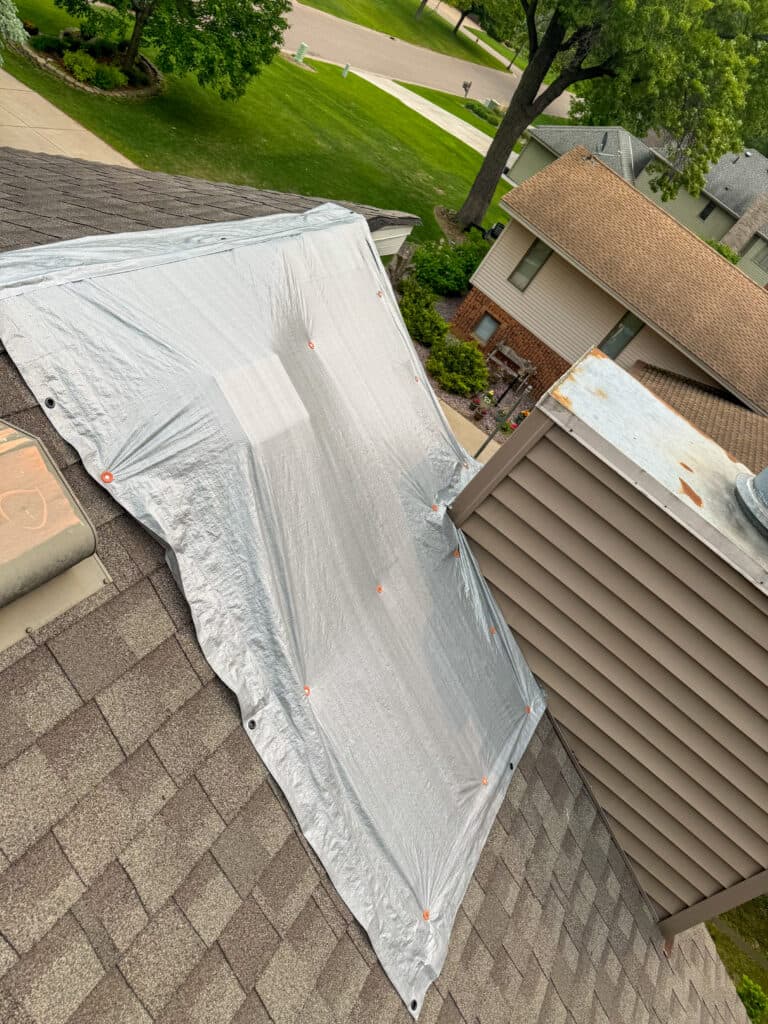
In many roof leak repair situations, emergency tarping is the first and most important step. Tarping provides temporary protection that stops water from entering the home and creates breathing room to assess the roof properly.
Emergency Tarping: How Professionals Stop the Leak
Emergency tarping isn’t about throwing a tarp over a problem area and hoping for the best. When done correctly, it’s a methodical process designed to control water flow and protect the structure of the home.
Step 1: Identifying the Source of the Leak
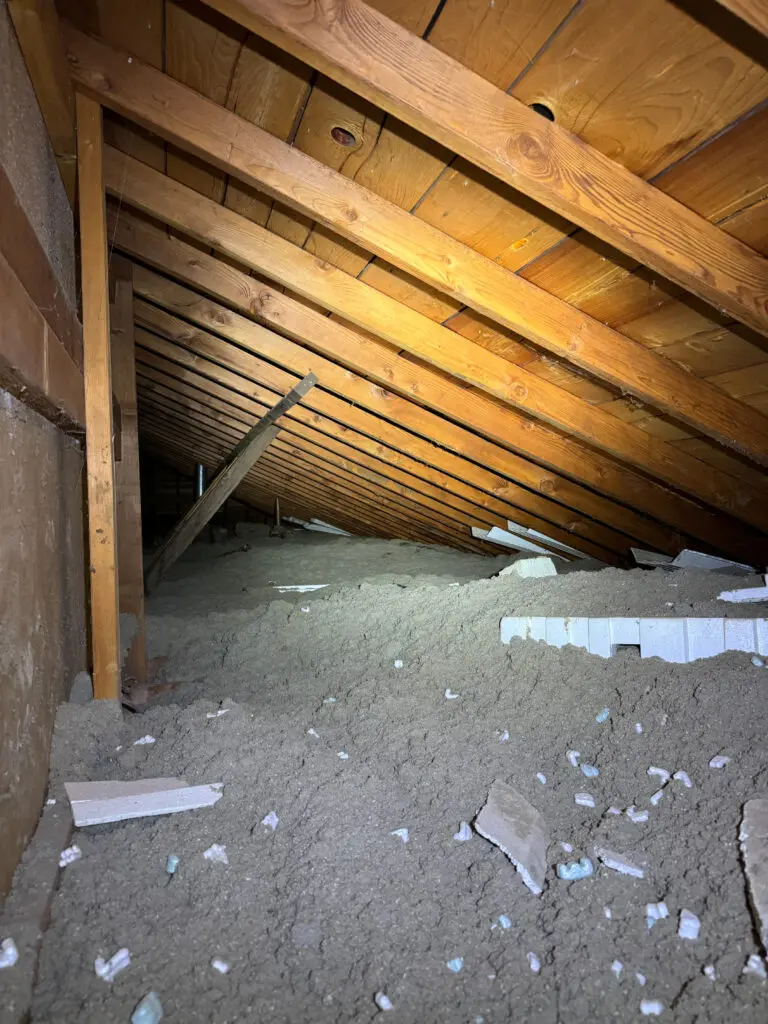
The first step in emergency tarping is identifying where the leak is actually coming from. In many cases, this starts inside the home — often in the attic or near the area where water is visible. Water can travel along rafters and decking before showing up inside, so starting from the interior helps pinpoint the most likely problem area on the roof.
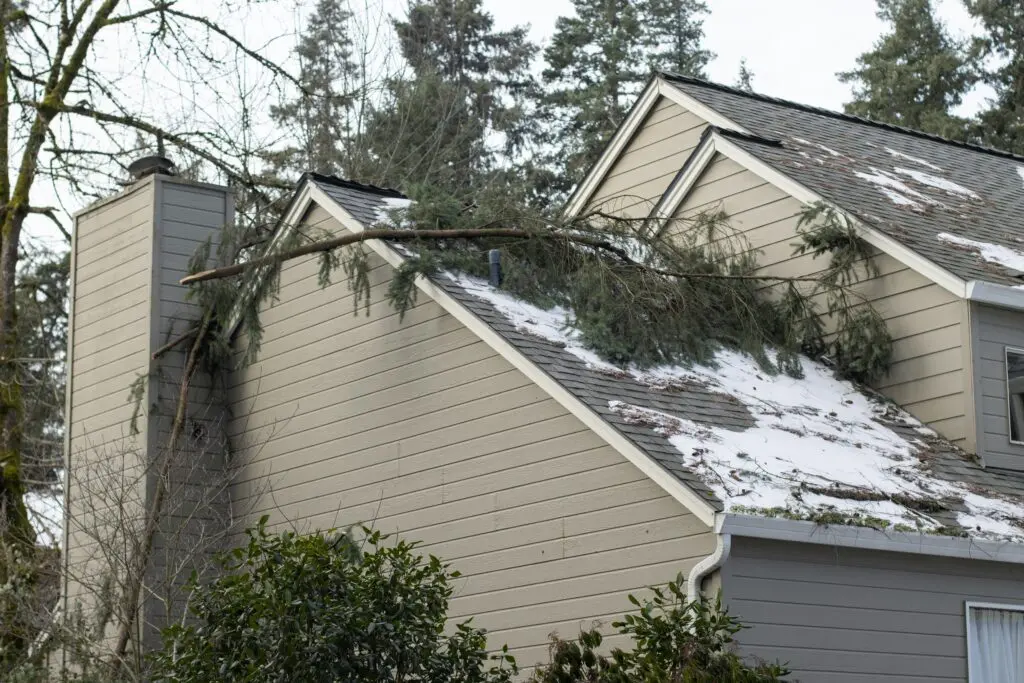
In some cases, the source is obvious, such as when a tree or large branch has fallen onto the roof or when storm damage is clearly visible. In these situations, protection can begin immediately while confirming the full extent of the damage.
Step 2: Addressing the Immediate Cause
Once the damaged area is identified, any object that created an opening in the roof — such as a fallen tree branch — is carefully removed. At this stage, thorough photos are taken of the damage and surrounding areas.
This documentation is important for records and can also be helpful if a homeowner chooses to explore an insurance claim. Insurance companies typically require proof of what caused the damage, and documenting everything early helps avoid confusion later.
Step 3: Properly Securing the Tarp
Proper emergency tarping requires the tarp to extend beyond the immediate damaged area and be secured under the existing shingle line above the leak. This ensures water sheds correctly and doesn’t work its way underneath the tarp, which would defeat the purpose of the temporary protection.
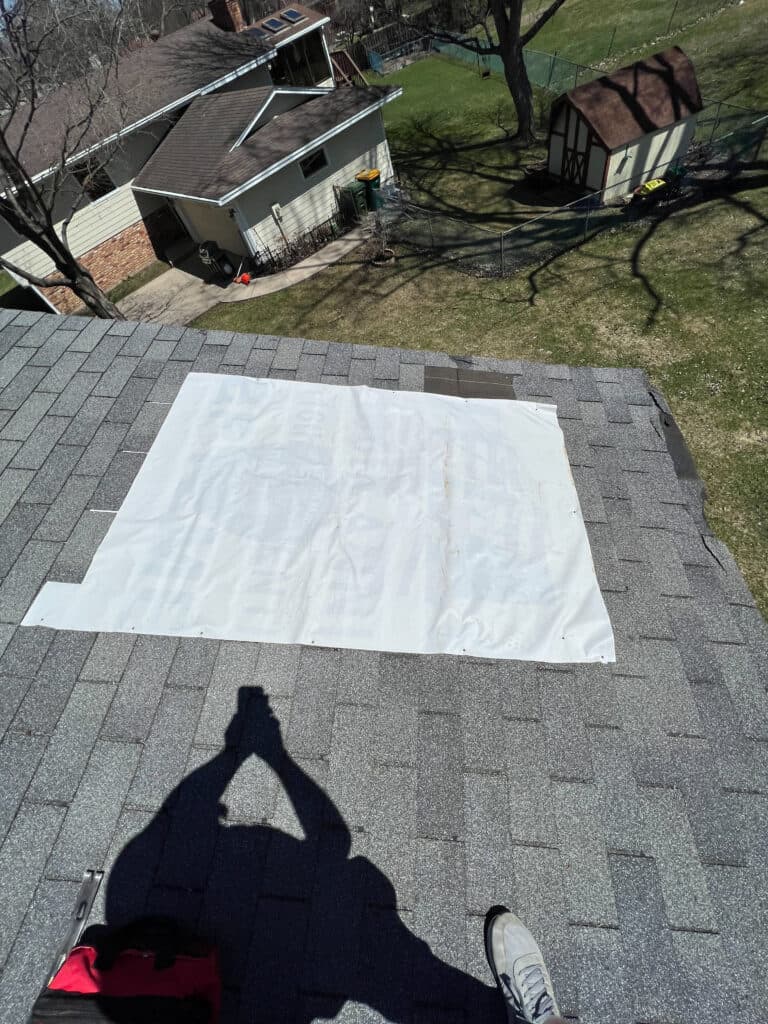
When done properly, tarping provides reliable short-term protection while permanent roof leak repair options are evaluated.
Step 4: Confirming the Leak Has Stopped
Once the tarp is secured, the final step is confirming that active water intrusion has stopped. This protects the home from further damage and allows the situation to stabilize.
What Happens After Emergency Tarping
With the leak under control, decisions no longer need to be rushed. Homeowners can take the time to understand the condition of their roof and determine the best long-term solution for their roof leak repair.
This step is critical. Rushed decisions made during an active leak often lead to unnecessary repairs or replacements. Stopping the leak first allows for thoughtful, informed recommendations.
How Roof Leak Repair Is Determined
Determining the right roof leak repair starts with evaluating how much of the roof is affected.
In some cases, the issue is isolated — such as a small number of damaged shingles or a localized flashing problem — and a targeted repair is the most responsible solution. In other situations, damage may be more widespread, making it more practical to repair an entire slope to ensure long-term performance and consistency.
There are also cases where storm-related damage meets the criteria outlined in a homeowner’s insurance policy. When this happens, documentation helps homeowners understand whether filing a claim is an option based on their specific coverage. The insurance company ultimately determines coverage, and responsible roof leak repair decisions are made based on the condition of the roof — not assumptions.
How Much Does It Cost to Repair a Roof Leak?
The cost of roof leak repair can vary widely depending on several factors. There is no one-size-fits-all price, because every roof and every leak is different.
Factors that influence roof leak repair cost include:
- The size of the affected area
- The type of roofing material
- Roof accessibility and pitch
- The extent of underlying damage
- Whether emergency tarping was required
In many cases, roof leak repairs are significantly less expensive than a full roof replacement — especially when the issue is addressed quickly. Stopping the leak early often prevents more costly interior or structural damage.
The most important step is getting clear answers before committing to any solution.
Owl Roofing’s Approach to Roof Leak Repair
At Owl Roofing, we help homeowners navigate roof leak repair with clarity and care. From identifying the affected area to documenting damage and explaining repair paths, we handle the legwork so homeowners can make informed decisions.
Our approach is simple:
- Protect the home first
- Communicate clearly
- Recommend only what makes sense for the situation
Whether that means a small repair or a more comprehensive solution, our goal is always the same — protect your home and give you peace of mind.
Roof Leak Repair Reminders
A roof leak is stressful, but it doesn’t have to be confusing or overwhelming. While regular inspections are the best way to prevent leaks, help is always available when they happen.
With the right process and honest guidance, roof leak repair can be handled calmly and responsibly — protecting your home now and into the future.
If you’re dealing with a roof leak and need clear answers, Owl Roofing is happy to help.
📍 Owl Roofing Serves the Entire Twin Cities Metro
Andover · Anoka · Apple Valley · Arden Hills · Big Lake · Blaine · Bloomington · Brooklyn Center · Brooklyn Park · Burnsville · Champlin · Chanhassen · Chaska · Columbia Heights · Coon Rapids · Cottage Grove · Crystal · deephaven · Delano · Eagan · East Bethel · Eden Prairie · Excelsior · Farmington · Forest Lake · Fridley · Golden Valley · Ham Lake · Hastings · Hopkins · Hugo · Inver Grove Heights · Lake Elmo · Lakeville · Lino Lakes · Mahtomedi · Maplewood · Mendota Heights · Minneapolis · Minnetrista · Mound · Mounds View · New Brighton · New Hope · North Oaks · North St. Paul · Oak Grove · Oakdale · Plymouth · Prior Lake · Ramsey · Richfield · Robbinsdale · Rosemount · Roseville · Saint Paul · Savage · Shakopee · Shoreview · South St. Paul · St. Louis Park · St. Michael · St. Paul · Stillwater · Vadnais Heights · Victoria · Waconia · wayzata · West St. Paul · White Bear Lake · woodbury
Licensed Minnesota roofing contractor · Free inspections · 10-year workmanship warranty · Get a free estimate →

Recent Articles
Explore The Blog