




Roofing in the Rain Risks and What Contractors Do
 12min Read
 Posted 10.30.2025
Roofing in the Rain: Risks and What Contractors Do
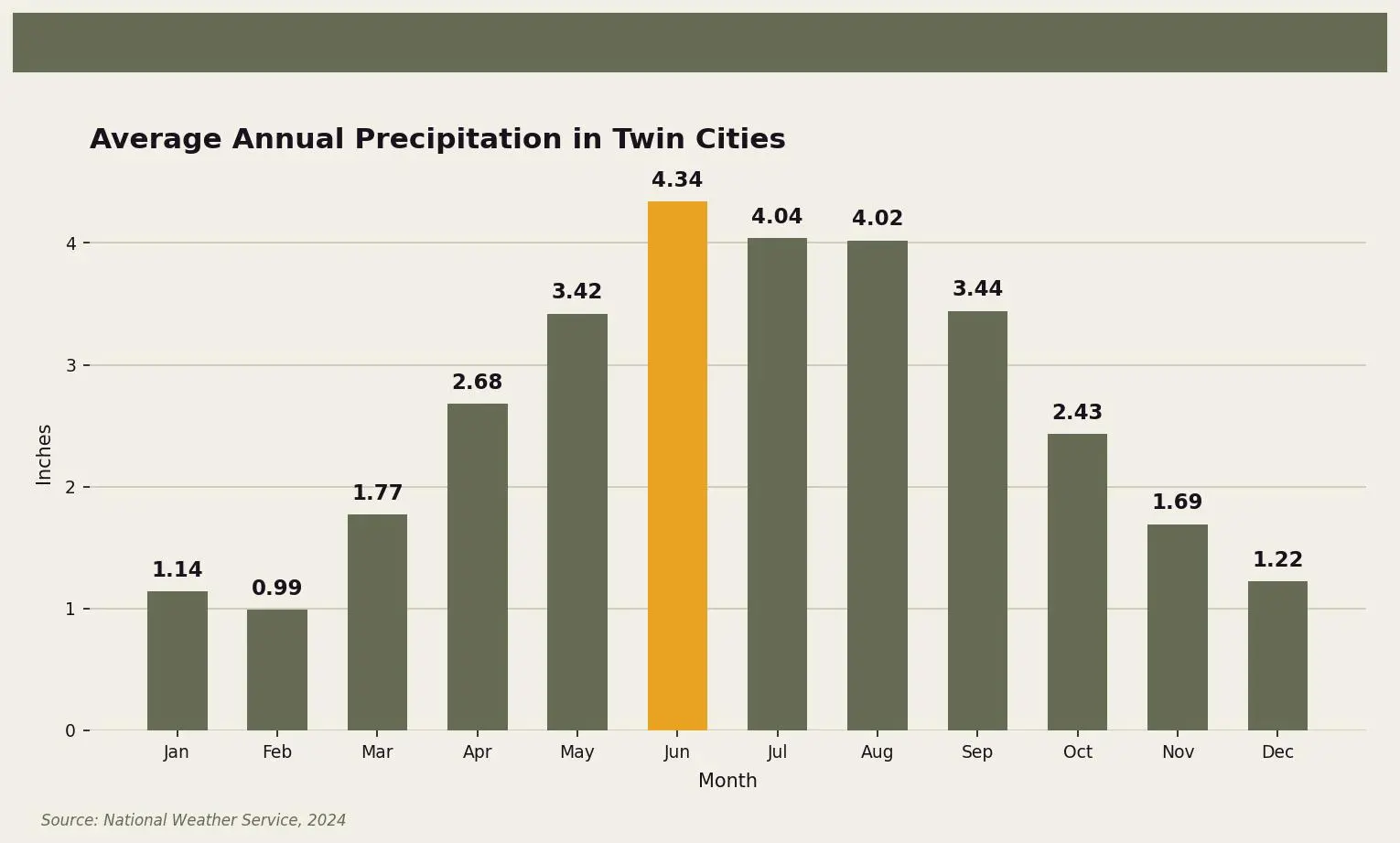
You finally pulled the trigger on a new roof—and now there’s rain in the forecast for the next four days. Welcome to Minnesota, where 32 inches of annual precipitation means your roofing project will almost certainly have a weather story. Here’s the good news: roofing in rain doesn’t have to turn into a nightmare. With the right contractor and the right approach, your home stays protected even when the skies don’t cooperate.
The problem? Wet conditions during installation can lead to trapped moisture, voided warranties, and repairs that cost you twice. The promise? We’re going to walk you through exactly what can go wrong, what smart contractors do about it, and how you can protect your investment—even in a Minnesota spring. Let’s get into it.
Why Rain and Roofing Don’t Mix (and Why It Still Happens)
Let’s be honest: nobody schedules their roof replacement hoping for rain. But in the Twin Cities, you’re rolling the dice with weather no matter when you book. The National Roofing Contractors Association (NRCA) is clear on this—roofing in rain can compromise materials if the job isn’t managed correctly. And “managed correctly” takes real experience, not just good intentions.
Here’s what’s at stake when rain shows up mid-project:
- Extended timelines. Rain delays add days (sometimes weeks) to your project. That means more time with your home partially exposed, more scheduling headaches, and more stress.
- Higher costs. Delays often mean additional labor charges, emergency tarping, or even material replacement if something gets waterlogged.
- Potential damage. Water that gets under your shingles or into your decking doesn’t just dry up and disappear. It can lead to mold, rot, and insulation damage that you won’t notice until it becomes a much bigger problem.
This isn’t meant to scare you—it’s meant to prepare you. Knowing what can go wrong helps you ask the right questions and choose a contractor who actually has a wet-weather plan (more on that in a minute).
The Real Risks of Wet Weather Roofing
What Happens When Water Gets Where It Shouldn’t
Roofing in wet weather isn’t just inconvenient—it introduces risks that can affect your roof for years. Here’s what experienced contractors worry about when the forecast turns gray:
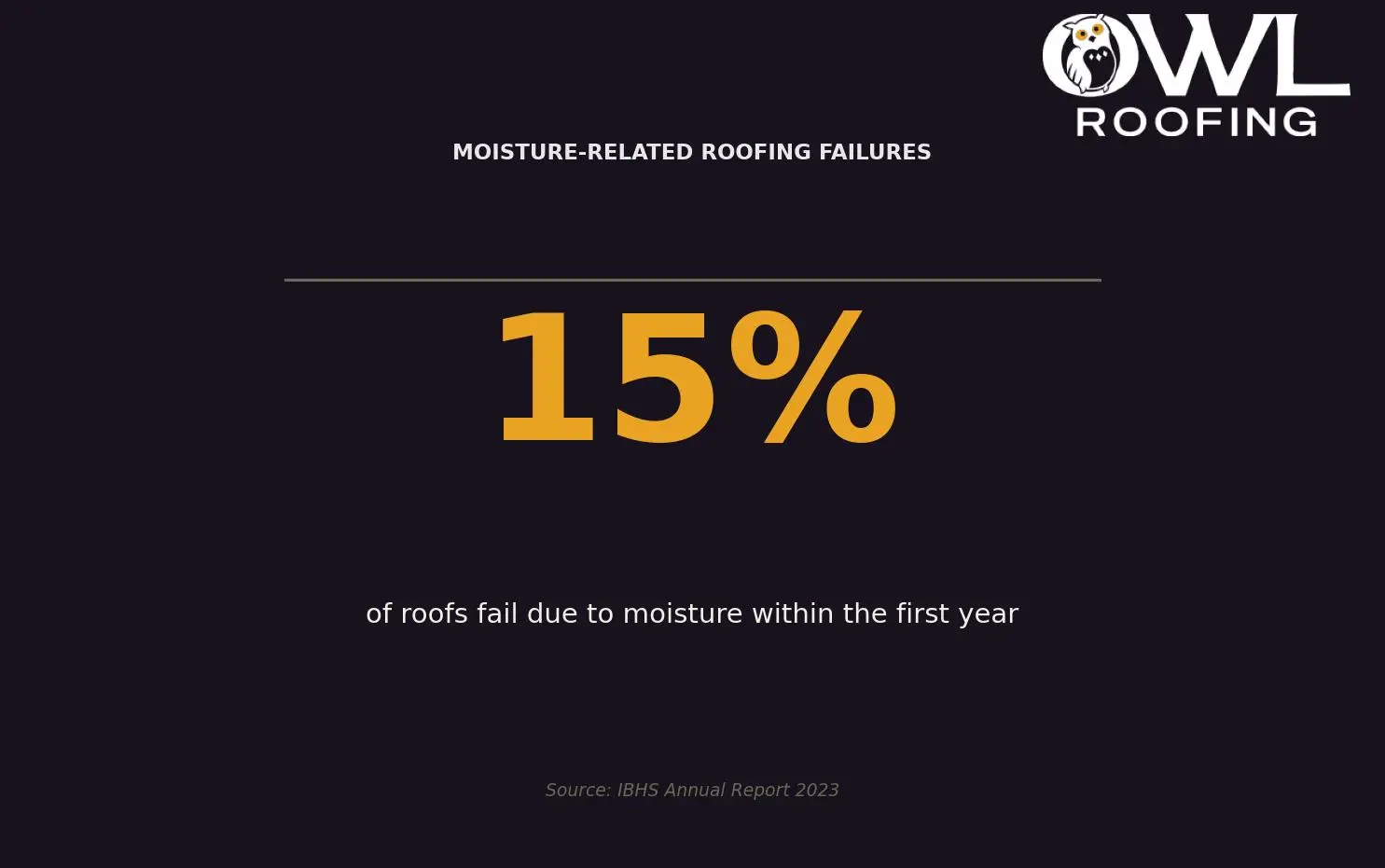
Moisture trapped in the roof system. When water seeps into exposed roof layers—decking, underlayment, or insulation—it doesn’t always have a way out once the new shingles go on top. That trapped moisture becomes a breeding ground for mold and accelerates wood rot. According to the Insurance Institute for Business & Home Safety (IBHS), moisture accounts for about 15% of roofing failures in the first year after installation. That’s not a small number.
Adhesive and sealant failure. Many roofing components rely on adhesives and sealants that need dry conditions to bond properly. Shingles installed on wet surfaces may not seal correctly, leaving your roof vulnerable to wind uplift and leaks. Some manufacturers will actually void your warranty if materials are installed in the rain.
Safety hazards for workers. Wet roof surfaces are slippery roof surfaces. This isn’t just a problem for the crew—it can affect the quality of work. When roofers are focused on not falling, they’re not focused on perfect installation. Rushed work in dangerous conditions leads to mistakes that show up later as leaks, lifted shingles, or gaps in flashing.
Compromised decking inspection. Before new shingles go down, contractors need to inspect (and often replace) damaged decking. When that decking is wet, it’s harder to assess its true condition. A board that looks fine when soaked might reveal rot once it dries—but by then, it’s already under your new roof.
The bottom line: a little rain might seem harmless, but water in the wrong place at the wrong time can turn a good roof into a problem roof.
Can Roofers Actually Work in the Rain?
The Short Answer: Sometimes, But Carefully
Here’s the truth that good contractors will tell you: light drizzle is manageable. Heavy rain means everyone goes home. The line between “we can work through this” and “we need to stop” separates experienced pros from the crews that cut corners.
What smart contractors do when rain threatens:
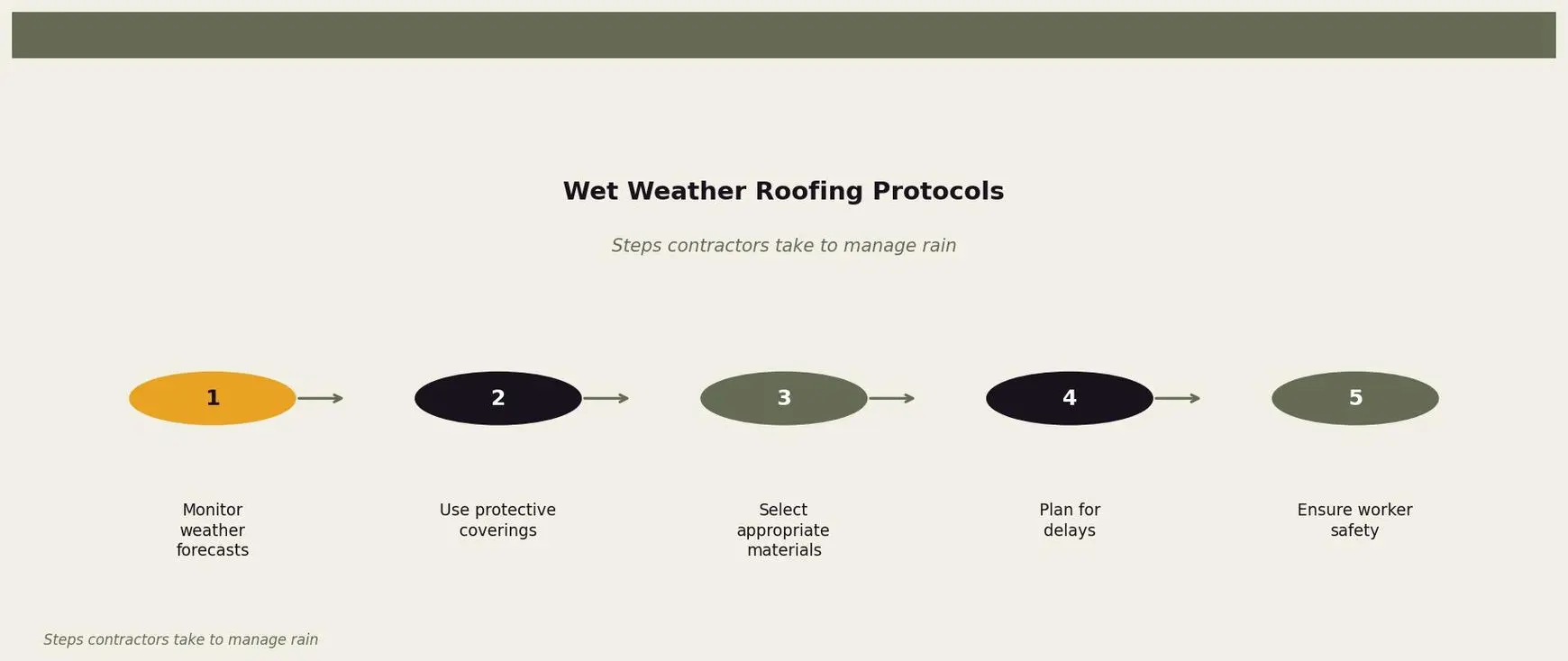
- Watch the forecast like hawks. The NRCA emphasizes that professional roofers assess weather forecasts meticulously and plan accordingly. This means checking multiple sources, understanding local weather patterns, and building buffer days into the schedule. A good contractor isn’t surprised by rain—they’ve already planned for it.
- Tarp everything exposed. Temporary protective coverings are non-negotiable. If your contractor tears off your old roof and doesn’t have tarps ready to deploy at a moment’s notice, that’s a red flag. Quality crews can cover an exposed roof in minutes when the first drops hit.
- Choose the right materials for the conditions. Not all roofing materials handle moisture equally. Asphalt shingles are more forgiving in damp conditions than wood shakes, which can absorb water and swell. Metal roofing components need to be completely dry for proper fastening. Experienced roofers know which materials can tolerate what—and when to just wait.
- Stop when safety demands it. Heavy rain halts progress. Period. This isn’t about being overly cautious—it’s about preserving material integrity and keeping workers safe. A contractor who pushes through dangerous conditions to meet a deadline is a contractor who’s going to deliver subpar work.
The goal isn’t to avoid all moisture contact—that’s impossible in Minnesota. The goal is to manage it intelligently so your roof performs as designed for the next 25+ years.
Minnesota’s Weather Makes This Even Trickier
Why Twin Cities Roofing Demands Local Know-How
If you live in the Twin Cities, you already know our weather keeps you on your toes. But when it comes to roofing, there’s a specific challenge that out-of-state contractors often underestimate: the freeze-thaw cycle.
According to the U.S. Census Bureau data on regional climate patterns, Minnesota experiences approximately 50 freeze-thaw cycles annually. That’s 50 times per year when temperatures bounce above and below freezing, causing any trapped water to expand and contract.
Here’s why that matters for your roof:
- Water expands when it freezes. If moisture gets trapped during installation and then freezes, it expands by about 9%. That expansion can crack sealants, pop fasteners, and create gaps in your roof system.
- Repeated cycling causes cumulative damage. One freeze might not cause visible problems. Fifty freezes? That’s a different story. Small installation mistakes get amplified with every cycle.
- Ice dams become more likely. Moisture problems in your roof system can contribute to poor ventilation and insulation issues, which leads to ice dams—and ice dams lead to leaks. It’s a frustrating chain reaction that starts with water getting where it shouldn’t during installation.
This is why hiring a contractor who actually lives and works in Minnesota matters. Someone who installed roofs in Texas for fifteen years might have impressive experience, but they haven’t dealt with what our winters do to marginal installation work. Local contractors have seen the consequences of wet-weather mistakes—and they know how to prevent them.
What You Should Do: A Practical Game Plan
For Homeowners Facing the Rain-and-Roofing Question
You can’t control the weather. But you can control how you prepare for it and who you trust to handle it. Here’s your action plan:
1. Ask about wet weather protocols before you sign anything.
This is a great way to separate serious contractors from the “we’ll figure it out” crowd. Ask specifically: What’s your plan if it rains mid-project? How quickly can you tarp the roof? Do you carry enough tarps for full coverage? What conditions cause you to stop work entirely? A good contractor will have immediate, specific answers. Vague responses like “we deal with it” should make you nervous.
2. Schedule during drier months when possible.
In the Twin Cities, late summer through early fall tends to be your best window—lower precipitation than spring and early summer, and you’re ahead of the winter rush. That said, “when possible” is doing a lot of work in that sentence. Sometimes your roof can’t wait for ideal conditions. If you need a roof now, you need a roof now. Just make sure your contractor has a solid wet-weather plan.
3. Build flexibility into your timeline.
If your contractor says a project will take three days, mentally prepare for five. Weather delays aren’t anyone’s fault, but they are predictable in Minnesota. The contractors who build buffer time into their estimates are the honest ones. The ones who promise impossible timelines are either lying to get your business or planning to cut corners when things get tight.
4. Communicate openly with your contractor.
Good contractors keep you informed. If rain is coming, they should let you know what they’re doing about it—before you have to ask. If you’re not hearing from your contractor during weather delays, pick up the phone. You deserve to know what’s happening with your home.
5. Don’t let storm chasers pressure you.
After big storms, out-of-town crews flood Minnesota promising fast work and insurance help. Many of these contractors will rush through projects in questionable conditions because they’re trying to hit as many houses as possible before moving to the next city. Speed is their priority, not quality. A local contractor who’s going to be here next year, and the year after, has every reason to do the job right.
The Bottom Line on Roofing in Rain
Rain during a roofing project isn’t the end of the world—but it does require careful management. The risks are real: trapped moisture, adhesive failure, compromised materials, and long-term performance issues. The solutions are also real: experienced contractors with solid wet-weather protocols, appropriate material selection, and the willingness to stop work when conditions demand it.
In the Twin Cities, where 32 inches of annual rain and 50 freeze-thaw cycles test every roof, local knowledge matters more than a slick sales pitch. The contractor who understands Minnesota’s unique challenges—and builds their process around them—is the one who’ll deliver a roof that actually lasts.
Need a Roof? Let’s Talk.
At Owl Roofing, we’ve worked through enough Minnesota springs to know exactly how to handle whatever the weather throws at us. We’re based right here in Shoreview, owned by two local families (the Browns and the Berglands), and we’ve been doing this across the Twin Cities for over 15 years combined. We’re not a franchise, and we’re definitely not storm chasers passing through—we’re your neighbors.
When it comes to roofing in rain (or any other weather), we’ll tell you straight what we can do, what we won’t do, and why. No pressure, no games. Just honest answers about your roof.
Give us a call at 651-977-6027 or visit owlroofing.com/ to set up a free inspection. We’ll take a look, tell you exactly what your roof needs, and give you a clear plan—rain or shine.
Protect Your Nest.
📍 Owl Roofing Serves the Entire Twin Cities Metro
Andover · Anoka · Apple Valley · Arden Hills · Big Lake · Blaine · Bloomington · Brooklyn Center · Brooklyn Park · Burnsville · Champlin · Chanhassen · Chaska · Columbia Heights · Coon Rapids · Cottage Grove · Crystal · deephaven · Delano · Eagan · East Bethel · Eden Prairie · Excelsior · Farmington · Forest Lake · Fridley · Golden Valley · Ham Lake · Hastings · Hopkins · Hugo · Inver Grove Heights · Lake Elmo · Lakeville · Lino Lakes · Mahtomedi · Maplewood · Mendota Heights · Minneapolis · Minnetrista · Mound · Mounds View · New Brighton · New Hope · North Oaks · North St. Paul · Oak Grove · Oakdale · Plymouth · Prior Lake · Ramsey · Richfield · Robbinsdale · Rosemount · Roseville · Saint Paul · Savage · Shakopee · Shoreview · South St. Paul · St. Louis Park · St. Michael · St. Paul · Stillwater · Vadnais Heights · Victoria · Waconia · wayzata · West St. Paul · White Bear Lake · woodbury
Licensed Minnesota roofing contractor · Free inspections · 10-year workmanship warranty · Get a free estimate →
