




Do Ridge Vents Really Work Pros and Cons
 15min Read
 Posted 12.08.2025
🦉 Attic Ventilation Calculator
Find the vent area (NFA) your attic needs under Minnesota code.
Based on the standard 1/300 rule (Minnesota code, R806): 1 sq ft of net free vent area per 300 sq ft of attic floor, split roughly 50/50 between soffit intake and ridge exhaust. Assumes ~56 sq in NFA per 8×16 soffit vent and ~18 sq in per linear foot of ridge vent — check your product’s rating. Poor ventilation is a top cause of Minnesota ice dams.
Get a Free Ventilation Assessment →Do Ridge Vents Really Work? Pros and Cons
Here’s a number that might wake you up faster than your morning coffee: roughly 9 out of 10 homes in America don’t have adequate attic ventilation. And if you’re in the Twin Cities, where we swing from -20°F winters to 90°F summers, that’s not just a statistic — it’s a ticking time bomb sitting right above your head.
Maybe you’ve already seen the warning signs. Icicles the size of baseball bats hanging from your gutters. That weird musty smell when you poke your head into the attic. Energy bills that make you wince every single month. Or maybe you’re staring at a roofing estimate that mentions “ridge vents” and you’re wondering if they’re actually worth it — or just another upsell.
Let’s cut through the noise and talk about what ridge vents actually do, whether they work in Minnesota’s brutal climate, and if they’re the right choice for your home.
The Problem: What Happens When Your Attic Can’t Breathe
Picture your attic right now. In summer, it’s basically a convection oven. Hot air gets trapped up there, baking your shingles from below while the sun hammers them from above. Your AC works overtime trying to cool a house that’s being heated from the top down. Your energy bills climb. Your roof ages faster than it should.
Winter? Different problem, same root cause. Warm air from your living space rises into the attic. Without proper ventilation, that warmth meets the cold underside of your roof deck. Condensation forms. That moisture soaks into your insulation (killing its effectiveness), encourages mold growth, and rots your roof sheathing from the inside out.
And then there’s the Twin Cities special: ice dams. When heat builds up in a poorly ventilated attic, it melts the snow on your roof. That water runs down toward the eaves, hits the cold overhang (which isn’t warmed by the attic), and refreezes. Over time, you get a dam of ice that backs water up under your shingles. Next thing you know, you’ve got water dripping down your walls, ruining insulation, drywall, and your whole week.
According to the National Roofing Contractors Association (NRCA), proper ventilation can significantly extend the life of your roof by preventing exactly this kind of moisture damage. In a climate like ours — where we see temperature swings of 100+ degrees throughout the year — this isn’t optional maintenance. It’s essential protection.
The Solution: A Roof That Regulates Itself
Now imagine the opposite scenario. Your attic maintains a temperature close to the outside air — cool in winter, not scorching in summer. Moisture doesn’t build up because air flows freely through the space. Your insulation stays dry and effective. Ice dams become a non-issue because there’s no heat differential melting snow unevenly on your roof.
Your energy bills drop because your HVAC system isn’t fighting against a superheated (or moisture-logged) attic. Your shingles last longer because they’re not being cooked from below. And that musty smell? Gone.
This is what proper roof ventilation delivers. And for many homes, ridge vents are the most effective way to get there.
How Do Ridge Vents Actually Work?
The Science Behind the Simplicity
Ridge vents are installed at the very peak of your roof, running along the entire ridge line. From the ground, they’re nearly invisible — just a slight raised profile along the top of your roof, covered by specialized shingle caps.
The mechanics are beautifully simple. Hot air rises. That’s just physics. As warm air in your attic moves upward, it naturally exits through the ridge vent at the highest point. This creates negative pressure that pulls cooler, fresh air in through soffit vents (those vented panels under your eaves). The result is continuous, passive airflow — no motors, no electricity, no moving parts to break down.
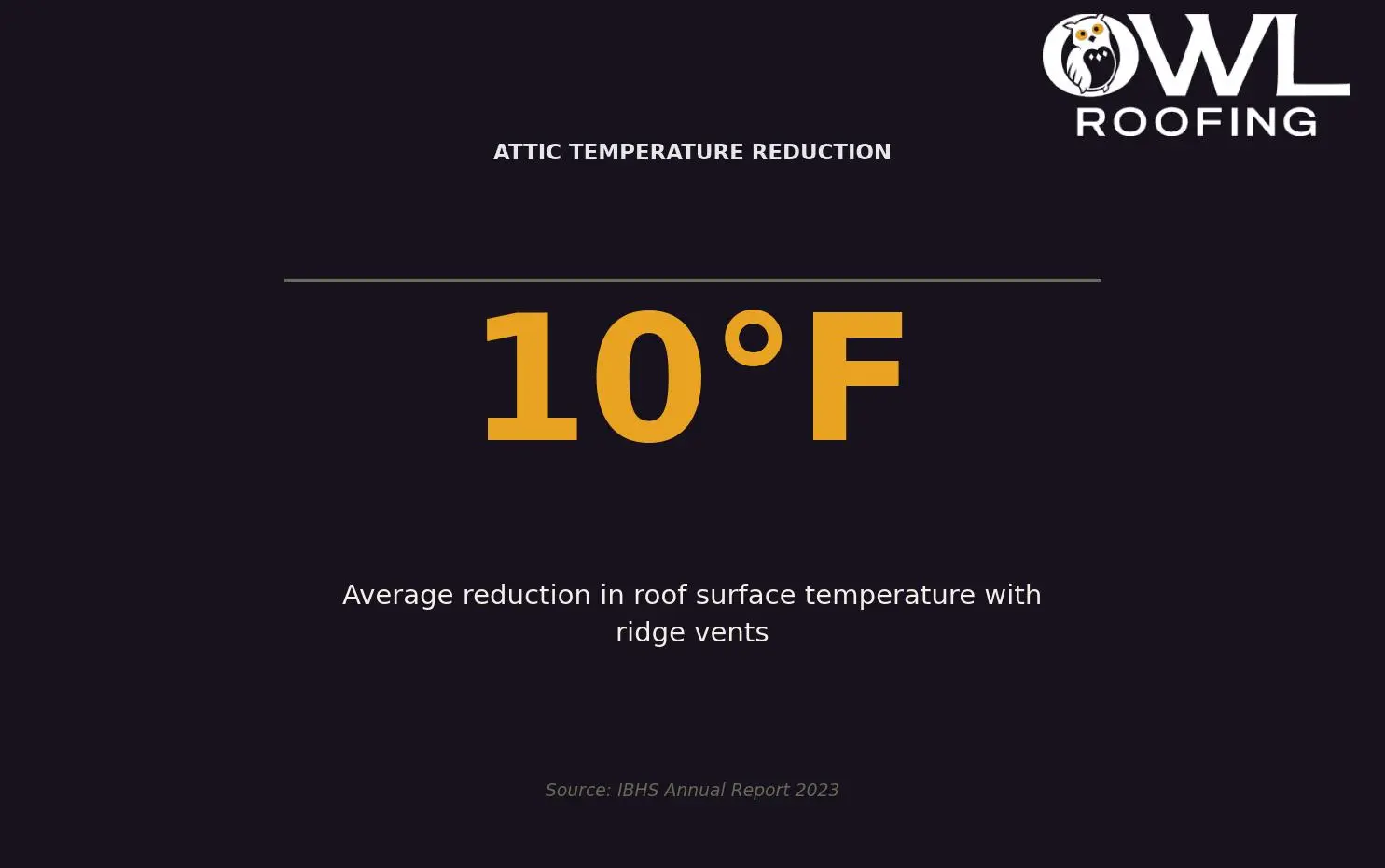
According to the Insurance Institute for Business & Home Safety (IBHS), a well-ventilated attic can lower roof surface temperatures by up to 10 degrees Fahrenheit. That might not sound like much, but over years of summer heat cycles, that temperature difference translates directly into longer shingle life and lower cooling costs.
The key word here is “balanced.” Ridge vents work best when paired with adequate intake ventilation (those soffit vents). Think of it like breathing — you need both an inhale and an exhale. The soffit vents are the inhale; the ridge vent is the exhale. Without both working together, you don’t get the airflow that makes the system effective.
Ridge Vents vs. Other Ventilation Options: A Real Comparison
Breaking Down Your Choices
Ridge vents aren’t the only option out there. Let’s look at how they stack up against the alternatives:
- Box Vents (Static Vents): These are the small, square vents you see dotted across some roofs. They’re cheap and easy to install, but they’re passive and limited in coverage. You need multiple units to ventilate effectively, and they can create “dead spots” where air doesn’t circulate. They also create more roof penetrations, which means more potential leak points.
- Turbine Vents (Whirlybirds): Those spinning metal domes you’ve probably seen. They’re more effective than box vents because they actively pull air out as they spin in the wind. But they’re noisy, they have moving parts that wear out, and they look… well, let’s just say they’re not winning any design awards. They also don’t work when the air is still.
- Power Vents (Electric or Solar): These use fans to actively move air. They’re effective, but they add electrical costs (or solar panel complexity), have motors that eventually fail, and can actually cause problems if they’re too powerful — pulling conditioned air from your living space into the attic, or even creating negative pressure that draws in moisture.
- Ridge Vents: Continuous ventilation along the entire roof peak. No moving parts. Nearly invisible. Works 24/7 regardless of wind direction. Fewer roof penetrations than multiple box vents.
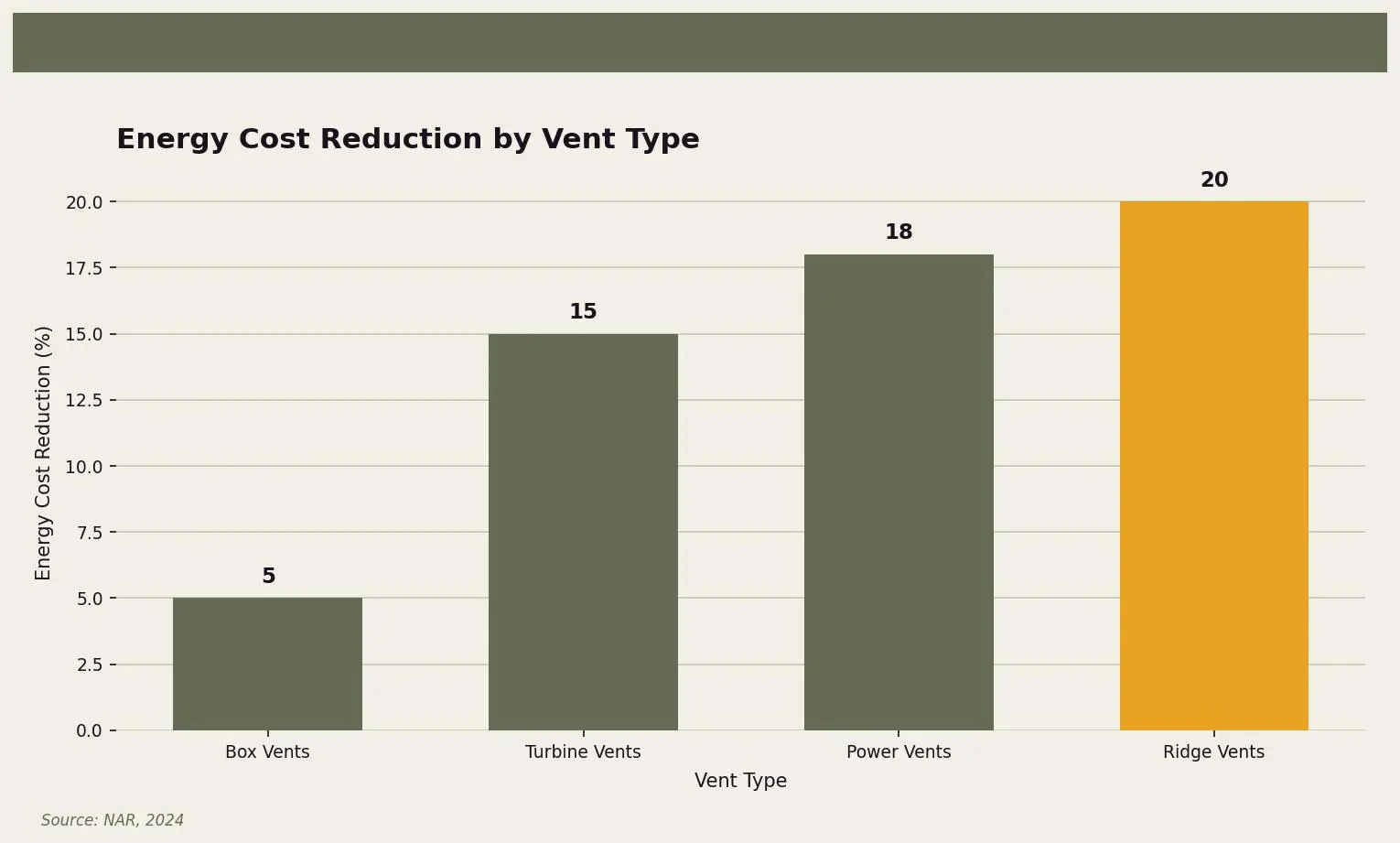
According to a study by the National Association of Realtors (NAR), homes with ridge vents saw a 20% reduction in energy costs compared to those with box vents. That’s a significant difference — and it comes with lower maintenance requirements and better aesthetics.
The Real Pros and Cons of Ridge Vents
The Good Stuff
- Uniform ventilation: Because they run the full length of your ridge, they provide consistent airflow across the entire attic. No hot spots, no dead zones.
- Low profile: Ridge vents sit flush with your roofline. Most people can’t even tell they’re there from the street. Your home’s curb appeal stays intact.
- No moving parts: Nothing to break, wear out, or maintain. Once they’re installed correctly, they just work.
- Energy efficiency: That 20% energy cost reduction compared to box vents isn’t just good for your wallet — it means your home is more comfortable year-round.
- Ice dam prevention: By keeping attic temperatures consistent with outside temps, ridge vents help prevent the uneven melting that causes ice dams. For Minnesota homeowners, this alone can justify the investment.
- Improved air quality: The Minnesota Department of Commerce notes that effective roof ventilation can enhance indoor air quality by reducing the concentration of indoor pollutants. A well-ventilated attic means fewer moisture-related problems like mold and mildew making their way into your living space.
The Honest Drawbacks
- Requires soffit vents: Ridge vents only work if you have adequate intake ventilation. If your soffits are blocked, poorly designed, or non-existent, you’ll need to address that first — or the ridge vent won’t do much good.
- Not ideal for all roof designs: Homes with complex rooflines, multiple ridges at different heights, or hipped roofs may not get full coverage from ridge vents alone. Some supplemental ventilation might be needed.
- Installation quality matters: A poorly installed ridge vent can leak. This isn’t a flaw of ridge vents themselves — it’s a reason to hire someone who knows what they’re doing. Proper flashing, correct shingle overlap, and quality materials make all the difference.
- Upfront cost: Ridge vents typically cost more than box vents to install. However, the energy savings and reduced maintenance usually make up for this over time.
- Weather considerations: In extreme weather (heavy snow, driving rain), some cheaper ridge vent products can allow moisture infiltration. Quality matters here — better ridge vent products have baffles and filters designed to prevent this.
Ridge Vent Performance in Minnesota’s Climate
Let’s talk specifically about how ridge vents perform in the Twin Cities, because our weather puts roofing systems to the test in ways that Florida or Arizona homeowners never have to think about.
Winter performance: The freeze-thaw cycle is relentless here. We might see 40°F one day and -10°F the next. Ridge vents help maintain that crucial temperature balance in your attic, keeping it cold enough that snow doesn’t melt unevenly on your roof. This is your primary defense against ice dams — a problem that costs Minnesota homeowners thousands of dollars in damage every single winter.
Summer performance: When July hits and your roof is absorbing all that solar heat, ridge vents let that hot air escape instead of turning your attic into a 150°F oven. Your air conditioning doesn’t have to work as hard, and your shingles don’t age prematurely from being baked from both sides.
Year-round moisture control: Our humidity swings are brutal too. Spring and fall bring moisture-laden air that can condense in your attic if it can’t escape. Ridge vents keep air moving, preventing the moisture buildup that leads to mold, rot, and insulation damage.
What to Do Next: Your Action Plan
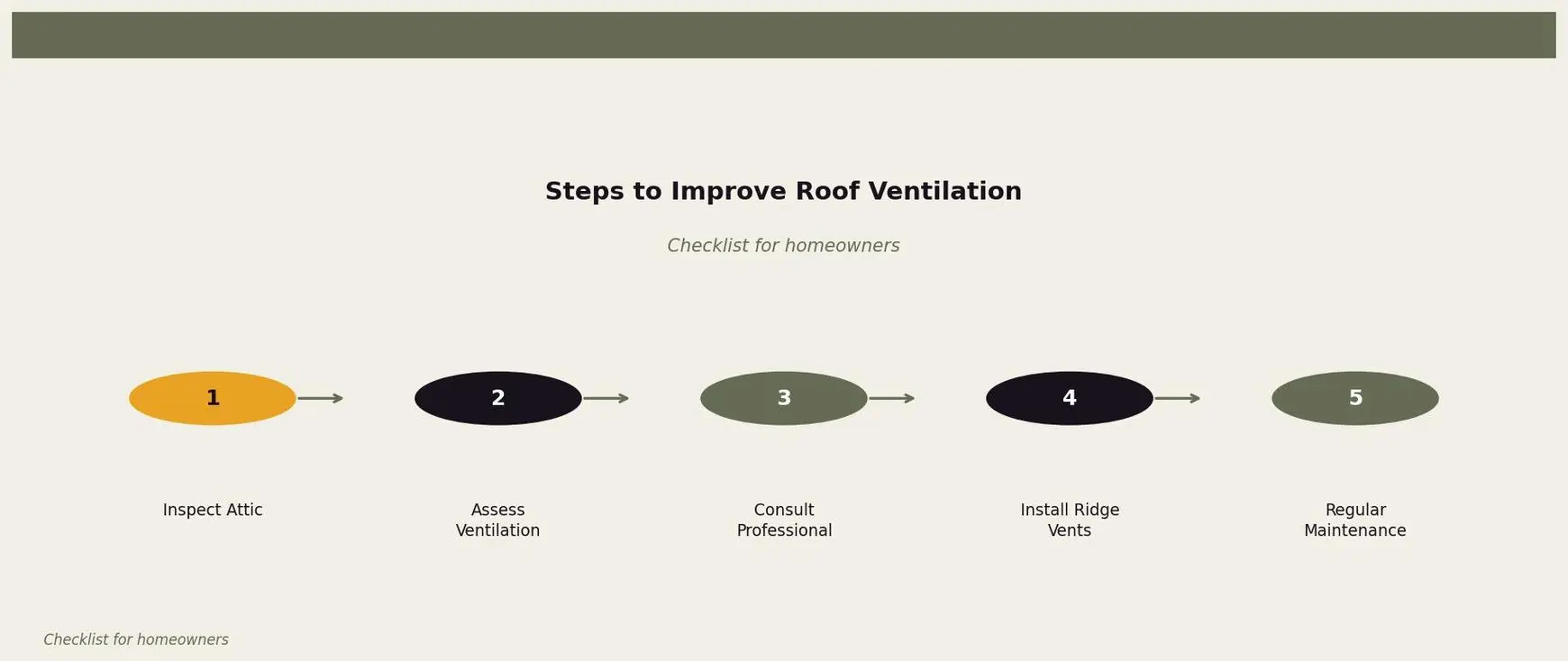
So how do you know if ridge vents are right for your home? Here’s a practical approach:
- Check your current ventilation: Go into your attic on a hot day. Is it significantly hotter than outside? Do you see any signs of moisture — staining on the wood, damp insulation, or that telltale musty smell? These are red flags.
- Inspect your soffits: Look under your eaves. Are there vents? Are they clear of insulation, paint, or debris? Ridge vents need that intake airflow to work.
- Look at your roof design: A straightforward gable roof is ideal for ridge vents. Complex rooflines might need a combination approach.
- Consider your roof’s age: If you’re due for a roof replacement in the next few years, that’s the perfect time to add ridge vents — it’s much more cost-effective to install them during a re-roof than as a standalone project.
- Get a professional assessment: A good roofing contractor can evaluate your specific situation, check your soffit ventilation, and tell you honestly whether ridge vents make sense for your home.
Ready to Fix Your Roof’s Breathing Problem?
If you’ve made it this far, you’re probably not looking for a high-pressure sales pitch — you’re looking for straight answers from people who actually know roofs. That’s what we do at Owl Roofing.
We’re based right here in Shoreview and serve homeowners across the Twin Cities. We’ve seen every ventilation problem Minnesota weather can throw at a roof — the ice dams, the moisture damage, the attics that turn into saunas every July. We’ll take a look at your specific situation, tell you exactly what’s going on, and give you honest options. If ridge vents aren’t the right call for your roof, we’ll say so.
Give us a call at 651-977-6027 or visit owlroofing.com/ to set up a conversation. No pressure, no gimmicks — just neighbors helping neighbors make smart decisions about their homes.
Protect Your Nest.
📍 Owl Roofing Serves the Entire Twin Cities Metro
Andover · Anoka · Apple Valley · Arden Hills · Big Lake · Blaine · Bloomington · Brooklyn Center · Brooklyn Park · Burnsville · Champlin · Chanhassen · Chaska · Columbia Heights · Coon Rapids · Cottage Grove · Crystal · deephaven · Delano · Eagan · East Bethel · Eden Prairie · Excelsior · Farmington · Forest Lake · Fridley · Golden Valley · Ham Lake · Hastings · Hopkins · Hugo · Inver Grove Heights · Lake Elmo · Lakeville · Lino Lakes · Mahtomedi · Maplewood · Mendota Heights · Minneapolis · Minnetrista · Mound · Mounds View · New Brighton · New Hope · North Oaks · North St. Paul · Oak Grove · Oakdale · Plymouth · Prior Lake · Ramsey · Richfield · Robbinsdale · Rosemount · Roseville · Saint Paul · Savage · Shakopee · Shoreview · South St. Paul · St. Louis Park · St. Michael · St. Paul · Stillwater · Vadnais Heights · Victoria · Waconia · wayzata · West St. Paul · White Bear Lake · woodbury
Licensed Minnesota roofing contractor · Free inspections · 10-year workmanship warranty · Get a free estimate →
