Storm Damage Roof FAQ: What Minnesota Homeowners Need to Know (2026)
 16min Read
 Posted 11.07.2025
Storm Damage Roof FAQ: What Minnesota Homeowners Need to Know (2026)
A hail storm rolls through your neighborhood. Your neighbor calls a roofer the next morning. You notice a few marks on your shingles but aren’t sure if it’s real damage. Your insurance agent is asking questions you’re not sure how to answer. Sound familiar? Storm damage roofing is one of the most confusing and potentially costly situations a Minnesota homeowner can navigate — and it’s also one of the most commonly mishandled, both by homeowners who ignore real damage and by homeowners who get taken advantage of by unscrupulous contractors.
This comprehensive FAQ covers every major question Minnesota homeowners ask after a storm — from identifying real damage to working with insurance adjusters to choosing the right contractor and material for your replacement.
Identifying Storm Damage
How do I know if my roof has hail damage?
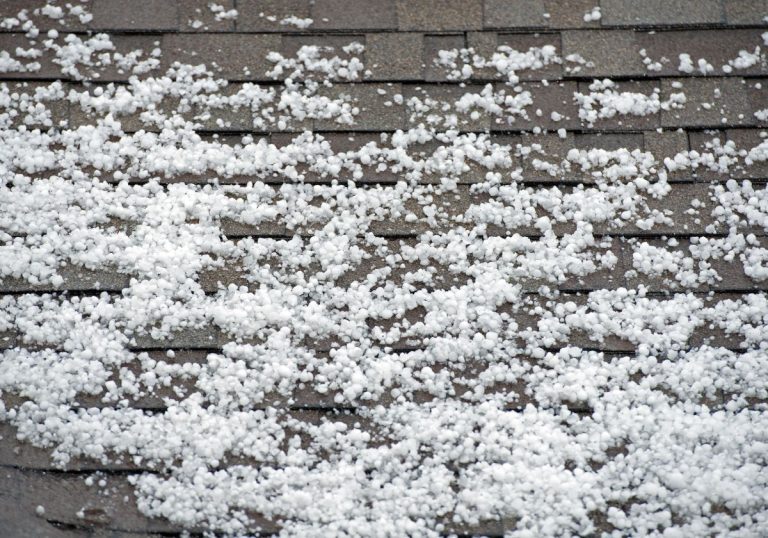
Hail damage to asphalt shingles takes a specific form: small, roughly circular impact marks — often called “bruises” — where the hail strike has knocked granules off the shingle surface and, in more severe cases, fractured the mat beneath. You’ll often see the marks as dark spots where the granule coating is missing, exposing the asphalt mat below. True hail damage is random in distribution (not concentrated in one area), roughly uniform in size across the roof (consistent with the hail size that fell), and present on all exposed surfaces — your roof, but also your gutters, downspouts, window screens, air conditioning condenser fins, and deck or patio furniture. If you see dents on soft metals (gutters, gutter caps, A/C fins) and marks on your shingles, that’s strong corroborating evidence of a qualifying hail event.
Not all marks on shingles are hail damage — blistering, cracking, and granule loss from age look different. A qualified contractor can distinguish impact damage from normal wear during a free inspection.
What size hail actually damages a roof?
Quarter-size hail (about 1 inch diameter) is generally the threshold for causing functional damage to standard architectural asphalt shingles. Nickel-size hail (7/8 inch) can damage older or already-degraded shingles. Golf-ball-size hail (1.75 inches) and larger can crack and puncture shingles regardless of age or condition. Class 4 impact-resistant shingles are tested to UL 2218 Class 4 standards using 2-inch steel balls dropped from specified heights — they withstand impacts that would damage standard shingles.
How long after a hail storm do I have to file an insurance claim in Minnesota?
Minnesota insurance policies vary, but most standard homeowners policies require claims to be filed within 1–2 years of the date of loss. However, waiting significantly increases the risk that your claim is denied — insurers become more skeptical of damage claims filed years after the event, and adjusters have less ability to verify the specific storm event caused the damage. If you suspect storm damage, get a free inspection from a licensed contractor and open your claim promptly. You can always decline to proceed with a claim if the damage turns out to be minor.
Can I see hail damage from the ground?
Sometimes, on severe events — missing shingles, large punctures, and very dark granule-loss patches may be visible from the ground on a steep-pitch roof. But most hail damage is not visible from ground level. The impact marks are often subtle and require getting on the roof and looking closely at shingle surfaces. Don’t assume your roof is undamaged just because you can’t see anything from the driveway — get a professional inspection after any significant hail event.
What does wind damage to a roof look like?
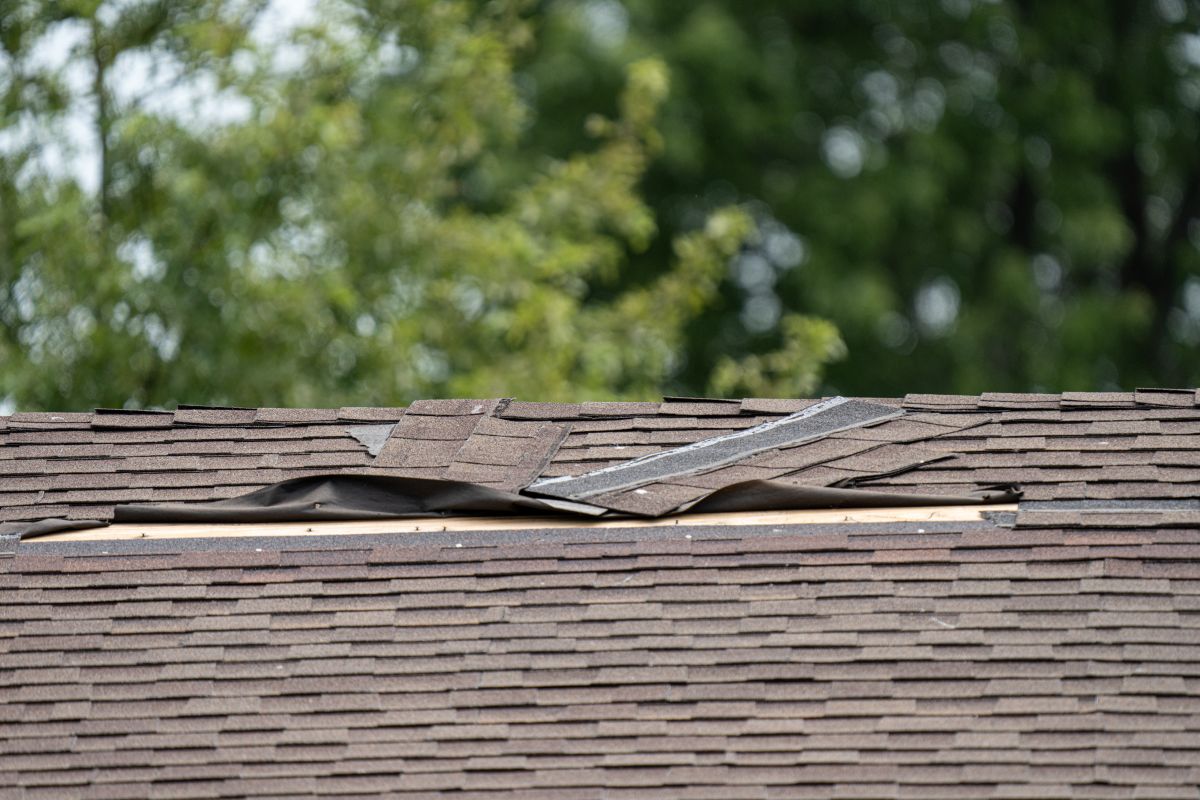
Wind damage typically presents as lifted, cracked, or missing shingles — often in a pattern that reflects the wind direction and the weakest points in your roof system (usually at ridges, rakes, and valleys). A common pattern is shingles that have broken along their bottom edge where the seal strip failed under wind uplift, leaving the upper portion still attached but the lower half loose or gone. Wind damage is often easier to see from the ground than hail damage, particularly when shingles are fully missing.
My roof doesn’t leak — does that mean there’s no damage?
Not necessarily. Hail damage compromises shingles by removing the granule layer that protects the asphalt mat from UV radiation. The roof may still be technically waterproof immediately after a hail event, but the damage dramatically accelerates degradation — a hail-damaged roof that’s not replaced will fail much sooner than its undamaged lifespan would suggest. Insurance adjusters assess functional damage to the shingle system, not just active leaks. A roof that is technically still shedding water but has widespread granule loss from hail impact is a legitimate claim.
Working with Insurance
How does the homeowners insurance claims process work for roof damage?
The standard process in Minnesota: (1) Contact your insurance company to report a potential claim and provide the date of the storm event. (2) The insurer dispatches an adjuster to inspect your roof. (3) The adjuster prepares a damage estimate — either actual cash value (ACV, which deducts depreciation) or replacement cost value (RCV, which covers full replacement cost) depending on your policy. (4) You receive a settlement offer. (5) You select a licensed contractor to complete the work. (6) After work is complete, most RCV policies pay a “recoverable depreciation” amount bringing the total to full replacement cost.
What’s the difference between ACV and RCV policies?
Actual Cash Value (ACV) policies pay the depreciated value of your damaged roof — what a 15-year-old roof is worth today, not what a new roof costs. If your roof is old, an ACV settlement may leave you significantly short of replacement cost. Replacement Cost Value (RCV) policies pay the full cost to replace the damaged roof with equivalent materials, minus your deductible. Most quality homeowners policies are RCV; check your policy declarations page to confirm what you have. If you have ACV, consider upgrading — the premium difference is typically modest compared to the coverage gap in a major claim.
Should I let the roofing contractor negotiate with my insurance company?
Licensed contractors can and do communicate with insurers to advocate for a proper scope of work — this is legitimate and often helpful. What you should avoid is signing an “Assignment of Benefits” (AOB) document that transfers your insurance rights to the contractor. AOB arrangements remove your control from the claims process and have been associated with fraudulent billing practices. Reputable contractors advocate for you without requiring an AOB — they’ll communicate with your adjuster, help document damage, and request supplements for work the adjuster may have missed, but the claim remains in your name and under your control.
What should I do if the insurance adjuster says there’s no damage?
You have the right to request a re-inspection and to have your contractor present during the adjuster’s visit. Many homeowners get better results when a knowledgeable contractor is on the roof alongside the adjuster and can point out specific damage indicators. If you still disagree with the insurer’s finding, you can invoke the appraisal clause in your policy — a formal dispute resolution process where both parties hire independent appraisers who then agree on a neutral umpire to resolve the dispute. This process can be valuable when there’s genuine disagreement about the extent of damage.
What is a deductible buy-down and is it legal in Minnesota?
Offering to “waive” or “cover” your insurance deductible is illegal in Minnesota (and most other states) under Minnesota Statutes. A contractor who offers to cover your deductible is essentially committing insurance fraud — inflating the claim to absorb your deductible into their billing. Avoid any contractor who makes this offer. Beyond being illegal, it typically signals other ethical shortcuts in how that contractor operates.
How do I know if a contractor’s insurance estimate is fair?
Most legitimate insurance claims for roof replacement are written using Xactimate — the industry-standard estimating software used by virtually all insurance carriers. Your contractor should be able to review the Xactimate estimate line by line and identify anything that’s missing or under-scoped. Common supplement items include: high-pitch labor, additional ice-and-water shield, permit fees, and steep-slope surcharges. A contractor who can speak fluently to an Xactimate estimate is a signal of professional competence in the insurance restoration space.
Choosing the Right Contractor
What should I look for in a storm restoration roofing contractor in Minnesota?
The key qualifications: a verifiable Minnesota contractor license (check at mn.gov/dli), active general liability insurance and workers’ compensation coverage, a physical Minnesota business address (not a PO box or out-of-state address), local references from completed insurance restoration projects, and manufacturer certifications that indicate trained installation crews. Length of time in business in Minnesota matters — storm chasers who come in after major events and then disappear have no accountability for warranty issues that emerge later.
What are storm chasers and how do I avoid them?
Storm chasers are out-of-state roofing contractors who descend on communities after major hail or wind events, typically soliciting door-to-door and offering to “work with your insurance” on your behalf. Warning signs: they knock on your door within days of a storm, they pressure you to sign a contract immediately (“we’re in your neighborhood today”), they can’t provide a Minnesota contractor license number, they have no physical Minnesota address, and they offer to cover your deductible. After a significant hail event in the Twin Cities metro, communities see dozens of out-of-state trucks showing up. The contractors often do adequate work, but when a warranty issue arises 18 months later, there’s no one to call.
Should I use the contractor my insurance company recommends?
You are never required to use an insurer-preferred contractor — you have the right to choose any licensed contractor. Insurance company “preferred vendor” programs can be legitimate, but the preference is partly based on cost control for the insurer, not necessarily maximum quality for you. Get at least two estimates from contractors you’ve researched independently and compare them against any insurer-recommended contractor before deciding.
How many estimates should I get for a storm damage replacement?
Two to three estimates is typically sufficient for a storm damage claim. The key is comparing them on scope (what’s included) rather than just price. All estimates should be working from the same insurance scope of loss; the variation you’ll see reflects different material selections, overhead structures, and what supplemental items each contractor has identified to add to the insurer’s scope. Be skeptical of any estimate significantly below the others — it likely omits required components.
Materials and Timing
Should I upgrade to impact-resistant shingles after a storm damage replacement?
In most cases, yes — particularly in the Twin Cities metro where hail events are frequent. Class 4 impact-resistant shingles cost $1,500–$3,000 more than standard architectural shingles on a typical project, but most Minnesota insurance carriers offer 15–30% premium discounts for Class 4 certified roofing. The payback period on the upgrade through insurance savings is typically 5–10 years, well within the shingle’s lifespan. You also significantly reduce the likelihood of a future storm damage claim — fewer claims means lower long-term insurance costs and less disruption to your life.
Can I change materials (switch to metal) during an insurance replacement?
Yes — your insurance pays to restore your roof to its pre-loss condition using like-kind-and-quality materials. If you want to upgrade to metal roofing, you pay the difference between the insurance settlement (which covers equivalent asphalt replacement cost) and the actual cost of the metal system. This is a legitimate and common approach: use the insurance event as the occasion to upgrade to the material you’ve been considering, paying only the incremental cost difference out of pocket.
How quickly should I address storm damage after a major event?
If your roof has active leaks or missing shingles, address it as quickly as possible — temporary tarping is appropriate to prevent interior damage while the full scope is assessed and contracted. For functional hail damage without active leaks, there’s less urgency but you should still open your claim promptly and schedule work within the season. Delaying into the following spring means another winter of weathering on a compromised roof and potential issues with your insurer if they feel the damage was exacerbated by delayed action.
What time of year is best for storm damage roof replacements in Minnesota?
Ideally, late spring through early fall (May–October) offers the best installation conditions and widest contractor availability. That said, most contractors work year-round in Minnesota — cold weather installations are possible with appropriate cold-weather adhesive management. If your storm damage occurs in October and you’re waiting for a spring installation window, ensure your roof is properly tarped or temporarily repaired to prevent water intrusion over winter.
Frequently Asked Questions
Will filing a roof claim raise my insurance premiums?
A single weather-related claim (hail, wind) generally does not cause significant premium increases with most Minnesota carriers — these are “Acts of God” claims that most insurers treat differently from at-fault claims. Multiple claims within a short period, however, can affect your rates or insurability. Ask your agent directly about your specific policy’s claim history implications before filing if this is a concern.
What if my roof is old — will insurance still cover hail damage?
Most insurance policies cover hail damage regardless of roof age, though the settlement may be ACV (depreciated) rather than RCV if your roof is very old or if your policy has depreciation schedules. Some insurers have begun excluding older roofs from coverage or requiring inspections before insuring — review your policy carefully and talk to your agent about any age-based limitations in your current coverage.
How do I document storm damage for an insurance claim?
Before any contractor gets on your roof, take ground-level photos of any visible damage (missing shingles, damaged gutters, dented A/C fins, broken skylights). Note the date of the storm and check your local weather service records for confirmation of hail size and track. Keep records of any temporary repairs (tarping). Your contractor will typically document the roof-level damage during their inspection — ask for photos and a written damage report to support your claim file.
Can Owl Roofing help me with my insurance claim?
Yes — Owl Roofing regularly assists Twin Cities homeowners through the insurance claim process. We perform free storm damage inspections, provide detailed damage documentation, communicate directly with insurance adjusters to advocate for a proper scope of work, and can be present during adjuster visits. We work with all major insurance carriers and are experienced with Xactimate supplements. Contact us after any significant storm event to schedule a free inspection — there’s no obligation, and we’ll give you an honest assessment of what we find.
Contact Owl Roofing for Storm Damage Help
Storm damage roofing is complicated — from identifying real damage to navigating the insurance process to finding a contractor you can trust. Owl Roofing is a family-owned Twin Cities roofing company that has helped hundreds of Minnesota homeowners through this process. We install architectural and impact-resistant asphalt shingles, metal roofing, gutters, siding, and windows — and we bring the same honesty and care to storm restoration work that we do to every project. If you’ve had a recent storm event or just want to know where your roof stands, call us for a free inspection. We’re here to help.
📍 Owl Roofing Serves the Entire Twin Cities Metro
Andover · Anoka · Apple Valley · Arden Hills · Big Lake · Blaine · Bloomington · Brooklyn Center · Brooklyn Park · Burnsville · Champlin · Chanhassen · Chaska · Columbia Heights · Coon Rapids · Cottage Grove · Crystal · deephaven · Delano · Eagan · East Bethel · Eden Prairie · Excelsior · Farmington · Forest Lake · Fridley · Golden Valley · Ham Lake · Hastings · Hopkins · Hugo · Inver Grove Heights · Lake Elmo · Lakeville · Lino Lakes · Mahtomedi · Maplewood · Mendota Heights · Minneapolis · Minnetrista · Mound · Mounds View · New Brighton · New Hope · North Oaks · North St. Paul · Oak Grove · Oakdale · Plymouth · Prior Lake · Ramsey · Richfield · Robbinsdale · Rosemount · Roseville · Saint Paul · Savage · Shakopee · Shoreview · South St. Paul · St. Louis Park · St. Michael · St. Paul · Stillwater · Vadnais Heights · Victoria · Waconia · wayzata · West St. Paul · White Bear Lake · woodbury
Licensed Minnesota roofing contractor · Free inspections · 10-year workmanship warranty · Get a free estimate →

Recent Articles
Explore The Blog