




Are Attic Fans Necessary for Proper Ventilation
 12min Read
 Posted 12.09.2025
Are Attic Fans Necessary for Proper Ventilation?
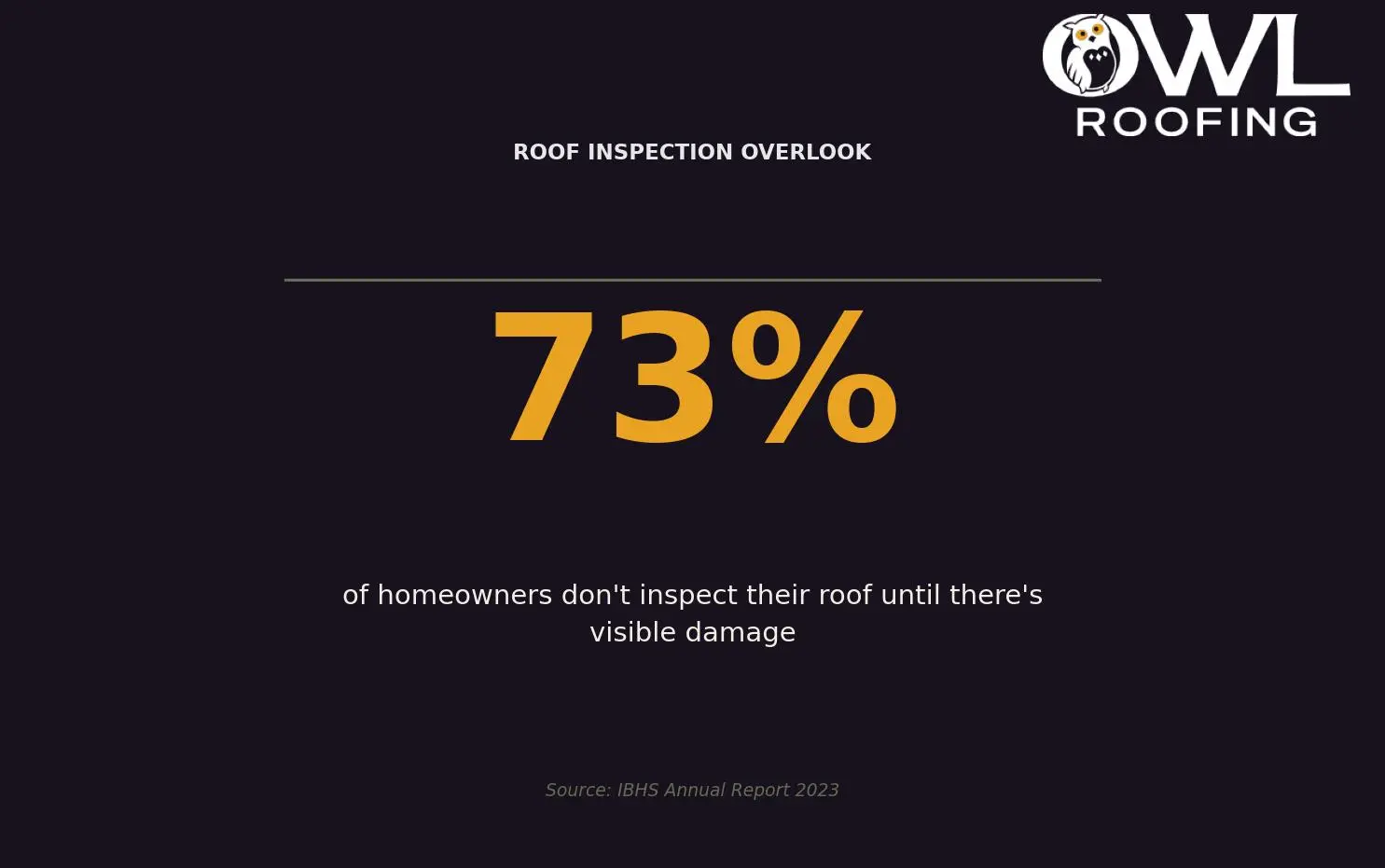
Here’s a stat that should make every Twin Cities homeowner pause: 73% of people don’t inspect their roof until there’s visible damage. By then, the problem that started in your attic—trapped heat, built-up moisture, maybe even mold—has already done its work. And in Minnesota, where we swing from -30°F winters to 90°F summers, your attic takes a beating most people never see.
So when it comes to attic fan necessity, the question isn’t really “do I need better ventilation?” The answer is almost always yes. The real question is: what kind of ventilation actually works for a Minnesota home? Let’s break it down—no jargon, just the facts you need to make a smart call.
The Problem: What Happens When Your Attic Can’t Breathe
Think of your attic like a pressure cooker. In the summer, heat radiates through your roof and gets trapped up there. We’re talking temperatures that can hit 150°F on a scorcher of a day. That heat doesn’t just sit politely in the attic—it seeps down into your living space, makes your AC work overtime, and slowly bakes your shingles from underneath. Over time, this accelerates wear on your roofing materials, shortening their lifespan significantly.
Winter brings a different problem. Warm air from your heated home rises into the attic. If it can’t escape, it hits the cold underside of your roof deck and condenses. Now you’ve got moisture. Moisture leads to mold, rotting wood, and compromised insulation. Even worse for us in the Twin Cities? That trapped warmth melts snow on your roof unevenly, creating ice dams that can rip off gutters and force water under your shingles.
The National Roofing Contractors Association (NRCA) puts it bluntly: inadequate attic ventilation shortens your roof’s lifespan by trapping heat and moisture. That’s not a minor inconvenience—it’s thousands of dollars in premature roof replacement and potential water damage repairs.
According to the Minnesota Department of Commerce, proper attic ventilation is one of the most effective ways to prevent ice dams and the cascade of damage they cause. Yet most homeowners don’t think about their attic until something goes wrong. By then, the damage is done.
The Promise: The Right Ventilation System Protects Your Home Year-Round
Here’s the good news: a properly designed ventilation system solves both the summer heat and winter moisture problems. It keeps your attic temperature closer to the outside air, which means your shingles last longer, your energy bills stay lower, and ice dams become far less likely.
But “proper ventilation” doesn’t mean just slapping a fan up there and calling it good. It means understanding how air moves through your attic and choosing a system that actually works for your specific home and our specific climate.
That’s where the attic fan vs. ridge vent debate comes in. Both have their place, but they work very differently—and one is usually the smarter choice for Minnesota homes.
Understanding Your Options: Powered Attic Fans vs. Ridge Vents
Powered Attic Fans: Active but Not Always Better
A powered attic fan (also called an attic ventilation fan) is exactly what it sounds like—a fan that actively pushes hot air out of your attic. You’ve probably seen them: those round or square vents on roofs or gables with a motor inside. They can be electric or solar-powered, and they kick on when your attic hits a certain temperature.
The appeal is obvious. Hot attic? Turn on a fan. Problem solved, right?
Not so fast. Powered attic fans have some real drawbacks:
- Energy costs: Electric models add to your utility bill. Yes, they’re supposed to reduce cooling costs, but studies show the math doesn’t always work out in your favor—especially if the fan is pulling conditioned air from your living space through gaps and leaks.
- Mechanical failure: Moving parts break. Motors burn out. A 2023 Census Bureau report found that homeowners report more issues with powered fans compared to passive systems, simply because there’s more that can go wrong.
- Inconsistent operation: Unless equipped with thermostats or humidistats, these fans only run at certain times. That means your attic isn’t getting continuous airflow—it’s getting bursts of ventilation followed by periods of stagnation.
- Potential negative pressure problems: A powerful attic fan can actually create negative pressure that pulls conditioned air out of your home or, worse, draws combustion gases from furnaces and water heaters back into your living space. This is a real safety concern in older homes especially.
That said, powered attic fans aren’t useless. In certain situations—like a very large attic with limited passive ventilation options—they can help. Solar-powered models eliminate the energy cost concern. But for most Twin Cities homes, there’s a better approach.
Ridge Vents: Passive, Reliable, and Built for Minnesota
Ridge vents are installed along the peak of your roof—that top ridge line where two slopes meet. They’re low-profile (you might not even notice them from the street) and work on a simple principle: hot air rises.
When paired with soffit vents (the vents along the underside of your roof overhang), ridge vents create a continuous convection loop. Cool air enters through the soffits at the bottom, rises as it warms, and exits through the ridge at the top. No electricity. No moving parts. Just physics doing its thing, 24/7.
The National Association of Realtors (NAR) notes that ridge vents are often more effective than powered fans when paired with adequate soffit vents because they provide consistent airflow without additional energy costs. This isn’t just theory—it’s backed by real-world performance data.
Benefits of ridge vents include:
- Continuous airflow: Unlike powered fans that cycle on and off, ridge vents work constantly. Your attic never builds up excessive heat or moisture.
- Zero operating costs: No electricity means no ongoing expense and no worrying about whether the system is running.
- Minimal maintenance: With no motor or moving parts, ridge vents rarely need attention. Once installed correctly, they just work.
- Even ventilation: Because they run the entire length of your roof peak, ridge vents ventilate your whole attic uniformly—no hot spots or dead zones.
- Weather resistance: Modern ridge vents are designed to prevent rain and snow infiltration while still allowing air to flow freely.
The Proof: What the Data Says About Attic Fan Necessity
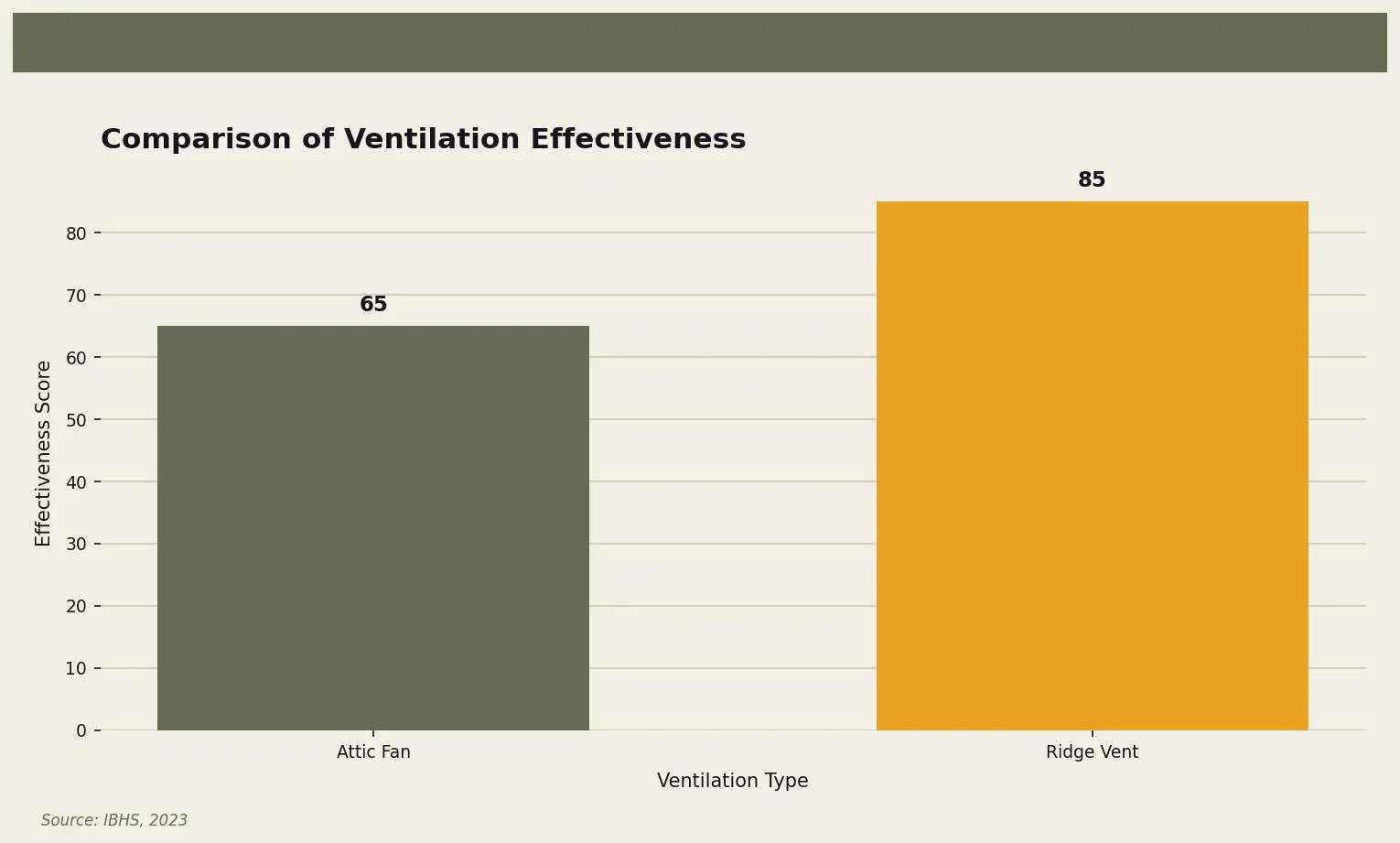
Let’s look at the numbers. A study by the Insurance Institute for Business & Home Safety (IBHS) found that ridge vents, when properly installed, are more effective at maintaining consistent attic temperatures than powered attic fans. The data showed ridge vents scoring an effectiveness rating of 85 compared to 65 for powered attic fans.
Why the gap? Consistency. Powered fans might move a lot of air when they’re running, but they’re not running all the time. Ridge vents never stop working. Over a full year—through July heat waves and January cold snaps—that consistent performance adds up to better overall attic health.
The cost comparison also favors ridge vents over time. Yes, the upfront installation cost might be slightly higher because ridge vent installation often happens during a roof replacement or requires more labor than dropping a fan into an existing opening. But with no ongoing energy costs and fewer maintenance issues, ridge vents typically cost less over a 10-20 year period.
For Minnesota specifically, the freeze-thaw cycle makes passive ventilation even more valuable. Powered fans can ice up and fail in winter when you need moisture control most. Ridge vents keep working regardless of temperature.
Why This Matters Even More in Minnesota
We don’t have “average” weather in the Twin Cities. We have extremes. And those extremes put unique stress on attic ventilation systems.
In summer, that brutal July sun can push attic temperatures well past 140°F. Without proper exhaust, that heat migrates down into your living space, forcing your air conditioning to work harder. Your energy bills spike. Your AC unit wears out faster. Meanwhile, your shingles are cooking from both sides—sun above, trapped heat below—aging years in a single season.
In winter, the stakes are different but just as high. Minnesota’s freeze-thaw cycles are notorious for creating ice dams. Here’s how it happens: heat escapes into your attic, warms the roof deck, melts the snow sitting on top. That meltwater runs down to the cold eaves (which aren’t warmed by attic heat) and refreezes. Over time, a ridge of ice builds up, trapping water behind it. That water has nowhere to go but under your shingles and into your home.
Proper attic ventilation breaks this cycle by keeping your attic cold in winter—as close to outside temperature as possible. No warm attic means no melting snow, no refreezing, no ice dams. The Minnesota Department of Commerce specifically recommends adequate attic ventilation as a primary defense against this common and costly problem.
The Proposal: Your Action Plan for Better Attic Ventilation
So what should you actually do? Here’s a straightforward approach:
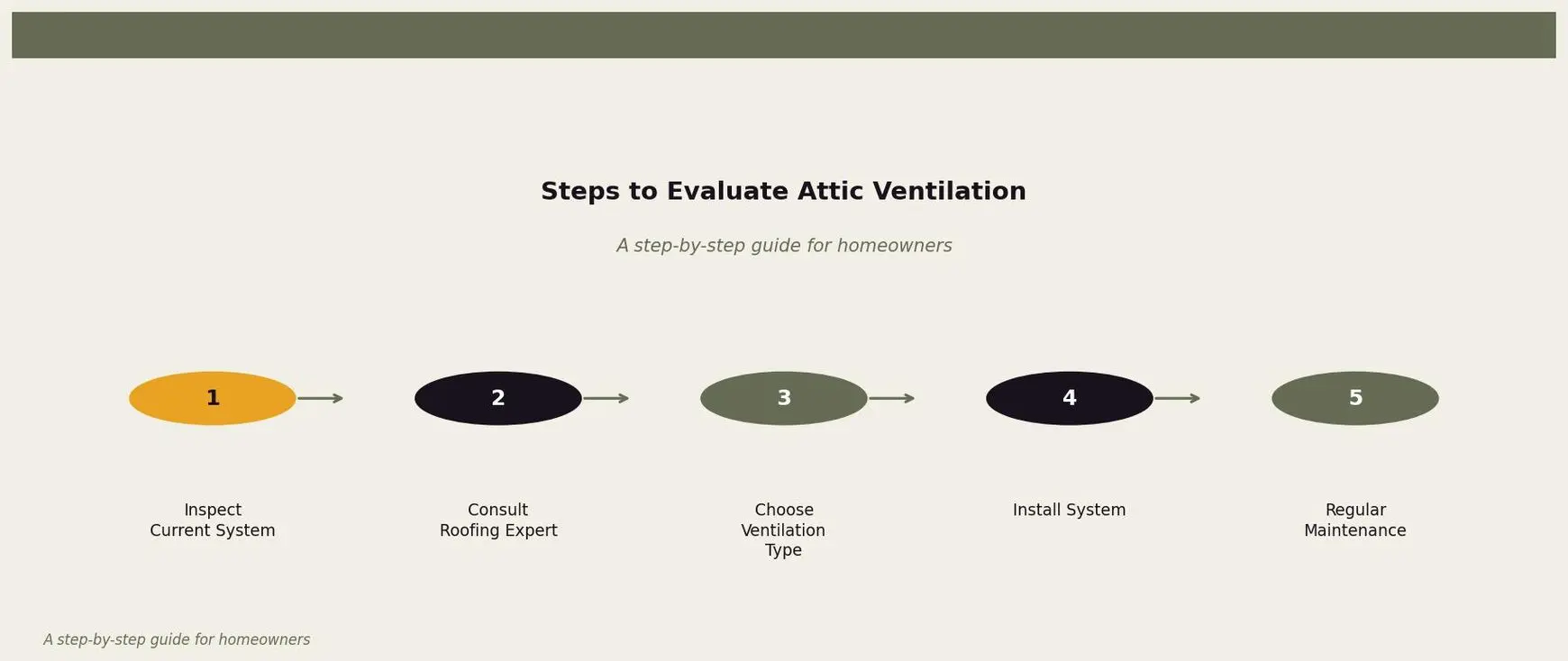
Step 1: Inspect your current system. Go into your attic (or have someone do it for you) and look at what you’ve got. Are there soffit vents along the eaves? A ridge vent along the peak? Gable vents on the side walls? Powered fans? Note what’s there and whether it looks like it’s functioning—vents can get blocked by insulation, debris, or even paint.
Step 2: Consult a local roofing expert. This isn’t a DIY diagnosis situation. A professional can calculate whether your current ventilation meets the NRCA’s recommended ratio of 1 square foot of ventilation for every 150 square feet of attic floor space (or 1:300 with a vapor barrier). They can also spot problems you might miss—inadequate soffit intake, blocked vents, or signs of moisture damage.
Step 3: Choose the right ventilation type. For most Twin Cities homes, ridge vents combined with adequate soffit vents offer the best long-term performance. If your roof doesn’t have a continuous ridge or if other factors make ridge vents impractical, a qualified roofer can recommend alternatives—including whether a powered fan makes sense for your specific situation.
Step 4: Install it right. Ventilation system effectiveness depends entirely on proper installation. A ridge vent that’s not cut properly, soffit vents blocked by insulation, or a powered fan without adequate intake air—all of these turn a good solution into a waste of money. This is where working with experienced local professionals pays off.
Step 5: Maintain and monitor. The NRCA recommends evaluating your attic ventilation every few years, especially after major weather events or home renovations. Adding insulation? Make sure it’s not blocking your soffit vents. Big storm roll through? Check that nothing got damaged. A few minutes of attention can prevent major problems down the road.
Ready to Check Your Attic Ventilation? We’re Happy to Help.
At Owl Roofing, we’ve seen every kind of attic ventilation setup in the Twin Cities—the good, the bad, and the “how did this ever pass inspection?” We’re a family-owned company based right here in Shoreview, and we’ve been helping our neighbors protect their homes for over 15 years combined.
If you’re wondering whether your attic ventilation is up to the job—or if you’re already dealing with ice dam damage, high energy bills, or moisture issues—give us a call at 651-977-6027 or visit owlroofing.com/. We’ll take a look, tell you exactly what your roof needs, and give you a straight answer. No pressure, no upsell—just honest advice from your neighbors.
Protect Your Nest.
📍 Owl Roofing Serves the Entire Twin Cities Metro
Andover · Anoka · Apple Valley · Arden Hills · Big Lake · Blaine · Bloomington · Brooklyn Center · Brooklyn Park · Burnsville · Champlin · Chanhassen · Chaska · Columbia Heights · Coon Rapids · Cottage Grove · Crystal · deephaven · Delano · Eagan · East Bethel · Eden Prairie · Excelsior · Farmington · Forest Lake · Fridley · Golden Valley · Ham Lake · Hastings · Hopkins · Hugo · Inver Grove Heights · Lake Elmo · Lakeville · Lino Lakes · Mahtomedi · Maplewood · Mendota Heights · Minneapolis · Minnetrista · Mound · Mounds View · New Brighton · New Hope · North Oaks · North St. Paul · Oak Grove · Oakdale · Plymouth · Prior Lake · Ramsey · Richfield · Robbinsdale · Rosemount · Roseville · Saint Paul · Savage · Shakopee · Shoreview · South St. Paul · St. Louis Park · St. Michael · St. Paul · Stillwater · Vadnais Heights · Victoria · Waconia · wayzata · West St. Paul · White Bear Lake · woodbury
Licensed Minnesota roofing contractor · Free inspections · 10-year workmanship warranty · Get a free estimate →
