





Can Homeowners Maintain Their Own Roof Safely
 12min Read
 Posted 12.24.2025
Can Homeowners Maintain Their Own Roof Safely?
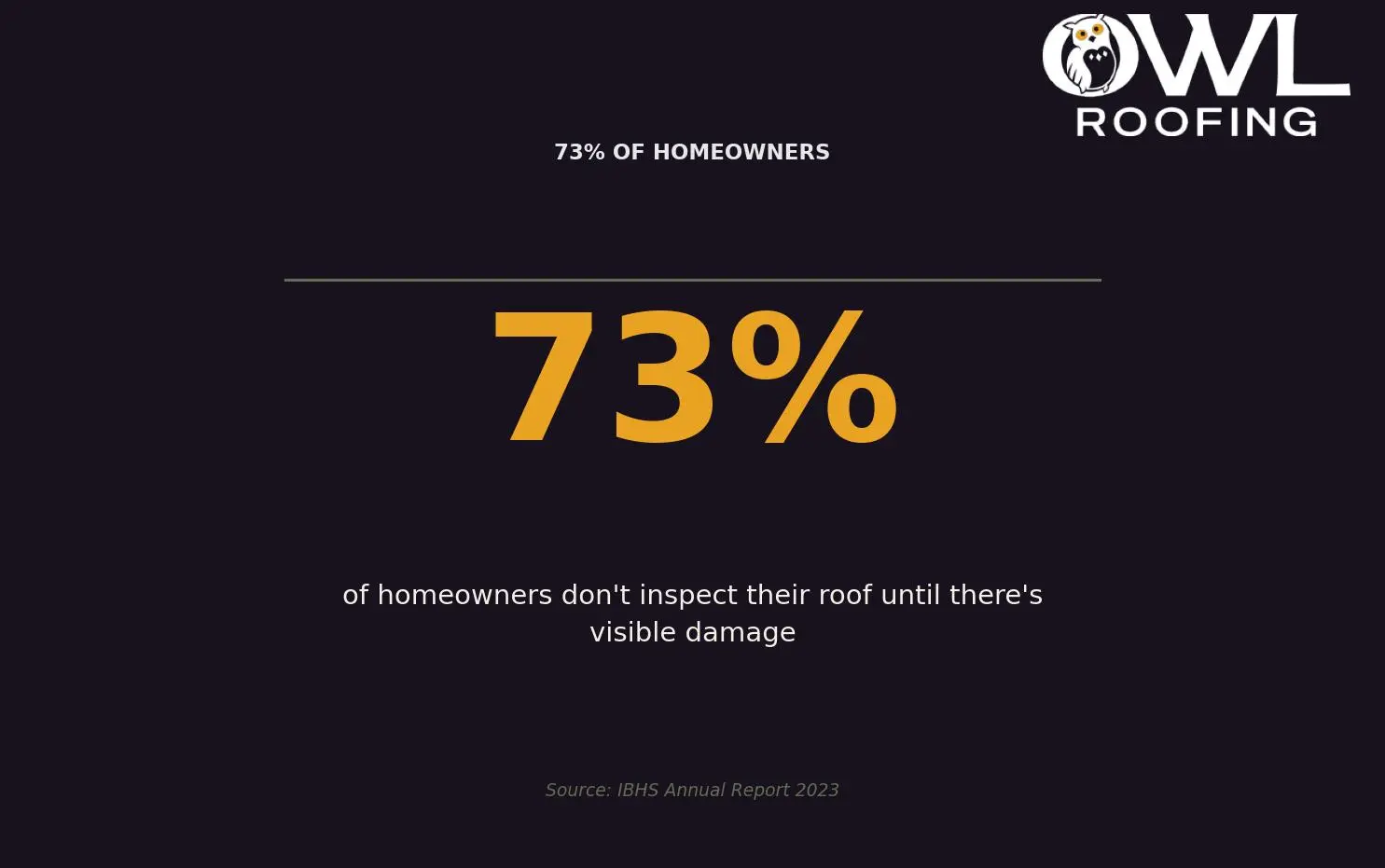
Here’s a number that might make you spit out your coffee: 73% of homeowners don’t look at their roof until water is dripping through their ceiling. By then? You’re not doing maintenance—you’re doing damage control. And in the Twin Cities, where we get everything from June hailstorms to February ice dams, that’s a gamble your home can’t afford.
So can you actually maintain your own roof without ending up on a stretcher or making things worse? Yes—with some important caveats. This guide breaks down exactly what you can safely handle yourself, what should make you pick up the phone, and how to keep your roof solid through another Minnesota winter.
Why Roof Maintenance Actually Matters (Beyond the Obvious)
Let’s talk numbers, because they tell the real story.
According to the National Roofing Contractors Association (NRCA), regular maintenance can extend a roof’s life by up to 50%. Think about that. A roof that might give you 15 years of service could last 22+ years with basic upkeep. That’s not a minor difference—that’s potentially delaying a $5,000 to $30,000 replacement (per the National Association of Realtors) by nearly a decade.
But here’s what those stats don’t capture: the stress of emergency repairs. The frantic calls when you notice a water stain spreading across your bedroom ceiling during a March thaw. The sinking feeling when a contractor tells you that small leak has been quietly rotting your decking for two years.
Regular maintenance isn’t glamorous. Nobody’s posting their clean gutters on Instagram. But it’s the difference between controlling your home’s timeline and your home controlling yours.
And if you live in Minnesota? The stakes are higher. Our freeze-thaw cycles, heavy snow loads, and summer storms put roofs through a stress test that homeowners in milder climates can’t imagine. What passes for “fine” in Arizona will fail you here by year ten.
What You Can Safely Do Yourself
Ground-Level Inspections: Your First Line of Defense
Here’s the good news: the most important inspection you can do doesn’t require a ladder at all.
Grab a pair of binoculars (the Insurance Institute for Business & Home Safety actually recommends this) and walk the perimeter of your home. You’re looking for:
- Missing or curled shingles — they’ll catch light differently than flat ones
- Sagging areas — any dip in your roofline is a red flag
- Debris accumulation — leaves and branches trap moisture
- Flashing issues — the metal around chimneys, vents, and skylights should lay flat
- Moss or algae growth — common on north-facing slopes, and more than cosmetic
Do this twice a year—once in spring after the snow melts, once in fall before it returns. Mark it on your calendar like a dentist appointment. It takes 15 minutes and catches problems when they’re still cheap to fix.
Inside your home, check your attic if you have access. Look for daylight coming through the roof boards, water stains, or any musty smells. These interior clues often show up before exterior damage is visible from the ground.
Gutter Cleaning: Simple but Critical
Clogged gutters are the number one cause of preventable roof damage in Minnesota. Here’s why: when gutters back up, water pools at your roof’s edge. In winter, that pooled water freezes into ice dams. Ice dams force water underneath your shingles. And then you’ve got leaks, rot, and a conversation with your insurance company that nobody wants to have.
The fix is straightforward:
- Clean gutters at least twice yearly—late spring and late fall
- Use a gutter scoop or garden trowel to remove debris
- Flush with a hose to confirm water flows freely to downspouts
- Make sure downspouts direct water at least 4-6 feet from your foundation
If you’re comfortable on a ladder and have someone spotting you, this is a reasonable DIY task. Just don’t overreach—move the ladder instead. And never, ever clean gutters on a wet or icy day. The 30 minutes you save isn’t worth the ER visit.
Branch Trimming: Protecting Your Shingles
Overhanging branches cause three problems:
- They drop debris that clogs gutters and traps moisture
- They create shade that encourages moss and algae growth
- They can break off in storms and puncture your roofing
Keep branches trimmed back at least 6 feet from your roof surface. For small branches you can reach from the ground with a pole pruner, this is easy DIY territory. Anything that requires climbing the tree or a chainsaw? That’s a job for an arborist. Seriously. Tree work kills more DIYers than roof work does.
Minor Debris Removal
After storms, leaves and small branches often collect in roof valleys and around penetrations like vents and chimneys. If you can safely access these areas, removing debris prevents moisture buildup and extends shingle life.
The key word is “safely.” If getting to the debris requires walking on steep slopes, working near roof edges without fall protection, or accessing areas you can’t easily see—leave it alone and call someone.
What You Absolutely Should NOT Do Yourself
Walking on Your Roof (In Most Cases)
Here’s where we get real: most homeowners shouldn’t be walking on their roofs. Period.
It’s not that you’re incapable. It’s that the risk-reward math doesn’t work. Professional roofers have proper footwear, fall protection equipment, and—critically—they know where to step. Roofs have weak spots. Walking in the wrong place can crack shingles, damage flashing, or send you through compromised decking.
If your roof is:
- Steep (more than a 6/12 pitch—you’ll feel it)
- Wet, frosty, or icy
- Covered with moss or algae (slippery)
- More than one story high
Stay off it. Ground-level inspections and attic checks catch the vast majority of issues anyway.
Any Repair Beyond the Truly Minor
Replacing a single shingle that’s obviously loose? Okay, maybe. But anything involving:
- Flashing repair or replacement
- Multiple shingles or large sections
- Anything near vents, chimneys, or skylights
- Structural damage to decking
- Leaks you can’t pinpoint from the attic
That’s professional territory. Not because we want to scare you off—but because improper repairs often cause more damage than the original problem. We’ve seen homeowners void their warranties, create new leak points, and turn $300 repairs into $3,000 ones by trying to DIY something beyond their skill level.
Storm Damage Assessment
After a hailstorm or high winds, you might be tempted to get up there and survey the damage. Don’t. Storm damage is often structural, and walking on a compromised roof is how small problems become dangerous ones.
Do your ground-level inspection. Check your attic for new leaks. Document what you can see from safely below. Then call a professional for the real assessment.
Minnesota-Specific Challenges (And How to Handle Them)
Ice Dams: The Twin Cities’ Specialty
If you’ve lived here through a few winters, you know ice dams. Those thick ridges of ice at your roof’s edge that look dramatic and cause thousands in damage.
Ice dams form when heat escapes through your attic, melts snow on your roof, and that water refreezes at the colder eaves. The ice builds up, creates a dam, and forces water back under your shingles.
Prevention is the only real solution:
- Attic insulation — keeps heat in your living space, not warming your roof
- Attic ventilation — equalizes temperature between attic and outside air
- Sealing air leaks — around attic hatches, recessed lights, plumbing vents
You can check your attic insulation depth yourself (aim for 12-15 inches of modern insulation). But if you’re getting ice dams despite what seems like adequate insulation, you’ve got air leakage issues that need professional diagnosis.
And please—don’t hack at ice dams with an axe or hammer. We’ve seen the results. It’s not pretty.
The Freeze-Thaw Cycle
Minnesota gets an average of 50+ freeze-thaw cycles per year. Every time water seeps into a tiny crack, freezes, and expands, that crack gets a little bigger. This is why shingles that look fine in August can crack over winter.
Your spring inspection is crucial for catching this damage early. Look for shingles that appear cracked, split, or have lost their granule coating (they’ll look bald or discolored compared to neighbors).
Heavy Snow Loads
Most roofs can handle normal Minnesota snowfall. But after a big dump—especially the wet, heavy snow we sometimes get—check for sagging from the ground and monitor your attic for any creaking or new stress signs.
If you’re concerned about snow weight, roof rakes can remove some accumulation from ground level. Work carefully—you’re pulling snow, not your shingles.
The Real Cost Comparison: DIY vs. Professional
Let’s be honest about the numbers.
DIY maintenance costs you time and basic supplies—maybe $50-100 per year in tools and materials, plus a Saturday afternoon twice a year.
Professional inspections typically run $150-300 annually, and they catch things you’ll miss. Plus, that inspection creates documentation that matters when you file insurance claims or sell your home.
The IBHS data showing 73% of homeowners don’t inspect until visible damage appears? Those homeowners pay an average of 40% more in repair costs than those who catch problems early.
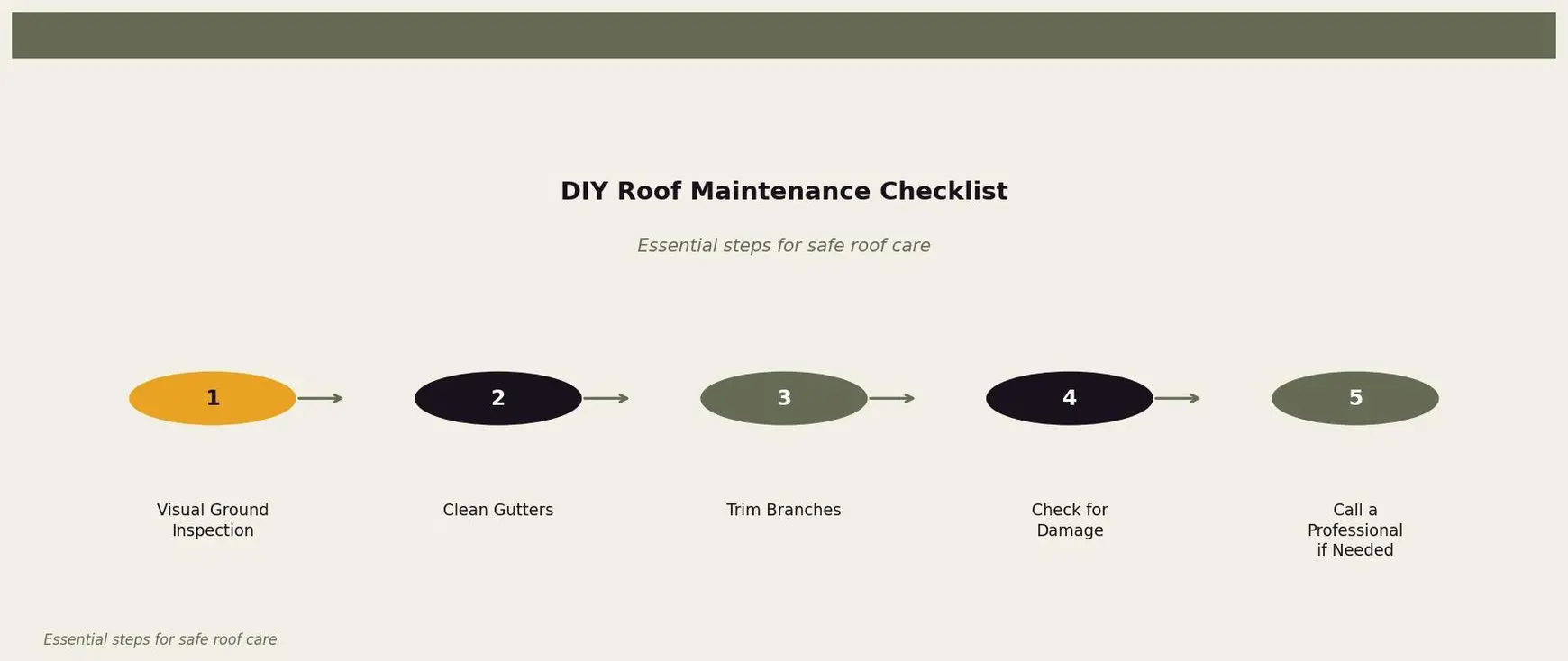
Here’s the bottom line: DIY the low-risk maintenance (ground inspections, gutter cleaning, branch trimming). Invest in annual professional inspections. Call immediately when you spot anything concerning.
That hybrid approach gives you the best of both worlds—you stay engaged with your home’s condition without putting yourself at unnecessary risk.
Your Roof Maintenance Action Plan
Make this simple. Put these in your calendar right now:
Every spring (April-May):
- Ground-level binocular inspection of entire roof
- Attic check for winter water stains or daylight
- Gutter cleaning after trees fully leaf out
- Branch trimming if needed
Every fall (October-November):
- Second ground-level inspection
- Gutter cleaning after leaves drop
- Check attic insulation depth before heating season
- Schedule professional inspection if you haven’t had one this year
After any major storm:
- Ground-level damage check within 24 hours
- Attic check for new leaks
- Document everything with photos (insurance will thank you)
- Call a professional if anything looks off
Print this out. Stick it on your fridge. Your future self—and your roof—will thank you.
When It’s Time to Call In the Pros
Your roof is your home’s first line of defense against everything Minnesota throws at it. And you can absolutely be part of keeping it healthy—the inspections, the gutter work, the awareness of what’s happening up there.
But there’s a point where DIY stops making sense. When damage is real, when repairs need doing right, when you want an expert eye on something that’s nagging at you—that’s when you need someone who does this every day.
At Owl Roofing, we’ve seen every type of roof issue a Twin Cities winter can create—ice dams, storm damage, shingles that gave up the fight years ago. We’re based right here in Shoreview and serve the entire metro. Not a franchise, not storm chasers passing through—just neighbors who know these roofs because we live under the same weather you do.
If something from your inspection has you concerned—or you just want professional eyes confirming that your roof’s in good shape—give us a call at 651-977-6027 or visit owlroofing.com/. We’ll tell you exactly what we see, no pressure, no runaround.
Protect Your Nest.
📍 Owl Roofing Serves the Entire Twin Cities Metro
Andover · Anoka · Apple Valley · Arden Hills · Big Lake · Blaine · Bloomington · Brooklyn Center · Brooklyn Park · Burnsville · Champlin · Chanhassen · Chaska · Columbia Heights · Coon Rapids · Cottage Grove · Crystal · deephaven · Delano · Eagan · East Bethel · Eden Prairie · Excelsior · Farmington · Forest Lake · Fridley · Golden Valley · Ham Lake · Hastings · Hopkins · Hugo · Inver Grove Heights · Lake Elmo · Lakeville · Lino Lakes · Mahtomedi · Maplewood · Mendota Heights · Minneapolis · Minnetrista · Mound · Mounds View · New Brighton · New Hope · North Oaks · North St. Paul · Oak Grove · Oakdale · Plymouth · Prior Lake · Ramsey · Richfield · Robbinsdale · Rosemount · Roseville · Saint Paul · Savage · Shakopee · Shoreview · South St. Paul · St. Louis Park · St. Michael · St. Paul · Stillwater · Vadnais Heights · Victoria · Waconia · wayzata · West St. Paul · White Bear Lake · woodbury
Licensed Minnesota roofing contractor · Free inspections · 10-year workmanship warranty · Get a free estimate →
