




Do Roofs Need to Breathe Ventilation Explained
 14min Read
 Posted 1.10.2026
🦉 Attic Ventilation Calculator
Find the vent area (NFA) your attic needs under Minnesota code.
Based on the standard 1/300 rule (Minnesota code, R806): 1 sq ft of net free vent area per 300 sq ft of attic floor, split roughly 50/50 between soffit intake and ridge exhaust. Assumes ~56 sq in NFA per 8×16 soffit vent and ~18 sq in per linear foot of ridge vent — check your product’s rating. Poor ventilation is a top cause of Minnesota ice dams.
Get a Free Ventilation Assessment →Do Roofs Need to Breathe? Ventilation Explained
Here’s something most Twin Cities homeowners don’t realize until it’s too late: that beautiful layer of snow on your roof might be slowly cooking up a disaster in your attic. We’re talking moisture, mold, and those dreaded ice dams that turn your gutters into frozen waterfalls every February.
The culprit? A roof that can’t breathe.
If you’ve ever walked into your attic on a summer day and felt like you stepped into a sauna, or noticed mysterious frost forming on your rafters in winter, your roof is trying to tell you something. Proper roof ventilation airflow isn’t some fancy upgrade—it’s the difference between a home that handles Minnesota’s mood swings gracefully and one that’s fighting a losing battle against the elements.
Let’s break down exactly what’s happening up there, why it matters for your wallet and your home’s health, and what you can actually do about it.
The Situation: Why Your Attic Might Be Working Against You
Picture this: It’s January in Shoreview. Outside, it’s a crisp 15°F. Inside your heated home, you’re comfortable at 68°F. But your attic? It’s caught in the middle, and without proper ventilation, things get weird fast.
Warm air from your living space naturally rises and sneaks into the attic through light fixtures, attic hatches, and gaps around pipes. If that warm, moist air has nowhere to go, it condenses on cold surfaces—your roof sheathing, rafters, and insulation. That moisture leads to mold, wood rot, and the kind of damage that doesn’t show up until you’re staring at a five-figure repair bill.
The numbers back this up. According to the National Roofing Contractors Association (NRCA), improper ventilation is one of the leading causes of premature roof failure. The Insurance Institute for Business & Home Safety (IBHS) reports that inadequate ventilation ranks among the top causes of attic mold and mildew—problems that can slash your home’s value and make insurance claims complicated.
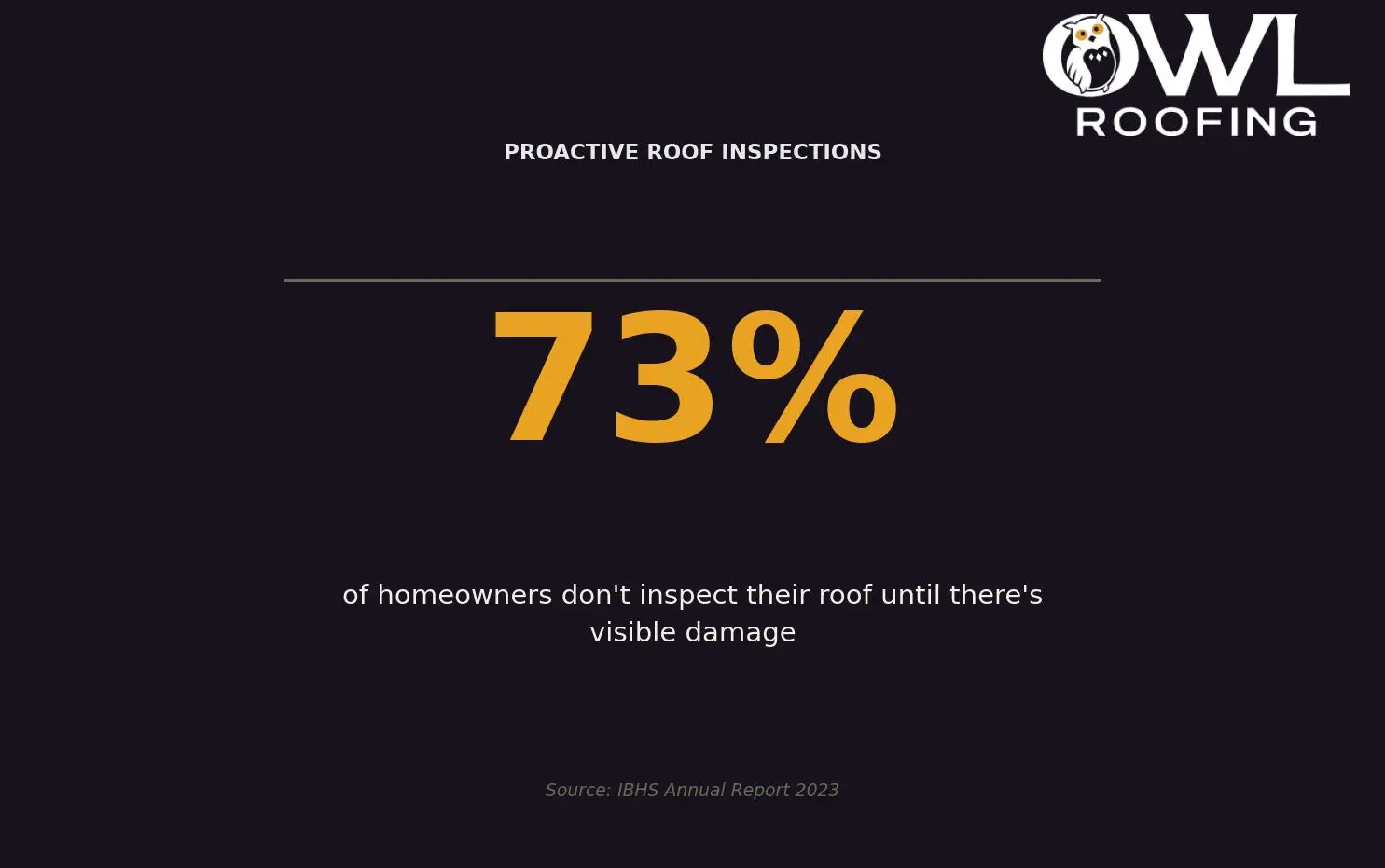
And here’s the kicker: most homeowners have no idea there’s a problem until the damage is done. The IBHS found that 73% of homeowners don’t inspect their roof until they notice visible damage. By then, you’re in reactive mode, paying premium prices to fix something that could’ve been prevented.
The Task: Understanding What “Breathing” Actually Means
It’s Not Magic—It’s Physics
When roofing folks talk about a roof “breathing,” they’re describing a simple but essential process: air needs to flow in, move through the attic space, and flow back out. Continuously. Year-round.
Think of your attic like a pair of lungs. You need an intake (air coming in) and an exhaust (air going out). Block either one, and you’ve got problems.
The NRCA outlines that a balanced ventilation system typically includes:
- Intake vents — Usually soffit vents tucked under your roof’s overhang. These let cool, dry air enter at the lowest point of your attic.
- Exhaust vents — Ridge vents along the peak of your roof, gable vents on the ends, or powered attic fans. These let warm, moist air escape from the highest point.
When both work together, you get continuous airflow that sweeps moisture and excess heat right out of your attic. When one is blocked, undersized, or missing entirely? That’s when things go sideways.
The Real-World Payoff
Proper roof ventilation airflow does more than prevent scary attic scenarios. It hits your wallet in a good way, too.
According to a study by the U.S. Department of Energy, efficient roof ventilation can reduce cooling costs by up to 10%. That’s because a well-ventilated attic doesn’t turn into a 150°F oven in July, forcing your AC to work overtime just to keep your upstairs bedrooms bearable.
In winter, good ventilation keeps your attic cold—which sounds counterintuitive, but it’s exactly what you want. A cold attic means snow stays frozen on your roof instead of melting, running down to the eaves, and refreezing into ice dams. More on that in a minute.
The Action: What Happens When Ventilation Goes Wrong
Sealed Roof Problems Are Sneaky
Here’s where things get frustrating. A lot of well-meaning home improvements can accidentally sabotage your roof’s ability to breathe.
Adding insulation without checking ventilation? That can block soffit vents. Installing a new roof over an old one? Layers can trap moisture. Sealing up every air leak for energy efficiency? Great for your heating bill, potentially terrible for your attic if you don’t compensate with better ventilation.
The Building Science Corporation highlights that a sealed or poorly ventilated roof can trap moisture inside, creating the perfect environment for wood rot and mold growth. These aren’t just cosmetic issues—they attack the structural integrity of your home. Rafters weaken. Sheathing deteriorates. What started as a ventilation problem becomes a major structural repair.
And then there’s the Minnesota specialty: ice dams.
Ice Dams: The Twin Cities’ Unwanted Winter Tradition
If you’ve lived through a few Minnesota winters, you’ve probably seen ice dams—those thick ridges of ice that form along roof edges, sometimes with icicles hanging like frozen curtains. They might look like a winter wonderland, but they’re actually a red flag.
Here’s how they form: Warm air trapped in a poorly ventilated attic heats the roof deck. Snow on top of the roof melts, trickles down toward the eaves, and hits the cold overhang where there’s no warm attic beneath it. That water refreezes, forming a dam. More meltwater backs up behind the dam, seeps under your shingles, and suddenly you’ve got water dripping into your walls, ceilings, and insulation.
A report from the Minnesota Department of Commerce emphasizes that proper roof ventilation can mitigate ice dam formation by maintaining consistent attic temperatures. When your attic stays cold, the snow on your roof stays frozen until it melts naturally from the sun—not from heat escaping your living space.
Comparing Homes: Ventilated vs. Sealed
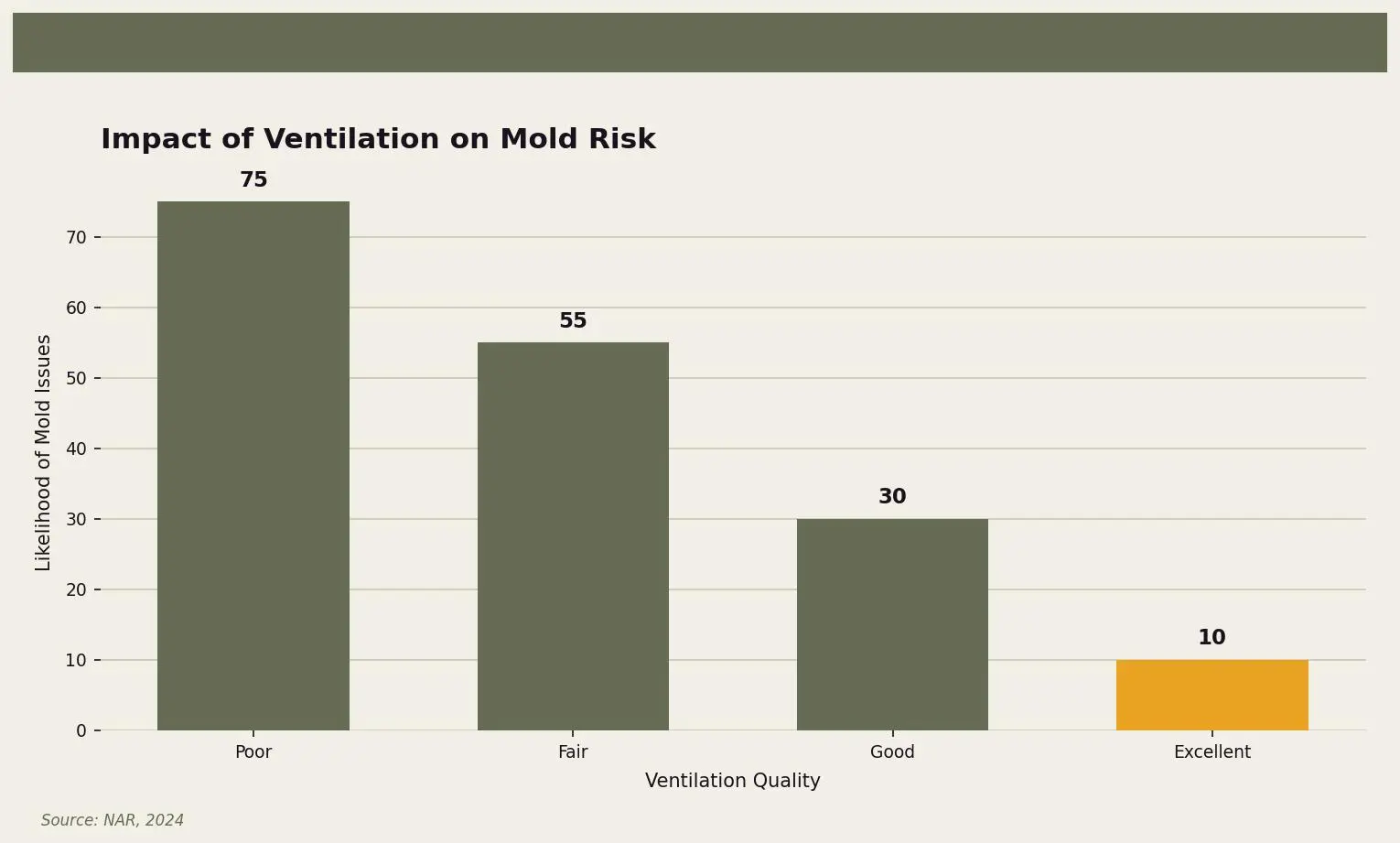
The difference between a well-ventilated home and one with poor airflow is dramatic over time. A study by the National Association of Realtors (NAR) found that homes with effective roof ventilation systems had a 25% lower likelihood of developing mold-related issues compared to homes with inadequate ventilation.
That’s not a small margin. We’re talking about the difference between a dry, healthy attic and one that’s slowly rotting from the inside out.
Homes with poor ventilation also experience bigger temperature swings throughout the house. Upstairs bedrooms that are freezing in winter and sweltering in summer? Often a ventilation problem. Higher energy bills despite good insulation? Ventilation might be the missing piece.
Minnesota-Specific Challenges: Why This Matters More Here
Let’s be real: Minnesota isn’t exactly kind to roofs. We’re not dealing with one type of weather stress—we’re dealing with all of them, sometimes in the same week.
Our region experiences significant freeze-thaw cycles that put constant pressure on roofing materials. One day it’s 35°F and sunny, melting snow on your roof. That night it drops to 10°F and everything refreezes. This cycle repeats dozens of times each winter, and every cycle is an opportunity for ice dams to form, for moisture to work its way into cracks, and for minor issues to become major ones.
Summer brings its own challenges. Attic temperatures in an unventilated space can easily exceed 150°F during a July heat wave. That kind of heat doesn’t just make your AC work harder—it actively bakes your shingles from below, accelerating wear and shortening your roof’s lifespan.
For Twin Cities homeowners, proper roof ventilation airflow isn’t optional. It’s essential maintenance, right up there with cleaning your gutters and checking your furnace before winter.
The Result: Your Action Plan for Better Roof Ventilation
Good news: ventilation problems are fixable, and catching them early saves you money and headaches down the road. Here’s what to do:
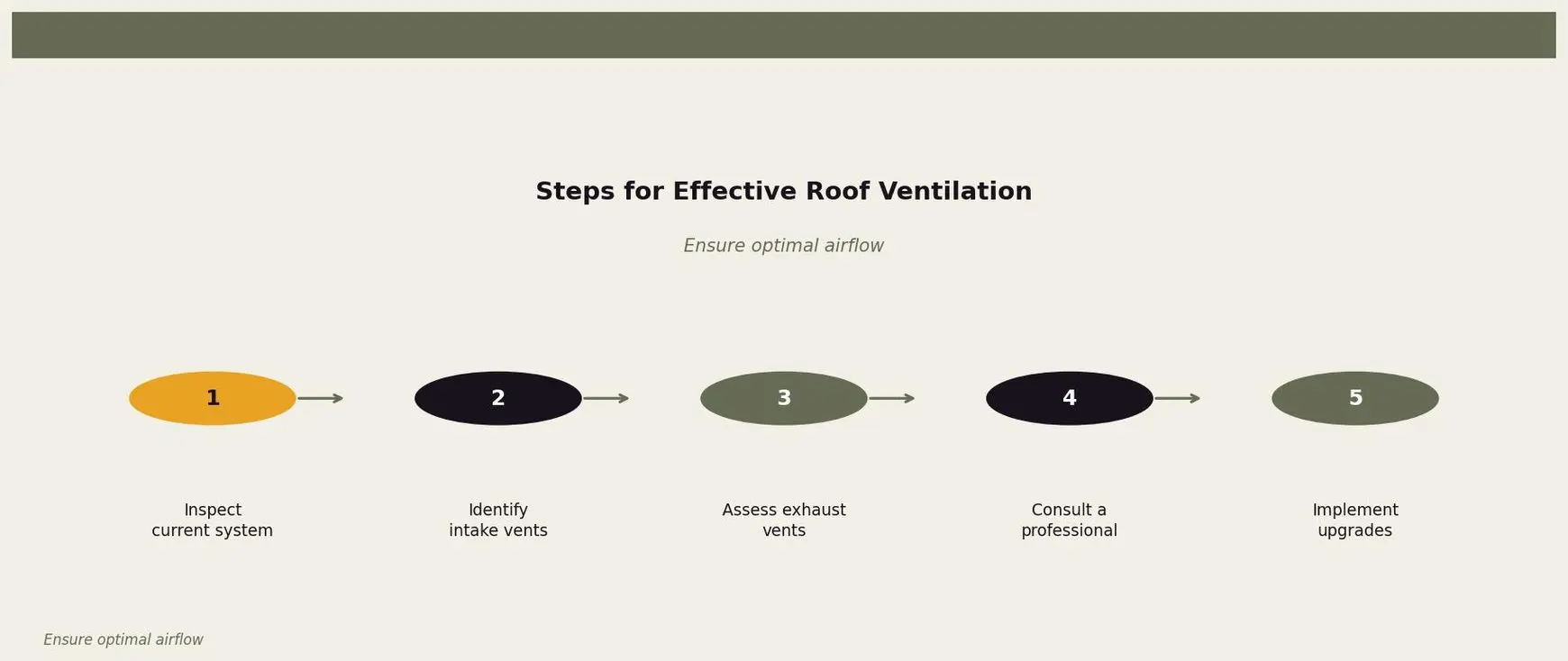
Step 1: Get a Professional Roof Inspection
Don’t wait until you see water stains on your ceiling. A professional inspection can identify ventilation issues before they cause damage. An experienced roofer will check your soffit vents (often clogged by insulation or debris), assess your exhaust vents, and calculate whether your system is properly balanced for your attic’s square footage.
Step 2: Know the Warning Signs
Between inspections, keep an eye out for these red flags:
- Ice dams forming along your roof’s edge in winter
- Frost or moisture on attic surfaces during cold months
- Musty odors in your attic or upper floors
- Visible mold or mildew on rafters or sheathing
- Upstairs rooms that are noticeably hotter than the rest of the house in summer
- Peeling paint or warping on exterior soffits and fascia
Step 3: Consider Upgrades
If your ventilation system is undersized or unbalanced, relatively simple additions can make a big difference:
- Ridge vents — These run along the peak of your roof and provide consistent exhaust along the entire roofline. They’re low-profile and effective.
- Additional soffit vents — More intake means better airflow. If your soffits are solid (no vents), adding them can transform your attic’s air circulation.
- Gable vents — These work well as supplementary exhaust, especially on older homes.
- Baffles — These inexpensive plastic or foam channels keep insulation from blocking your soffit vents. Essential if you’ve added blown-in insulation.
Step 4: Don’t DIY the Diagnosis
While some ventilation improvements are straightforward, diagnosing the root cause of attic moisture or ice dam problems requires experience. What looks like a ventilation issue might actually be an air sealing problem—or vice versa. A qualified local roofer can tell the difference and recommend solutions that actually address the issue.
The Bottom Line: A Roof That Breathes Is a Roof That Lasts
Your roof is your home’s first line of defense against everything Minnesota throws at it—blizzards, ice storms, summer heat waves, and everything in between. But it can only do its job if it can breathe.
Proper roof ventilation airflow prevents moisture damage, reduces energy costs, extends the life of your shingles, and keeps ice dams from turning your winter into an insurance claim. It’s one of those behind-the-scenes systems that doesn’t get much attention until something goes wrong—but a little proactive maintenance goes a long way.
If you haven’t thought about your roof’s ventilation lately, now’s the time. A quick inspection today could save you from a costly surprise tomorrow.
Ready to Check Your Roof’s Ventilation?
At Owl Roofing, we’ve seen what Minnesota weather does to roofs—the ice dams, the moisture damage, the attics that turned into petri dishes because nobody checked the vents. We’re a family-owned company based right here in Shoreview, serving neighbors throughout the Twin Cities. Tim, Bea, Noah, and Anya have 15+ years of combined experience helping homeowners protect their biggest investment.
If you’re curious whether your roof is breathing the way it should, give us a call at 651-977-6027 or visit owlroofing.com/. We’ll take a look, tell you exactly what we find, and give you honest options—no pressure, no upselling. Just straightforward advice from people who live here and care about doing the job right.
Protect Your Nest.
📍 Owl Roofing Serves the Entire Twin Cities Metro
Andover · Anoka · Apple Valley · Arden Hills · Big Lake · Blaine · Bloomington · Brooklyn Center · Brooklyn Park · Burnsville · Champlin · Chanhassen · Chaska · Columbia Heights · Coon Rapids · Cottage Grove · Crystal · deephaven · Delano · Eagan · East Bethel · Eden Prairie · Excelsior · Farmington · Forest Lake · Fridley · Golden Valley · Ham Lake · Hastings · Hopkins · Hugo · Inver Grove Heights · Lake Elmo · Lakeville · Lino Lakes · Mahtomedi · Maplewood · Mendota Heights · Minneapolis · Minnetrista · Mound · Mounds View · New Brighton · New Hope · North Oaks · North St. Paul · Oak Grove · Oakdale · Plymouth · Prior Lake · Ramsey · Richfield · Robbinsdale · Rosemount · Roseville · Saint Paul · Savage · Shakopee · Shoreview · South St. Paul · St. Louis Park · St. Michael · St. Paul · Stillwater · Vadnais Heights · Victoria · Waconia · wayzata · West St. Paul · White Bear Lake · woodbury
Licensed Minnesota roofing contractor · Free inspections · 10-year workmanship warranty · Get a free estimate →
