Weathered Wood is GAF’s most-chosen shingle color nationally, and for good reason — it’s a warm, neutral brown-gray blend that hides granule wear and roof debris better than almost any other color GAF makes. The one-line pairing rule: Weathered Wood looks best against white, cream, or greige siding, and gets muddy against cool-gray siding and trim. Below, we break down exactly why, with real pairing guidance instead of a generic “it goes with everything” line.
Quick Answer
Weathered Wood is a blended brown-gray architectural shingle color, available across GAF’s Timberline HDZ, Timberline UHDZ, and Timberline AS II lines. It’s GAF’s most popular color because it’s genuinely neutral — warmer than a true gray, cooler than a true brown — which makes it forgiving against a wide range of siding colors. The one-line rule: it reads best against white, cream, and greige; it reads muddiest against cool, blue-leaning gray siding, where Pewter Gray or Slate is the better call.
What It Actually Looks Like
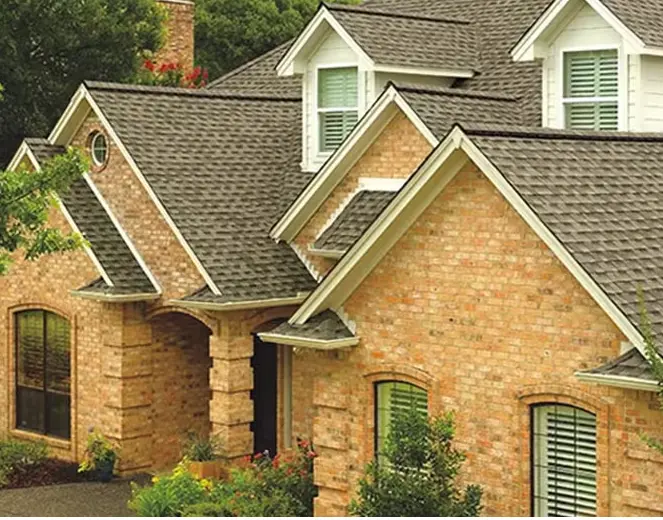
GAF describes Weathered Wood as having “rich tones and neutral highlights,” and calls it the color that brings out the wood-shake look built into the Timberline HDZ shingle profile. In practice, that means the color shifts noticeably depending on light and distance:
In direct afternoon sun, Weathered Wood reads noticeably browner — the warm granule tones dominate and the roof can look closer to a true brown than it does in the sample chip.
On north-facing slopes, away from direct sun, it reads grayer and cooler, since the warm tones need direct light to pop.
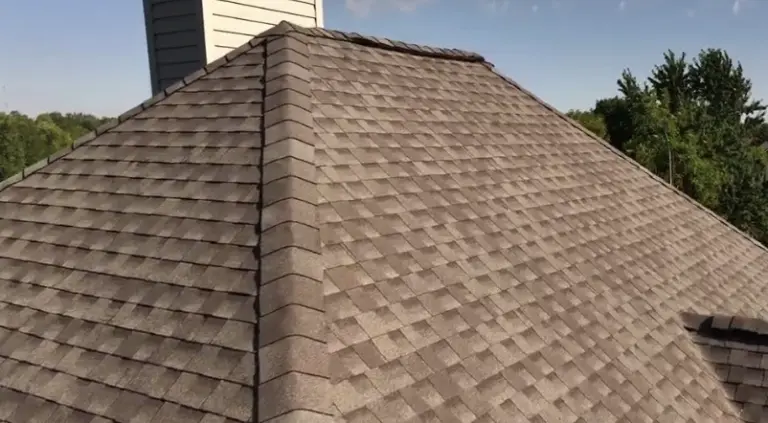
At 30 feet or more, the individual brown, tan, and gray granules blend into a single, mottled neutral tone — which is the whole point of a blended granule color, and why a close-up photo of the shingle surface (below) looks almost nothing like the roof does from the street.
Across seasons, Minnesota’s low winter light angle and longer shadows can push the color cooler and grayer than it reads in July’s overhead sun.
Which Product Lines Offer Weathered Wood
Weathered Wood is available across all three Timberline lines we checked:
Timberline HDZ (standard architectural, Class 3 impact) — part of the 19-color High Definition® collection
Timberline UHDZ (Class 4 impact, highest rating) — one of only six colors offered on this line
Timberline AS II / ArmorShield II (Class 4 impact) — one of seven colors offered on this line
That makes Weathered Wood one of the few colors you can carry across a standard HDZ roof and a Class 4 upgrade (garage, addition, or full reroof later) without a color mismatch — worth knowing if there’s any chance you’ll add a Class 4 section down the road. We couldn’t confirm whether Weathered Wood is currently offered on GAF’s Grand Sequoia AS designer/shake-look line; GAF’s own product page for Grand Sequoia AS did not list specific color names at the time we checked.
Siding Pairings: Great, Good, Avoid
Siding Color
Rating
Why
White
Great
Maximum contrast; Weathered Wood’s warm tones stand out clearly against pure white without clashing
Cream
Great
Warm-to-warm pairing; the roof and siding read as a cohesive, traditional palette
Greige (gray-beige)
Great
Greige splits the difference between warm and cool, so it bridges naturally with Weathered Wood’s blended tone
Sage green
Good
Sage’s muted, earthy green complements the brown undertones well, though it’s a more deliberate, designer-driven look than a safe default
Brick (red/tan tones)
Good
Most Twin Cities brick runs warm, so Weathered Wood generally harmonizes, but check your specific brick’s undertone before committing — very red brick can fight a very brown roof
Navy
Good
Strong contrast that can look intentional and upscale, but it’s a bolder choice than most of this list — view a full-size sample against your actual navy siding before committing
Cool gray
Avoid
This is the pairing that reads muddy. Cool, blue-leaning gray siding fights Weathered Wood’s warm undertones, and the combination can look dingy rather than intentional from the curb
If your siding is a cool gray and you want a warm-toned brown roof regardless, consider Barkwood or Shakewood instead — they lean more decisively brown without Weathered Wood’s gray undertone, which can read as more deliberate against a cool gray exterior. If you want to stay in the Weathered Wood “neutral brown-gray” family but your siding is cool-toned, Pewter Gray or Slate is the better match — see the comparison below.
Weathered Wood vs. Barkwood vs. Pewter Gray vs. Shakewood
Color
Tone
Best For
Avoid With
Weathered Wood
Neutral brown-gray blend
White, cream, greige siding; buyers who want a safe, resale-friendly neutral
Cool gray siding
Barkwood
Warm, reddish-brown
Warm-tone brick, tan, cream siding
Cool gray or blue-toned siding
Pewter Gray
Cool, true gray
Cool gray, white, navy siding; modern exteriors
Warm brown or orange-toned brick
Shakewood
Warmest brown in the standard lineup, cedar-shake look
Weathered Wood’s neutrality is its biggest resale asset — it’s rarely the reason a buyer walks, because it doesn’t commit as hard to “brown” or “gray” as the other options on this list. For HOA approval, it reads as a conservative, traditional choice in most Twin Cities associations we’ve worked with, though you should always confirm your specific HOA’s approved color list before ordering — some associations restrict to a narrow palette regardless of how neutral a color is. One heat note worth flagging: Weathered Wood is a mid-tone color, not a true dark or true light shingle. Darker colors like Charcoal or Midnight absorb more solar heat and can run a roof deck hotter in summer; true light colors like Oyster Gray reflect more. Weathered Wood sits in the middle — it’s not the coolest-running color on the chart, but it’s not the hottest either, which is a minor consideration if attic ventilation on your home is already marginal.
Frequently Asked Questions
What color is GAF Weathered Wood? A blended brown-gray architectural shingle color — warmer than a true gray, cooler than a true brown — described by GAF as having “rich tones and neutral highlights.” It’s designed to look different depending on light angle and distance, blending into a single neutral tone when viewed from the street. Does Weathered Wood look good with white siding? Yes — white siding is one of the strongest pairings for Weathered Wood. The contrast is clean, and the roof’s warm undertones stand out clearly without clashing. What siding color should I avoid with Weathered Wood shingles? Cool, blue-leaning gray siding. The combination tends to read muddy rather than intentional, because Weathered Wood’s warm undertones fight a cool gray’s blue undertones. Is Weathered Wood available on Class 4 impact-resistant shingles? Yes — Weathered Wood is offered on GAF’s Timberline UHDZ and Timberline AS II lines, both of which carry the Class 4 impact rating, as well as on standard Timberline HDZ. Is Weathered Wood a good choice for resale value? Generally, yes. It’s a conservative, widely-liked neutral that rarely turns off buyers, which is part of why it’s GAF’s most popular color nationally. Does Weathered Wood make my attic hotter than other colors? It’s a mid-tone color, so it absorbs more heat than a true light shingle but less than a true dark one like Charcoal. If your attic ventilation is already marginal, that’s worth factoring in regardless of which mid-to-dark color you pick. Still deciding between Weathered Wood and a cooler tone? Get a free quote and we’ll bring full-size samples to match against your actual siding. Related reading:GAF Timberline HDZ colors · Best roof shingles 2026 · Roof and siding color combinations · Best roof color for curb appeal and resale
Owl is the local family-owned roofer that actually cares.
250+ Twin Cities families have trusted us with their homes. Book a free inspection and see why.
★★★★★
“We couldn’t be happier with how everything turned out. From the beginning to the end, the whole experience was great.”
Rob Larson, Local Homeowner + Owl Customer
A real person calls you back, usually within the hour.
Written By: Tim Brown
Tim Brown, an owner of Owl Roofing, has been serving in the roofing industry for 10+ years, improving processes, is a keynote speaker at RoofCon, and the best-selling author of 'How to Become a Hometown Hero' a practical guide to home services and roofing marketing.




 9min Read
 Posted 10.07.2026
 ★★★★★
 Accredited