




How Often Should You Inspect Your Roof
 13min Read
 Posted 12.16.2025
How Often Should You Inspect Your Roof?
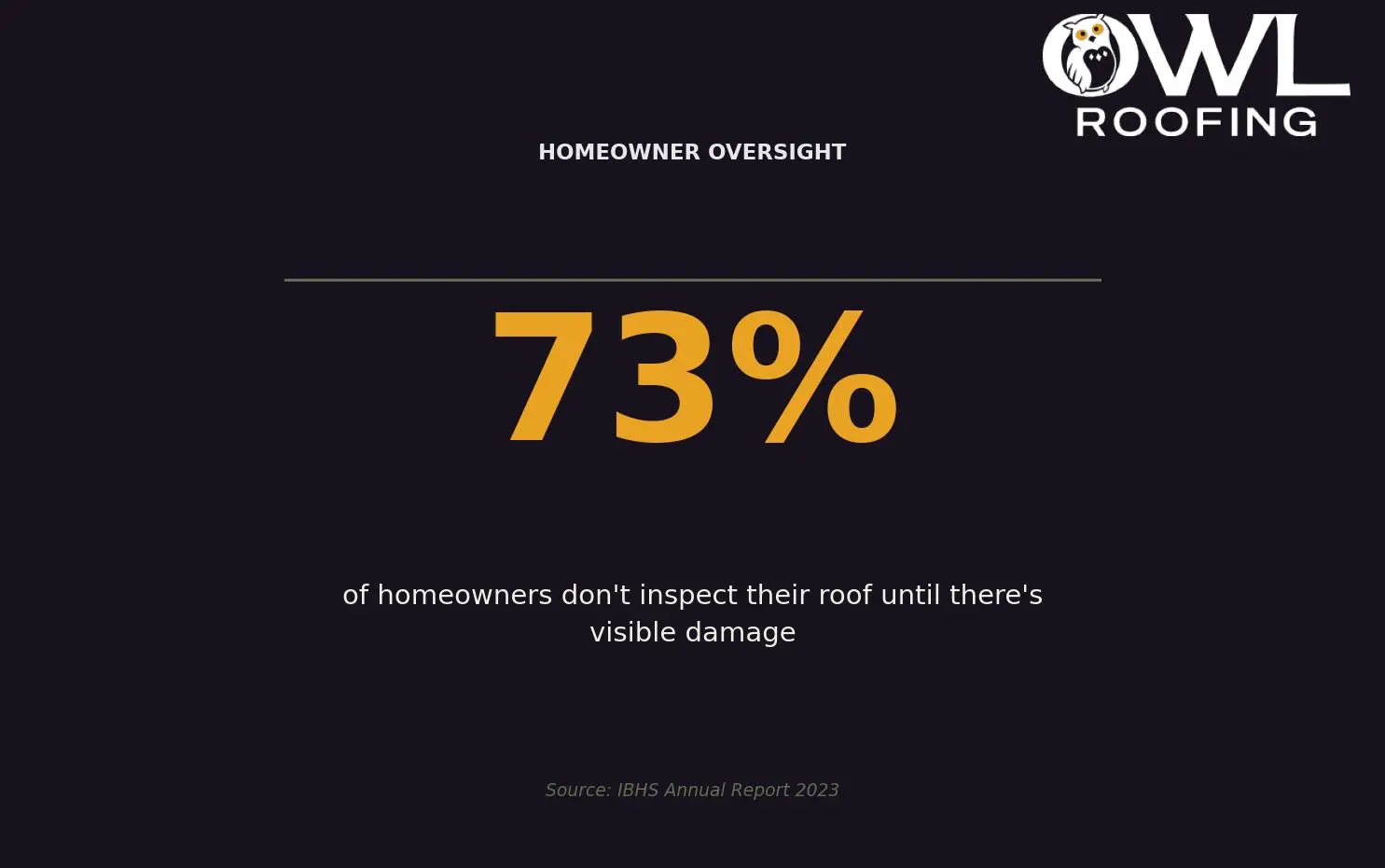
Here’s a number that might make you wince: 73% of homeowners don’t inspect their roof until something’s already wrong. That’s like waiting for your car to start smoking before checking the oil. In the Twin Cities, where your roof battles ice dams in February and hailstorms in July, that wait-and-see approach can turn a $300 fix into a $15,000 problem.
The thing is, most people don’t ignore their roofs on purpose. You just… forget it’s up there. It’s not leaking, so it must be fine, right? But by the time water’s dripping onto your kitchen floor, the damage has been building for months — sometimes years. And suddenly you’re not just replacing shingles. You’re replacing plywood, dealing with mold, and fighting with your insurance company.
The good news? A simple inspection schedule can save you from all of that. Let’s talk about how often you actually need to check your roof — and what happens when you don’t.
Why Roof Inspections Actually Matter (Beyond the Obvious)
Your roof isn’t just shingles. It’s the lid on everything you own. Every piece of furniture, every family photo, every device you’re probably reading this on — all of it sits under that roof. When it fails, everything underneath is at risk.
Minnesota weather doesn’t make this any easier. We get the full menu: heavy snow loads that stress your structure, ice dams that force water under your shingles, spring rains that find every weak spot, summer storms that whip tree branches into your gutters. Your roof handles more abuse in one Twin Cities winter than roofs in milder climates see in five years.
Here’s what the National Roofing Contractors Association (NRCA) found: regular inspections can extend a roof’s lifespan by 30%. That’s not a typo. If your roof should last 20 years, proper maintenance could push it to 26. On a roof that costs $15,000–$25,000 to replace, that’s real money back in your pocket.
But there’s another angle most people miss: insurance. When you file a claim for roof damage, your insurance company is going to ask questions. Did you maintain the roof? Can you prove it? Without documentation of regular inspections, you might find your claim denied or reduced. The Insurance Information Institute (III) is clear on this — insurers want evidence of maintenance. A paper trail of inspections isn’t just organized. It’s protection.
The Real Cost of Skipping Inspections
Let’s get specific about what “costly damage” actually means, because it’s easy to gloss over that phrase.
A missing shingle spotted during a routine inspection? Maybe $150–$300 to fix. That same missing shingle ignored for two years, letting water seep into your roof deck, rotting the plywood, soaking your attic insulation, and growing mold in your ceiling? You’re looking at $5,000–$20,000, depending on how far it spread. We’ve seen it happen. More than once.
Then there’s the energy bill creep. Damaged roofing lets conditioned air escape. Your furnace runs longer. Your AC works harder. You don’t notice it because it happens gradually — but a compromised roof can add 10–15% to your heating and cooling costs. In a Minnesota winter, that adds up fast.
And if you’re thinking about selling your home someday? The National Association of Realtors (NAR) reports that a well-maintained roof can increase a home’s resale value by up to 5%. On a $400,000 home, that’s $20,000. Buyers notice roofs. Home inspectors definitely notice roofs. A documented history of regular inspections tells potential buyers, “This homeowner took care of things.”
How Often Should You Actually Inspect Your Roof?
The Baseline: Twice a Year
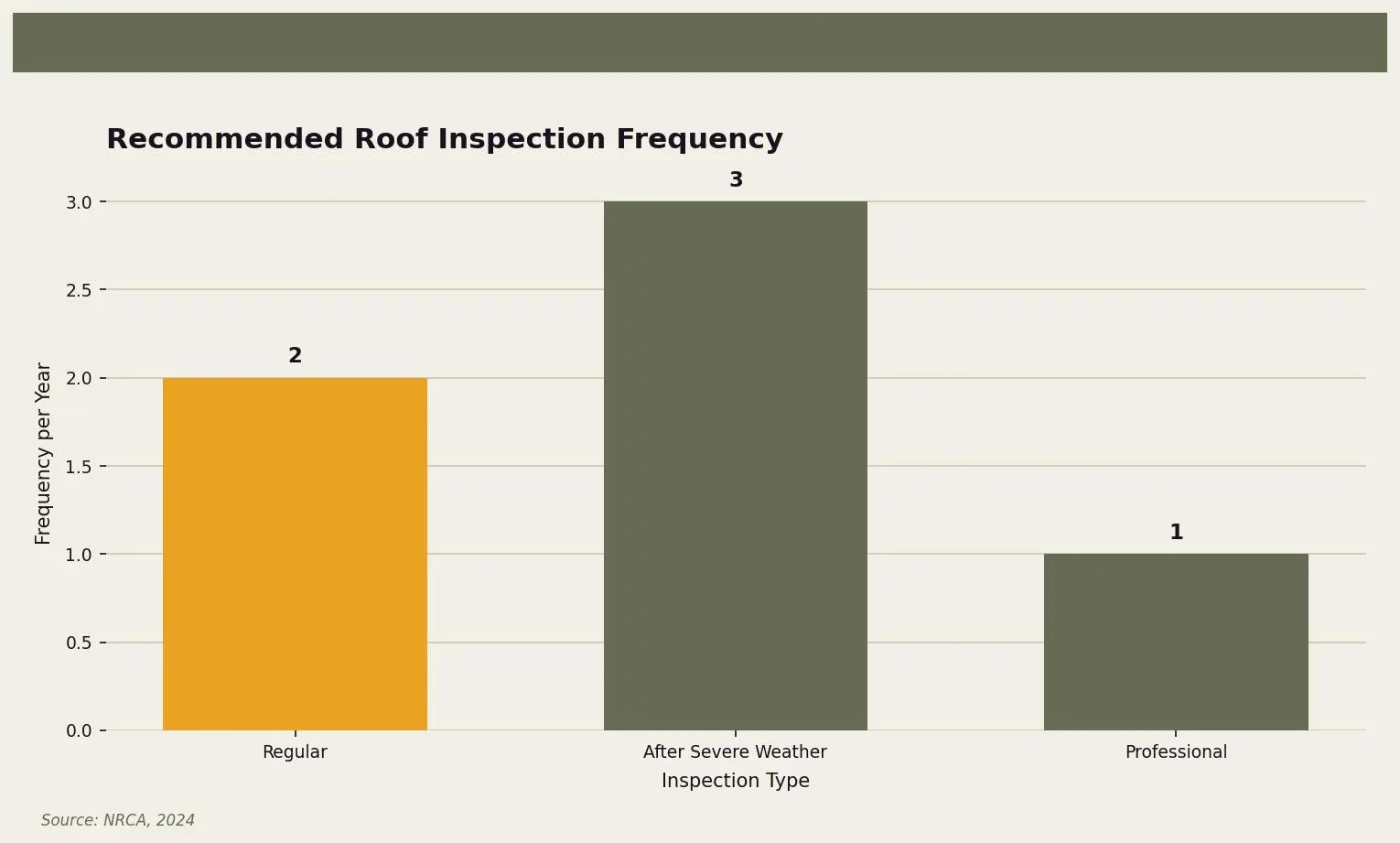
The NRCA recommends inspecting your roof at least twice annually — once in spring and once in fall. This isn’t arbitrary. Each inspection has a specific job:
- Spring inspection: This is your post-winter damage assessment. You’re looking for everything the snow, ice, and freeze-thaw cycles might have done. Cracked shingles, lifted flashing, gutter damage, ice dam aftermath. Winter is hard on roofs. Spring is when you find out how hard.
- Fall inspection: This is prep work. You’re making sure your roof is ready to handle another Minnesota winter. Clearing debris, checking that everything is sealed tight, confirming your gutters can handle snowmelt. Think of it as winterizing your roof the same way you’d winterize your car.
Mark these on your calendar. Seriously. Pick two dates — maybe the first weekend of April and the last weekend of October — and make them recurring events. It takes 15 minutes to do a basic ground-level visual check. That’s less time than you spend scrolling your phone on a slow morning.
After Severe Weather: No Exceptions
Here’s where a lot of homeowners slip up. You have your biannual inspections scheduled, so you think you’re covered. Then a hailstorm rolls through in June, you don’t see any obvious damage from the ground, and you move on with your life.
Big mistake. The Insurance Information Institute specifically recommends inspecting your roof after any significant weather event. This includes:
- Hailstorms (even “small” hail can damage shingles)
- High winds (50+ mph can lift and loosen materials)
- Heavy snow loads (especially after rapid accumulation)
- Ice storms
- Severe thunderstorms with driving rain
In the Twin Cities, this might mean three or four additional checks per year. It sounds like a lot, but most of these can be quick visual scans. You’re looking for obvious signs: missing shingles, debris accumulation, dented gutters, anything that looks different from last time. If something seems off, that’s when you call in a professional.
Annual Professional Inspections: Worth Every Dollar
Can you inspect your own roof? Yes, to a point. You can spot obvious damage from the ground with binoculars. You can walk around your house and check the gutters. You can look for daylight in your attic or water stains on ceilings.
But here’s the reality: you’re not trained to see what a professional sees. Subtle signs of wear, early-stage flashing failures, proper ventilation function, structural stress points — these require experience and knowledge that most homeowners don’t have. And that’s okay. You don’t need to become a roofing expert. You just need to hire one once a year.
The Insurance Institute for Business & Home Safety (IBHS) specifically recommends professional inspections because they include comprehensive assessments that cover areas an untrained eye will miss. A professional will get on your roof (safely), check all the components, look at your attic ventilation, and give you a documented report of the roof’s condition.
Expect to pay $150–$400 for a thorough professional inspection. Compare that to the cost of major repairs, and it’s one of the best values in home maintenance.
Twin Cities-Specific Challenges: What Minnesota Throws at Your Roof
Not all roofs face the same challenges. Living in the Minneapolis-St. Paul metro means your roof deals with conditions that would be foreign to homeowners in Dallas or San Diego. Understanding these local factors helps you know what to look for.
Ice Dams: Minnesota’s Signature Roof Problem
If you’ve lived here through a few winters, you’ve probably seen ice dams — those thick ridges of ice that form at the edge of roofs. They look almost pretty. They’re actually destructive.
Here’s what happens: heat escaping from your attic melts snow on the upper parts of your roof. That water flows down until it hits the colder eaves (the overhang part), where it refreezes into a dam. As more water backs up behind this dam, it has nowhere to go — except under your shingles and into your home.
The Minnesota Department of Commerce specifically advises homeowners to watch for ice dam formations, which can cause water backup under shingles and lead to serious leaks. Prevention comes down to two things: proper attic insulation (keeps heat from escaping) and adequate ventilation (keeps the roof surface cold). A professional inspection should always assess these factors.
Freeze-Thaw Cycles: The Slow Destroyer
Minnesota doesn’t just get cold and stay cold. We bounce back and forth. A sunny 35-degree day in February melts snow, then it refreezes overnight. This freeze-thaw cycling is brutal on roofing materials.
Water seeps into tiny cracks and gaps. It freezes, expands, and makes those cracks bigger. Then it melts, seeps in deeper, and freezes again. Over time, this process can loosen shingles, crack flashing, and create entry points for water. The NRCA notes that homeowners in regions with harsh winters should be more vigilant with their inspection schedules specifically because of this effect.
Heavy Snow Loads
Fresh snow weighs about 3–5 pounds per cubic foot. Packed snow can weigh 20 pounds or more. Ice? Around 57 pounds per cubic foot. Your roof is designed to handle significant loads, but that doesn’t mean unlimited loads.
After major snowfalls, watch for signs of stress: doors that suddenly stick, visible sagging, cracking sounds from the attic. If you’re concerned, get snow removed (carefully, by someone who knows what they’re doing) and have your roof inspected once it’s clear.
Your Roof Inspection Action Plan
Enough theory. Here’s exactly what to do:
Set Your Calendar
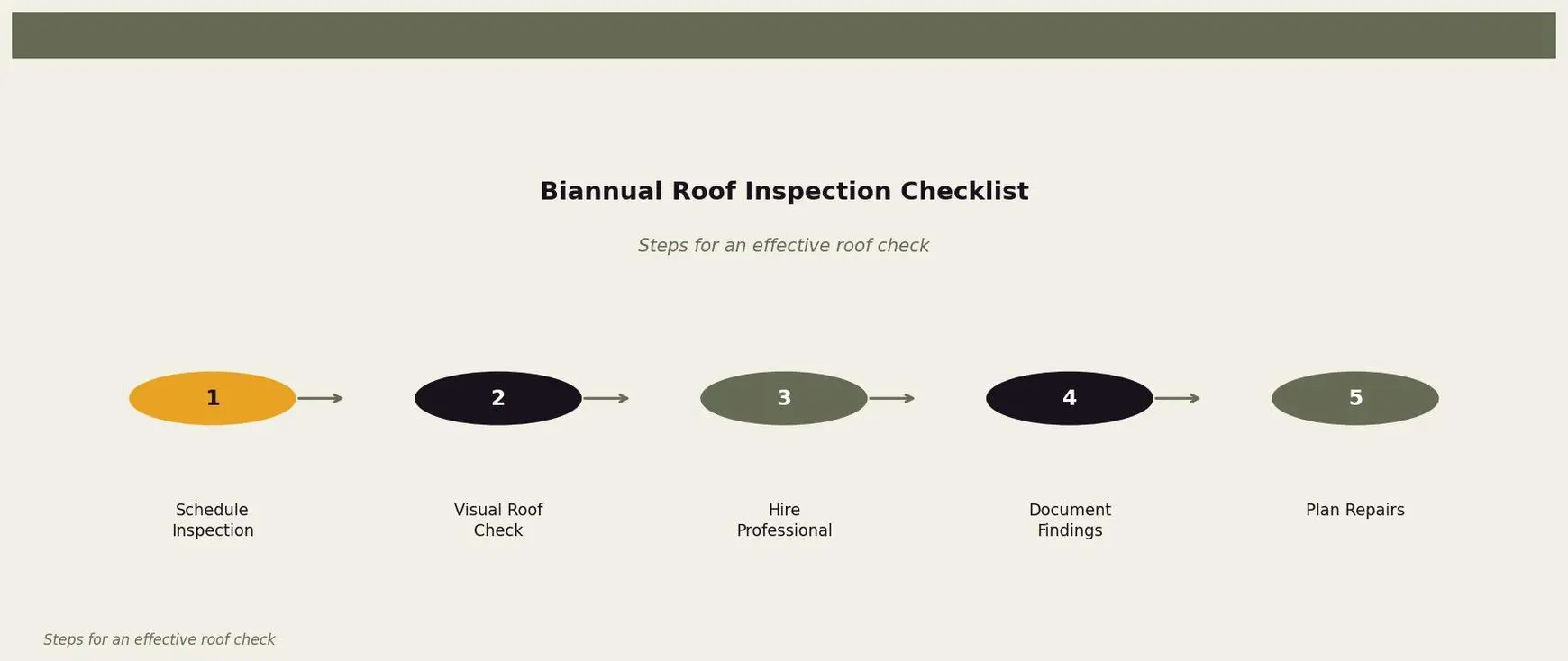
- Spring inspection (April): Post-winter damage check. Do a ground-level visual scan yourself, note anything suspicious, and schedule a professional inspection if it’s been over a year.
- Fall inspection (October): Pre-winter prep. Clear debris, check gutters, confirm everything is sealed and ready for snow.
- After any major storm: Quick visual check within 24–48 hours. Look for missing materials, debris, or damage to gutters and flashing.
- Annual professional inspection: Schedule this for spring. Let the pros catch what you can’t see.
Know What to Look For
During your DIY checks, you’re scanning for:
- Missing, cracked, or curling shingles
- Shingle granules accumulating in gutters (sign of wear)
- Damaged or missing flashing around vents, chimneys, skylights
- Sagging areas or visible dips in the roofline
- Clogged or damaged gutters and downspouts
- Debris accumulation (leaves, branches)
- Inside your home: water stains on ceilings, daylight visible in attic, musty smells
Document Everything
Keep a simple record of every inspection and any repairs made. This doesn’t need to be fancy — a folder with dated notes and photos works fine. Include professional inspection reports, receipts for repairs, and photos of your roof’s condition over time. This documentation is gold when you file an insurance claim or sell your home.
Don’t Wait on Repairs
Found something? Fix it. Small problems don’t stay small. A $200 repair in June becomes a $2,000 repair by December. Roof damage almost always gets worse, never better. Acting quickly is the difference between maintenance and emergency.
The Bottom Line on Roof Inspection Frequency
Your roof works hard every single day, and it works even harder in Minnesota. Twice-yearly inspections, plus checks after severe weather, plus one professional inspection annually — that’s the formula that keeps small problems from becoming disasters.
The 73% of homeowners who wait until damage is visible? They’re the ones dealing with emergency repairs, insurance battles, and premature roof replacements. The homeowners who stay ahead of problems? They’re the ones whose roofs last 30% longer and whose homes sell for more.
You don’t have to become obsessive about your roof. You just have to be consistent. Put those inspections on your calendar, take 15 minutes to actually do them, and call a professional when something seems off. That’s it. That’s the whole system.
Need an Expert Eye on Your Roof?
If it’s been a while since your last inspection — or if you’ve never had a professional look at your roof — we’d be happy to help. We’re Owl Roofing, a family-owned company based right here in Shoreview, and we’ve been inspecting and repairing roofs across the Twin Cities for over 15 years combined. We’ve seen every type of ice dam damage, hail impact, and winter wear that Minnesota dishes out.
We’ll tell you exactly what your roof needs — no pressure, no upselling, just honest information you can use. If everything looks good, we’ll tell you that too. Give us a call at 651-977-6027 or visit owlroofing.com/ to schedule an inspection. We’re your neighbors, and we’re here to help you protect your nest.
Protect Your Nest.
📍 Owl Roofing Serves the Entire Twin Cities Metro
Andover · Anoka · Apple Valley · Arden Hills · Big Lake · Blaine · Bloomington · Brooklyn Center · Brooklyn Park · Burnsville · Champlin · Chanhassen · Chaska · Columbia Heights · Coon Rapids · Cottage Grove · Crystal · deephaven · Delano · Eagan · East Bethel · Eden Prairie · Excelsior · Farmington · Forest Lake · Fridley · Golden Valley · Ham Lake · Hastings · Hopkins · Hugo · Inver Grove Heights · Lake Elmo · Lakeville · Lino Lakes · Mahtomedi · Maplewood · Mendota Heights · Minneapolis · Minnetrista · Mound · Mounds View · New Brighton · New Hope · North Oaks · North St. Paul · Oak Grove · Oakdale · Plymouth · Prior Lake · Ramsey · Richfield · Robbinsdale · Rosemount · Roseville · Saint Paul · Savage · Shakopee · Shoreview · South St. Paul · St. Louis Park · St. Michael · St. Paul · Stillwater · Vadnais Heights · Victoria · Waconia · wayzata · West St. Paul · White Bear Lake · woodbury
Licensed Minnesota roofing contractor · Free inspections · 10-year workmanship warranty · Get a free estimate →
