How to Choose a Roofing Contractor You Can Trust (checklist)
 8min Read
 Posted 12.29.2025
Choosing a roofing contractor shouldn’t feel risky — but for many homeowners, it does.
Not because roofs are complicated, but because the industry is crowded with unclear communication, rushed decisions, and incentives that don’t always align with your best interest.
This guide exists to slow things down, give you clarity, and help you make a confident, wise decision — whether you work with us or not.
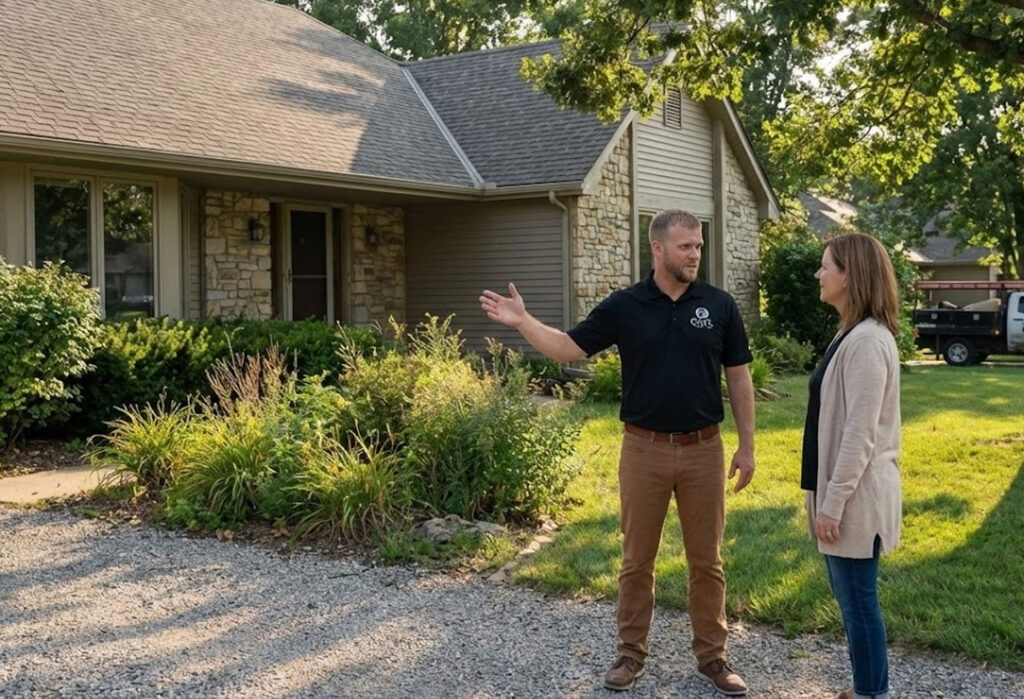
Why Roofing Feels So Hard to Trust
Most homeowners replace a roof once or twice in a lifetime. Roofers do it every day.
That imbalance creates three problems:
- You don’t know what “normal” looks like
Prices, materials, timelines, warranties — most people have no baseline. - The decision often feels urgent
Storms, leaks, insurance deadlines, or a contractor saying “this needs to be done now.” - Many contractors are rewarded for speed, not care
Fast sales, fast installs, minimal follow-up.
When urgency meets confusion, homeowners default to:
- The cheapest quote
- The loudest salesperson
- The company that “seems confident”
None of those guarantee trust.
The Biggest Myth: “All Roofers Are Basically the Same”
They’re not.
The differences aren’t always visible in photos or shingle brands — they show up in:
- How clearly things are explained
- Whether repair is discussed before replacement
- How problems are handled after the contract is signed
- How much effort goes into protecting your home, not just finishing the job
Two roofs can look identical on day one — and perform very differently five years later.
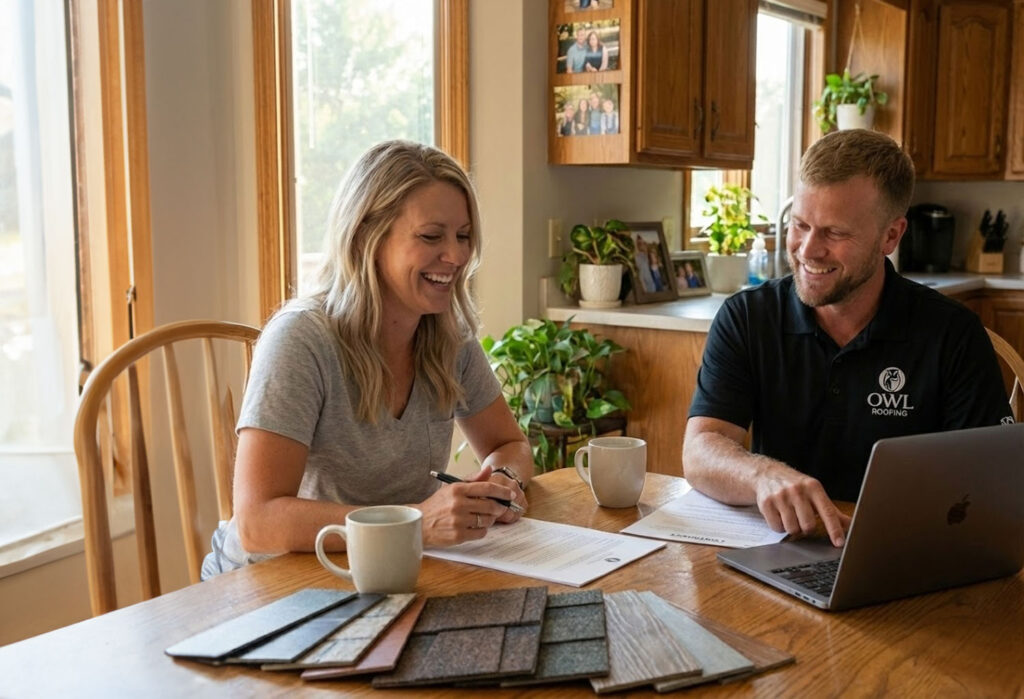
Trust Starts Before Price Is Discussed
A trustworthy roofer doesn’t rush to numbers.
They focus first on:
- Understanding your concerns
- Explaining what they’re seeing and why it matters
- Outlining options, not pushing outcomes
If the conversation jumps straight to:
“Insurance will cover it”
“This deal expires today”
“Everyone in your neighborhood is doing it”
That’s not expertise — that’s pressure.
A Simple Reframe That Helps Homeowners
Instead of asking:
“Who’s the best roofer?”
Ask:
“Who helps me understand my roof best?”
Trustworthy contractors:
- Teach without talking down
- Welcome second opinions
- Are comfortable saying “you don’t need a full replacement yet”
- Make you feel calmer after the meeting — not more anxious
Clarity is the signal. Confidence follows clarity.
What This Guide Will Not Do
This isn’t:
- A scare tactic
- A “choose us or else” pitch
- A list of gimmicks to look for
It is:
- A homeowner-first framework
- Built around real-world decisions
- Designed to protect your home, your money, and your peace of mind
In Part 1, we covered why roofing decisions feel risky and how clarity — not urgency — is the foundation of trust.
Now let’s get concrete.
This section gives you a simple, homeowner-friendly checklist you can use with any contractor to separate professionals from pressure artists.
You don’t need roofing knowledge to use this.
You just need to pay attention to how things are explained.
The 6-Question Trust Checklist
A trustworthy roofer should be able to answer all six of these clearly, calmly, and without defensiveness.
1. “Can you show me what you’re seeing on my roof and explain why it matters?”
Good signs:
- Photos or video from your roof
- Plain language explanations
- Willingness to point out what’s still in good shape
Red flag:
- “Just trust me” explanations
- Vague phrases like “storm damage everywhere” with no visuals
If they can’t explain it, they don’t own it.
2. “Do I need a full replacement, or are repairs an option?”
Good signs:
- Repair is discussed seriously, not dismissed
- Pros and cons of each option are explained
- No pressure to decide on the spot
Red flag:
- Replacement presented as the only option immediately
A contractor who never recommends repairs is telling you more about their incentives than your roof.
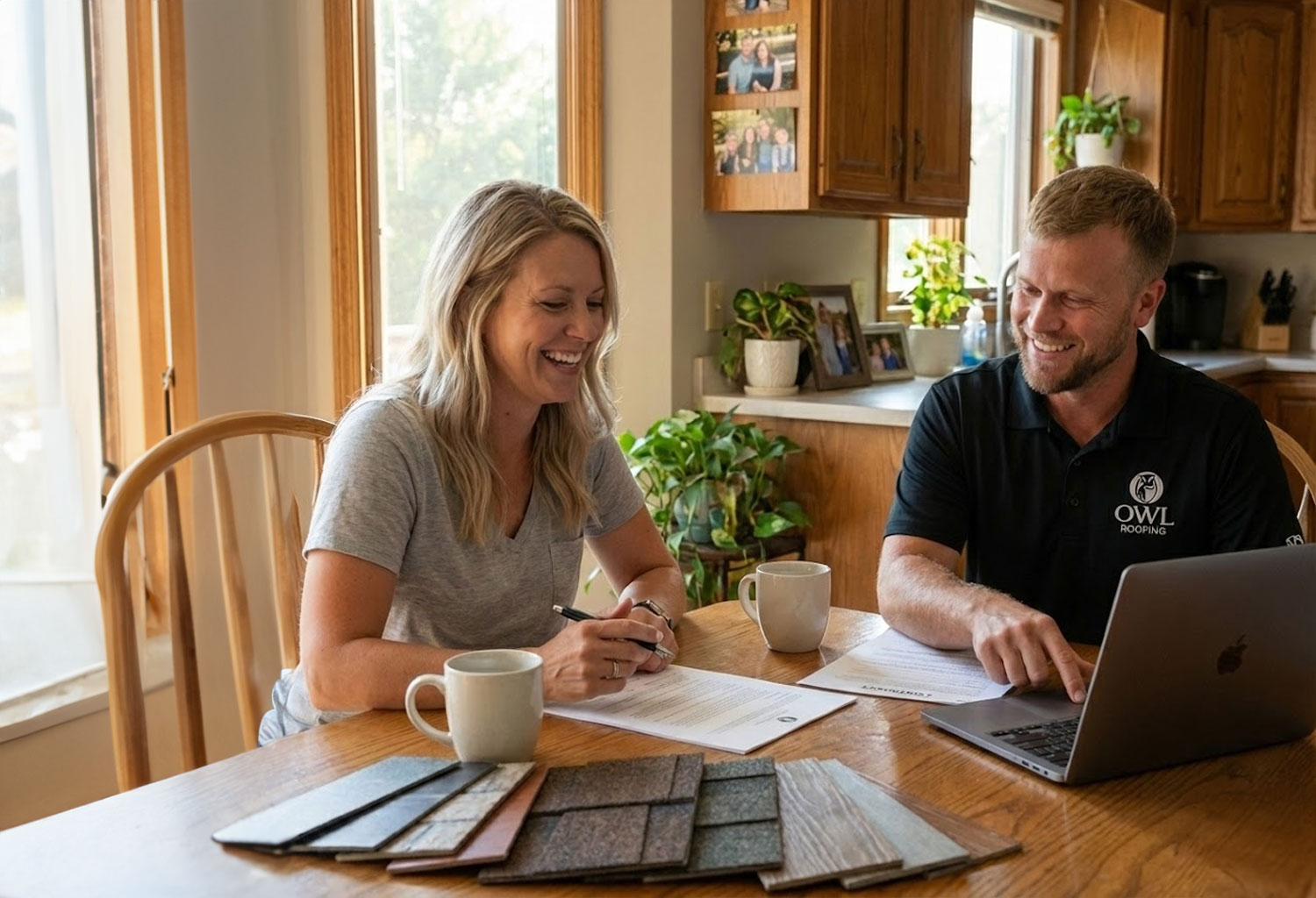
3. “What exactly is included in your estimate?”
Good signs:
- Materials, labor, ventilation, cleanup, and protection are itemized
- You know what isn’t included just as clearly
- They’re happy to walk through it line by line
Red flag:
- One lump-sum number with no detail
If it’s not written down, it’s not promised.
4. “How will you protect my home during the project?”
Good signs:
- Specific plans for landscaping, driveways, siding, and gutters
- Daily cleanup explained
- Clear expectations for noise, debris, and timing
Red flag:
- “We’re careful” with no process behind it
Care is a system, not a personality trait.
5. “Who will be my point of contact before, during, and after the job?”
Good signs:
- A named person
- Clear communication expectations
- You know who to call if something feels off
Red flag:
- “Just call the office” with no ownership
Over-communication doesn’t happen by accident.
6. “What happens if something goes wrong?”
Good signs:
- Calm, straightforward answer
- Examples of how issues are handled
- No blaming manufacturers, crews, or homeowners
Red flag:
- Defensive answers or minimizing the question
Every project has hiccups. Trustworthy companies plan for them.
Red Flags That Matter (and Ones That Don’t)
Red Flags That Matter
- High-pressure timelines
- Refusal to put things in writing
- Talking badly about every other roofer
- Avoiding questions instead of answering them
Red Flags That Don’t
- A company telling you to get a second opinion
- A contractor saying “you don’t need this yet”
- Slightly higher pricing paired with clearer scope and service
Confidence doesn’t rush you. It steadies you.
How to Compare Roofing Estimates Without Losing Your Mind
When comparing quotes, don’t line them up by price alone.
Compare:
- Scope of work
- Materials quality
- Ventilation approach
- Cleanup and protection
- Communication expectations
Two estimates that look similar in price can be wildly different in value.
The goal isn’t the cheapest roof.
It’s the roof you never have to stress about again.
The Final Gut Check
Before you decide, ask yourself one last question:
“After meeting this contractor, do I feel calmer and more informed — or more rushed and unsure?”
That feeling matters.
Wise homeowners choose the contractor who:
- Makes the process feel manageable
- Explains without ego
- Treats their home like it matters
That’s how you protect your nest — not just with shingles, but with good decisions.
📍 Owl Roofing Serves the Entire Twin Cities Metro
Andover · Anoka · Apple Valley · Arden Hills · Big Lake · Blaine · Bloomington · Brooklyn Center · Brooklyn Park · Burnsville · Champlin · Chanhassen · Chaska · Columbia Heights · Coon Rapids · Cottage Grove · Crystal · deephaven · Delano · Eagan · East Bethel · Eden Prairie · Excelsior · Farmington · Forest Lake · Fridley · Golden Valley · Ham Lake · Hastings · Hopkins · Hugo · Inver Grove Heights · Lake Elmo · Lakeville · Lino Lakes · Mahtomedi · Maplewood · Mendota Heights · Minneapolis · Minnetrista · Mound · Mounds View · New Brighton · New Hope · North Oaks · North St. Paul · Oak Grove · Oakdale · Plymouth · Prior Lake · Ramsey · Richfield · Robbinsdale · Rosemount · Roseville · Saint Paul · Savage · Shakopee · Shoreview · South St. Paul · St. Louis Park · St. Michael · St. Paul · Stillwater · Vadnais Heights · Victoria · Waconia · wayzata · West St. Paul · White Bear Lake · woodbury
Licensed Minnesota roofing contractor · Free inspections · 10-year workmanship warranty · Get a free estimate →

Recent Articles
Explore The Blog