


Ice & Water Shield Calculator: Coverage & Cost
 6min Read
 Posted 7.28.2026
🦉 Ice & Water Shield Calculator
Estimate membrane coverage & material cost for your Minnesota roof (R905.1.2).
Minnesota code (R905.1.2) requires ice barrier from the eave edge to at least 24″ past the interior wall line — typically two 3-ft courses (6 ft) up the roof. Valleys use a 3-ft-wide run. Material only; installation is part of roofing labor.
Price My Roof — Free Estimate →What Ice & Water Shield Is (and Why Minnesota Requires It)
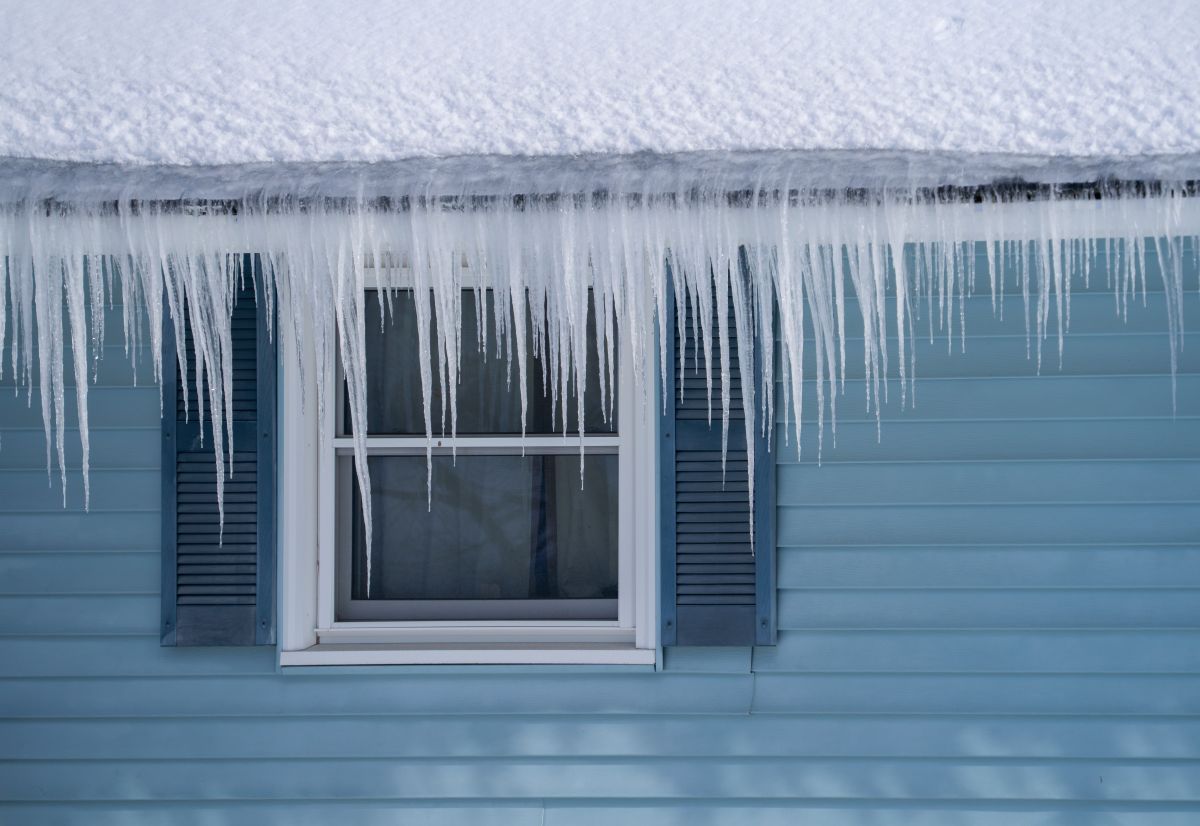
Ice and water shield is a self-adhering rubberized membrane that bonds directly to the roof deck and seals around every nail driven through it. Unlike felt or synthetic underlayment, which shed water, ice barrier stops water that is actively being pushed uphill — which is exactly what an ice dam does. When meltwater pools behind a ridge of ice at your eave, it backs up under the shingles; the membrane is the last line keeping it out of your ceiling. That is why Minnesota code (R905.1.2) mandates it on every new roof in the state, and why skipping or shorting it is one of the classic cheap-bid tricks.
How Much Ice & Water Shield Does Code Require?
The rule: membrane must run from the eave edge to at least 24 inches inside the exterior wall line, measured horizontally. With typical overhangs and pitches, that means two 3-ft courses — 6 feet up the slope from the edge. Low-slope roofs and deep overhangs need more; a 4/12 roof with a 24″ overhang can require three courses. The calculator above converts your eave and valley lengths into squares of membrane using the standard 6-ft eave band and 3-ft valley runs, then prices it at current material rates ($80–$120 per square for quality 40-mil membrane).
Code Minimum vs. Full Protection: Where Extra Coverage Pays
Code minimum handles the eaves. But ice dams and wind-driven rain do not read code books — valleys, around chimneys and skylights, along sidewalls, and low-slope transitions are all high-risk zones worth wrapping. Upgrading from code-minimum to eaves-plus-valleys on a typical 2,500 sq ft roof adds only $600–$1,500, which is cheap insurance against the five-figure interior damage a single February leak can cause. On homes with a history of ice dams, or low-slope sections, full-deck membrane coverage ($2,000–$3,750 in material on that same roof) is the belt-and-suspenders play — overkill on a steep simple gable, a genuinely smart spec on complex or shallow roofs.
Membrane Grades: Standard, Premium, and High-Temp
Standard 40-mil membranes (Grace Ice & Water Shield, GAF WeatherWatch) cover most Twin Cities reroofs at $80–$120 per square. Premium versions add thickness and tougher top surfaces for valleys and low slopes. High-temp membranes ($140–$200/square) are required under metal roofs, where surface temperatures would soften standard adhesives. One non-negotiable: membrane bonds to the deck, so it goes on during a reroof — it cannot be retrofitted under existing shingles. If your roof predates 2000, there is a real chance it has none, which moves reroof timing up the priority list.
Ice Barrier Is Step Three of Ice Dam Defense
Worth saying plainly: ice and water shield does not prevent ice dams — it survives them. Prevention lives in the attic: air sealing, R-49+ insulation, and balanced ventilation keep the roof deck cold so snow melts from the sun, not your furnace. The membrane is the backstop for the winters that overwhelm everything (2023, we remember). Roofs that combine all three sail through Minnesota winters; roofs missing any one of them keep steam-removal crews busy — see our ice dam removal cost guide.
Ice & Water Shield FAQs
How many feet of ice and water shield does code require?
From the eave edge to 24″ past the interior wall line — typically 6 ft up the slope in Minnesota (two courses).
How much does ice and water shield cost?
$80–$200 per square (100 sq ft) in material depending on grade; a code-minimum install on a 2,500 sq ft roof is roughly $480–$720.
Can you install ice and water shield over old shingles?
No — it must bond to a clean deck, which is why it happens at reroof time.
Is ice and water shield worth it on the whole roof?
On low-slope, complex, or dam-prone roofs, often yes. On steep simple gables, eaves-plus-valleys hits the value sweet spot.
Does ice and water shield replace underlayment?
It replaces underlayment only where it is installed; the rest of the roof still gets synthetic underlayment over the field.
Not sure what is under your shingles? Owl Roofing specs ice barrier explicitly on every estimate — coverage drawn on the diagram, no mystery. Get yours free. 🦉
