




Roof Ventilation Minneapolis Why It Matters for Energy and Roof Lifespan
 13min Read
 Posted 2.16.2026
Your Attic Is Probably Cooking Your Roof Right Now
Here’s a number that should make you sweat: on a 90-degree Minneapolis summer day, your attic can hit 150 degrees or higher. That’s hot enough to bake cookies—and it’s slowly destroying your shingles from the inside out. Poor roof ventilation in Minneapolis homes is one of the most expensive problems homeowners don’t know they have. It silently drives up your energy bills, warps your roof deck, and shaves years off your roof’s life. The worst part? Most people only discover the damage after they’re staring at a repair estimate that makes their stomach drop.
But here’s the good news: proper roof ventilation can flip the script entirely. We’re talking lower energy bills, a roof that actually lasts as long as it’s supposed to, and an attic that doesn’t feel like a sauna in July or grow icicles in January. Let’s dig into how something as straightforward as letting your attic breathe can save you thousands and keep your home comfortable year-round.
The Hidden Cost of Ignoring Your Attic
Most homeowners don’t think about their attic until something goes wrong. A leak appears. Ice dams form along the eaves. The upstairs bedrooms become unbearably hot every summer. By then, the damage is already done—and the bills start piling up.
Roof ventilation isn’t glamorous, but it’s absolutely critical for maintaining your home’s health and efficiency. According to the National Roofing Contractors Association (NRCA), inadequate ventilation leads to moisture accumulation that damages roofing materials and drives up energy costs. When hot, humid air gets trapped in your attic, it doesn’t just sit there—it goes to work degrading your roof deck, warping your shingles, and creating the perfect environment for mold to thrive.
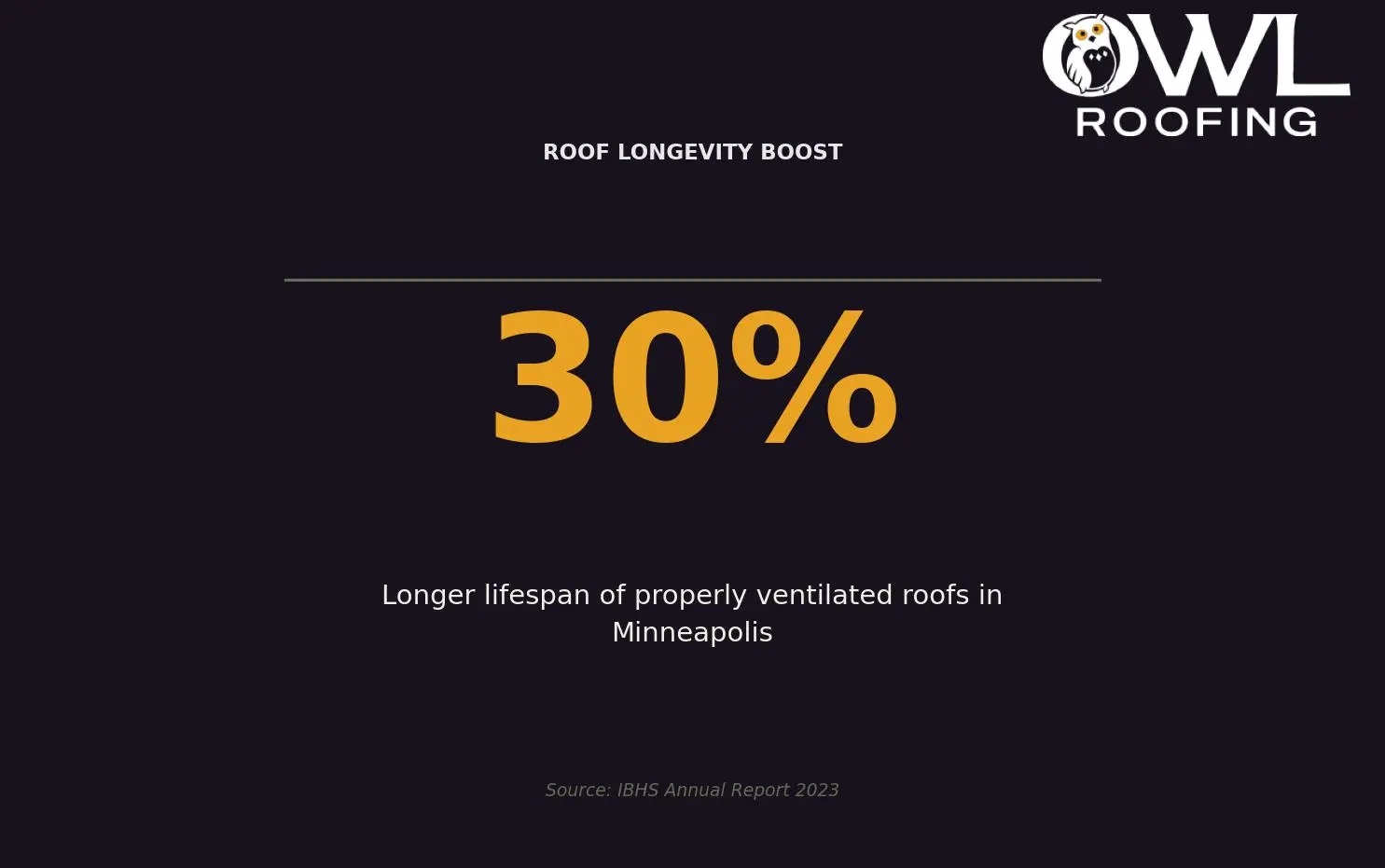
And here’s a stat that should get your attention: the Insurance Institute for Business & Home Safety (IBHS) reports that homes with proper attic ventilation in Minneapolis can experience up to 30% longer roof lifespans. Think about that. If a typical roof lasts 20-25 years, proper ventilation could add another 6-8 years before you need a replacement. That’s real money staying in your pocket.
In short, investing in ventilation isn’t just about comfort—it’s about protecting one of the biggest investments you’ll ever make: your home.
How Roof Ventilation Actually Works
The Simple Science Behind It
Roof ventilation isn’t complicated, but it is clever. The whole system works on a basic principle: hot air rises. When your attic heats up (whether from summer sun beating down on your shingles or heat escaping from your living space below), that warm air naturally wants to go up and out. A good ventilation system gives it somewhere to go.
The magic happens through a continuous cycle of air movement. Intake vents at the eaves (usually soffit vents) draw in cooler outside air, while exhaust vents near the roof’s peak let warm, moist air escape. This constant flow prevents moisture buildup—the stuff that leads to mold growth, wood rot, and that musty smell nobody wants in their home.
Ridge vents are especially popular in Minneapolis because they run along the entire peak of your roof, providing consistent exhaust ventilation without any mechanical parts that can break down. Paired with proper soffit intake vents, they create what roofers call “balanced ventilation”—and that balance is everything.
What Proper Ventilation Does for Your Home
When your roof ventilation is working the way it should, you’ll notice the difference in ways big and small:
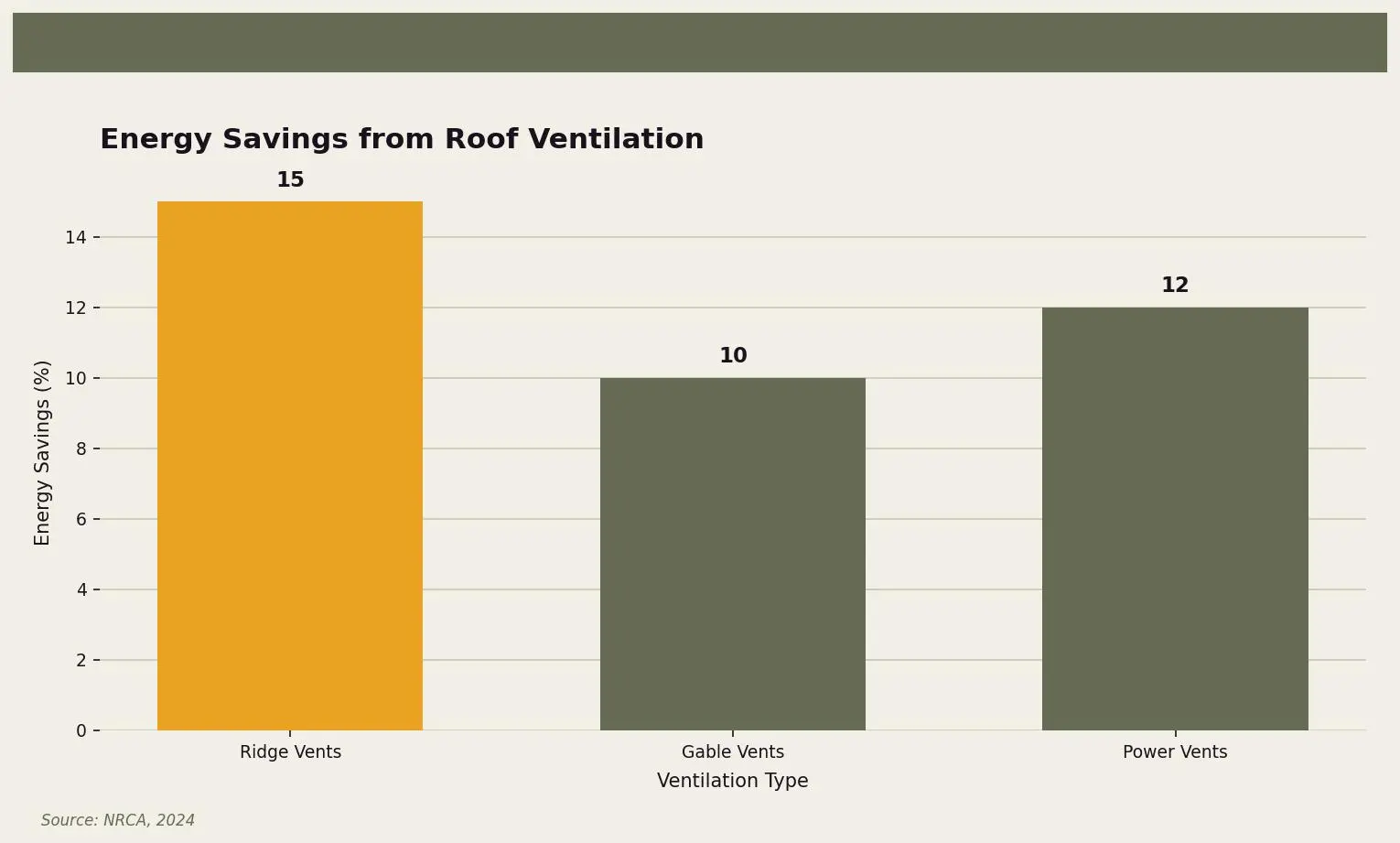
- Lower energy bills: NRCA data shows that homes with proper ventilation can save up to 15% on cooling costs alone. Your AC doesn’t have to fight against a 150-degree attic anymore.
- Longer-lasting shingles: Excessive heat breaks down roofing materials faster. Keep your attic cooler, and your shingles stay flexible and functional longer.
- No more ice dam roulette: In winter, proper ventilation keeps your roof deck cold enough that snow doesn’t melt, refreeze at the eaves, and create those destructive ice dams.
- Healthier air quality: Moisture control means less mold and mildew growing in your attic—stuff that can work its way into your living space.
- More comfortable upstairs rooms: Ever notice your second floor is always hotter than your first? Poor attic ventilation is usually the culprit.
Proper roof vent installation in Minneapolis isn’t just a nice-to-have. It’s the difference between a home that works with Minnesota’s weather and one that’s constantly fighting against it.
Your Ventilation Options (And How They Stack Up)
Breaking Down the Choices
Not all ventilation systems are created equal. Here’s what’s out there and how each option works:
Ridge Vents: These sit right at the peak of your roof and are pretty much invisible from the ground. They’re the gold standard for exhaust ventilation because they provide continuous airflow along the entire roofline. No moving parts means nothing to break, no electricity required, and minimal maintenance. When combined with soffit vents, they create that balanced system your attic needs.
Soffit Vents: These are your intake vents, installed in the eaves (the underside of your roof’s overhang). Without them, ridge vents can’t do their job—air needs somewhere to come in before it can go out. Many older Minneapolis homes have blocked or inadequate soffit vents, which chokes off the whole system.
Gable Vents: You’ve seen these—they’re the triangular or rectangular vents on the end walls of attics. They can work fine for smaller attics or as a supplement to other ventilation, but they’re less effective than ridge-and-soffit systems because they rely on wind direction to move air.
Power Vents (Attic Fans): These use electricity to actively push hot air out of your attic. They can be effective, but they come with ongoing energy costs and moving parts that eventually wear out. Some models are solar-powered, which helps with efficiency. They’re a good option when passive ventilation isn’t cutting it, but they’re not our first recommendation for most homes.
Turbine Vents: Those spinning metal cylinders you see on some roofs. They’re wind-powered and reasonably effective, but they only work when there’s actually a breeze. In the dead of a humid Minneapolis summer? Not always reliable.
Comparing Costs and Long-Term Value
Let’s talk dollars, because that’s ultimately what helps you make a decision.
According to a report from the National Association of Realtors (NAR), the average cost of installing ridge vents in Minneapolis ranges from $300 to $650, depending on the size and complexity of your roof. That’s a pretty modest investment when you consider the payoff. Ridge vents require virtually no maintenance and operate passively forever—no electricity bills, no parts to replace.
Power vents typically cost $200 to $600 for the unit itself, plus installation and ongoing electricity costs. They’ll do the job, but you’re signing up for long-term expenses and eventual replacement when the motor burns out.
The IBHS’s research is pretty compelling here: properly ventilated roofs last up to 50% longer than those without adequate ventilation. When a roof replacement can easily cost $15,000-$30,000 in the Twin Cities, even modest improvements to your ventilation system pay for themselves many times over.
Why This Matters Even More in Minnesota
Living in the Twin Cities means your roof has to survive some of the most demanding weather in the country. We’re not just dealing with one extreme—we get them all. Below-zero winters with heavy snow. Hot, humid summers that turn attics into ovens. And that brutal freeze-thaw cycle that seems specifically designed to destroy homes.
Proper attic ventilation in Minneapolis isn’t optional—it’s how you fight back against all of it.
Take ice dams, for example. They form when heat escaping into your attic warms the roof deck, melting snow from underneath. That water runs down to your cold eaves, refreezes, and creates a dam that backs up under your shingles. The result? Leaks, water damage, and repair bills that can run into the thousands. But when your attic stays consistently cold (because warm air is properly venting out), ice dams become a lot less likely.
Summer brings its own problems. A superheated attic doesn’t just shorten your roof’s life—it turns your upper floor into a sauna and forces your AC to work overtime. That’s money flying out of your wallet every month from June through August.
The Minnesota Department of Commerce highlights that efficient home ventilation can reduce heating costs by 10% to 15%. In a state where heating season lasts six months or more, those savings add up fast. We’re talking potentially hundreds of dollars every year, just from making sure air can move through your attic the way it should.
What to Do Next: A Simple Action Plan
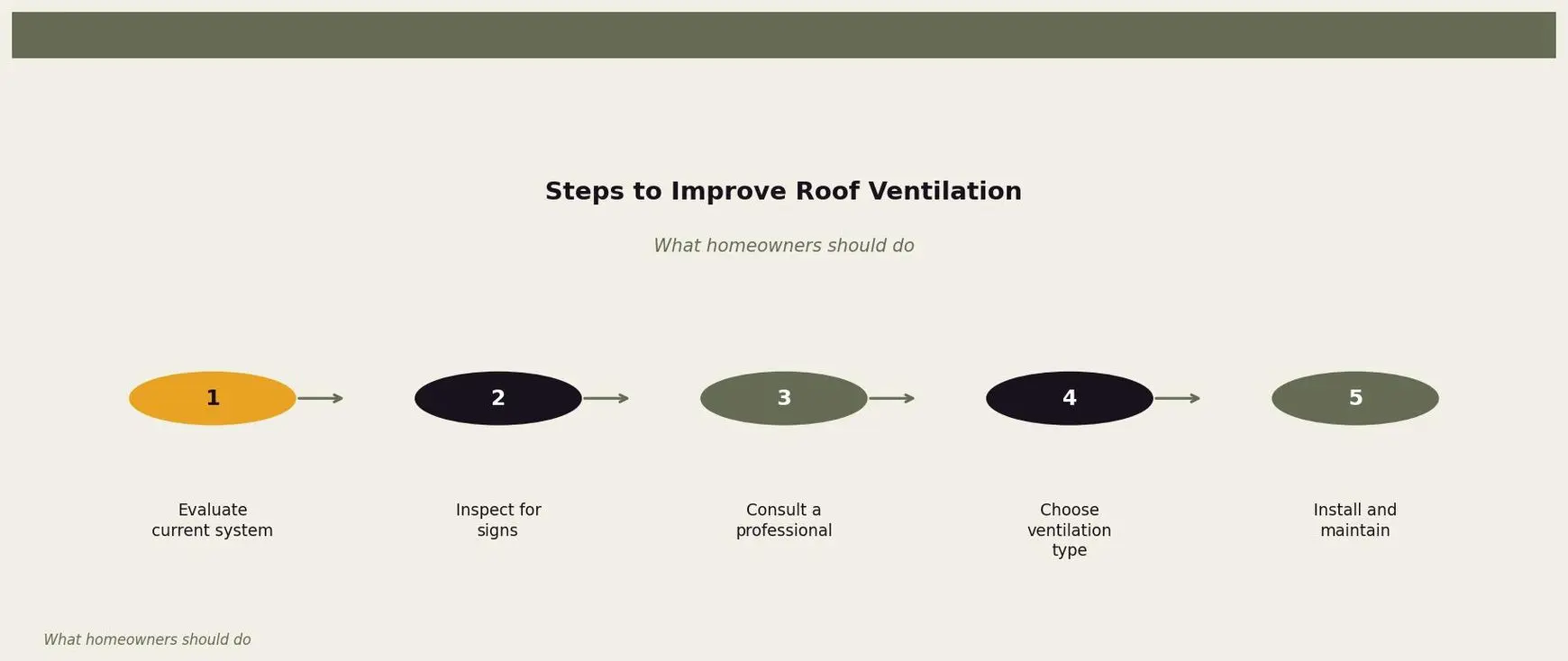
Ready to stop letting your attic work against you? Here’s how to take control:
Step 1: Take a look at what you’ve got. If you can safely access your attic, do a quick inspection. Feel the air—is it stagnant and hot, even on a mild day? Look for signs of moisture problems: water stains on the roof deck, rust on nail heads, any visible mold or mildew. Check if you can see daylight through your soffit vents (that’s good) or if they’re blocked by insulation (that’s bad).
Step 2: Watch for warning signs in your home. Ice dams in winter are a dead giveaway. So are upstairs rooms that never seem to cool down in summer, or higher-than-expected energy bills. Peeling paint near your roofline can indicate moisture escaping from your attic. If you’re seeing any of these, your ventilation probably needs attention.
Step 3: Get a professional opinion. Ventilation issues aren’t always obvious, and the fixes aren’t always straightforward. An experienced roofer can assess your current system, identify what’s working and what’s not, and recommend specific improvements for your home’s layout and your budget.
Step 4: Choose the right ventilation type. Based on your roof’s design and your specific issues, you might need ridge vents, improved soffit vents, power ventilation, or a combination. A good roofer will explain your options honestly and help you understand the trade-offs.
Step 5: Install and maintain. Once your ventilation is upgraded, keep an eye on it. Make sure soffit vents stay clear of debris and insulation. Check ridge vents occasionally for blockages. A little maintenance goes a long way toward protecting your investment.
By taking these steps now, you avoid those nasty surprise repairs, make your home noticeably more comfortable, and keep your energy bills from climbing higher every year.
The Bottom Line on Roof Ventilation
Proper roof ventilation in Minneapolis homes isn’t some luxury upgrade—it’s basic protection for your biggest investment. Without it, you’re fighting a losing battle against moisture damage, ice dams, sky-high energy bills, and premature roof failure. With it, you’ve got a home that handles Minnesota’s extreme weather gracefully, stays comfortable year-round, and keeps more money in your pocket over time.
The difference between a roof that lasts 15 years and one that lasts 25 often comes down to what’s happening in your attic. And that’s something you can actually control.
Let’s Talk About Your Roof
If you’ve been reading this and thinking, “I should probably have someone look at my attic,” we’d love to help. At Owl Roofing, we’re a local, family-owned company based right here in Shoreview—not a franchise, not storm chasers, just neighbors who’ve been taking care of Twin Cities roofs for over 15 years combined.
We’ve seen every ventilation problem Minnesota weather can create, from attics you could fry an egg in to ice dam damage that made us wince. We’ll take an honest look at your roof, tell you exactly what it needs (and what it doesn’t), and handle the whole thing without you having to chase us down or decode a confusing estimate.
Give us a call at 651-977-6027 or visit owlroofing.com/ to set up an inspection. We serve all of the Twin Cities, and we’d be happy to answer any questions—no pressure, no sales pitch. Just straight talk about what your home actually needs.
Protect Your Nest.
📍 Owl Roofing Serves the Entire Twin Cities Metro
Andover · Anoka · Apple Valley · Arden Hills · Big Lake · Blaine · Bloomington · Brooklyn Center · Brooklyn Park · Burnsville · Champlin · Chanhassen · Chaska · Columbia Heights · Coon Rapids · Cottage Grove · Crystal · deephaven · Delano · Eagan · East Bethel · Eden Prairie · Excelsior · Farmington · Forest Lake · Fridley · Golden Valley · Ham Lake · Hastings · Hopkins · Hugo · Inver Grove Heights · Lake Elmo · Lakeville · Lino Lakes · Mahtomedi · Maplewood · Mendota Heights · Minneapolis · Minnetrista · Mound · Mounds View · New Brighton · New Hope · North Oaks · North St. Paul · Oak Grove · Oakdale · Plymouth · Prior Lake · Ramsey · Richfield · Robbinsdale · Rosemount · Roseville · Saint Paul · Savage · Shakopee · Shoreview · South St. Paul · St. Louis Park · St. Michael · St. Paul · Stillwater · Vadnais Heights · Victoria · Waconia · wayzata · West St. Paul · White Bear Lake · woodbury
Licensed Minnesota roofing contractor · Free inspections · 10-year workmanship warranty · Get a free estimate →
