Scaffolding in Roofing & Construction, and Roofing Safety & Harness Info
 9min Read
 Posted 1.09.2026
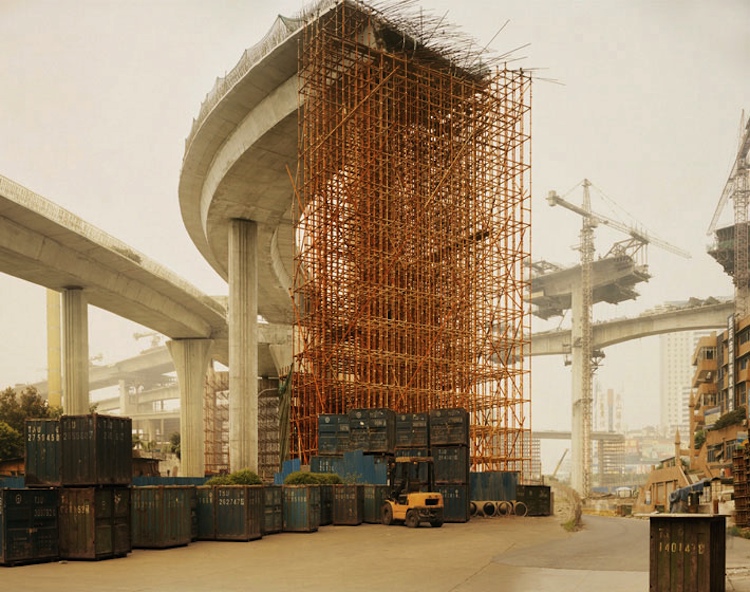
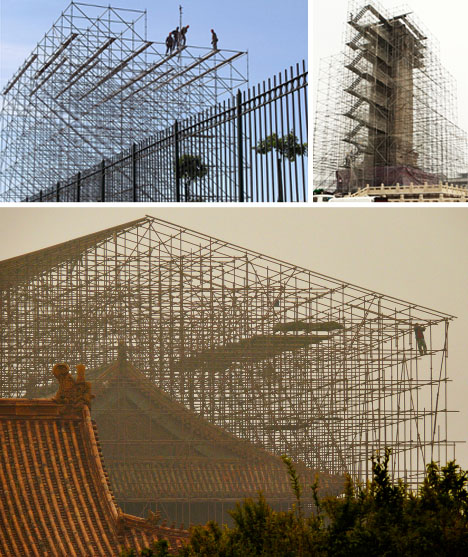
Scaffolding is one of the few things in construction that can look like art while doing something brutally practical.
A clean scaffold wrap on a home has rhythm. Repeating frames. Perfect planks. Diagonal braces that look like a sketch from an engineer who also secretly paints. It turns a chaotic jobsite into a temporary “building around the building.”
It also saves lives when it’s planned and built right. Falls are still the leading cause of death in construction, and in 2023 there were 421 fatal falls to a lower level in construction, based on BLS data summarized by OSHA’s Stop Falls campaign.
Roofing is right in the blast zone: in 2023, roofing contractors accounted for 110 fatal falls, slips, and trips, which was 26% of those fatalities in selected construction industries.
So yeah, we can wax poetic. But the point is simple: work up high is unforgiving.
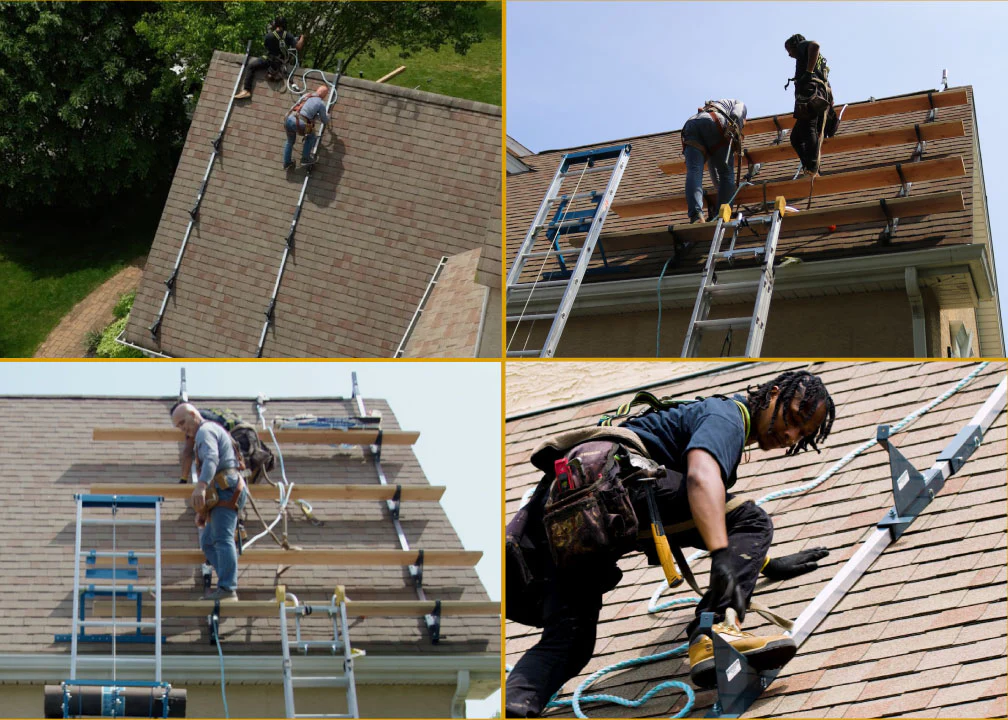
Scaffolding as art (and why it’s still serious business)
Good scaffolding does a few beautiful things at the same time:
- It creates a level world around a crooked one
- It gives workers a “second ground” so fewer steps happen near the edge
- It makes movement predictable, which makes the job calmer and safer
You see it on historic restorations, big remodels, and high-end exterior projects. The best crews treat scaffolding like part of the craftsmanship. Straight lines. Locked rails. Clean access. No sketchy hop-and-hope moves.
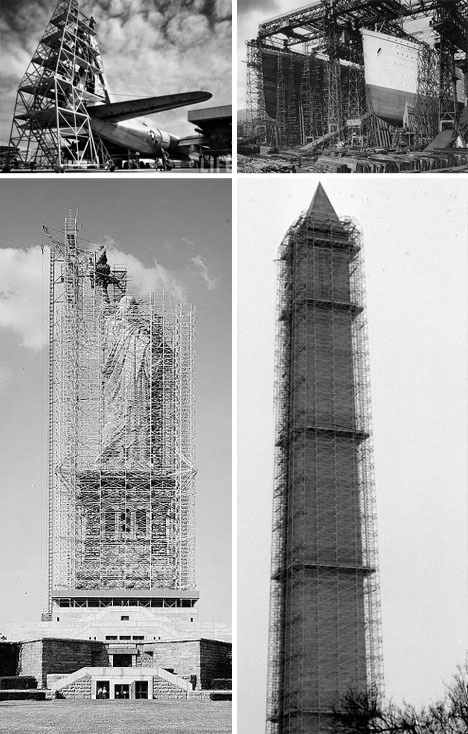
If you’ve ever watched a crew flow on a properly set scaffold, it looks like choreography. Nobody rushes. Nobody overreaches. The job becomes smoother.
That’s the hidden value: safety gear is also productivity gear.
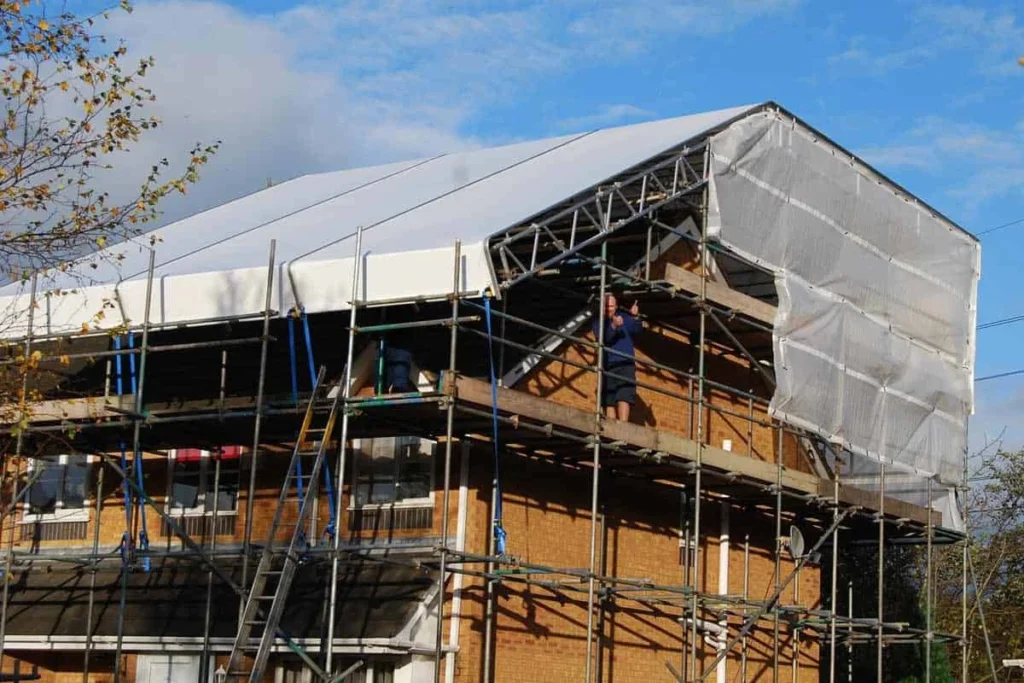
The core safety items every roofing crew needs
This is the short list that prevents the dumb stuff from becoming the tragic stuff.
1) Fall protection that matches the roof and the height
OSHA’s baseline rule in construction is straightforward: fall protection is generally required when workers are 6 feet or more above a lower level. Minnesota OSHA guidance and training materials repeat this “6 feet rule” clearly.
OSHA’s roofing-specific rules also call out that workers on low-slope roofs and steep roofs need protection at 6 feet or more above lower levels, but the allowed systems differ.
2) Anchors that are real, not vibes
A harness is only as good as the anchor, connector, and setup. OSHA’s roofing safety guidance repeatedly stresses that damaged gear, improper setup, or skipping protection increases risk fast.
3) A ladder plan
Most injuries are not “big dramatic falls.” They’re slips, weird transitions, missed steps, and rushing. Ladder angle, tie-off, and stable footing matter.
4) Guardrails, covers, and skylight protection
Skylights are basically roof traps when they’re not protected. MNOSHA training materials explicitly call out holes/skylights and the need for covers or protection when exposed at 6 feet or more.
5) Footwear built for traction
A surprising number of near-misses start at the sole.
Traction footwear is not a fashion choice. It’s a system.
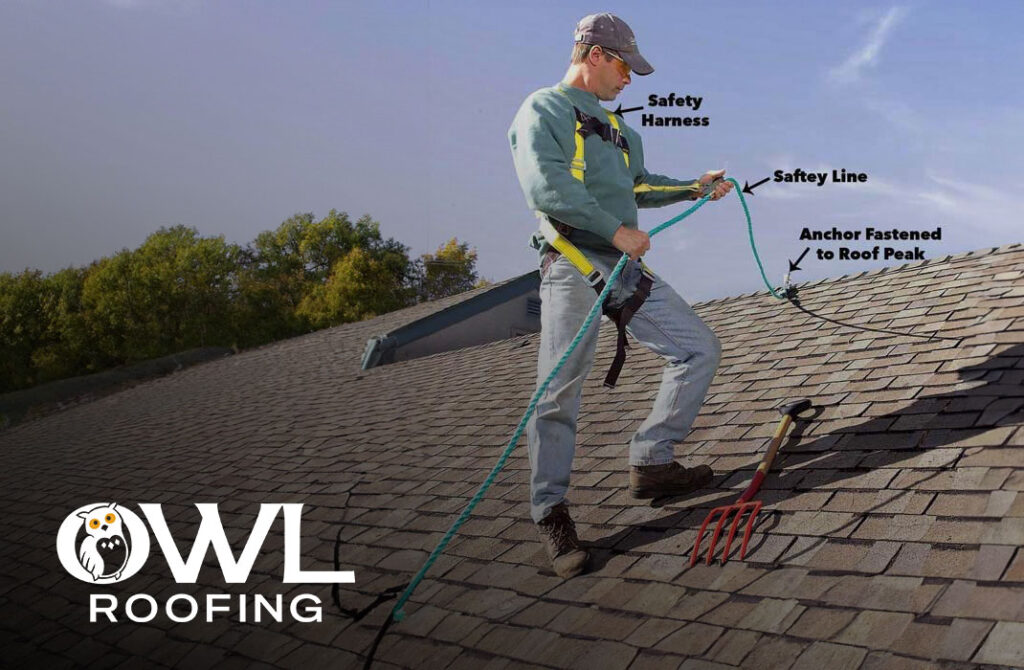
Minnesota roof pitch and harness requirements (what requires harnesses, and what doesn’t)
Two important truths can both be true:
- The legal trigger is usually height, not pitch.
- Pitch changes what kind of fall protection you can use, and what’s smart on-site.
The Minnesota baseline: 6 feet
MNOSHA materials explain the “6 feet or more above lower level” trigger for fall protection in construction.
OSHA definitions that matter for roofers
OSHA defines a low-slope roof as ≤ 4:12.
A steep roof is > 4:12 (confirmed in OSHA interpretation letters and definitions).
What pitches “require” a harness in practice
If your crew is 6 feet or more above a lower level, fall protection is required.
But what’s allowed differs:
- Low-slope roof (≤ 4:12): OSHA allows several options, including guardrails, safety nets, personal fall arrest systems, and in certain setups combinations that can include warning lines and safety monitoring (details depend on the situation).
- Steep roof (> 4:12): OSHA requires guardrails with toeboards, safety nets, or personal fall arrest systems. Warning lines/controlled access zones are not the go-to option here.
In plain terms: the steeper it gets, the more you should expect real fall arrest to be part of the plan.
Quick pitch guide (practical, not macho)
This is not legal advice. This is how crews stay alive.
- 0/12 to 4/12: feels walkable, still dangerous near edges and transitions
- 5/12 to 7/12: where slips happen “out of nowhere,” especially with debris
- 8/12 to 12/12: you’re working on a slope that wants you off the roof
The smart move is simple: if you’re up high, treat the roof like it’s trying to throw you.
Other key roofing safety considerations that get ignored
Heat and dehydration
Roofing is a performance sport in direct sun. Dehydration makes people clumsy. Clumsy on a roof is expensive.
House protection equals worker protection
Tarping, perimeter control, clean staging, and controlling debris reduces rushed movement. Rushing creates falls.
Communication and the “no hero moves” rule
The fastest way to lose someone is a culture where people feel pressured to “just do it real quick.”
If a step feels sketchy, it probably is.

Cougar Paws roofing safety footwear (traction you can trust)
High-traction roofing footwear from Cougar Paws, known for boots and replaceable traction pads designed for roof work. Cougar Paws markets their products specifically around grip, stability, and roof traction needs.
Why crews like traction footwear systems:
- Better grip on common roof surfaces
- More confidence moving materials
- Less foot fatigue from micro-slipping all day
This is one of those upgrades that feels “optional” until you watch someone slide three inches and catch themselves.
That moment is the whole point.
Pitch Hopper (a simple tool that reduces fatigue on steep slopes)
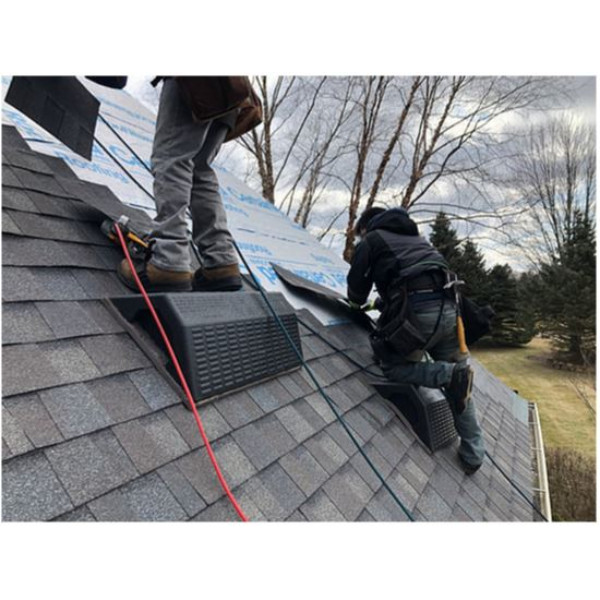
The Pitch Hopper is a roofing wedge / temporary working surface designed to give crews a more stable platform on pitched roofs. The company describes it as usable up to a 12/12 pitch, with a design that helps reduce strain on ankles and calves from working on pitched surfaces.
Where it helps:
- staging tools and bundles
- creating a repeatable “step” for the crew
- reducing that constant downhill fight on steep pitches
It’s not a replacement for fall protection. It’s a way to make the job less exhausting so people make fewer mistakes.

SteepGear (sometimes called “Steepwear”) friction-based roof safety clothing
SteepGear sells “roof safety” clothing designed to increase friction between the worker and steep sloped surfaces. They describe their products as developed to reduce sliding risk and designed to slip over existing clothing.
Think of it as “extra grip” for your body, not just your boots.
Again, not a magic shield. But on steep slopes, a little extra friction can buy time to regain balance, and time is life.
Scaffolding vs harnesses vs guardrails: what’s the real best choice?
It depends on the job, but the hierarchy is pretty consistent:
- Eliminate the fall hazard (guardrails, scaffold guardrails, proper access)
- Reduce exposure time (planning, staging, smart tools)
- Arrest the fall (personal fall arrest systems)
OSHA’s construction fall protection guidance and MNOSHA materials emphasize using guardrails, safety nets, or personal fall arrest systems when the 6-foot threshold is met, with details varying by scenario.
The basics to remember every single time
- If you’re 6 feet or more above a lower level, plan for fall protection
- Know whether you’re on low-slope (≤ 4:12) or steep (> 4:12) because the allowed systems change
- Protect skylights and openings like they’re holes, because they are
- Traction matters. Footwear matters. Fatigue management matters
- If the plan depends on “being careful,” it’s not a plan
We give a hoot about safety
At Owl Roofing, we’re a local, family-owned team. We want every project to end the same way: the roof is solid, the yard is clean, and everybody who showed up goes home in one piece.
If you want a roofing company that treats safety like part of craftsmanship (not a box to check), reach out. We’ll walk you through the plan, the setup, and what “safe” actually looks like on your home.
📍 Owl Roofing Serves the Entire Twin Cities Metro
Andover · Anoka · Apple Valley · Arden Hills · Big Lake · Blaine · Bloomington · Brooklyn Center · Brooklyn Park · Burnsville · Champlin · Chanhassen · Chaska · Columbia Heights · Coon Rapids · Cottage Grove · Crystal · deephaven · Delano · Eagan · East Bethel · Eden Prairie · Excelsior · Farmington · Forest Lake · Fridley · Golden Valley · Ham Lake · Hastings · Hopkins · Hugo · Inver Grove Heights · Lake Elmo · Lakeville · Lino Lakes · Mahtomedi · Maplewood · Mendota Heights · Minneapolis · Minnetrista · Mound · Mounds View · New Brighton · New Hope · North Oaks · North St. Paul · Oak Grove · Oakdale · Plymouth · Prior Lake · Ramsey · Richfield · Robbinsdale · Rosemount · Roseville · Saint Paul · Savage · Shakopee · Shoreview · South St. Paul · St. Louis Park · St. Michael · St. Paul · Stillwater · Vadnais Heights · Victoria · Waconia · wayzata · West St. Paul · White Bear Lake · woodbury
Licensed Minnesota roofing contractor · Free inspections · 10-year workmanship warranty · Get a free estimate →

Recent Articles
Explore The Blog