Roof Insurance Claims After Storm Damage: a Clear Simple Guide
 6min Read
 Posted 12.27.2025
Need expert guidance on filing an insurance claim – hire storm damage specialists today, and experience a higher level of guidance.
- Lawn swept 3x with magnets
- Storm restoration specialists
- We actually answer: (651) 977-6027
 5.0 · 90+ reviews
 Accredited
Owl is the local family-owned roofer that actually cares.
250+ Twin Cities families have trusted us with their homes. Book a free inspection and see why.
★★★★★“We couldn’t be happier with how everything turned out. From the beginning to the end, the whole experience was great.”
Rob Larson, Local Homeowner + Owl Customer
A real person calls you back, usually within the hour.
When Does Storm Damage to a Roof Qualify for an Insurance Claim?
Storm damage usually qualifies for a roof insurance claim when the damage is sudden and caused by a specific event.
This includes:
- Wind lifting or tearing shingles
- Hail impacting shingles or flashing
- Storm debris striking the roof
- Sudden leaks that begin during or right after a storm
Insurance typically covers storm damage. It usually does not cover long-term wear, poor maintenance, or aging materials.
The key difference is whether the damage happened because of the storm, not over time.
Signs Your Roof May Have Storm Damage
Some storm damage is obvious. Some is easy to miss.
Common signs include:
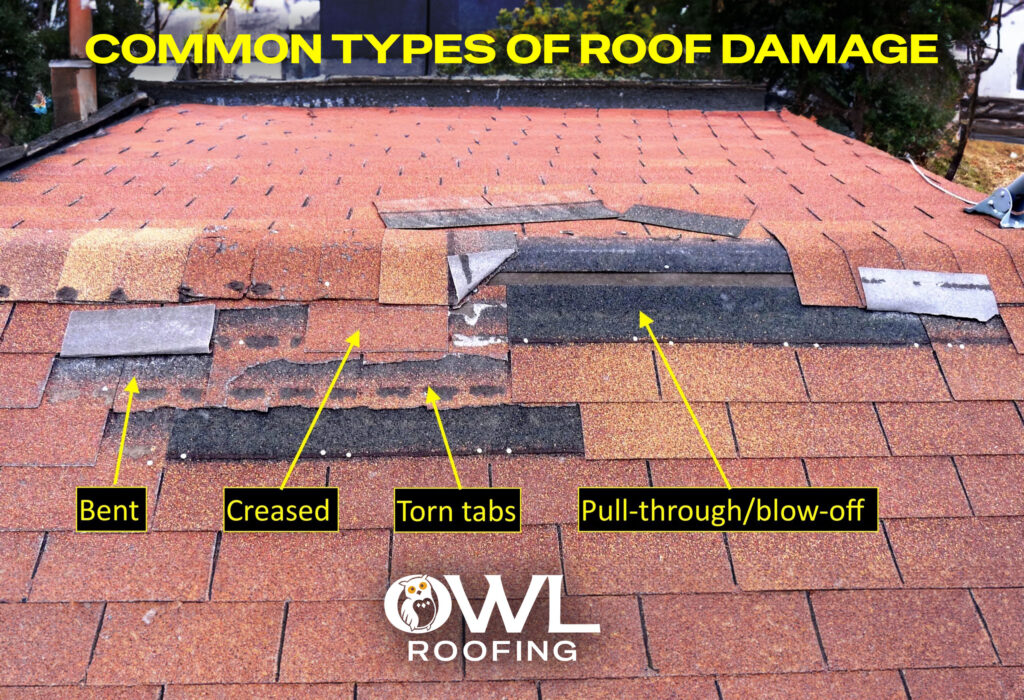
- Missing, lifted, or creased shingles
- Granule loss in gutters after hail
- Dented vents, flashing, or metal components
- Leaks or ceiling stains after a storm
- Shingles that suddenly look uneven or exposed
If damage appears soon after a storm, it is worth documenting and inspecting, even if leaks are not visible yet.
Step 1: Document Roof Damage as Soon as It’s Safe
Good documentation is one of the most important parts of a successful roof damage insurance claim.
Start with:
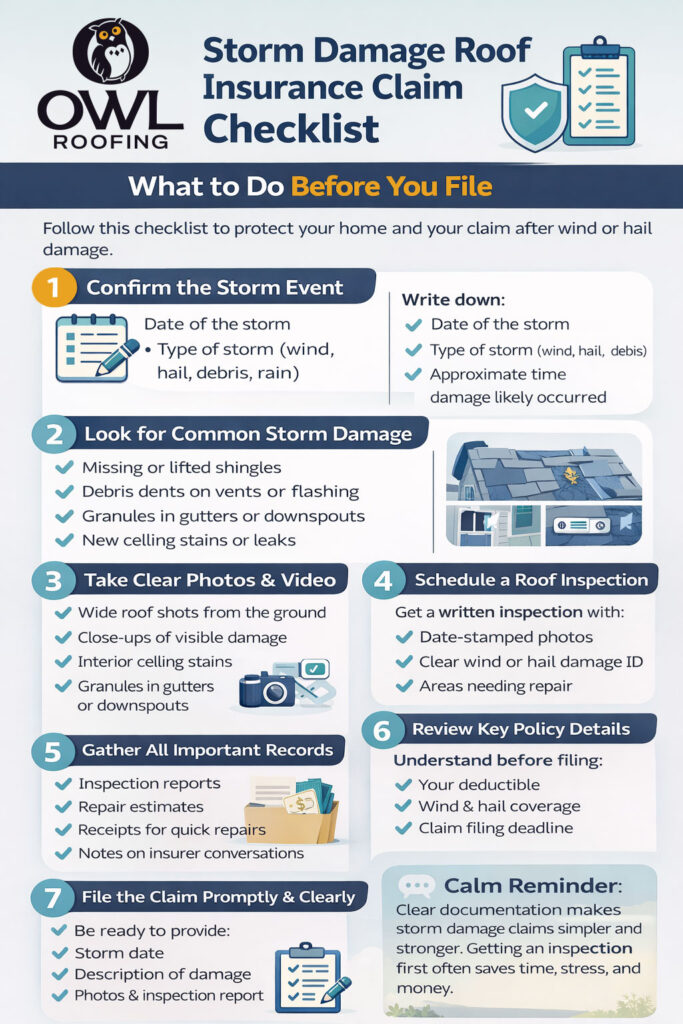
- Photos of the roof from the ground
- Close-ups of visible damage
- Photos of interior leaks or ceiling stains
- Notes on the date and type of storm
If you cannot safely access the roof, do not climb it. A professional inspection is safer and often more thorough.
Early documentation helps establish that damage is storm-related and not pre-existing.
Step 2: Schedule a Professional Roof Inspection
A storm damage roof inspection helps clarify:
- Whether the damage is cosmetic or functional
- Whether repair or replacement makes sense
- Whether the damage meets insurance thresholds
An experienced roofing contractor can identify wind damage, hail impact, and shingle failure that homeowners and adjusters may miss at first glance.
Written inspection reports and photos are valuable when filing a claim.
Step 3: Review Your Roof Insurance Coverage
Before filing, review your policy or speak with your agent.
Important details to understand:
- Wind and hail coverage
- Your deductible
- Whether your policy pays replacement cost or actual cash value
- Any exclusions or time limits for filing
Some policies have separate wind or hail deductibles. Knowing this ahead of time prevents surprises later.
Step 4: File the Storm Damage Insurance Claim
Once damage is confirmed, contact your insurance company to open a roof damage claim.
Be prepared to provide:
- The storm date
- A description of the damage
- Photos and inspection findings
Many insurers allow claims by phone or online. Filing sooner is usually better, especially after major storms.
Step 5: Meet the Insurance Adjuster Prepared
The adjuster’s inspection plays a big role in the outcome.
It helps to:
- Be present during the inspection
- Point out all areas of concern
- Share inspection reports or photos
- Ask how damage is being categorized
Some damage, especially from wind or small hail, is subtle. Clear communication helps ensure nothing is overlooked.
What Happens After the Roof Insurance Claim Is Reviewed?
After inspection, the insurer will issue a decision.
This may include:
- Approval for repair or replacement
- A partial approval with limitations
- A request for more information
If approved, you’ll receive a scope of work and an initial payment based on policy terms.
If the amount seems low, additional documentation or estimates may be needed.
Common Reasons Roof Insurance Claims Get Underpaid or Denied
Claims are often challenged when:
- Damage is attributed to age instead of storm impact
- Documentation is incomplete
- The damage pattern is inconsistent
- The roof had known issues before the storm
This is why inspections, photos, and timing matter so much.
Choosing a Roofing Contractor After a Storm Claim
Once approved, choose a contractor experienced with storm damage repairs.
Look for:
- Licensing and insurance
- Storm damage experience
- Clear estimates and communication
- Familiarity with insurance scopes
Avoid high-pressure sales or promises that sound too good to be true.
Can Insurance Cover a Full Roof Replacement?
Sometimes, yes.
Full replacement may be approved when:
- Damage is widespread
- Repairs cannot be matched properly
- The roof no longer meets code
- Functional damage affects large areas
Each claim is different. The decision depends on damage type, roof age, and policy language.

A Clear, Calm Approach to Storm Damage Claims
Storm damage roof insurance claims do not have to feel adversarial or overwhelming.
At Owl Roofing, we focus on clarity first. We inspect the roof thoroughly, explain what we see, and help homeowners understand whether filing a claim makes sense. No pressure. No exaggeration. Just honest guidance based on the condition of your roof.
If your home was hit by wind or hail and you’re unsure what comes next, we’re here to help you protect your nest with confidence.
Schedule a storm damage roof inspection.
Because good decisions start with clear information.
📍 Owl Roofing Serves the Entire Twin Cities Metro
Andover · Anoka · Apple Valley · Arden Hills · Big Lake · Blaine · Bloomington · Brooklyn Center · Brooklyn Park · Burnsville · Champlin · Chanhassen · Chaska · Columbia Heights · Coon Rapids · Cottage Grove · Crystal · deephaven · Delano · Eagan · East Bethel · Eden Prairie · Excelsior · Farmington · Forest Lake · Fridley · Golden Valley · Ham Lake · Hastings · Hopkins · Hugo · Inver Grove Heights · Lake Elmo · Lakeville · Lino Lakes · Mahtomedi · Maplewood · Mendota Heights · Minneapolis · Minnetrista · Mound · Mounds View · New Brighton · New Hope · North Oaks · North St. Paul · Oak Grove · Oakdale · Plymouth · Prior Lake · Ramsey · Richfield · Robbinsdale · Rosemount · Roseville · Saint Paul · Savage · Shakopee · Shoreview · South St. Paul · St. Louis Park · St. Michael · St. Paul · Stillwater · Vadnais Heights · Victoria · Waconia · wayzata · West St. Paul · White Bear Lake · woodbury
Licensed Minnesota roofing contractor · Free inspections · 10-year workmanship warranty · Get a free estimate →

Recent Articles
Explore The Blog