




Should You Remove Moss From Your Roof
 11min Read
 Posted 12.19.2025
Should You Remove Moss from Your Roof?
That fuzzy green patch on your roof isn’t charming—it’s eating your shingles alive. Here in the Twin Cities, where we get over 100 freeze-thaw cycles every year (thanks, Minnesota), moss turns from minor nuisance to major problem faster than you’d think. And here’s the kicker: the Insurance Institute for Business & Home Safety found that regular roof maintenance, including moss treatment, can add up to 10 years to your roof’s lifespan. That’s a decade of not writing a check for a full replacement.
So let’s talk about what moss actually does to your roof, why our Minnesota weather makes it worse, and exactly how to deal with it before it deals with your wallet.
The Problem: Moss Isn’t Just Ugly—It’s Destructive
We get it. Moss looks kind of nice on a forest floor or a fairy tale cottage. On your Shoreview split-level? Not so much. But the real issue isn’t aesthetics—it’s what’s happening underneath that green blanket.
Your Shingles Are Taking a Beating
Moss works like a sponge stuck to your roof. It soaks up rain, morning dew, and snowmelt, then holds all that moisture directly against your shingles. Day after day. Week after week. According to the National Roofing Contractors Association (NRCA), this constant dampness causes shingles to deteriorate, curl, and lift at the edges. Once shingles start lifting, water finds its way underneath—and that’s when you get leaks, rot, and the kind of water damage that makes your stomach drop.
Think about what happens during a typical Minnesota spring: rain during the day, freezing temps at night. That moisture moss is holding? It freezes, expands, thaws, and repeats. Each cycle pushes your shingles apart just a little more. Multiply that by dozens of cycles per season, and you’ve got shingles that are cracking, splitting, and failing years before their time.
The Weight Problem Nobody Talks About
Here’s something that surprises most homeowners: moss gets heavy. Really heavy. A thick layer of moss saturated with water adds significant weight to your roof. Now add a Minnesota snowfall on top of that. The Insurance Institute for Business & Home Safety warns that this combined weight can strain your roof’s structure, leading to sagging in mild cases—and in extreme situations, actual roof collapse.
We’re not trying to scare you. But we are trying to get your attention. This isn’t about keeping up with the neighbors’ curb appeal. It’s about preventing the kind of damage that turns a manageable repair into a major project.
The Promise: Catch It Early, Save Your Roof
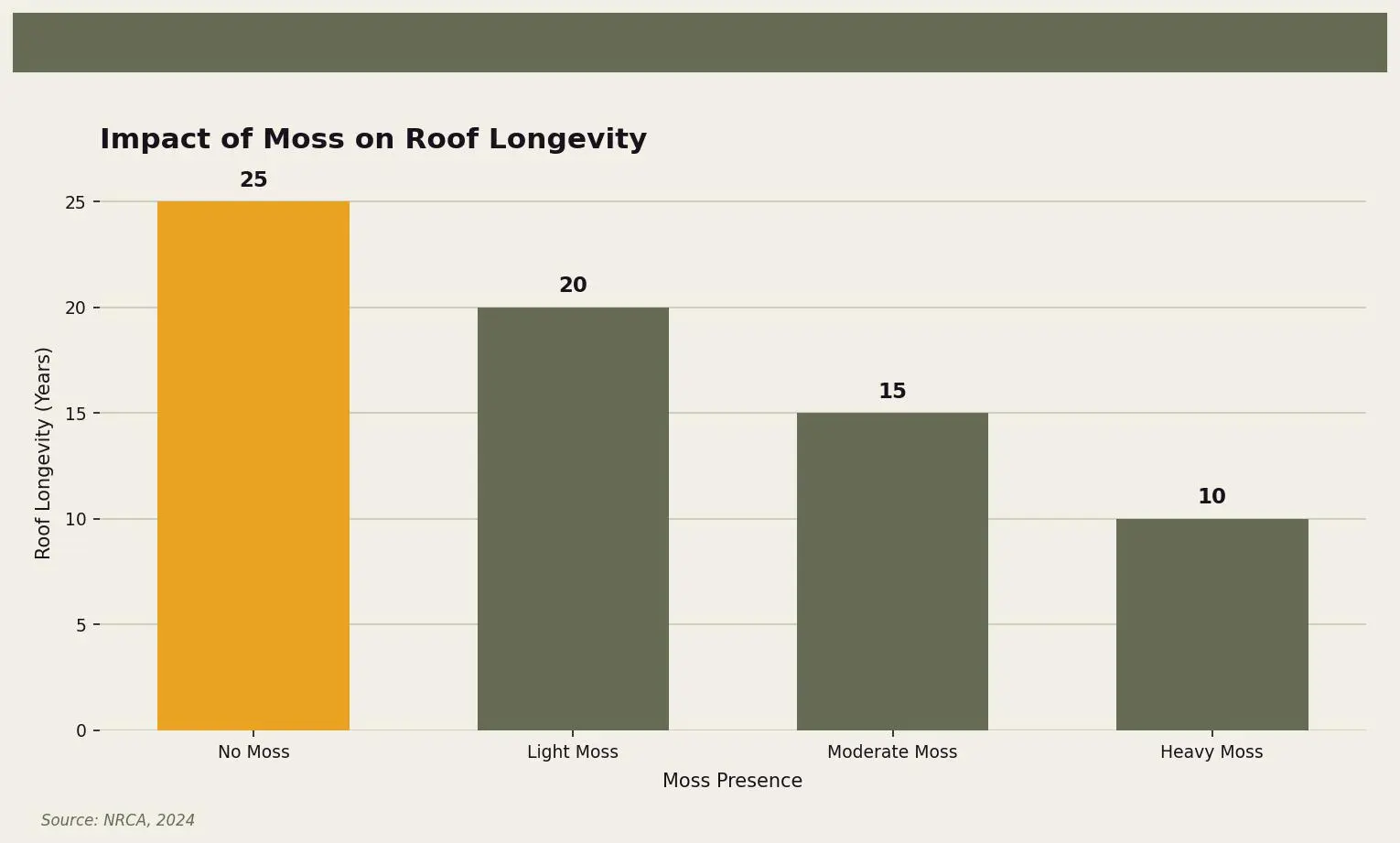
Here’s the good news: moss damage is almost entirely preventable. If you catch it early and remove it properly, your roof can keep doing its job for decades. The NRCA data backs this up—roofs without moss can last 25 years or more, while roofs with heavy moss growth often fail around the 10-year mark. That’s a 15-year difference based on whether you deal with the green stuff or ignore it.
The key is understanding that moss removal isn’t a one-and-done task. It’s part of regular roof maintenance, especially here in Minnesota where our climate practically rolls out the red carpet for moss growth. Shady spots, humid summers, wet springs and falls—our weather creates perfect moss conditions.
The Proof: Why Minnesota Roofs Have It Harder
Let’s talk numbers, because the data tells the story better than we can.
According to Census Bureau climate data, Minnesota experiences over 100 freeze-thaw cycles annually. That’s more than 100 opportunities for moss-held moisture to expand and contract against your shingles every single year. Compare that to states with milder winters, and you’ll understand why Twin Cities roofs take such a beating.
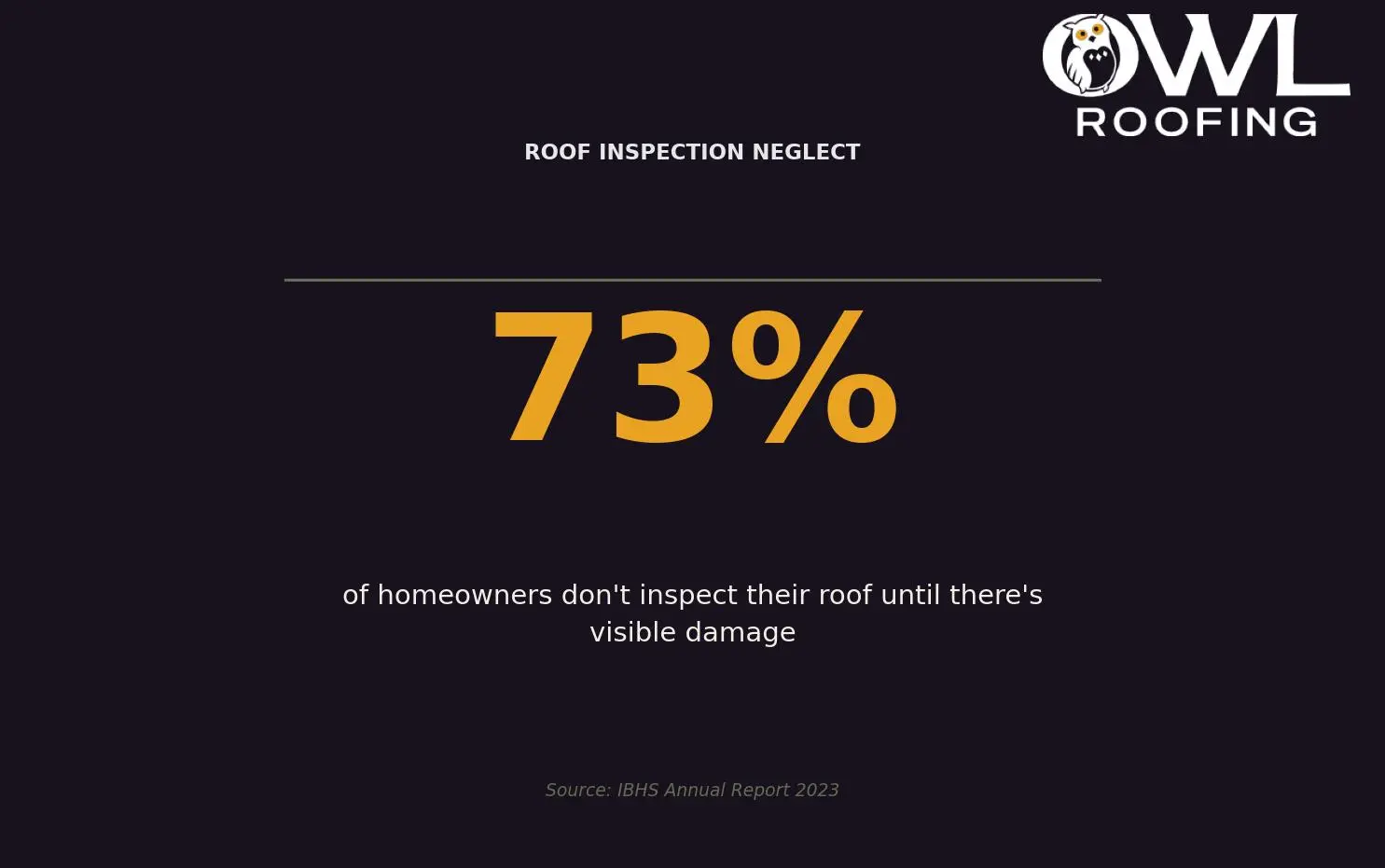
The IBHS Annual Report from 2023 found that 73% of homeowners don’t inspect their roof until there’s visible damage—like water stains on the ceiling or missing shingles after a storm. By then, the moss has been working against you for years. The homeowners who inspect regularly and address moss early? They’re the ones getting the full lifespan out of their roofing investment.
And that NRCA statistic about maintenance adding up to 10 years of roof life? That’s not a minor benefit. On a typical Twin Cities home, that’s tens of thousands of dollars in replacement costs you’re pushing down the road—or avoiding entirely if you time things right.
How to Actually Remove Moss from Your Roof
Alright, so you’re convinced moss needs to go. Now what? You’ve got two main options, and the right choice depends on how much moss you’re dealing with and how comfortable you are on a ladder.
Option 1: Manual Removal
This is exactly what it sounds like—physically removing the moss from your shingles. For light moss growth, this can work well. You’ll need a stiff brush (not metal, which can damage shingles), a garden hose, and some patience.
The technique matters here. Always brush downward, following the direction of the shingles. Brushing upward or side-to-side can lift shingle edges and cause the exact damage you’re trying to prevent. Work in sections, rinse as you go, and take your time.
A few honest words about DIY roof work: it’s dangerous. Wet roofs are slippery. Moss-covered roofs are even slipperier. The NRCA recommends professional assistance for roof work, and it’s not just because they want your business—falls from roofs send thousands of homeowners to emergency rooms every year. If your roof is steep, if you’re not comfortable with heights, or if the moss growth is significant, this is a job worth hiring out.
Option 2: Chemical Treatments
For heavier moss growth, or as a follow-up to manual removal, chemical treatments can kill existing moss and help prevent regrowth. These products typically contain zinc sulfate or potassium salts, which are toxic to moss but relatively safe for your shingles.
The important consideration here—especially in Shoreview and the surrounding Twin Cities communities—is environmental impact. Chemical runoff flows into storm drains, which eventually reach local lakes and watersheds. The IBHS recommends working with roofing professionals who understand local regulations and can apply treatments safely and appropriately.
Some homeowners opt for preventive measures like zinc strips installed near the roof ridge. When it rains, trace amounts of zinc wash down the roof, creating an environment where moss can’t thrive. It’s not a solution for existing moss, but it can help keep a clean roof clean.
What About Pressure Washing?
We’ll keep this short: don’t do it. Pressure washing might seem like an efficient way to blast moss off your roof, but the force required to remove moss is also enough to damage shingles, strip away protective granules, and void your warranty. It’s one of those solutions that creates bigger problems than it solves.
The Minnesota Factor: Timing Your Moss Removal
In the Twin Cities, timing matters. The best windows for roof moss removal are late spring (after the freeze-thaw cycles end but before summer humidity kicks in) and early fall (after the heat breaks but before the first freeze). These shoulder seasons give treatments time to work and give your roof time to dry out properly.
Avoid removing moss in winter—the risk of ice and falls isn’t worth it—and be cautious during our humid summer months when moss can regrow quickly if conditions stay damp.
Regular inspections should happen at least twice a year. A quick look from the ground with binoculars can tell you a lot. Look for green patches, especially on north-facing slopes and under overhanging trees where shade keeps things damp. If you spot moss starting to form, that’s your cue to act before it spreads.
Your Action Plan: Simple Steps to Protect Your Roof
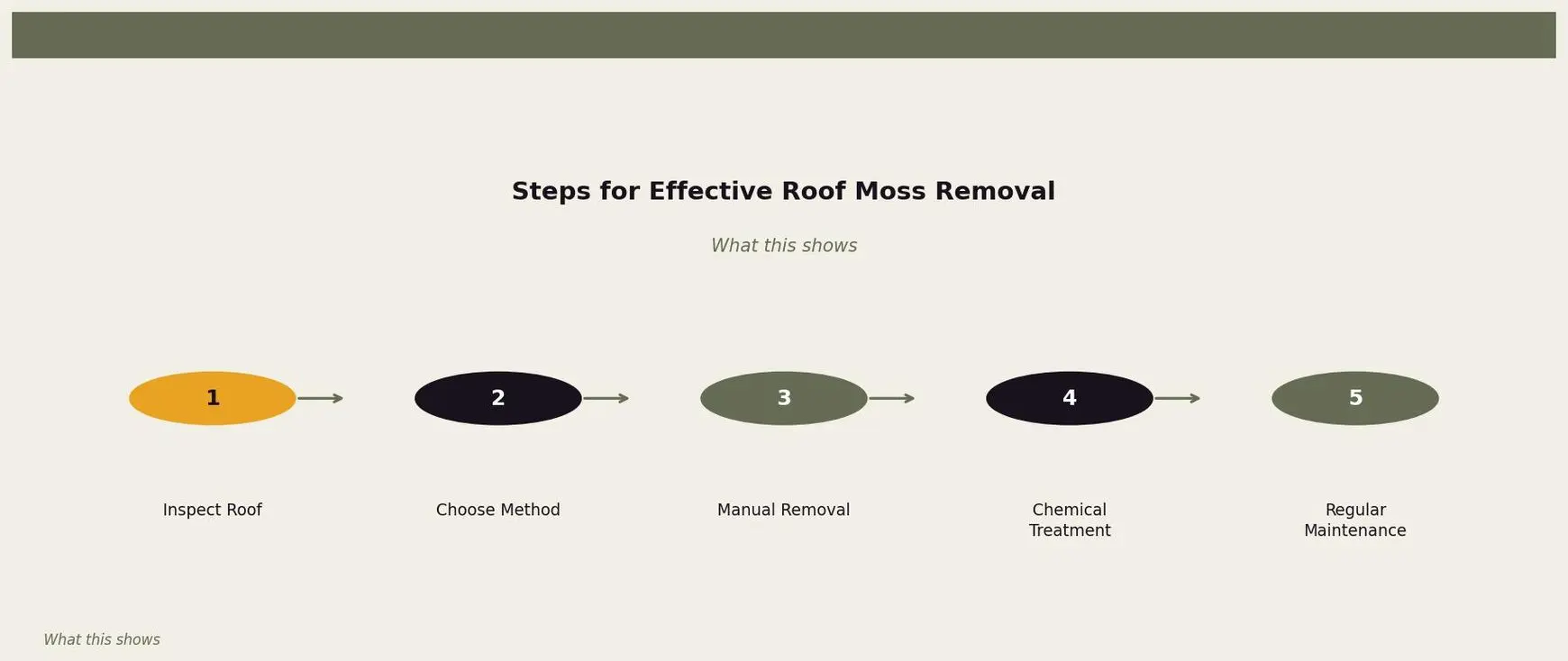
Let’s make this practical. Here’s what to do, in order:
- Inspect your roof this week. Grab binoculars and look for green patches, lifted shingles, or dark streaks (which often indicate algae, moss’s troublesome cousin). Pay special attention to shaded areas.
- Trim overhanging branches. More sunlight means less moisture retention and slower moss growth. This is preventive maintenance that pays off for years.
- Schedule a professional inspection. A roofing pro can get up there safely and give you an honest assessment of what you’re dealing with. They’ll spot issues you might miss from the ground.
- Choose your removal method. Light moss and you’re comfortable on ladders? Manual removal might work. Heavy growth or steep roof? Call in professionals. Consider environmental factors when selecting chemical treatments.
- Set up a maintenance schedule. Mark your calendar for spring and fall inspections. Catching moss early is always easier and cheaper than dealing with established growth.
- Consider preventive measures. Zinc strips, improved drainage, and tree trimming can all reduce moss growth going forward.
The homeowners who follow these steps are the ones who get 25+ years out of their roofs instead of 15. It’s not complicated—it just requires paying attention.
Ready to Deal with Moss the Right Way?
If you’re looking at your roof and thinking “yeah, that green stuff needs to go,” we’d be happy to take a look. We’re Owl Roofing—Tim, Bea, Noah, and Anya—and we’ve been helping our Shoreview neighbors (and homeowners across the Twin Cities) with exactly this kind of thing for over 15 years combined. We’ve seen every stage of moss damage, from “just starting” to “wish we’d caught this sooner,” and we’ll tell you straight what your roof actually needs.
Give us a call at 651-977-6027 or visit owlroofing.com/ to schedule an inspection. We’ll come out, take a look, and give you honest advice—no pressure, no upsell, just neighbors helping neighbors keep their homes in good shape.
Protect Your Nest.
📍 Owl Roofing Serves the Entire Twin Cities Metro
Andover · Anoka · Apple Valley · Arden Hills · Big Lake · Blaine · Bloomington · Brooklyn Center · Brooklyn Park · Burnsville · Champlin · Chanhassen · Chaska · Columbia Heights · Coon Rapids · Cottage Grove · Crystal · deephaven · Delano · Eagan · East Bethel · Eden Prairie · Excelsior · Farmington · Forest Lake · Fridley · Golden Valley · Ham Lake · Hastings · Hopkins · Hugo · Inver Grove Heights · Lake Elmo · Lakeville · Lino Lakes · Mahtomedi · Maplewood · Mendota Heights · Minneapolis · Minnetrista · Mound · Mounds View · New Brighton · New Hope · North Oaks · North St. Paul · Oak Grove · Oakdale · Plymouth · Prior Lake · Ramsey · Richfield · Robbinsdale · Rosemount · Roseville · Saint Paul · Savage · Shakopee · Shoreview · South St. Paul · St. Louis Park · St. Michael · St. Paul · Stillwater · Vadnais Heights · Victoria · Waconia · wayzata · West St. Paul · White Bear Lake · woodbury
Licensed Minnesota roofing contractor · Free inspections · 10-year workmanship warranty · Get a free estimate →
