Roof Repair vs Roof Replacement: How We Help Homeowners Decide Honestly
 8min Read
 Posted 12.24.2025
One of the most stressful moments in roofing is not a leak or a storm.
It’s standing in your driveway while someone tells you, “You need a full roof replacement.”
- Lawn swept 3x with magnets
- Storm restoration specialists
- We actually answer: (651) 977-6027
 5.0 · 90+ reviews
 Accredited
Owl is the local family-owned roofer that actually cares.
250+ Twin Cities families have trusted us with their homes. Book a free inspection and see why.
★★★★★“We couldn’t be happier with how everything turned out. From the beginning to the end, the whole experience was great.”
Rob Larson, Local Homeowner + Owl Customer
A real person calls you back, usually within the hour.
Maybe that’s true.
Maybe it isn’t.
The problem is that most homeowners are never given the information they need to tell the difference.
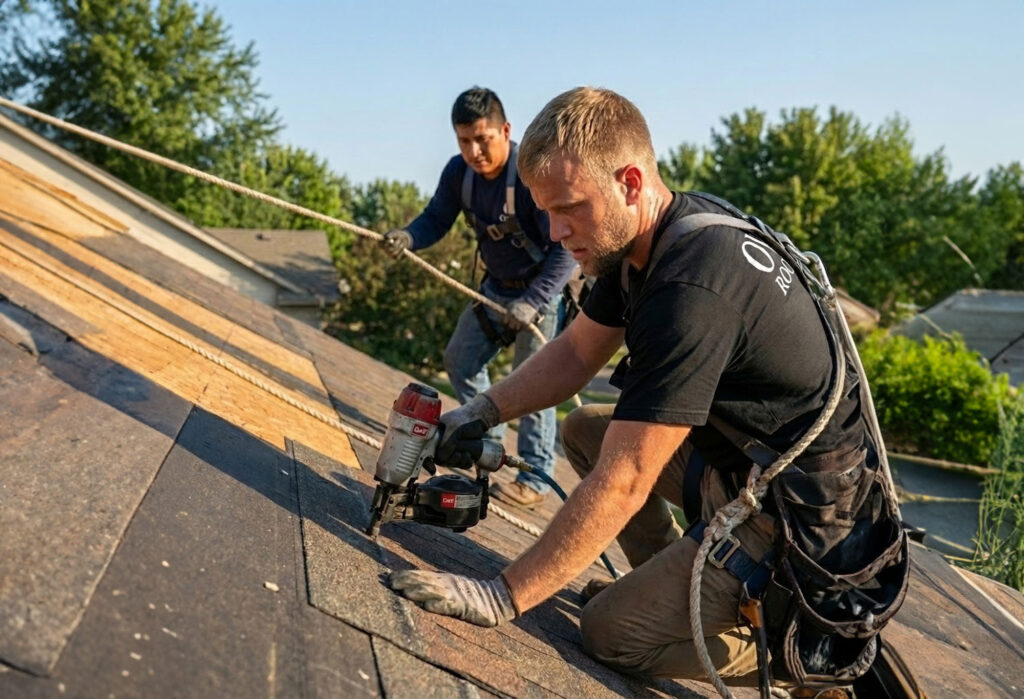
Why This Decision Feels So Confusing
Roof repair versus roof replacement decisions feel overwhelming for three reasons.
First, most homeowners don’t know what normal roof aging actually looks like. A roof can be old and still performing well, or relatively new and already failing.
Second, many contractors approach this decision through a sales lens instead of a stewardship lens. That changes how options are presented.
Third, the cost difference is large. When big numbers enter the conversation, fear tends to follow, and clarity disappears.
The Industry Incentive Few Homeowners Hear About
Here’s a truth most roofers won’t say out loud.
Roof replacement is usually faster, simpler, and more profitable than roof repair.
That doesn’t automatically make replacement wrong.
But it does mean you should understand the incentive before accepting the recommendation.
Repairs require diagnosis, precision, and accountability. They take more thought and carry more responsibility if they don’t fully solve the issue.
Replacement is more straightforward. Tear off. Install new. Move on.
When replacement is the first and only option discussed, it’s reasonable to slow the conversation down.
The Question Homeowners Are Asking Wrong
Many homeowners ask, “Is my roof old?”
That’s not the most important question.
The better question is, “Is my roof failing as a system, or does it have isolated problems?”
A roof can be structurally sound with a few weak points.
It can also look fine from the ground while failing underneath.
Age matters, but performance matters more.
Repairs Are Not Automatically Short-Term Fixes
Another common belief is that repairs are just temporary band-aids.
Sometimes that’s true. Often it’s not.
A properly diagnosed repair can extend the life of a roof by years, especially when the issue is localized and the rest of the system is still performing as intended.
Random patching is wasteful.
Targeted repairs are strategic.
The difference is diagnosis.
Replacement Is Sometimes the Wisest Choice
To be clear, there are situations where replacement is absolutely the right move.
Replacement tends to make sense when problems are widespread, when multiple repairs would cost nearly as much as a new roof, when the system is near the end of its designed lifespan, or when underlying ventilation or structural issues are baked into the existing setup.
The mistake isn’t replacing a roof.
The mistake is replacing it without understanding why.
What Trustworthy Contractors Do Differently
A trustworthy contractor doesn’t start with a recommendation.
They start with what’s working, what’s failing, what’s likely to fail next, and what each option realistically buys you in time and peace of mind.
They explain tradeoffs instead of pushing outcomes.
If the explanation makes sense, the decision usually does too.
What Comes Next
In Part 2, we’ll get very practical.
We’ll walk through a clear decision framework homeowners can use, real scenarios where repair makes sense versus replacement, the questions that reveal whether advice is honest, and how to avoid paying for a full roof before you truly need one.
For now, remember this.
A wise roofing decision isn’t about spending less or more.
It’s about spending right, at the right time, for the right reasons.
That’s how homeowners protect their nest.
How to Decide the Right Option for Your Home
In Part 1, we covered why homeowners so often feel pushed into roof replacements without fully understanding their options.
Now it’s time to make the decision practical.
This section gives you a clear framework to decide whether repair or replacement actually makes sense for your home, your budget, and your peace of mind.
Start With the Type of Problem, Not the Age of the Roof
The most important factor is not how old your roof is.
It’s where and how it’s failing.
Repairs are more likely to make sense when:
- Leaks are isolated to one area
- Damage is caused by flashing, penetrations, or a small section of shingles
- The majority of the roof is still performing as intended
- The issue appeared suddenly rather than gradually everywhere
Replacement becomes more likely when:
- Problems are spread across multiple slopes or sections
- Shingles are brittle, curling, or losing granules everywhere
- Past repairs keep stacking up without lasting results
- Structural or ventilation issues affect the entire system
A good contractor should help you identify which category you’re in, not guess.
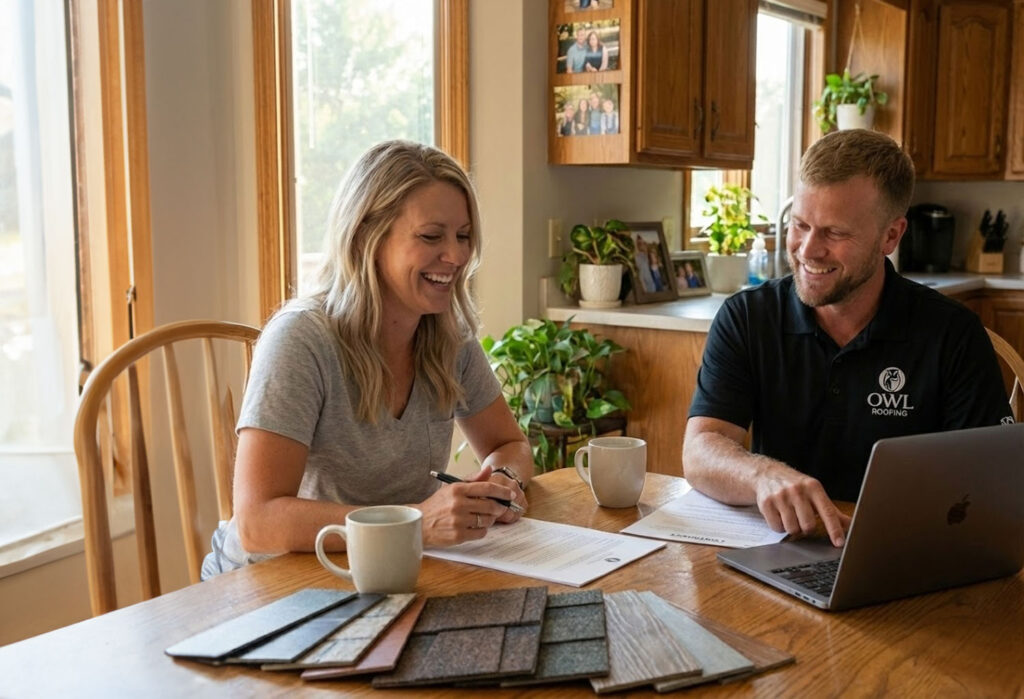
Compare Options by Outcome, Not Just Cost
Homeowners often compare repair versus replacement by price alone.
That’s understandable, but it’s incomplete.
A better comparison looks like this:
- How long is this option realistically buying me?
- What risks remain after the work is done?
- What problems does this solve completely?
- What problems could still show up later?
A repair that costs less but only buys a year of peace of mind may not be the better choice.
A replacement that solves systemic issues and resets the clock might be worth the investment.
The goal is not the cheapest solution.
The goal is the most sensible solution.
Ask One Question That Changes the Conversation
There’s a single question that cuts through pressure quickly.
“If this were your house, what would you do and why?”
A trustworthy contractor will slow down here.
They’ll explain tradeoffs.
They’ll acknowledge uncertainty.
They won’t dodge the question.
Be cautious of answers that sound rehearsed or absolute.
Roofing decisions are rarely black and white.
Repairs Should Be Explained, Not Dismissed
If a contractor dismisses repairs without explanation, that’s a signal to pause.
An honest recommendation sounds like:
- “A repair could work here, but here’s what it won’t fix.”
- “This would likely buy you two to four years.”
- “Here’s the risk if something else fails later.”
Even when replacement is the best option, you should understand why repair isn’t.
Clarity is the standard, not persuasion.
Replacement Should Solve More Than One Problem
If you are replacing a roof, it should do more than stop leaks.
A thoughtful replacement addresses:
- Ventilation
- Ice dam risk
- Flashing details
- Long-term durability, not just appearance
If the conversation is only about shingles and color, something important is being missed.
Replacement should improve how the entire system performs.
The Calm-Test Before You Decide
Do I feel more informed and calmer than when the conversation started?
Or do I feel rushed, confused, or pressured to act quickly?
That emotional signal matters.
Good decisions feel steady.
Bad decisions feel urgent.

Roof repair and roof replacement are both valid options.
The right choice depends on:
- The scope of the problem
- The condition of the overall system
- Your timeline and tolerance for future risk
- How clearly the options were explained to you
Wise homeowners don’t choose the biggest job or the cheapest fix.
They choose the option that makes sense for their home today and their life tomorrow.
That’s how you protect your nest.
📍 Owl Roofing Serves the Entire Twin Cities Metro
Andover · Anoka · Apple Valley · Arden Hills · Big Lake · Blaine · Bloomington · Brooklyn Center · Brooklyn Park · Burnsville · Champlin · Chanhassen · Chaska · Columbia Heights · Coon Rapids · Cottage Grove · Crystal · deephaven · Delano · Eagan · East Bethel · Eden Prairie · Excelsior · Farmington · Forest Lake · Fridley · Golden Valley · Ham Lake · Hastings · Hopkins · Hugo · Inver Grove Heights · Lake Elmo · Lakeville · Lino Lakes · Mahtomedi · Maplewood · Mendota Heights · Minneapolis · Minnetrista · Mound · Mounds View · New Brighton · New Hope · North Oaks · North St. Paul · Oak Grove · Oakdale · Plymouth · Prior Lake · Ramsey · Richfield · Robbinsdale · Rosemount · Roseville · Saint Paul · Savage · Shakopee · Shoreview · South St. Paul · St. Louis Park · St. Michael · St. Paul · Stillwater · Vadnais Heights · Victoria · Waconia · wayzata · West St. Paul · White Bear Lake · woodbury
Licensed Minnesota roofing contractor · Free inspections · 10-year workmanship warranty · Get a free estimate →

Recent Articles
Explore The Blog